
Richard Courant (1888–1972)
Author of What Is Mathematics? An Elementary Approach to Ideas and Methods
About the Author
Richard Courant was born in Lublintz, Germany, on January 8, 1888, later becoming an American citizen. He was a mathematician, researcher and teacher, specializing in variational calculus and its applications to physics, computer science, and related fields. He received his Ph.D. from the show more University of Gottingen, Germany, lectured at Cambridge University and headed the mathematics department at New York University. Courant's writings include Introduction to Calculus and Analysis (1965), written with John Fritz, Differential and Integral Calculus (1965), Methods of Mathematical Physics: Dirichlet's Principle, Conformal Mapping and Minimal Surfaces (1950), and Supersonic Flow and Shock Waves (1948). He edited a mathematics series and contributed to journals and periodicals. Courant received the Distinguished Service Award from the Mathematical Association of America in 1965. He earned the Navy Distinguished Public Service Award, the Knight-Commander's cross, and Germany's Star of the Order of Merit in 1958. Courant died on January 27, 1972. (Bowker Author Biography) show less
Image credit: Mathematisches Forschungsinstitut Oberwolfach, http://owpdb.mfo.de/detail?photoID=726
Works by Richard Courant
Calculus of Variations 6 copies
Associated Works
Tagged
Common Knowledge
- Canonical name
- Courant, Richard
- Birthdate
- 1888-01-08
- Date of death
- 1972-01-27
- Gender
- male
- Education
- University of Göttingen
- Organizations
- New York University
Courant Institute of Mathematical Sciences - Relationships
- Hilbert, David (doctoral advisor)
- Nationality
- Germany
USA
Members
Reviews
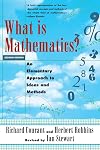
For more than two thousand years a familiarity with mathematics has been regarded as an indispensable part of the intellectual equipment of every cultured person. Today, unfortunately, the traditional place of mathematics in education is in grave danger. The teaching and learning of mathematics has degenerated into the realm of rote memorization, the outcome of which leads to satisfactory formal ability but does not lead to real understanding or to greater intellectual independence. This new show more edition of Richard Courant's and Herbert Robbins's classic work seeks to address this problem. Its goal is to put the meaning back into mathematics. Written for beginners and scholars, for students and teachers, for philosophers and engineers, What is Mathematics?, Second Edition is a sparkling collection of mathematical gems that offers an entertaining and accessible portrait of the mathematical world. Covering everything from natural numbers and the number system to geometrical constructions and projective geometry, from topology and calculus to matters of principle and the Continuum Hypothesis, this fascinating survey allows readers to delve into mathematics as an organic whole rather than an empty drill in problem solving. With chapters largely independent of one another and sections that lead upward from basic to more advanced discussions, readers can easily pick and choose areas of particular interest without impairing their understanding of subsequent parts. Brought up to date with a new chapter by Ian Stewart, What is Mathematics?, Second Edition offers new insights into recent mathematical developments and describes proofs of the Four-Color Theorem and Fermat's Last Theorem, problems that were still open when Courant and Robbins wrote this masterpiece, but ones that have since been solved.Formal mathematics is like spelling and grammar--a matter of the correct application of local rules. Meaningful mathematics is like journalism--it tells an interesting story. But unlike some journalism, the story has to be true. The best mathematics is like literature--it brings a story to life before your eyes and involves you in it, intellectually and emotionally. What is Mathematics is like a fine piece of literature--it opens a window onto the world of mathematics for anyone interested to view. show less
What Is Mathematics? An Elementary Approach to Ideas and Methods: An Elementary Approach to Ideas and Methods by Richard Courant
Pieces fit toghether around core mathematical questions. Not as satisfying from philosophical point of view as the title might lead to believe.
This is a fantastic book for introducing sophisticated mathematical thinking with "elementary" material. It would be a great present for a gifted child with a taste for mathematical thinking.
Very well done. About half of this can be appreciated by the bright high school senior; the rest might require a couple of college math courses.
Lists
Awards

You May Also Like


Associated Authors
Statistics
- Works
- 32
- Also by
- 3
- Members
- 1,785
- Popularity
- #14,423
- Rating
- 4.2
- Reviews
- 16
- ISBNs
- 94
- Languages
- 8

