
Ken Haedrich
Author of Pie: 300 Tried-and-True Recipes for Delicious Homemade Pie
About the Author
Ken Haedrich is a prolific food writer, the author of a dozen cookbooks, and a winner of the Julia Child Cookbook Award. His articles have appeared in many magazines, including Better Homes and Gardens, Cooking Light, and Bon Appetit. Haedrich makes his home in Rumney, New Hampshire
Series
Works by Ken Haedrich
Apple Pie Perfect: 100 Delicious and Decidedly Different Recipes for America's Favorite Pie (2002) 101 copies, 1 review
Country Baking: Simple Home Baking With Wholesome Grains and the Pick of the Harvest (1990) 84 copies
Dinner Pies: From Shepherd's Pies and Pot Pies to Tarts, Turnovers, Quiches, Hand Pies, and More, with 100 Delectable and Foolproof Recipes (2015) 60 copies
Pie Academy: Master the Perfect Crust and 255 Amazing Fillings, with Fruits, Nuts, Creams, Custards, Ice Cream, and More; Expert Techniques for Making Fabulous Pies from Scratch (2020) 57 copies, 2 reviews
The Harvest Baker: 150 Sweet & Savory Recipes Celebrating the Fresh-Picked Flavors of Fruits, Herbs & Vegetables (2017) 54 copies, 2 reviews
Savory Dinner Pies: More than 80 Delicious Recipes from Around the World (2022) 30 copies, 2 reviews
The Old Farmer's Almanac Comfort Food: Every dish you love, every recipe you want (2014) 27 copies, 1 review
Tagged
Common Knowledge
- Gender
- male
Members
Reviews
Pie Academy: Master the Perfect Crust and 255 Amazing Fillings, with Fruits, Nuts, Creams, Custards, Ice Cream, and More; Expert Techniques for Making Fabulous Pies from Scratch by Ken Haedrich
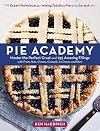
This book is GORGEOUS….I drooled over every page (thank goodness I didn’t short circuit my computer while reading). The Pie Academy is loaded with an amazing array of pie crusts and pie recipes ranging from the classics to the exotic. All with detailed instructions, photos and tips.
That being said, I’m what you call a quick, no muss no fuss cook and baker (at least that is my goal when I enter the kitchen). No huge kitchen-aid on my counter, if I can’t do the prep in just a few show more minutes, my attention span has exhausted, and I may not make it to the finish line. So, although most of what I make comes out tasty, you won’t find me using my hands for anything that cannot be done or prepared in a Magimix or bread machine. My food-processor and microwave cookbooks are my kitchen bibles – and I know my scriptures by heart.
I did learn a few pie-crust tricks and the trials were fool-proof. There is no lard in my larder (except that first syllable) so we contented ourselves with butter crusts. Adding a little cornstarch and/or vinegar made for the most delicious and flaky crusts I’ve ever eaten. No sugar in the crust, also good advice (so much for my mom’s recipe). If you don’t mix meat and dairy, serve a different dessert after meat, since margarine is something that doesn’t belong in anyone’s kitchen. I can’t speak for the hydrogenated vegetable shortenings since I don’t use them. So, a butter crust recipe was my standard, but now the sky (or Pie Academy) is the limit.
Pie Academy includes a number of different pie-crust recipes for sweet and savory pies. There are numerous photo illustrations of the different pie-crust techniques and textures. This book is not heavy on the “best and only” equipment, which I like. If you become a pie afficionado, you can add equipment in the future. But at the very least, you should have a rolling pin and pie plates. If you don’t have a pin, you should probably buy one of the two suggested. I use the tapered single piece French-style pin. I’ve had it for years and it’s great. Haedrich also discusses surfaces for rolling out dough. My counter tops are marble and I don’t have any problem with the dough sticking as I roll out my pie pastries on a lightly floured surface. I think temperature is a bit tricky. If the dough is too chilled it is harder to roll out and cracks a bit around the edges. You can trim but the less you mess with pie crust the better it comes out. If it is not chilled enough it might be sticky and alter the balance or texture of the fat mixture. Haedrich provides very helpful explanations and tips for all his recipes, so you can’t go wrong if you follow his advice.
Blind baking the bottom shell is a bit of a pain in the neck; if you don’t weigh down the shell the bottom may puff in spots and the sides will droop down while baking. Haedrich describes techniques and equipment to prevent that. I just prick the bottom and let the sides droop a little but, then, I will make the pie in anything and any shape; sometimes it is not a pretty sight (although tasty), so you should follow the author’s advice.
There are beautiful descriptions and photos demonstrating the various finishing techniques along the edges of the pie shells and top crusts. My edges will never come out as pretty as Haedrich’s. I trim where long and press on where short, then I just pinch close or lightly flour a thin tined fork and press along the edges. Fiddling around making lattice tops, braided edges, shapes, or peek-a-boo top crusts, etc., is just not for me (no sitzfleisch), but if you are not always in a hurry to flee the kitchen, you may take the time and succeed with these beautiful techniques.
So now the “good” stuff. Fillings…there are beautiful mouthwatering recipes for fillings galore and I am going to try at least half of them – but not those that I already have in my repertoire because I can see without trying that I love mine more (especially the lemon meringue pie). Haedrich’s Granny Smith Apple Pie filling is virtually identical to my double crusted apple pie filling (although I combine brown and white sugar and generally use flour instead of cornstarch in the filling). What Haedrich calls cream pies I think of as custard pies – my absolute favorites. I employ a completely different method (remember I told you I am a microwave maven). It does not take less time, but it feels like less steps and almost no work at all. Liquid and dry ingredients are whisked in a large microwave Pyrex and heated to thickened, occasionally removed and lightly whisked to break up any lumps that might form. Once thickened you whisk a little hot mixture into the eggs before pouring and whisking eggs into the main “cream” filling, back in the micro for another minute or two and then whisk in the butter chunks until melted with a little of your extract/other additions (flavored chips/coconut/etc.). The custard/cream filling comes out smooth and perfect every time and I have never had a skin form on top. I do not refrigerate to cool but let cool on counter and then pour into shell and put whipped cream, meringue, or other relevant topping to taste. I refrigerate when completed. Although Haedrich refrigerates his lemon meringue pie, I do not. It does not need to be refrigerated, certainly not on the day of baking, and it is usually gone the same day, immediately after dinner. I also don’t plan on trying the Swiss meringue. It is so easy to make a delicious fluffy meringue and it takes about two minutes to bake and uniformly brown on a very high heat. By the way, if you don’t have lemon (my lemon tree is a little lame this year), I opened a tin of pineapple, threw it into the Magimix and blended, then added the dry ingredients, made the thickened mixture in the microwave, added eggs then butter, cooled and topped with the meringue…it made an excellent substitute for lemon meringue pie last weekend.
Haedrich’s fruit pies are beauties. I will try one or two of the more creative crusts with some of the more exotic recipes, probably next weekend with either Creamy-Maple Yogurt Pie (with my Bread Machine homemade yogurt), Mango & Pineapple Pie with Candied Ginger, or Watermelon Rind Pie (!)
Many thanks to NetGalley and Storey Publishing for this ARC of this beautiful book, Pie Academy. I LOVE IT! show less
That being said, I’m what you call a quick, no muss no fuss cook and baker (at least that is my goal when I enter the kitchen). No huge kitchen-aid on my counter, if I can’t do the prep in just a few show more minutes, my attention span has exhausted, and I may not make it to the finish line. So, although most of what I make comes out tasty, you won’t find me using my hands for anything that cannot be done or prepared in a Magimix or bread machine. My food-processor and microwave cookbooks are my kitchen bibles – and I know my scriptures by heart.
I did learn a few pie-crust tricks and the trials were fool-proof. There is no lard in my larder (except that first syllable) so we contented ourselves with butter crusts. Adding a little cornstarch and/or vinegar made for the most delicious and flaky crusts I’ve ever eaten. No sugar in the crust, also good advice (so much for my mom’s recipe). If you don’t mix meat and dairy, serve a different dessert after meat, since margarine is something that doesn’t belong in anyone’s kitchen. I can’t speak for the hydrogenated vegetable shortenings since I don’t use them. So, a butter crust recipe was my standard, but now the sky (or Pie Academy) is the limit.
Pie Academy includes a number of different pie-crust recipes for sweet and savory pies. There are numerous photo illustrations of the different pie-crust techniques and textures. This book is not heavy on the “best and only” equipment, which I like. If you become a pie afficionado, you can add equipment in the future. But at the very least, you should have a rolling pin and pie plates. If you don’t have a pin, you should probably buy one of the two suggested. I use the tapered single piece French-style pin. I’ve had it for years and it’s great. Haedrich also discusses surfaces for rolling out dough. My counter tops are marble and I don’t have any problem with the dough sticking as I roll out my pie pastries on a lightly floured surface. I think temperature is a bit tricky. If the dough is too chilled it is harder to roll out and cracks a bit around the edges. You can trim but the less you mess with pie crust the better it comes out. If it is not chilled enough it might be sticky and alter the balance or texture of the fat mixture. Haedrich provides very helpful explanations and tips for all his recipes, so you can’t go wrong if you follow his advice.
Blind baking the bottom shell is a bit of a pain in the neck; if you don’t weigh down the shell the bottom may puff in spots and the sides will droop down while baking. Haedrich describes techniques and equipment to prevent that. I just prick the bottom and let the sides droop a little but, then, I will make the pie in anything and any shape; sometimes it is not a pretty sight (although tasty), so you should follow the author’s advice.
There are beautiful descriptions and photos demonstrating the various finishing techniques along the edges of the pie shells and top crusts. My edges will never come out as pretty as Haedrich’s. I trim where long and press on where short, then I just pinch close or lightly flour a thin tined fork and press along the edges. Fiddling around making lattice tops, braided edges, shapes, or peek-a-boo top crusts, etc., is just not for me (no sitzfleisch), but if you are not always in a hurry to flee the kitchen, you may take the time and succeed with these beautiful techniques.
So now the “good” stuff. Fillings…there are beautiful mouthwatering recipes for fillings galore and I am going to try at least half of them – but not those that I already have in my repertoire because I can see without trying that I love mine more (especially the lemon meringue pie). Haedrich’s Granny Smith Apple Pie filling is virtually identical to my double crusted apple pie filling (although I combine brown and white sugar and generally use flour instead of cornstarch in the filling). What Haedrich calls cream pies I think of as custard pies – my absolute favorites. I employ a completely different method (remember I told you I am a microwave maven). It does not take less time, but it feels like less steps and almost no work at all. Liquid and dry ingredients are whisked in a large microwave Pyrex and heated to thickened, occasionally removed and lightly whisked to break up any lumps that might form. Once thickened you whisk a little hot mixture into the eggs before pouring and whisking eggs into the main “cream” filling, back in the micro for another minute or two and then whisk in the butter chunks until melted with a little of your extract/other additions (flavored chips/coconut/etc.). The custard/cream filling comes out smooth and perfect every time and I have never had a skin form on top. I do not refrigerate to cool but let cool on counter and then pour into shell and put whipped cream, meringue, or other relevant topping to taste. I refrigerate when completed. Although Haedrich refrigerates his lemon meringue pie, I do not. It does not need to be refrigerated, certainly not on the day of baking, and it is usually gone the same day, immediately after dinner. I also don’t plan on trying the Swiss meringue. It is so easy to make a delicious fluffy meringue and it takes about two minutes to bake and uniformly brown on a very high heat. By the way, if you don’t have lemon (my lemon tree is a little lame this year), I opened a tin of pineapple, threw it into the Magimix and blended, then added the dry ingredients, made the thickened mixture in the microwave, added eggs then butter, cooled and topped with the meringue…it made an excellent substitute for lemon meringue pie last weekend.
Haedrich’s fruit pies are beauties. I will try one or two of the more creative crusts with some of the more exotic recipes, probably next weekend with either Creamy-Maple Yogurt Pie (with my Bread Machine homemade yogurt), Mango & Pineapple Pie with Candied Ginger, or Watermelon Rind Pie (!)
Many thanks to NetGalley and Storey Publishing for this ARC of this beautiful book, Pie Academy. I LOVE IT! show less
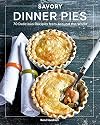
I received a free electronic review copy of this title from the publisher via Edelweiss+. With cookbooks in particular, if I like the electronic ARC, I make a point of buying a physical copy of the book when it comes out. Kan Haedrich's Savory Dinner Pies is being released on January 18—and I'm preordering it from my local independent bookseller. This is a title I want to put to use immediately!
Haedrich knows his pies and has a wonderful sense of humor. Normally, I would be skipping the show more opining chapters on things like types of pie pans and butter vs. shortening, but Haedrich makes these topics a delight. Once you get to the recipes, there are all kinds of variations: pot pies, hand pies, savory tarts, quiches, samosas. Some of the recipes are classics, others are surprising (and delicious-sounding): tomato and ham cobbler; Italian sausage and chicken skillet pie; sloppy joe pot pies with a biscuit crust; taco pot pie; loaded baked potato tart; curried winter squash galette with onion and apple.
I am in total agreement with the philosophy Haedrich explains in the Author's Note: "I am hopelessly addicted to crust. I've been this way for decades. In fact, I can scarcely remember eating a meal that could not have been improved by putting some sort of crust over, under, or around it.... Don't even get me started on crustless quiche, a notion I find just plain disturbing." If you're a member of or are considering a membership in the Crust-Lovers' Club, you'll want to purchase a copy of Savory Pies—stat! show less
Haedrich knows his pies and has a wonderful sense of humor. Normally, I would be skipping the show more opining chapters on things like types of pie pans and butter vs. shortening, but Haedrich makes these topics a delight. Once you get to the recipes, there are all kinds of variations: pot pies, hand pies, savory tarts, quiches, samosas. Some of the recipes are classics, others are surprising (and delicious-sounding): tomato and ham cobbler; Italian sausage and chicken skillet pie; sloppy joe pot pies with a biscuit crust; taco pot pie; loaded baked potato tart; curried winter squash galette with onion and apple.
I am in total agreement with the philosophy Haedrich explains in the Author's Note: "I am hopelessly addicted to crust. I've been this way for decades. In fact, I can scarcely remember eating a meal that could not have been improved by putting some sort of crust over, under, or around it.... Don't even get me started on crustless quiche, a notion I find just plain disturbing." If you're a member of or are considering a membership in the Crust-Lovers' Club, you'll want to purchase a copy of Savory Pies—stat! show less
Ken Haedrich is a food writer and pie baker of some prominence. This book is a compilation of his notes on baking savory pies coupled with a set of clear instructions he has honed over the years as a pie blogger and online teacher. I recommend the book highly, but still with a couple of reservations.
I come from a family of pie bakers in a regions of the USA where pies are king. I bake pies but my older relatives are unsung champions. Ken Haedrich's recipes are very good. His crust is very show more good and his instructions are very good. My only complaint is that he omits some stuff I think is important:
• The crusts here are butter based or butter with a little vegetable shortening. There is no mention of lard or suet crusts, which are traditional, delicious and no less healthy than any other saturated fat crust. Lard crusts (and vegetable shortening only crusts, for that matter) are for sweet or savory pies and are easier to work with than butter crusts. Suet crusts are generally reserved for meat pies, particularly British pork pies and others that are presented outside of the pie plate.
• In the section on rolling techniques, there is no mention of pastry cloths which are the rule in my family. You need to store them in the freezer and wash once every so often, but a well-seasoned cloth is easy to use because you can use the cloth to wrap the dough around the rolling pin to lift onto the pie plate. Mr. Haedrich appears to roll his crusts on parchment paper on top of a silicone mat. I'd go with the cloth.
• In my part of the USA savory pies are 4-6 inches deep and have a top and bottom lard or vegetable shortening crust. The bottom crust is supposed to be as flaky as you expect in a two-crust fruit pie. A Pyrex casserole dish is best because the bottom crust heats quickly in glass. Spoon the meat and vegetable stew into the unbaked crust using a slotted spoon. Some gravy, not too much, goes into the pie with the remaining gravy served at the table.
• No mention of pithiviers, which are turtle shells of puff-pastry crust top and bottom enclosing sweet or savory fillings.
One set of recipes that I find odd are for open-faced "pizza" made with pie crust. I would call them "tarts" not "pizza" but whatever, the name doesn't matter.
Read the book. Do what he says. Do try to keep a baking journal to help understand the quirks of your oven. Journals are always a good idea, although I wonder how many of us really do it. Not me.
I received a review copy of "Savory Dinner Pies" by Ken Haedrich from Harvard Common Press through NetGalley.com. show less
I come from a family of pie bakers in a regions of the USA where pies are king. I bake pies but my older relatives are unsung champions. Ken Haedrich's recipes are very good. His crust is very show more good and his instructions are very good. My only complaint is that he omits some stuff I think is important:
• The crusts here are butter based or butter with a little vegetable shortening. There is no mention of lard or suet crusts, which are traditional, delicious and no less healthy than any other saturated fat crust. Lard crusts (and vegetable shortening only crusts, for that matter) are for sweet or savory pies and are easier to work with than butter crusts. Suet crusts are generally reserved for meat pies, particularly British pork pies and others that are presented outside of the pie plate.
• In the section on rolling techniques, there is no mention of pastry cloths which are the rule in my family. You need to store them in the freezer and wash once every so often, but a well-seasoned cloth is easy to use because you can use the cloth to wrap the dough around the rolling pin to lift onto the pie plate. Mr. Haedrich appears to roll his crusts on parchment paper on top of a silicone mat. I'd go with the cloth.
• In my part of the USA savory pies are 4-6 inches deep and have a top and bottom lard or vegetable shortening crust. The bottom crust is supposed to be as flaky as you expect in a two-crust fruit pie. A Pyrex casserole dish is best because the bottom crust heats quickly in glass. Spoon the meat and vegetable stew into the unbaked crust using a slotted spoon. Some gravy, not too much, goes into the pie with the remaining gravy served at the table.
• No mention of pithiviers, which are turtle shells of puff-pastry crust top and bottom enclosing sweet or savory fillings.
One set of recipes that I find odd are for open-faced "pizza" made with pie crust. I would call them "tarts" not "pizza" but whatever, the name doesn't matter.
Read the book. Do what he says. Do try to keep a baking journal to help understand the quirks of your oven. Journals are always a good idea, although I wonder how many of us really do it. Not me.
I received a review copy of "Savory Dinner Pies" by Ken Haedrich from Harvard Common Press through NetGalley.com. show less
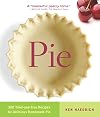
Recipes to suit beginners and experienced pie makers. Good descriptions of the finished product (so you know what to expect from a recipe), as well as best practices and tips for success. Excellent recipes for bake from scratch as well as icebox pies with grocery store crusts. Lemon Cloud Pie, White Russian Pie and Peaches and Cream Pie are some of our favorites, and we have yet to be disappointed by a new recipe.
Lists
Food (1)
Awards

You May Also Like


Associated Authors
Statistics
- Works
- 22
- Members
- 1,082
- Popularity
- #23,754
- Rating
- 4.2
- Reviews
- 14
- ISBNs
- 39
- Favorited
- 3