
Peter Reinhart
Author of The Bread Baker's Apprentice: Mastering the Art of Extraordinary Bread
About the Author
Peter Reinhart is a full-time baking instructor at Johnson & Wales University in Providence, Rhode Island. Peter is a regular commentator on food and culture for public radio's One Union Station
Image credit: Peter Reinhart
Works by Peter Reinhart
The Bread Baker's Apprentice: Mastering the Art of Extraordinary Bread (2001) 1,443 copies, 28 reviews
Peter Reinhart's Whole Grain Breads: New Techniques, Extraordinary Flavor (2007) 383 copies, 4 reviews
Sacramental Magic in a Small-Town Cafe: Recipes and Stories from Brother Juniper's Cafe (1994) 150 copies, 3 reviews
Bread Revolution: World-Class Baking with Sprouted and Whole Grains, Heirloom Flours, and Fresh Techniques (2014) 105 copies, 1 review
Perfect Pan Pizza: Square Pies to Make at Home, from Roman, Sicilian, and Detroit, to Grandma Pies and Focaccia [A Cookbook] (2019) 93 copies
The Joy of Gluten-Free, Sugar-Free Baking: 80 Low-Carb Recipes that Offer Solutions for Celiac Disease, Diabetes, and Weight Loss (2012) 75 copies
Pan artesano: Recetas rápidas y fáciles de todo el mundo para elaborar tu propio pan (Cocina) (Spanish Edition) (2015) 3 copies
The Art and Craft of Bread 1 copy
Associated Works
Baking Artisan Pastries and Breads: Sweet and Savory Baking for Breakfast, Brunch, and Beyond (2009) — Preface, some editions — 71 copies, 2 reviews
Tagged
Common Knowledge
- Canonical name
- Reinhart, Peter
- Birthdate
- 1950
- Gender
- male
- Occupations
- baking instructor (Johnson & Wales University | Providence, Rhode Island)
- Nationality
- USA
- Places of residence
- Charlotte, North Carolina, USA
Providence, Rhode Island, USA
Sonoma, California, USA - Associated Place (for map)
- USA
Members
Reviews
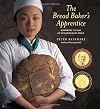
I love it when a baker can wax poetic about bread, and Reinhart definitely can. He's passionate about bread, and it shows in the preface, introduction, and two substantial chapters that fills up over 100 pages we get to read through before even getting to the formulas. The deconstruction section is especially interesting as far as the science and nitty-gritty of the grains and mechanics go. Even if you don't care for that stuff, the formulas are clear and fully explained. A really fantastic show more addition to any food reference collection. show less
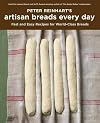
I know... I'm still reading it and I've given it a rating. But I couldn't help it... I'm halfway through and I LOVE this book. Another book I got a few years ago - Crust, by Richard Bertinet - introduced me to the idea that you can make your dough one day and let it sit for a few days in the fridge before using it. For the past ten years, I make all my own pizza dough, and this is usually the way I make it.
Artisan Breads explores - and explains - that very method, along with others of show more course. I can't wait to try some of these recipes! As a freelance illustrator, and mother of two teens (yes, I'll accept all sympathy in the form of a cold beer, thanks) time is precious but I still want decent food for my family and myself.
And making bread is very... zen, if I may say so. Beat the crap out of dough and tension is gone. Well, KNEAD the crap out of it.
Anyway, this is definitely a book I'll return to, and now I really want his pizza book! Dang it. show less
Artisan Breads explores - and explains - that very method, along with others of show more course. I can't wait to try some of these recipes! As a freelance illustrator, and mother of two teens (yes, I'll accept all sympathy in the form of a cold beer, thanks) time is precious but I still want decent food for my family and myself.
And making bread is very... zen, if I may say so. Beat the crap out of dough and tension is gone. Well, KNEAD the crap out of it.
Anyway, this is definitely a book I'll return to, and now I really want his pizza book! Dang it. show less
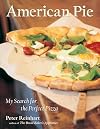
Peter Reinhart is a major American authority and writer on bread baking. I came across American Pie several years ago while searching the Library catalog for anything else by Reinhart. Since I regularly made homemade pizza, it immediately appealed to me. A week later I purchased my own copy.
American Pie is one part food travelogue (The Hunt) and one part recipe book (The Recipes). The Hunt begins with Reinhart having pizza from his favorite childhood pizzeria; he is incredibly disappointed show more to realize, however, that it isn’t at all as good as he had remembered. ‘“Maybe,” I said to myself,” it was never as good as I thought it was, just the best I’d been exposed to during my sheltered youth.”’ Reinhart begins looking for a better pizza, and, as he shares his search with others, he is continually met with the objection “But you can’t say something is the best until you’ve tried…” This begins his quest to find, what to him is, the perfect pizza. His journey takes him to Genoa, Rome, and Naples, as well as all across America. Reinhart provides an incredibly interesting and mouth-watering overview on the different aspects of regional pizza, as well as the nature of great pizza and the people and quality ingredients that make it happen. I guarantee if you read the first half you will be dying to make some of the pizzas that follow in the second half.
The Recipes consists of “The Family of Doughs,” “Sauces and Specialty Toppings,” and “The Pizzas.” Because my husband and I love thin crust, first I decided to try the Roman Pizza Dough – an ultrathin dough that typically is not served in the states. I liked it; but it was, incredibly, too thin and crispy for my husband: it almost had the texture and snap of a Wheat Thin cracker without the greasiness. I also adopted Reinhart’s basic recipe for Sautéed Mushrooms, altering it minimally by adding a bit of thyme. In “The Pizzas” section, both my sister and I raved over the Onion Marmalade, Walnuts, & Blue Cheese Pizza. (If you try it, load the onion marmalade thickly on the dough! That recipe is also how I discovered I no longer despised Blue Cheese.)
Until I read American Pie, I used my 1985 edition of Carol Field's The Italian Baker for my go-to pizza dough recipe. Though it is good in a time pinch, it does not compare to the slow, cold-rise dough recipes in American Pie, or, for that matter, my all-time favorite: Sourdough Pizza Crust from King Arthur. (Though easy, the sourdough recipe requires a significant time investment for the best result:http://www.kingarthurflour.com/recipes/sourdough-pizza-crust-recipe.) Another thing I learned from American Pie: crank up the heat for homemade pizza – 465 is now the absolute lowest I go. show less
American Pie is one part food travelogue (The Hunt) and one part recipe book (The Recipes). The Hunt begins with Reinhart having pizza from his favorite childhood pizzeria; he is incredibly disappointed show more to realize, however, that it isn’t at all as good as he had remembered. ‘“Maybe,” I said to myself,” it was never as good as I thought it was, just the best I’d been exposed to during my sheltered youth.”’ Reinhart begins looking for a better pizza, and, as he shares his search with others, he is continually met with the objection “But you can’t say something is the best until you’ve tried…” This begins his quest to find, what to him is, the perfect pizza. His journey takes him to Genoa, Rome, and Naples, as well as all across America. Reinhart provides an incredibly interesting and mouth-watering overview on the different aspects of regional pizza, as well as the nature of great pizza and the people and quality ingredients that make it happen. I guarantee if you read the first half you will be dying to make some of the pizzas that follow in the second half.
The Recipes consists of “The Family of Doughs,” “Sauces and Specialty Toppings,” and “The Pizzas.” Because my husband and I love thin crust, first I decided to try the Roman Pizza Dough – an ultrathin dough that typically is not served in the states. I liked it; but it was, incredibly, too thin and crispy for my husband: it almost had the texture and snap of a Wheat Thin cracker without the greasiness. I also adopted Reinhart’s basic recipe for Sautéed Mushrooms, altering it minimally by adding a bit of thyme. In “The Pizzas” section, both my sister and I raved over the Onion Marmalade, Walnuts, & Blue Cheese Pizza. (If you try it, load the onion marmalade thickly on the dough! That recipe is also how I discovered I no longer despised Blue Cheese.)
Until I read American Pie, I used my 1985 edition of Carol Field's The Italian Baker for my go-to pizza dough recipe. Though it is good in a time pinch, it does not compare to the slow, cold-rise dough recipes in American Pie, or, for that matter, my all-time favorite: Sourdough Pizza Crust from King Arthur. (Though easy, the sourdough recipe requires a significant time investment for the best result:http://www.kingarthurflour.com/recipes/sourdough-pizza-crust-recipe.) Another thing I learned from American Pie: crank up the heat for homemade pizza – 465 is now the absolute lowest I go. show less
The Bread Baker's Apprentice, 15th Anniversary Edition: Mastering the Art of Extraordinary Bread by Peter Reinhart

Summary:
Co-founder of the legendary Brother Juniper’s Bakery, author of ten landmark bread books, and distinguished instructor at the world’s largest culinary academy, Peter Reinhart has been a leader in America’s artisanal bread movement for more than thirty years. Never one to be content with yesterday’s baking triumph, however, Peter continues to refine his recipes and techniques in his never-ending quest for extraordinary bread.
In this new edition of the award-winning and show more best-selling The Bread Baker’s Apprentice, Peter shares bread breakthroughs arising from his study in France’s famed boulangeries and the always-enlightening time spent in the culinary college kitchen with his students. Peer over Peter’s shoulder as he learns from Paris’s most esteemed bakers, like Lionel Poilâne and Phillippe Gosselin, whose pain à l’ancienne has revolutionized the art of baguette making. Then stand alongside his students in the kitchen as Peter teaches the classic twelve stages of building bread, his clear instructions accompanied by more than 100 step-by-step photographs.
You’ll put newfound knowledge into practice with fifty master formulas for such classic breads as rustic ciabatta, hearty pain de campagne, old-school New York bagels, and the book’s Holy Grail—Peter’s version of the famed pain à l’ancienne, as well as three all-new formulas. En route, Peter distills hard science, advanced techniques, and food history into a remarkably accessible and engaging resource that is as rich and multitextured as the loaves you’ll turn out. In this revised edition, he adds metrics and temperature conversion charts, incorporates comprehensive baker’s percentages into the recipes, and updates methods throughout. This is original food writing at its most captivating, teaching at its most inspired and inspiring—and the rewards are some of the best breads under the sun.
I received this early copy through Netgalley.
For about five years now, I have baked my own sandwich bread each week, along with my own pizza dough, rolls, and most any bready goods. This book changed how I think about bread and offered me numerous, delicious recipes, too.
The first portion of the book is on the science of bread baking. This is a fairly complex thing--as any baker will failed loaves can attest to--where yeast, fermentation, temperature, and ratios all play vital rolls. I appreciated Reinhart's attitude; he's not one of those cooks who says you must do everything a certain way. He lays the facts out there, saying you need these elements to make bread work, but play around with it, see what works for you.
I did just that as I tested three recipes from his book: cinnamon raisin bread, white sandwich bread, and poor man's brioche. (One note on the ebook edition: it seriously garbled the recipes, skewing lines and ingredients in a way that required writing them down to interpret the data; I sincerely hope this is fixed in the final edition of the ebook.)
The cinnamon raisin bread produced two loaves, so I did two variations as shown in the book: one with a swirl, and one without. Both turned out to be delicious, though the swirled one not only looked prettier when sliced but had a better rise.
The white bread and brioche both produced enough dough for two small loaves each, but I opted to make each as a larger loaf while using about 1/3 of the dough to make rolls. I also modified the directions and used my bread machine to mix the dough, then did the second rise in the kitchen and baked them in the oven. The results were spectacular. Both recipes produced tender, delicious bread that worked well sliced for sandwiches and as rolls. My husband ate all the brioche rolls in one sitting and begged me to do a full batch of brioche rolls. I want to do that soon--and try the two richer recipes for brioche as well.
I loved this cookbook. It's no wonder the original has been declared a classic, warranting this 15th anniversary edition. show less
Co-founder of the legendary Brother Juniper’s Bakery, author of ten landmark bread books, and distinguished instructor at the world’s largest culinary academy, Peter Reinhart has been a leader in America’s artisanal bread movement for more than thirty years. Never one to be content with yesterday’s baking triumph, however, Peter continues to refine his recipes and techniques in his never-ending quest for extraordinary bread.
In this new edition of the award-winning and show more best-selling The Bread Baker’s Apprentice, Peter shares bread breakthroughs arising from his study in France’s famed boulangeries and the always-enlightening time spent in the culinary college kitchen with his students. Peer over Peter’s shoulder as he learns from Paris’s most esteemed bakers, like Lionel Poilâne and Phillippe Gosselin, whose pain à l’ancienne has revolutionized the art of baguette making. Then stand alongside his students in the kitchen as Peter teaches the classic twelve stages of building bread, his clear instructions accompanied by more than 100 step-by-step photographs.
You’ll put newfound knowledge into practice with fifty master formulas for such classic breads as rustic ciabatta, hearty pain de campagne, old-school New York bagels, and the book’s Holy Grail—Peter’s version of the famed pain à l’ancienne, as well as three all-new formulas. En route, Peter distills hard science, advanced techniques, and food history into a remarkably accessible and engaging resource that is as rich and multitextured as the loaves you’ll turn out. In this revised edition, he adds metrics and temperature conversion charts, incorporates comprehensive baker’s percentages into the recipes, and updates methods throughout. This is original food writing at its most captivating, teaching at its most inspired and inspiring—and the rewards are some of the best breads under the sun.
I received this early copy through Netgalley.
For about five years now, I have baked my own sandwich bread each week, along with my own pizza dough, rolls, and most any bready goods. This book changed how I think about bread and offered me numerous, delicious recipes, too.
The first portion of the book is on the science of bread baking. This is a fairly complex thing--as any baker will failed loaves can attest to--where yeast, fermentation, temperature, and ratios all play vital rolls. I appreciated Reinhart's attitude; he's not one of those cooks who says you must do everything a certain way. He lays the facts out there, saying you need these elements to make bread work, but play around with it, see what works for you.
I did just that as I tested three recipes from his book: cinnamon raisin bread, white sandwich bread, and poor man's brioche. (One note on the ebook edition: it seriously garbled the recipes, skewing lines and ingredients in a way that required writing them down to interpret the data; I sincerely hope this is fixed in the final edition of the ebook.)
The cinnamon raisin bread produced two loaves, so I did two variations as shown in the book: one with a swirl, and one without. Both turned out to be delicious, though the swirled one not only looked prettier when sliced but had a better rise.
The white bread and brioche both produced enough dough for two small loaves each, but I opted to make each as a larger loaf while using about 1/3 of the dough to make rolls. I also modified the directions and used my bread machine to mix the dough, then did the second rise in the kitchen and baked them in the oven. The results were spectacular. Both recipes produced tender, delicious bread that worked well sliced for sandwiches and as rolls. My husband ate all the brioche rolls in one sitting and begged me to do a full batch of brioche rolls. I want to do that soon--and try the two richer recipes for brioche as well.
I loved this cookbook. It's no wonder the original has been declared a classic, warranting this 15th anniversary edition. show less
Lists
Awards


You May Also Like


Associated Authors
Statistics
- Works
- 17
- Also by
- 4
- Members
- 3,765
- Popularity
- #6,733
- Rating
- 4.3
- Reviews
- 52
- ISBNs
- 36
- Languages
- 1
- Favorited
- 2