
Joost van den Vondel (1587–1679)
Author of Lucifer
About the Author
Vondel could, with some justification, be considered the Shakespeare of the Netherlands because of his output and influence on dramatic art. A contemporary of Shakespeare (see Vol. 1), Vondel was born in Cologne but, as an infant, moved to Amsterdam with his parents where, as soon as he was old show more enough, he helped his father run a silk stocking shop. To a large extent, Vondel was a self-made man: he taught himself both classical and modern languages, and several of his 32 plays bear witness to the fact that he had a thorough knowledge of classical culture and the Bible as well. In his best-known historical play, Gijsbrecht van Amstel (1637), he describes the siege and consequent destruction of Amsterdam, but moulds it accurately on Virgil's report on the fall of Troy in Aeneas. In another historical play, Maria Stuart (1646), he launches a fierce attack on Queen Elizabeth. Vondel's parents, being Baptists, had fled from Antwerp to Cologne in order to escape persecution. He adopted the Roman Catholic faith at age 40 and was deeply involved in the religious conflicts between Remonstrants and anti-Remonstrants. It is not surprising, therefore, that his biblical plays far outnumber the historical ones. He regarded his Jeptha (1657) as a model classical play, for it fully complied with all the rules of Aristotle: the play has five acts; the first four are followed by a chorus; the unities of time and place are strictly maintained; the lines are written in perfect alexandrines; and Jeptha is the perfect tragic hero, who falls, not because he is basically bad or sinful, but because of evil conquering good, with Jeptha the innocent victim. The tragic death of Jeptha's daughter, owing to a foolish commitment her father had made, is movingly and convincingly told in a style and language which, in contrast to the themes, is more Baroque than Renaissance in character. On the basis of his sensitive and observant nature, Vondel considered himself called upon to react poetically to a variety of topical occurrences, varying from the beheading of Grand Pensionary van Oldenbarneveld, which Vondel described as a legal murder, to the premature deaths of two of his three children. The phrase 's Landts oudste en grootste poeet (the country's oldest and greatest poet) was coined specially on the occasion of Vondel's funeral in 1679 and has continued undisputed after more than three hundred years. (Bowker Author Biography) show less
Image credit: Portrait by Ph. Koninck (1665)
Works by Joost van den Vondel
Lucifer ; Adam in ballingschap, of Aller treurspelen treurspel ; Noah, of Ondergang der eerste wereld (2004) 18 copies
J. v. Vondels Palamedes of vermoorde onnozelheit : Treurspel, met aantekeningen uit 's digters mondt opgeschreven (1977) 10 copies
O kersnacht schooner dan de daegen 10 copies
Joseph in Egypten 5 copies
Vijftig gedichten 5 copies
Maeghden 4 copies
De werken. 1648-1651: Salomon 4 copies
Verzen van Vondel 3 copies
Bloemlezing uit Vondels lyriek 3 copies
Toneelspelen 3 copies
Koning David hersteld treurspel 3 copies
De werken. 1645: Altaergeheimenissen 2 copies
Vondels spelen. Dl. 3 2 copies
Publius Virgilius Maroos Wercken in Nederduitsch dicht vertaelt II — Translator — 2 copies
Vondels spelen. Dl. 2 2 copies
Waar werd oprechter trouw ... 2 copies
Vondel hervonden 2 copies
De werken van Vondel,volledige en geïllustreerde tekstuitgave in tien deelen: vijde deel (5/10) 2 copies
De werken van Vondel, volledige en geïllustreerde tekstuitgave in tien deelen: tweede deel (2/10) 2 copies
Samson // Batavische gebroeders 2 copies
De werken van J. Van den Vondel - 1642-1645 - Brieven der Heilige Maeghden - Grotius Testament 2 copies
Vondels spelen. Het tweede deel. Het eerste stuk. Joseph in Egypte - Salomon - Lucifer (1913) 2 copies
De werken van Vondel,volledige en geïllustreerde tekstuitgave in tien deelen: zesde deel (6/10) 1 copy
De werken van Vondel, volledige en geïllustreerde tekstuitgave in tien deelen: vierde deel (4/10) 1 copy
De werken van Vondel, volledige en geïllustreerde tekstuitgave in tien deelen: tiende deel (10/10) 1 copy
De werken van Vondel, volledige en geïllustreerde tekstuitgave in tien deelen: derde deel (3/10) 1 copy
De werken van Vondel,volledige en geïllustreerde tekstuitgave in tien deelen: zevende deel (7/10) 1 copy
Alle De Treurspelen 1 copy
Al de dichtwerken van Joost van Vondel : Naar tijdsorde gerangschikt en in de hedendaagsche spelling uitgegeven : Eerste deel — Author — 1 copy
De werken van Vondel,volledige en geïllustreerde tekstuitgave in tien deelen: achste deel (8/10) 1 copy
De werken van Vondel, volledige en geïllustreerde tekstuitgave in tien deelen: negende deel (9/10) 1 copy
Leerdichten 1 copy
De drukkunst 1 copy
De werken van Vondel, volledige en geïllustreerde tekstuitgave in tien deelen: eerste deel (1/10) 1 copy
Joost van den Vondel (1587-1679) Cinq tragédies Notice biographique et notes Traduction vers par vers dans les rythmes originaux par Jean STALS 1 copy, 1 review
Toneelspellen II 1 copy
Toneelspelen, tweede bundel 1 copy
Toneelspelen, eerste bundel 1 copy
Maeghden // Peter en Pauwels 1 copy
Op 's hemels ronde spil 1 copy
Uren met dichters : Vondel, Hooft, Huygens, Bredero, Anna Roemers Visscher, Maria Tesselschade — Contributor — 1 copy
Rey van Klaerissen : fragment uit het derde bedrijf van Joost van den Vondel's Gijsbrecht van Aemstel 1 copy
Proza van Vondel 1 copy
Keurlezing uit Vondel 1 copy
De weken van Vondel deel 1-9 1 copy
Driekoningen 1 copy
J. v. Vondels Palamedes 1 copy
Roskam en Rommelpot 1 copy
Koning Davids harpzangen 1 copy
Salmoneus // Jeptha 1 copy
Toneelspelen Tweede Bundel 1 copy
Associated Works
Domweg gelukkig, in de Dapperstraat : de bekendste gedichten uit de Nederlandse literatuur (1990) — Contributor — 227 copies, 2 reviews
De Nederlandse poëzie van de zeventiende en achttiende eeuw in duizend en enige gedichten (1986) — Contributor — 117 copies
Twee muzen : een verzameling van Nederlandse gedichten handelend over muziek (1955) — Contributor — 28 copies
De muze en de zeventien provinciën : een bloemlezing van verzen over Noord- en Zuidnederland (1962) — Contributor — 27 copies, 1 review
De wereld is een speeltoneel klassieke toneelspelen van Hooft en Vondel (1973) — Contributor — 21 copies, 1 review
Oogst Der Tijden. keur uit de werken van schrijvers en dichters aller volken en eeuwen (1940) — Contributor — 12 copies
De werken. 1630-1636 : Josef of Sofompaneas — Translator, some editions — 4 copies
Publius Virgilius Maroos Wercken in Nederduitsch dicht vertaelt — Translator — 3 copies
Tagged
Common Knowledge
- Birthdate
- 1587-11-17
- Date of death
- 1679- 02-05
- Gender
- male
- Occupations
- dramatist
poet - Organizations
- Brabantse Rederijkerskamer 'Het Wit Lavendel'
- Nationality
- Holy Roman Empire
Dutch Republic - Birthplace
- Cologne, Holy Roman Empire
- Places of residence
- Keulen, Duitsland
Amsterdam, Noord-Holland, Nederland - Place of death
- Amsterdam, Netherlands
- Burial location
- Nieuwe Kerk, Amsterdam, Netherlands
- Map Location
- Netherlands
Members
Reviews

A playwright from a generation beyond Shakespeare. The language sounds similarly Shakespearean, but this playwright is no Shakespeare. He is less interested in molding a compelling story than in telling a particular story to favor a particular point of view, which is that Mary Stuart had absolutely no flaws, not one, and her only crime was being the rightful heir to the English throne that had been usurped by Elizabeth. This is no secret, as the playwright includes a dedication that says show more essentially as much. While the play is interesting as a piece of historical propaganda, a look at what some people were thinking at that time, it is not that compelling as a drama. This story has been told much better (from both sides) in other places. Interesting, in other words, as history, not as literature. show less
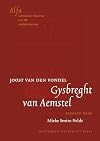
The play starts somewhat slow. It's the end of the Trojan war retold with Amsterdam taking the place of Troy. The name of the ship that plays the role of the Trojan Horse, the Seahorse, is an early amusing reference. The dialogue is quite good throughout most of the play, but sadly the ending is incredibly cheesy: it's a silly "prediction" of the future, presumably meant to make a certain contingent of expected spectators like the mayor and other magistrates feel good about themselves show more through an explicit mention.
I'd give Vondel four stars, but the specific edition left me less enthused. The footnotes didn't seem to clarify who a certain speaking character was upon their first introduction (something you can find at the beginning of the play), except for the occasional character of larger historical importance, yet every time there was a reference to "the bastard" the footnotes seemed to feel the need to point out who exactly was being referenced over and over again. There were also a few times that the footnote numbers got messed up (e.g. from 39 it went on to 340 or something) and some of the footnotes ended up on the wrong pages. Neither was a big issue, but it just doesn't look too good. Some of the clarifying margin notes seemed quite redundant, e.g. that wisse means certain, whereas it didn't mention anywhere that words like genade are written like gena in the text. Okay, in the list of a few clarifying words at the beginning it says that “spa(de)” means late, but that's a word that's no longer in use and is really more about the word as such than about whether or not there's a de at the end. What most annoyed me is that there were various times when an expression still exists and it was only the spelling of a vowel that differed, e.g. star is now spelled (and spoken) ster, but instead of just giving that as clarification it gave a synonym. In the example of star I figure that would mean clarifying it by saying something like luminous celestial sphere, although that particular example is made-up and perhaps a bit far-fetched. I imagine any native speaker of Dutch who reads this should have fairly little trouble understanding the text, but the text still seems stuck somewhere in between two or even three different goals: the first, to make the text accessible for a student of Dutch whose introduction to the language of the 17th century has (mostly) been through other means and knows what dictionaries to utilize in case something needs further clarification. For this public there should be no issue. The second goal seems to be to make the text accessible to (almost) every native speaker of Dutch. It doesn't fail in this regard, but given certain issues like mentioned above it doesn't exactly succeed either. The third and least likely goal is to make the text accessible to speakers of Dutch as a foreign language. The various clarifications of perfectly ordinary words and expressions lead me to suspect this as a goal for some future edition, although it could be that as someone from Holland (as opposed to the rest of the Netherlands and Belgium), I might consider these ordinary while people from the east and south of the Dutch language area would not. show less
I'd give Vondel four stars, but the specific edition left me less enthused. The footnotes didn't seem to clarify who a certain speaking character was upon their first introduction (something you can find at the beginning of the play), except for the occasional character of larger historical importance, yet every time there was a reference to "the bastard" the footnotes seemed to feel the need to point out who exactly was being referenced over and over again. There were also a few times that the footnote numbers got messed up (e.g. from 39 it went on to 340 or something) and some of the footnotes ended up on the wrong pages. Neither was a big issue, but it just doesn't look too good. Some of the clarifying margin notes seemed quite redundant, e.g. that wisse means certain, whereas it didn't mention anywhere that words like genade are written like gena in the text. Okay, in the list of a few clarifying words at the beginning it says that “spa(de)” means late, but that's a word that's no longer in use and is really more about the word as such than about whether or not there's a de at the end. What most annoyed me is that there were various times when an expression still exists and it was only the spelling of a vowel that differed, e.g. star is now spelled (and spoken) ster, but instead of just giving that as clarification it gave a synonym. In the example of star I figure that would mean clarifying it by saying something like luminous celestial sphere, although that particular example is made-up and perhaps a bit far-fetched. I imagine any native speaker of Dutch who reads this should have fairly little trouble understanding the text, but the text still seems stuck somewhere in between two or even three different goals: the first, to make the text accessible for a student of Dutch whose introduction to the language of the 17th century has (mostly) been through other means and knows what dictionaries to utilize in case something needs further clarification. For this public there should be no issue. The second goal seems to be to make the text accessible to (almost) every native speaker of Dutch. It doesn't fail in this regard, but given certain issues like mentioned above it doesn't exactly succeed either. The third and least likely goal is to make the text accessible to speakers of Dutch as a foreign language. The various clarifications of perfectly ordinary words and expressions lead me to suspect this as a goal for some future edition, although it could be that as someone from Holland (as opposed to the rest of the Netherlands and Belgium), I might consider these ordinary while people from the east and south of the Dutch language area would not. show less
READ IN DUTCH
One of these works we had to read for Dutch Literature in school. Actually a rather clever retelling of the Fall of Troy set in early Amsterdam. Quite nice. However, beware because 17th century Dutch is way more difficult in my opinion compared to 17th century English.
One of these works we had to read for Dutch Literature in school. Actually a rather clever retelling of the Fall of Troy set in early Amsterdam. Quite nice. However, beware because 17th century Dutch is way more difficult in my opinion compared to 17th century English.

Lists
Awards


You May Also Like


Associated Authors
Statistics
- Works
- 186
- Also by
- 26
- Members
- 834
- Popularity
- #30,628
- Rating
- 3.9
- Reviews
- 23
- ISBNs
- 63
- Languages
- 4
- Favorited
- 5