
Satchel Paige (1906–1982)
Author of Maybe I'll Pitch Forever
About the Author
Works by Satchel Paige
Visions of Excellence 1 copy
Associated Works
Tagged
Common Knowledge
- Canonical name
- Paige, Satchel
- Birthdate
- 1906-07-07
- Date of death
- 1982-06-08
- Gender
- male
- Occupations
- baseball player
- Organizations
- Negro Leagues Baseball
Major League Baseball - Awards and honors
- Baseball Hall of Fame (Player|Negro Leagues|1971)
- Short biography
- Satchel Paige's pitching and his showboating were legendary. His career highlights span five decades. Pronounced the greatest pitcher in the history of the Negro Leagues, Paige compiled such feats as 64 consecutive scoreless innings, a stretch of 21 straight wins, and a 31-4 record in 1933. His goal was to pitch in the Major Leagues and in 1948, his dream came true when he was signed by the Cleveland Indians. He also played for St. Louis and Kansas City. He was elected to the Baseball Hall of Fame in 1971.
- Nationality
- USA
- Birthplace
- Mobile, Alabama, USA
- Places of residence
- Cleveland, Ohio, USA
St. Louis, Missouri, USA
Kansas City, Missouri, USA - Associated Place (for map)
- USA
Members
Reviews
The first area of life where I was anything approaching color-blind was baseball (soon followed by music). Less than a decade after Jackie Robinson broke the color barrier, Willie Mays, Henry Aaron, Ernie Banks, Minnie Minoso and others were among the best in the game. More than a half-century later, it's not politically correct to point to sports prowess as an argument for equality, but as a young teenager, still on the fence on issues such as housing, schooling, voting rights and show more employment, it was a start. I bought this book when my admiration for the stars of the time made me curious about those who went before: Josh Gibson, Cool Papa Bell, and the rest. Satchel was a transitional figure. When the game desegregated, he got his chance, as the oldest player in the league. The story he tells, brash, and only as sanitized as it needed to be to get published in the pre-Jim Bouton days, would have confirmed the inveterate racist's worst fears, but I loved it. show less

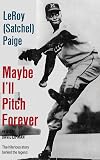
In Maybe I’ll Pitch Forever, LeRoy “Satchel” Paige’s classic baseball autobiography (as told to David Lipman), the great pitcher of the Negro Leagues (and later with a few short stints in the major leagues) tells his story in his own quirky way, in his own inimitable voice. Satch, a popular ambassador for baseball via his frequent barnstorming exhibition tours and one of the iconic characters of the game, fully displays his smooth blend of good humor, playful braggadocio, and show more occasional broad exaggerations that border on Bunyanesque tall tales. This is as close as one can get to actually sitting down with the man and listening to his life story firsthand. One of the essential baseball bios. show less
Maybe I'll pitch forever: A great baseball player tells the hilarious story behind the legend by Satchel Paige

Is it still arrogance when you really are that good? Satchel Paige was one of the greatest pitchers in the history of baseball, and he knew it. This autobiography, told to David Lipman in the early 1960s, is an extremely entertaining account of Paige's astonishingly long career in professional baseball, from barnstorming across the country to the Negro Leagues to several seasons in the majors (including Paige being
seriously considered for Rookie of the Year at the ripe old age of 42).
At show more multiple points throughout the book, Paige laments the racism that kept him out of the majors; he heard many times "If only you were white...." and he knew full well that not only was he good enough for the majors, he was good enough to be one of the best in history. He expresses private bitterness at not being the man chosen to integrate the major leagues, though as he admits his personality presumably had more to do with that than his talent, even in his 40s.
Paige was a notorious bullshitter, and it's best not to believe everything you read here; read it for the descriptions of an incredible career told entertainingly, not for a precisely detailed and 100% history. Recommended for baseball history fans. show less
seriously considered for Rookie of the Year at the ripe old age of 42).
At show more multiple points throughout the book, Paige laments the racism that kept him out of the majors; he heard many times "If only you were white...." and he knew full well that not only was he good enough for the majors, he was good enough to be one of the best in history. He expresses private bitterness at not being the man chosen to integrate the major leagues, though as he admits his personality presumably had more to do with that than his talent, even in his 40s.
Paige was a notorious bullshitter, and it's best not to believe everything you read here; read it for the descriptions of an incredible career told entertainingly, not for a precisely detailed and 100% history. Recommended for baseball history fans. show less
Maybe I'll Pitch Forever: A Great Baseball Player Tells the Hilarious Story behind the Legend by Satchel Paige
(audio nonfiction/baseball history/autobiography, ~7 hours) selling satchels as a kid (and earning his nickname), pitching in the Negro Leagues (Baltimore Black Socks and other teams) before finally being allowed into the eventually de-segregated Major League (with the 1948 Cleveland Indians), a (doomed) marriage to wife Janet Howard and marriage to second wife Lahoma (with 5 daughters and a son), using snake oil (gifted to him by Native American friends near Bismarck, North Dakota) to keep show more his pitching arm warm, a (possibly career-ending) arm injury at age 32, trying to organize a charity game for injured WWII soldiers.
TW/CW: The n-word does come up multiple times; animal cruelty (childhood practice of throwing rocks at birds).
I would've picked a different narrator (one with more charisma, who sounds like he could actually be a ballplayer from Mobile, Alabama, and preferably a Black narrator) but I am enjoying Paige's recorded oral histories so far. If you don't like baseball, you'll probably get bored, but otherwise an easy read. show less
TW/CW: The n-word does come up multiple times; animal cruelty (childhood practice of throwing rocks at birds).
I would've picked a different narrator (one with more charisma, who sounds like he could actually be a ballplayer from Mobile, Alabama, and preferably a Black narrator) but I am enjoying Paige's recorded oral histories so far. If you don't like baseball, you'll probably get bored, but otherwise an easy read. show less
Lists
You May Also Like
Associated Authors
Statistics
- Works
- 3
- Also by
- 2
- Members
- 156
- Popularity
- #134,404
- Rating
- 4.1
- Reviews
- 4
- ISBNs
- 16