

Padgett Powell
Author of The Interrogative Mood: A Novel?
About the Author
Padgett Powell has received the Prix de Rome of the American Academy of Arts & Letters, a Whiting Writer's Award, & a nomination for the National Book Award for his first novel, "Edisto." He resides in Gainesville, Florida. (Bowker Author Biography)
Works by Padgett Powell
Associated Works
For the Love of Books: 115 Celebrated Writers on the Books They Love Most (1999) — Contributor — 479 copies, 4 reviews
Significant Objects: 100 Extraordinary Stories about Ordinary Things (2012) — Contributor — 64 copies, 1 review
The Artists' and Writers' Cookbook: A Collection of Stories with Recipes (2016) — Contributor — 19 copies
Tagged
Common Knowledge
- Other names
- Powell, John Padgett, Jr. (birth name)
- Birthdate
- 1952-04-25
- Gender
- male
- Education
- College of Charleston
University of Houston - Occupations
- novelist
university professor - Organizations
- University of Florida
Fellowship of Southern Writers - Awards and honors
- Whiting Writers' Award (1986)
- Nationality
- USA
- Birthplace
- Gainesville, Florida, USA
- Associated Place (for map)
- Florida, USA
Members
Reviews
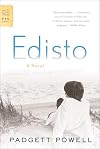
Edisto Island sits among the other sea islands along the coast of South Carolina, midway between Charleston and Savannah. Both those cities have islands nearer; Tybee for Savannah and John’s and Pawley’s for Charleston. The out-of-staters and affluent go to Myrtle Beach Hilton Head, where there are golf courses, resorts and t-shirt emporiums. This leaves Edisto for families from the Upstate to congregate for their annual beach vacations, in a place where the fancy end of Edisto Beach show more holds a modest marina, a nine-hole golf course open to the public and a scattering of condos. The rest of the town is composed of beach houses of varying sorts, from the modest and run-down variety to newer three story constructions of wide balconies and cathedral ceilings. There’s a bookstore that features both free wifi and a cat and the local Piggly-Wiggly became a Bi-Lo just last year, although the changes appear to be slight and entirely cosmetic. People buy their vegetables and key lime pies on the drive across the island to the beach, at farm stands down dirt roads or from pick-ups parked along the roadside.
Padgett Powell's novel is set in Edisto before the beach houses were built, when the island had not yet begun it’s transition from a sparsely populated African-American enclave that began as a refuge for escaped slaves, when people made modest livings fishing, farming and weaving grass baskets for the market in Charleston. Twelve-year-old Simons Manigault is being raised out there by his educated and heavy-drinking mother, going to the local school and is an expert in fitting into environments where he is clearly an outsider.
So he goes in the house and reads W.P.A. stories on the walls where the roaches have eaten away the flour but not the ink of the newspapers, and he naps, wakes, and emerges into the old, bored heat of this named but never discovered small place of the South and hears the tin roof tic, tic in that heat.
Simons is a wonderful narrator. He’s clever and observant, but also very much a boy about to enter puberty. Lots of what he sees and experiences he doesn’t fully understand, but he explains as best he can. This is not a book with a lot of action (although things do happen), but one that captures the atmosphere and feel of a world that has been gone for some time, of juke joints and old women fishing, of boxing matches and drunken faculty parties, and of a boy learning about his world and figuring his place in it.
The Father wipes the silver chalice with a beautiful linen rag large as a small tablecloth, turns the cup two inches each time to keep you from having to drink where the last worshipper lipped it, as if that takes care of the germs. But I don’t care, I always reach out very piously — that’s to say, in slow motion, the way you move for some reason to take and eat the body of Our Savior — reach out and lay my hand over the Father’s in somber reverence to the moment and then press down and suck a slug of wine that should have fed six communers. I have to, because the bread of His body is stuck to the roof of my mouth like a rubber tire patch, and if I can’t wash it loose by swishing His blood around, I’m going to have to dig it off with a finger, in slow motion, and possibly gag. show less
Padgett Powell's novel is set in Edisto before the beach houses were built, when the island had not yet begun it’s transition from a sparsely populated African-American enclave that began as a refuge for escaped slaves, when people made modest livings fishing, farming and weaving grass baskets for the market in Charleston. Twelve-year-old Simons Manigault is being raised out there by his educated and heavy-drinking mother, going to the local school and is an expert in fitting into environments where he is clearly an outsider.
So he goes in the house and reads W.P.A. stories on the walls where the roaches have eaten away the flour but not the ink of the newspapers, and he naps, wakes, and emerges into the old, bored heat of this named but never discovered small place of the South and hears the tin roof tic, tic in that heat.
Simons is a wonderful narrator. He’s clever and observant, but also very much a boy about to enter puberty. Lots of what he sees and experiences he doesn’t fully understand, but he explains as best he can. This is not a book with a lot of action (although things do happen), but one that captures the atmosphere and feel of a world that has been gone for some time, of juke joints and old women fishing, of boxing matches and drunken faculty parties, and of a boy learning about his world and figuring his place in it.
The Father wipes the silver chalice with a beautiful linen rag large as a small tablecloth, turns the cup two inches each time to keep you from having to drink where the last worshipper lipped it, as if that takes care of the germs. But I don’t care, I always reach out very piously — that’s to say, in slow motion, the way you move for some reason to take and eat the body of Our Savior — reach out and lay my hand over the Father’s in somber reverence to the moment and then press down and suck a slug of wine that should have fed six communers. I have to, because the bread of His body is stuck to the roof of my mouth like a rubber tire patch, and if I can’t wash it loose by swishing His blood around, I’m going to have to dig it off with a finger, in slow motion, and possibly gag. show less

Powell's writing in these stories is unique - I have not read anything quite like it. They are so surreal, yet too realistic to be surreal and to absurd to be realistic. For some reason, I did not care for these stories. Perhaps one needs a particular appreciation of irony or the right sort of offbeat humor. Maybe one has to have spent time in the South to appreciate the language. Whatever it is, I don't have it. I found it a struggle to read more than a few pages at a time. It seemed as if show more the stories had been written over a period of years and that the writing style matured in the later stories. Near the end there is one short story, only three or four pages long, that I found absolutely brilliant: "Wait". I'm not even going to summarize it as I think it is best to read when wholly unprepared for it. The collection is worth dipping in and out of, if only for the unique style. show less

Well, I can answer the question in the subtitle: No. This is not a novel. I'm not sure what the hell this is, other than that it's an endless series of questions. Mundane questions. Bizarre questions. Philosophical questions. Personal questions. Random questions. Repetitive questions. Thought-provoking questions. Nonsense questions. Trivia questions. Questions that give odd, incomplete little glances into the asker's mind. Question after question, on and on and on, with no obvious rhyme or show more reason to any of it.
It's a stupid idea for a book. It should be almost unreadable. And yet, it's weirdly compelling. I mean, really, really compelling. Something about it just captured my attention and dragged me along with half-formed answers tumbling over themselves in my mind in a breathless internal dialog: "Yes. No. Yes, but it was years ago. Somewhere in-between. Does that even mean anything? I dunno, I'm more of a cat person than a dog person. Why are you so interested in furniture polish? Eww, no! Hey, that's a really good question; I think you're on to something worth pondering here. You already asked me that before. Maybe. Wait-- what?"
This goes on for 164 pages. Admittedly, they're small pages. But by the end of it I felt tired, and rather like my brain had just been mugged. I'm still not sure quite what happened, but it was certainly one of the most interesting reading experiences I've ever had. show less
It's a stupid idea for a book. It should be almost unreadable. And yet, it's weirdly compelling. I mean, really, really compelling. Something about it just captured my attention and dragged me along with half-formed answers tumbling over themselves in my mind in a breathless internal dialog: "Yes. No. Yes, but it was years ago. Somewhere in-between. Does that even mean anything? I dunno, I'm more of a cat person than a dog person. Why are you so interested in furniture polish? Eww, no! Hey, that's a really good question; I think you're on to something worth pondering here. You already asked me that before. Maybe. Wait-- what?"
This goes on for 164 pages. Admittedly, they're small pages. But by the end of it I felt tired, and rather like my brain had just been mugged. I'm still not sure quite what happened, but it was certainly one of the most interesting reading experiences I've ever had. show less
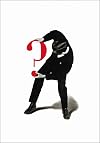
Have you ever read a book composed entirely of questions? Would you consider reading such a book? If I told you that there is indeed such a book called The Interrogative Mood : a novel? by Padgett Powell and that is contains nothing but 164 pages of questions, would that further entice you to read it? What if I quoted the opening paragraph?
“Are your emotions pure? Are your nerves adjustable? How do you stand in relation to the potato? Should it still be Constantinople? Does a nameless show more horse make you more nervous or less nervous than a named horse? In your view, do children smell good? If before you know, would you eat animal crackers? Could you lie down and take a rest on the sidewalk? Did you love your mother and father, and do Psalms do it for you? If you are relegated to last place in every category, are you bothered enough to struggle up? Does your doorbell ever ring? Is there sand in your craw? Could Mendeleyev place you correctly in a square on a chart of periodic identities, or would you resonate all over the board? How many push-ups can you do?” (p.1)
Still not convinced that this is a book worth your time? What if said that, given most good literature is mostly about an author asking questions of his or her reader, then a book full of questions for the reader to ponder is surely this uncontroversial idea taken to its logical extreme?
If I employ nothing questions to review a book that is nothing but questions, is that tribute, plagiarism or just annoying? Am I doing the author a disservice? Are you now convinced to read The Interrogative Mood? Can I quote another passage; one that I feel better shows the surprising depth of the book?
“Do you like to listen to weather broadcasts or do you just like to see, in uncoached anticipation, weather happen? Will you be saddened that you life has been minor if in fact it has been minor? Is there anything you might do today that would distinguish you from being just a vessel of consumption and pollution with a proper presence in the herd? Have you ever spent time in the house of a recently deceased old woman and seen her Siamese-cat needlepoints and her baking supplies and her shoes and her inspirational sayings on the wall? Do you realize that people move on steadily, even arguably bravely, unto the end, stunned and more stunned, and numbed and more numbed, by what has happened to them and not happened to them? Have you ever heard the saying, Life is a sandwich of activity between two periods of bed-wetting” (p. 28)
Does a book composed of questions, and nothing but questions, end up saying more about the author or the reader? Wouldn’t you like to find out? show less
“Are your emotions pure? Are your nerves adjustable? How do you stand in relation to the potato? Should it still be Constantinople? Does a nameless show more horse make you more nervous or less nervous than a named horse? In your view, do children smell good? If before you know, would you eat animal crackers? Could you lie down and take a rest on the sidewalk? Did you love your mother and father, and do Psalms do it for you? If you are relegated to last place in every category, are you bothered enough to struggle up? Does your doorbell ever ring? Is there sand in your craw? Could Mendeleyev place you correctly in a square on a chart of periodic identities, or would you resonate all over the board? How many push-ups can you do?” (p.1)
Still not convinced that this is a book worth your time? What if said that, given most good literature is mostly about an author asking questions of his or her reader, then a book full of questions for the reader to ponder is surely this uncontroversial idea taken to its logical extreme?
If I employ nothing questions to review a book that is nothing but questions, is that tribute, plagiarism or just annoying? Am I doing the author a disservice? Are you now convinced to read The Interrogative Mood? Can I quote another passage; one that I feel better shows the surprising depth of the book?
“Do you like to listen to weather broadcasts or do you just like to see, in uncoached anticipation, weather happen? Will you be saddened that you life has been minor if in fact it has been minor? Is there anything you might do today that would distinguish you from being just a vessel of consumption and pollution with a proper presence in the herd? Have you ever spent time in the house of a recently deceased old woman and seen her Siamese-cat needlepoints and her baking supplies and her shoes and her inspirational sayings on the wall? Do you realize that people move on steadily, even arguably bravely, unto the end, stunned and more stunned, and numbed and more numbed, by what has happened to them and not happened to them? Have you ever heard the saying, Life is a sandwich of activity between two periods of bed-wetting” (p. 28)
Does a book composed of questions, and nothing but questions, end up saying more about the author or the reader? Wouldn’t you like to find out? show less
Lists
Awards


You May Also Like


Associated Authors
Statistics
- Works
- 18
- Also by
- 21
- Members
- 1,576
- Popularity
- #16,374
- Rating
- 3.6
- Reviews
- 28
- ISBNs
- 86
- Languages
- 7
- Favorited
- 4