
Bruce Wagner
Author of I'm Losing You
About the Author
The author of the novels FORCE Majeure and I'M LOSING YOU and creator of televisions critically acclaimed "Wild Palms." He writes films and has directed four volumes of Carlos Casteneda's "Tensegrity" series. He wrote and directed the film adaptatiion of I'M LOSING YOU, which was released by Lion's show more Gate Films in 1999. He lives in Los Angeles. (Bowker Author Biography) show less
Image credit: photo by: jesse dylan
Works by Bruce Wagner
L. A. Stories 1 copy
Associated Works
Tagged
Common Knowledge
- Legal name
- Wagner, Bruce Allen
- Birthdate
- 1954-03-20
- Gender
- male
- Nationality
- USA
- Birthplace
- Madison, Wisconsin, USA
- Associated Place (for map)
- Wisconsin, USA
Members
Reviews
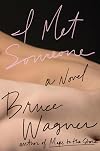
I picked up I Met Someone because it used the words “Hollywood actress” in the synopsis and that is a junk food reading trigger for me. Add “emotional thriller” and I’m there. My bad. No, actually, the author’s bad because if he had held true to the core of the plot as a contemporary drama about a Hollywood lesbian power couple and owned the bling, extravagance, and superficiality of that lifestyle the novel might have worked. Adding in ancillary plots about a teenage hacker who show more works for Anonymous, is estranged from his father, whose mother is a stand-in for the actress, some twists involving the healthcare system, being forced to give a child up for adoption and well, it goes on from there.
Even then, the novel could have been outrageous, campy fun or satire. Instead what is essentially a Jackie Collins plot is wrapped in Faulknerian prose. I Met Someone is bedazzled with five words when only one was needed leaving the book to sink under its own weight. show less
Even then, the novel could have been outrageous, campy fun or satire. Instead what is essentially a Jackie Collins plot is wrapped in Faulknerian prose. I Met Someone is bedazzled with five words when only one was needed leaving the book to sink under its own weight. show less
I'm warning you right now - there are some recent Game of Thrones spoilers ahead.
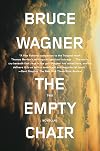
I know - that's not what you came here for. I'm sorry for that. The fact is, when I sat down to write this review, I had no plans of bringing up Game of Thrones. I was simply trying to work out how best to explain Bruce Wagner's compellingly difficult work. Suddenly it came to me - this week's episode "The Door" is the perfect companion piece to this book's backbone. So if Game of Thrones is not your thing, or show more it is but you still haven't watched this week's episode - sorry - you can skip this review if that's going to spoil something for you. Come on back later. For everyone else, let's dive in.
The paperback edition of The Empty Chair was published right around the time I was recuperating from my second of three operations on my leg in late 2014. I'd asked the folks at Plume to forward the book to my address in Florida thinking it would give me something new to read while I recovered. Unfortunately the painkillers (and the pain itself) made reading difficult. I wasn't able to dive into a book without distraction for some time after that and, as a result, this book sat on my shelves for another year and a half. Given the subject matter, I'd say that's probably for the best.
Wagner's novellas are both told as stream of conscience narratives - stories from one man and one woman to a third character "Bruce Wagner" who has absorbed, redacted, found their connecting thread, and married them beneath this binding.
Charley's story is put forward first and titled "The First Guru." Charley (a gay man) and his wife (it's...complicated) experience a tragedy, seemingly due to their casual but direct approach to religion. Queenie's story follows, titled "The Second Guru." Queenie recounts for Bruce this history of her late lover, and his quest to find a renowned teacher in India. These stories are completely disparate - "told" several years apart, and "occurring" at even further a distance from one another - but their "leitmotif of 'diet Buddhism,'" as Wagner calls it in his preface, remains a baseline throughout the book.
There is one piece of both stories which, in the end, brings everything into focus so beautifully and violently, that I actually had to take a step back and go back a few pages to make sure I completely understood what was happening. This is not to say that Wagner is unclear in his narrative, but that he has tied the laces at last so subversively that I was caught off guard by it.
Without spoiling too much of the book (and we're getting to Game of Thrones, I promise), Wagner maintains a focus on the concept of two gurus - two teachers. The abridged principle is this: when one finds one's first teacher, one is then truly lost in a sea of information until the second teacher arrives to make sense of the first. (That's a bit of a hack job on one of the basic principles of Eastern religion, but I'm no expert - sorry again.)
Here's the Game of Thrones portion of our programming, wherein I use the recent episode as a parallel for Wagner's musings, and hopefully this will help you understand the concept as I did:
Hodor is an adult man of a single word - "Hodor." We are introduced to him and given no real explanation as to why this is, or whether he ever had another name, or what could have caused this. Hodor's character, as we know him, is the first guru.
Wyllis' character is the second guru. His story was first, before he became Hodor, but it fills in the gap in Hodor's story for the viewer, finally making this aspect of the tale clearer. It reveals the origin and destiny of that word - "Hodor." It also probably made you cry. It made me cry.
Queenie's story, although it takes place earlier (as Wyllis' does), shines a startling and unexpected light on Charley's story from several years earlier and thousands of miles away (and made me cry). And that final puzzle piece is slipped in right at the last, like you expected to never get any clarification and then, just there at the end, you suddenly have it.
There's a lot pretense in this book, almost like William Goldman in The Princess Bride (but a LOT less whimsical). Wagner has expertly separated out these two narrators who hold some similar beliefs, and has made their voices wonderfully individual. Charley's tale is short, sad, and haunting. Queenie's is somewhat longer, more indulgent, and dynamic. As separate stories, they border on tedious. But together they are intricate and bold. Don't let the title fool you - separate novellas they may be, but they are together for a reason; together they are powerfully potent.
www.theliterarygothamite.com show less
I know - that's not what you came here for. I'm sorry for that. The fact is, when I sat down to write this review, I had no plans of bringing up Game of Thrones. I was simply trying to work out how best to explain Bruce Wagner's compellingly difficult work. Suddenly it came to me - this week's episode "The Door" is the perfect companion piece to this book's backbone. So if Game of Thrones is not your thing, or show more it is but you still haven't watched this week's episode - sorry - you can skip this review if that's going to spoil something for you. Come on back later. For everyone else, let's dive in.
The paperback edition of The Empty Chair was published right around the time I was recuperating from my second of three operations on my leg in late 2014. I'd asked the folks at Plume to forward the book to my address in Florida thinking it would give me something new to read while I recovered. Unfortunately the painkillers (and the pain itself) made reading difficult. I wasn't able to dive into a book without distraction for some time after that and, as a result, this book sat on my shelves for another year and a half. Given the subject matter, I'd say that's probably for the best.
Wagner's novellas are both told as stream of conscience narratives - stories from one man and one woman to a third character "Bruce Wagner" who has absorbed, redacted, found their connecting thread, and married them beneath this binding.
Charley's story is put forward first and titled "The First Guru." Charley (a gay man) and his wife (it's...complicated) experience a tragedy, seemingly due to their casual but direct approach to religion. Queenie's story follows, titled "The Second Guru." Queenie recounts for Bruce this history of her late lover, and his quest to find a renowned teacher in India. These stories are completely disparate - "told" several years apart, and "occurring" at even further a distance from one another - but their "leitmotif of 'diet Buddhism,'" as Wagner calls it in his preface, remains a baseline throughout the book.
There is one piece of both stories which, in the end, brings everything into focus so beautifully and violently, that I actually had to take a step back and go back a few pages to make sure I completely understood what was happening. This is not to say that Wagner is unclear in his narrative, but that he has tied the laces at last so subversively that I was caught off guard by it.
Without spoiling too much of the book (and we're getting to Game of Thrones, I promise), Wagner maintains a focus on the concept of two gurus - two teachers. The abridged principle is this: when one finds one's first teacher, one is then truly lost in a sea of information until the second teacher arrives to make sense of the first. (That's a bit of a hack job on one of the basic principles of Eastern religion, but I'm no expert - sorry again.)
Here's the Game of Thrones portion of our programming, wherein I use the recent episode as a parallel for Wagner's musings, and hopefully this will help you understand the concept as I did:
Hodor is an adult man of a single word - "Hodor." We are introduced to him and given no real explanation as to why this is, or whether he ever had another name, or what could have caused this. Hodor's character, as we know him, is the first guru.
Wyllis' character is the second guru. His story was first, before he became Hodor, but it fills in the gap in Hodor's story for the viewer, finally making this aspect of the tale clearer. It reveals the origin and destiny of that word - "Hodor." It also probably made you cry. It made me cry.
Queenie's story, although it takes place earlier (as Wyllis' does), shines a startling and unexpected light on Charley's story from several years earlier and thousands of miles away (and made me cry). And that final puzzle piece is slipped in right at the last, like you expected to never get any clarification and then, just there at the end, you suddenly have it.
There's a lot pretense in this book, almost like William Goldman in The Princess Bride (but a LOT less whimsical). Wagner has expertly separated out these two narrators who hold some similar beliefs, and has made their voices wonderfully individual. Charley's tale is short, sad, and haunting. Queenie's is somewhat longer, more indulgent, and dynamic. As separate stories, they border on tedious. But together they are intricate and bold. Don't let the title fool you - separate novellas they may be, but they are together for a reason; together they are powerfully potent.
www.theliterarygothamite.com show less
What is it about Charles Dickens that holds such sway over today’s fiction writers? There’s something about the Great Bearded One that makes many a writer go ga-ga with plot, character and metaphor.
Shout the word “DickensianâÂ? in a crowded shopping mall (especially around Yuletide) and youâÂÂll have hundreds of people conjuring images of cherub-cheeked uncles, fortunes lost, fortunes gained, wizened misers, lovelorn old maids, grime-cheeked orphans and whip-wielding show more schoolmasters.
Say âÂÂDickensianâÂ? at a literary soiree and youâÂÂll get two out of three authors thinking, âÂÂHey, heâÂÂs talking about me.âÂ?
Among them, Bruce Wagner.
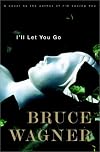
Unlike some modern novelists who distance themselves from Chuck D. by saying the resemblance is purely coincidental, Wagner (Force Majeur, IâÂÂm Losing You) goes full-out with Pickwickian gusto in IâÂÂll Let You Go, a 549-page saga chockfull of characters that would make Mr. D. proud as Pumblechook. Wagner not only wears Dickens on his sleeve, he had a portrait of the author taped to the wall above his desk as he was writing this novel.
âÂÂYears ago, I bought one of his letters and had it hanging on the wall while I wrote,âÂ? he said in a recent interview. âÂÂIt was framed along with an etching of him gazing out. When I finally finished the book, I thanked Mr. Dickens, then promptly sold it. His stare became too intimidating!âÂ?
Daunting or not, the Ghost of Victorian Writers Past clots every sentence of IâÂÂll Let You Go. The plot and its cast of characters is bigâÂÂmake that, BigâÂÂand busy. At its center is twelve-year-old Toulouse âÂÂTullâÂ? Trotter who lives on his grandfatherâÂÂs Bel-Air estate with his mother, Katrina, a topiary designer strung-out on drugs and despair. Like Great Expectationsâ Miss Havisham, Katrina was abandoned on her wedding night shortly after Tull was conceived (or so the young lad has been led to believe). Tull has spent much of his life pondering his long-lost father (who, according to Katrina, was killed in a snowmobile accident).
His paternal search is about to reach closure, thanks to the huge cast of characters Wagner throws into this stew of a bookâÂÂall of them crashing into each other, bumping and spinning off into a dizzying series of coincidence and that old standby, deus ex machina. He even includes a cast list of âÂÂprincipal charactersâÂ? prior to the bookâÂÂs first, jet-propelled paragraph. For starters, there are TullâÂÂs close friends, his cousins Lucy and Edward. Lucy, in typical L.A. ambition, is determined to be a published author before she hits puberty (current project: The Mystery of the Blue Maze); Edward, suffering from the disfiguring ApertâÂÂs disease, is a tragic figure a la young Paul Dombey (apropos of nothing, but yet everything, his name, Edward Aurelius Trotter, spells EAT).
Also vying for ink-space in IâÂÂll Let You Go: patriarch Louis Aherne Trotter, who collects anything associated with the name Louis (like Louis XIV furniture) and who is obsessed with designing his gravesite; his Alzheimer-afflicted wife Bluey who is equally obsessed with clipping obituaries from the daily newspaper; KatrinaâÂÂs brother Dodd, the eighteenth-richest man in the world; his wife Joyce, currently obsessed with rescuing unwanted babies from dumpsters; Amaryllis Kornfeld, the most Dickensian of orphans, who is shuttled between foster homes and eventually intersects TullâÂÂs life; and, last but certainly not least, an eccentric vagrant named Topsy, aka William Morris, the Victorian poet (Topsy believes he is the long-dead author of News From Nowhere, though in point of fact, he is a former employee of the William Morris talent agency whose brain was long ago scrambled). There are many other characters large and small (Diane Keaton makes a cameo and screenwriter Ron Bass is the butt of a long-running joke), and canine (TullâÂÂs beloved Great Dane Pullman who might just be the wisest character of them all).
The novel plays out in front of a sprawling Hollywood backdrop. The ghost of Nathanael West haunts the corridors of the Trotter mansion as much as Dickens. Wagner, himself a filmmaker, knows his Rodeo Drive and his Mulholland Drive like they were mapped on the back of his hand. Better yet, he knows the characters who live thereâÂÂthe real, the fake, the semi-sincereâÂÂand he paints them large on his canvas. Referring to the Trotters, Amaryllis muses, âÂÂThis family worked in God-like scale!âÂ? The same could be said for the author.
IâÂÂll Let You Go is big, archaic and ambitious. Metafiction? Hell, this is megafiction, filled with the kind of writing that wrestles readers into submission. Witness, if you dare, this one paragraph from TopsyâÂÂs sojourn in Santa Monica:
He spent hours atop a MacyâÂÂs bath towel, burning his skin at the shore. The waves lapped relentlessly as is their wont; sunbathers lazed and sortied in pointillist ballet; dusk ushered in the nebulae. He imagined himself illustrated, a hero on a dead world that was tentatively beginning to flower againâÂÂsaw himself standing tall under empyrean tempera of cloud-scudded sky, replete with William MorrisâÂÂs beloved Arthurian garb, a gleaming, high-crested morion stuffed onto thickened head, with smoky visor and bentail, fat thighs squeezed into cuisses, wearing epaulieres of rubies plucked from SaturnâÂÂs rings, sword and escutcheon raised against bottomless heavens filled with vessels of improbable size disgorging a-hundred-thousand-score armies of desperate, adventuresome men: celestial warriors! WillâÂÂm lay on the sand with his recumbent DNA and bore miniscule, magisterial witness to the wonder-book of yawping cosmological eye.
There are plenty of tongue-lapping delights to be had here (âÂÂempyrean temperaâÂ?!), and for the most part Wagner is up to the task of delivering something on the order of David Copperfield Will Never Eat Lunch In This Town Again. The tongue-tangling styleâÂÂthick and brooding black on the pageâÂÂis nicely juxtaposed with the shallow, surface-skimming world of Hollywood. The author has as much satiric fun skewering the cell-phone set as Robert Altman did in his movie The Player.
Trouble is, Wagner doesnâÂÂt know when to bring the fun to a close. The book is too long by even the most generous of Dickensian standards (at least ole Charlie D. knew how to bring all the players back on stage for one final bow before we started checking our watches). Wagner reaches for much; but in so doing, grabs hold of less than heâÂÂd hoped. IâÂÂll Let You Go loses much of its steam in the third act. What should have been a coda or an epilogueâÂÂor one of those noisy chapters crowded with coincidence, mistaken-identities-revealed, and happy fortune of which Dickens was so fondâÂÂdrags out into a hundred-page chore of denouement. The baleful gaze of the Bearded One hanging over his desk should have been warning enough for him to more quickly wrap up what is otherwise a near-masterpiece.
Draggy finish aside, IâÂÂll Let You Go is well worth the readerâÂÂs time and patience. From here, one can only have great expectations for Bruce WagnerâÂÂs career. show less
Shout the word “DickensianâÂ? in a crowded shopping mall (especially around Yuletide) and youâÂÂll have hundreds of people conjuring images of cherub-cheeked uncles, fortunes lost, fortunes gained, wizened misers, lovelorn old maids, grime-cheeked orphans and whip-wielding show more schoolmasters.
Say âÂÂDickensianâÂ? at a literary soiree and youâÂÂll get two out of three authors thinking, âÂÂHey, heâÂÂs talking about me.âÂ?
Among them, Bruce Wagner.
Unlike some modern novelists who distance themselves from Chuck D. by saying the resemblance is purely coincidental, Wagner (Force Majeur, IâÂÂm Losing You) goes full-out with Pickwickian gusto in IâÂÂll Let You Go, a 549-page saga chockfull of characters that would make Mr. D. proud as Pumblechook. Wagner not only wears Dickens on his sleeve, he had a portrait of the author taped to the wall above his desk as he was writing this novel.
âÂÂYears ago, I bought one of his letters and had it hanging on the wall while I wrote,âÂ? he said in a recent interview. âÂÂIt was framed along with an etching of him gazing out. When I finally finished the book, I thanked Mr. Dickens, then promptly sold it. His stare became too intimidating!âÂ?
Daunting or not, the Ghost of Victorian Writers Past clots every sentence of IâÂÂll Let You Go. The plot and its cast of characters is bigâÂÂmake that, BigâÂÂand busy. At its center is twelve-year-old Toulouse âÂÂTullâÂ? Trotter who lives on his grandfatherâÂÂs Bel-Air estate with his mother, Katrina, a topiary designer strung-out on drugs and despair. Like Great Expectationsâ Miss Havisham, Katrina was abandoned on her wedding night shortly after Tull was conceived (or so the young lad has been led to believe). Tull has spent much of his life pondering his long-lost father (who, according to Katrina, was killed in a snowmobile accident).
His paternal search is about to reach closure, thanks to the huge cast of characters Wagner throws into this stew of a bookâÂÂall of them crashing into each other, bumping and spinning off into a dizzying series of coincidence and that old standby, deus ex machina. He even includes a cast list of âÂÂprincipal charactersâÂ? prior to the bookâÂÂs first, jet-propelled paragraph. For starters, there are TullâÂÂs close friends, his cousins Lucy and Edward. Lucy, in typical L.A. ambition, is determined to be a published author before she hits puberty (current project: The Mystery of the Blue Maze); Edward, suffering from the disfiguring ApertâÂÂs disease, is a tragic figure a la young Paul Dombey (apropos of nothing, but yet everything, his name, Edward Aurelius Trotter, spells EAT).
Also vying for ink-space in IâÂÂll Let You Go: patriarch Louis Aherne Trotter, who collects anything associated with the name Louis (like Louis XIV furniture) and who is obsessed with designing his gravesite; his Alzheimer-afflicted wife Bluey who is equally obsessed with clipping obituaries from the daily newspaper; KatrinaâÂÂs brother Dodd, the eighteenth-richest man in the world; his wife Joyce, currently obsessed with rescuing unwanted babies from dumpsters; Amaryllis Kornfeld, the most Dickensian of orphans, who is shuttled between foster homes and eventually intersects TullâÂÂs life; and, last but certainly not least, an eccentric vagrant named Topsy, aka William Morris, the Victorian poet (Topsy believes he is the long-dead author of News From Nowhere, though in point of fact, he is a former employee of the William Morris talent agency whose brain was long ago scrambled). There are many other characters large and small (Diane Keaton makes a cameo and screenwriter Ron Bass is the butt of a long-running joke), and canine (TullâÂÂs beloved Great Dane Pullman who might just be the wisest character of them all).
The novel plays out in front of a sprawling Hollywood backdrop. The ghost of Nathanael West haunts the corridors of the Trotter mansion as much as Dickens. Wagner, himself a filmmaker, knows his Rodeo Drive and his Mulholland Drive like they were mapped on the back of his hand. Better yet, he knows the characters who live thereâÂÂthe real, the fake, the semi-sincereâÂÂand he paints them large on his canvas. Referring to the Trotters, Amaryllis muses, âÂÂThis family worked in God-like scale!âÂ? The same could be said for the author.
IâÂÂll Let You Go is big, archaic and ambitious. Metafiction? Hell, this is megafiction, filled with the kind of writing that wrestles readers into submission. Witness, if you dare, this one paragraph from TopsyâÂÂs sojourn in Santa Monica:
He spent hours atop a MacyâÂÂs bath towel, burning his skin at the shore. The waves lapped relentlessly as is their wont; sunbathers lazed and sortied in pointillist ballet; dusk ushered in the nebulae. He imagined himself illustrated, a hero on a dead world that was tentatively beginning to flower againâÂÂsaw himself standing tall under empyrean tempera of cloud-scudded sky, replete with William MorrisâÂÂs beloved Arthurian garb, a gleaming, high-crested morion stuffed onto thickened head, with smoky visor and bentail, fat thighs squeezed into cuisses, wearing epaulieres of rubies plucked from SaturnâÂÂs rings, sword and escutcheon raised against bottomless heavens filled with vessels of improbable size disgorging a-hundred-thousand-score armies of desperate, adventuresome men: celestial warriors! WillâÂÂm lay on the sand with his recumbent DNA and bore miniscule, magisterial witness to the wonder-book of yawping cosmological eye.
There are plenty of tongue-lapping delights to be had here (âÂÂempyrean temperaâÂ?!), and for the most part Wagner is up to the task of delivering something on the order of David Copperfield Will Never Eat Lunch In This Town Again. The tongue-tangling styleâÂÂthick and brooding black on the pageâÂÂis nicely juxtaposed with the shallow, surface-skimming world of Hollywood. The author has as much satiric fun skewering the cell-phone set as Robert Altman did in his movie The Player.
Trouble is, Wagner doesnâÂÂt know when to bring the fun to a close. The book is too long by even the most generous of Dickensian standards (at least ole Charlie D. knew how to bring all the players back on stage for one final bow before we started checking our watches). Wagner reaches for much; but in so doing, grabs hold of less than heâÂÂd hoped. IâÂÂll Let You Go loses much of its steam in the third act. What should have been a coda or an epilogueâÂÂor one of those noisy chapters crowded with coincidence, mistaken-identities-revealed, and happy fortune of which Dickens was so fondâÂÂdrags out into a hundred-page chore of denouement. The baleful gaze of the Bearded One hanging over his desk should have been warning enough for him to more quickly wrap up what is otherwise a near-masterpiece.
Draggy finish aside, IâÂÂll Let You Go is well worth the readerâÂÂs time and patience. From here, one can only have great expectations for Bruce WagnerâÂÂs career. show less
I DID NOT FINISH THIS BOOK!!!!
My second confession is I don't care if books, movies, TV shows are offensive if they are interesting or funny. I Love Californication on Showtime, which is offensive, and funny, and actually has a story line.
I confess I have never read any books by this author before, but if they wander as aimlessly as this one did, I doubt I will.
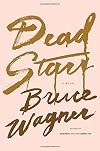
Dead Stars premise was promising. A cutting attack on our porn, fame and celebrity obsessed culture. The problem for me is that the show more book just wandered all over the place. At times it was very funny, but it just took forever to get to any kind of point. I mean 120 pages in and I couldn't care less about the fate or likely downfall of any of the main characters, I couldn't even remember what their soon to be claim to fame was, is, or would be.
This may have been a great book if I had bothered to finish it- at least based on others who have read and reviewed it- I just could. I stopped caring about the story. show less
My second confession is I don't care if books, movies, TV shows are offensive if they are interesting or funny. I Love Californication on Showtime, which is offensive, and funny, and actually has a story line.
I confess I have never read any books by this author before, but if they wander as aimlessly as this one did, I doubt I will.
Dead Stars premise was promising. A cutting attack on our porn, fame and celebrity obsessed culture. The problem for me is that the show more book just wandered all over the place. At times it was very funny, but it just took forever to get to any kind of point. I mean 120 pages in and I couldn't care less about the fate or likely downfall of any of the main characters, I couldn't even remember what their soon to be claim to fame was, is, or would be.
This may have been a great book if I had bothered to finish it- at least based on others who have read and reviewed it- I just could. I stopped caring about the story. show less
Lists
Awards


You May Also Like


Associated Authors
Statistics
- Works
- 21
- Also by
- 1
- Members
- 882
- Popularity
- #29,045
- Rating
- 3.3
- Reviews
- 19
- ISBNs
- 72
- Languages
- 4
- Favorited
- 1