
Valerie Worth (1933–1994)
Author of All the Small Poems and Fourteen More
About the Author
Works by Valerie Worth
Associated Works
Cricket Magazine, Vol. 5, No. 10, June 1978 — Contributor — 3 copies
Cricket Magazine, Vol. 8, No. 2, October 1980 — Contributor — 2 copies
Cricket Magazine, Vol. 2, No. 12, August 1975 — Contributor — 2 copies
Gnostica: a Practical Guide to the Magick Within You, Vol. 5 #2, Whole Number 38 (1976) — Contributor — 2 copies
Gnostica News, Volumes 1 & 2 — Contributor — 1 copy
Tagged
Common Knowledge
- Legal name
- Bahlke, Valerie Worth
- Birthdate
- 1933-10-29
- Date of death
- 1994-07-31
- Gender
- female
- Education
- Swarthmore College (1955)
- Occupations
- poet
children's book author - Awards and honors
- NCTE Award for Excellence in Poetry for Children (1991)
- Short biography
- Valerie Worth was a prolific writer whose work included numerous books of children's poetry and fiction for both young people and adults. In 1991, the National Council of Teachers of English honored her with their Poetry Award for Excellence in Poetry for Children. Her Poems are vivid observations of the quiet rumblings of everyday objects. In all her writing, the careful attention to rhythm and sound and her striking images and metaphors make for engaging reading.
Valerie Worth was born in Philadelphia, and as a child she lived in Pennsylvania, Florida and India. She attended Swarthmore College and graduated in 1955. Afterwards, she settled in Clinton, New York, and continued he Writing. She had many other interests, including astronomy, gardening and meditation. Valerie Worth died in 1994. She is survived by her husband, George Bahlke, and three children. - Nationality
- USA
- Birthplace
- Philadelphia, Pennsylvania, USA
- Places of residence
- Swarthmore, Pennsylvania, USA
Tampa, Florida, USA
Bangalore, India - Place of death
- Clinton, New York, USA
- Associated Place (for map)
- USA
Members
Reviews

Mom read this book to me when I was in my early years of school, and honestly, I wasn’t super impressed back then. I have always enjoyed poetry; the rhythm and rhyme and beautiful perspectives on the world around me have always been favorites of mine. This book, while having excellent poetry, didn’t favor rhythm OR rhyme, so it didn’t appeal to me as a youngster.
Recently, though, I’ve gotten into the habit of reading poetry to my sisters as our bedtime wind-down routine, and after show more going through quite a few of the poetry books on our shelves, I decided to try this one again—and I was surprised! Freeverse poetry is a work of art in its own right, and over the years since I was a youngster, I’ve learned to appreciate it for what it is—and I ended up loving this collection after all.
These poems are small—just 2-3 verses generally—and all are about very ordinary things, but viewed from a perspective of love and gratitude. Comparison and contrast reign in some poems; others are gentle reflections of sunbeams upon a floor or the hush of wind through the tops of daisies. Some brought laughter (the poem about a dog with fleas, from the fleas’ perspective, was especially memorable!), some brought a contented sigh. All were picturesque—beautiful, a moment of peace at the end of a busy day.
I ended up thoroughly enjoying being able to read this book, and I think my sisters enjoyed it, too. While it may not have the same kind of appeal as A Child’s Garden of Verses or When We Were Very Young, this collection of poetry deserves its place on the shelf as well. I’m sure this won’t be the last time I pick up this book, now that I’ve discovered what a treasure it is! show less
Recently, though, I’ve gotten into the habit of reading poetry to my sisters as our bedtime wind-down routine, and after show more going through quite a few of the poetry books on our shelves, I decided to try this one again—and I was surprised! Freeverse poetry is a work of art in its own right, and over the years since I was a youngster, I’ve learned to appreciate it for what it is—and I ended up loving this collection after all.
These poems are small—just 2-3 verses generally—and all are about very ordinary things, but viewed from a perspective of love and gratitude. Comparison and contrast reign in some poems; others are gentle reflections of sunbeams upon a floor or the hush of wind through the tops of daisies. Some brought laughter (the poem about a dog with fleas, from the fleas’ perspective, was especially memorable!), some brought a contented sigh. All were picturesque—beautiful, a moment of peace at the end of a busy day.
I ended up thoroughly enjoying being able to read this book, and I think my sisters enjoyed it, too. While it may not have the same kind of appeal as A Child’s Garden of Verses or When We Were Very Young, this collection of poetry deserves its place on the shelf as well. I’m sure this won’t be the last time I pick up this book, now that I’ve discovered what a treasure it is! show less
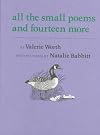
Worth's Words
In our guest rooms we have books. In fact, in most of the rooms of our house we have books. In the main guest room, we have some attractive books: Heritage Club editions, Folio Society books, boxed Collectors’ Reprints. We have fiction, biography, humor, mysteries, art, some Modern Library classics — mostly thin books or small books, books that might be read in a two- or three-day guest stay. But in a prominent place on the top shelf, we have a little collection of poetry show more for children. Not because we expect to have children in the room (that’s across the hall, with a bookcase crammed with children’s stories), but because these poems for children are a joy for adults, too. Especially adults who may have forgotten the pleasure of poetic insights.
The book is all the small poems and fourteen more by Valerie Worth (Farrar, Straus and Giroux, 1994). It’s called that because most of the poems in it first appeared in four earlier books: small poems, more small poems, still more small poems, and small poems again. The book is illustrated by Natalie Babbitt, the distinguished writer of children’s books, such as Search for Delicious and Tuck Everlasting. That should tell you something right there, for Babbit would not illustrate a book of poems for children unless they were very special.
And very special they are. Traditionally, poetry for children goes ta-dum, ta-dum, ta-dum rhyme, ta-dum, ta-dum, ta-dum rhyme, ta-ra-dum one more time. It rhymes all the time and it has a beat that bounces in every line. But ever since Walt Whitman, USAmericans have known that the best poetry doesn’t always do that; in fact, these days it doesn’t usually do that.
It flows,
or it flips and flops,
or it holds on for a long time,
then stops.
Like that.
And the subject of traditional children’s poems is too often
something pretty,
something sweet,
something cute
or charming and neat.
Well, not with Valerie Worth. She writes small poems. No doubt about that. That’s about the only thing about them that’s predictable. Her subjects are charming, too, but just a half-twist off traditional sweet, neat paths, more like what children actually see, or would like to see; like porches, zinnias, raw carrots, earthworms, rags, garbage, coat hangers, asparagus, an amoeba, telephone poles, and a skunk — stuff like that. And instead of rhyming and bouncing, the language fits the form and the form fits the subject: “lawnmower” goes back and forth, “pie” is rich and fat, “pig” gets fatter as time goes on, “chairs” has a straight back, arms, and feet, and “flamingo” is all legs. This is the way the poems are shaped to the eye, but its also the way they sound to the ear.
Make no mistake: the poet makes music with the sounds of language, with length of lines, with the breath of the reader, with variations of rhythm, not unlike the improvisations of a mime or a jazz clarinetist. The best way to convey the music of Worth’s words is to look closely at one small poem:
safety pin
Closed, it sleeps
On its side
Quietly,
The silver
Image
Of some
Small fish;
Opened, it snaps
Its tail out
Like a thin
Shrimp, and looks
At the sharp
Point with a
Surprised eye.
To see a safety pin look like a shrimp, all you have to do is listen to Worth’s poem, or see Babbitt’s illustration. And the music is so subtle that it may not register with your mind — not at first, maybe not at all — but your ear hears. Most of the lines have but three syllables (though you don’t really think about that when you’re reading or hearing it), but somehow the second part, about the opened safety pin, is just a little less thin.
But just look at what all you’ve been listening to: all those sleepy s’s and zzz-sounds: “cloZed, it SleepS / on itS Side / . . . / the Silver / image / of Some Small fiSh; // opened, it SnapS / itS tail out / like a thin / Shrimp, and lookS / at the Sharp / point with a / SurpriZed eye.” Thirty-four words in fourteen sharp lines with sixteen S-Z sounds. Not that anybody’s counting, but your ear hears, and this doesn’t happen just by accident. The poet’s ear guides the poet’s tongue. This is called consonance: the repetition of similar consonant sounds.
Along the way, especially in lines that deserve emphasis, there’s assonance too, repeated vowel sounds, not-quite rhymes but nearly: “its side / Quietly,” “thin shrimp,” “surprised eye.” Occasionally, it springs a half-rhyme on you: “Opened, it snaps / Its tail out.” Your ear likes to hear “snaps” almost rhyme with”out,” but not quite. And then there is noticeable parallelism, as in the opening lines of each stanza: “Closed, it sleeps”; “Opened, it snaps”; and the not-so-noticeable parallelism of the last lines: “Small fish”; “Surprised eye.”
One can certainly push this kind of analysis too far. Maybe I just did. And, whatever else you do, don’t EVER expect children to examine poems in this way. NEVER. I do it here just to illustrate how a poet, even one who avoids rhyme, plays with the sound of words and uses various kinds of repetitions to please the ear. Now go back and read “safety pin” again, without consciously paying attention to all these devices. Just let your ear hear. Never thought a safety pin could sing, did you?
Just listen to the first four lines of “caterpillar”:
The feet of the
Caterpillar
Do not patter
As he passes
But the lines do patter, don’t they? And the words, pounce at you.
However, the caterpillar’s feet really “ripple,” she insists. Listen to the last four lines, as those feet travel
Down the brown
Twig, to a
Greener, midsummer
Dinner.
The lines don’t patter now, do they? They don’t slither or slide. What they do is “ripple,” right?
Worth also is fastidious with her use of figurative language, usually stingy with similes and metaphors, but letting them lift you to another level when she chooses; for example, the safety pin like a shrimp with its “surprised eye,” that surprises us.
Or notice this one, with its consonance and assonance and one far-flung rhyme, leaping onto one simile at the end.
tractor
The tractor rests
In the shed,
Dead or asleep,
But with high
Hind wheels
Held so still
We know
It is only waiting,
Ready to leap —
Like a heavy
Brown
Grasshopper.
One sentence, just thirty-one words, but rich with its music and a delight to the inner eye.
Guests who pick up this little book read a few poems casually — simple little poems on everyday subjects. They find them delightful. They’re not sure why.
Worth makes certain of that. That they do. And that they aren’t.
This book was a gift from our daughter. Her inscription tells us how to read the poems and shows us one way to use them:
May you live your life's book
Like you read a small rhyme
Let linger your look
And take your time. show less
In our guest rooms we have books. In fact, in most of the rooms of our house we have books. In the main guest room, we have some attractive books: Heritage Club editions, Folio Society books, boxed Collectors’ Reprints. We have fiction, biography, humor, mysteries, art, some Modern Library classics — mostly thin books or small books, books that might be read in a two- or three-day guest stay. But in a prominent place on the top shelf, we have a little collection of poetry show more for children. Not because we expect to have children in the room (that’s across the hall, with a bookcase crammed with children’s stories), but because these poems for children are a joy for adults, too. Especially adults who may have forgotten the pleasure of poetic insights.
The book is all the small poems and fourteen more by Valerie Worth (Farrar, Straus and Giroux, 1994). It’s called that because most of the poems in it first appeared in four earlier books: small poems, more small poems, still more small poems, and small poems again. The book is illustrated by Natalie Babbitt, the distinguished writer of children’s books, such as Search for Delicious and Tuck Everlasting. That should tell you something right there, for Babbit would not illustrate a book of poems for children unless they were very special.
And very special they are. Traditionally, poetry for children goes ta-dum, ta-dum, ta-dum rhyme, ta-dum, ta-dum, ta-dum rhyme, ta-ra-dum one more time. It rhymes all the time and it has a beat that bounces in every line. But ever since Walt Whitman, USAmericans have known that the best poetry doesn’t always do that; in fact, these days it doesn’t usually do that.
It flows,
or it flips and flops,
or it holds on for a long time,
then stops.
Like that.
And the subject of traditional children’s poems is too often
something pretty,
something sweet,
something cute
or charming and neat.
Well, not with Valerie Worth. She writes small poems. No doubt about that. That’s about the only thing about them that’s predictable. Her subjects are charming, too, but just a half-twist off traditional sweet, neat paths, more like what children actually see, or would like to see; like porches, zinnias, raw carrots, earthworms, rags, garbage, coat hangers, asparagus, an amoeba, telephone poles, and a skunk — stuff like that. And instead of rhyming and bouncing, the language fits the form and the form fits the subject: “lawnmower” goes back and forth, “pie” is rich and fat, “pig” gets fatter as time goes on, “chairs” has a straight back, arms, and feet, and “flamingo” is all legs. This is the way the poems are shaped to the eye, but its also the way they sound to the ear.
Make no mistake: the poet makes music with the sounds of language, with length of lines, with the breath of the reader, with variations of rhythm, not unlike the improvisations of a mime or a jazz clarinetist. The best way to convey the music of Worth’s words is to look closely at one small poem:
safety pin
Closed, it sleeps
On its side
Quietly,
The silver
Image
Of some
Small fish;
Opened, it snaps
Its tail out
Like a thin
Shrimp, and looks
At the sharp
Point with a
Surprised eye.
To see a safety pin look like a shrimp, all you have to do is listen to Worth’s poem, or see Babbitt’s illustration. And the music is so subtle that it may not register with your mind — not at first, maybe not at all — but your ear hears. Most of the lines have but three syllables (though you don’t really think about that when you’re reading or hearing it), but somehow the second part, about the opened safety pin, is just a little less thin.
But just look at what all you’ve been listening to: all those sleepy s’s and zzz-sounds: “cloZed, it SleepS / on itS Side / . . . / the Silver / image / of Some Small fiSh; // opened, it SnapS / itS tail out / like a thin / Shrimp, and lookS / at the Sharp / point with a / SurpriZed eye.” Thirty-four words in fourteen sharp lines with sixteen S-Z sounds. Not that anybody’s counting, but your ear hears, and this doesn’t happen just by accident. The poet’s ear guides the poet’s tongue. This is called consonance: the repetition of similar consonant sounds.
Along the way, especially in lines that deserve emphasis, there’s assonance too, repeated vowel sounds, not-quite rhymes but nearly: “its side / Quietly,” “thin shrimp,” “surprised eye.” Occasionally, it springs a half-rhyme on you: “Opened, it snaps / Its tail out.” Your ear likes to hear “snaps” almost rhyme with”out,” but not quite. And then there is noticeable parallelism, as in the opening lines of each stanza: “Closed, it sleeps”; “Opened, it snaps”; and the not-so-noticeable parallelism of the last lines: “Small fish”; “Surprised eye.”
One can certainly push this kind of analysis too far. Maybe I just did. And, whatever else you do, don’t EVER expect children to examine poems in this way. NEVER. I do it here just to illustrate how a poet, even one who avoids rhyme, plays with the sound of words and uses various kinds of repetitions to please the ear. Now go back and read “safety pin” again, without consciously paying attention to all these devices. Just let your ear hear. Never thought a safety pin could sing, did you?
Just listen to the first four lines of “caterpillar”:
The feet of the
Caterpillar
Do not patter
As he passes
But the lines do patter, don’t they? And the words, pounce at you.
However, the caterpillar’s feet really “ripple,” she insists. Listen to the last four lines, as those feet travel
Down the brown
Twig, to a
Greener, midsummer
Dinner.
The lines don’t patter now, do they? They don’t slither or slide. What they do is “ripple,” right?
Worth also is fastidious with her use of figurative language, usually stingy with similes and metaphors, but letting them lift you to another level when she chooses; for example, the safety pin like a shrimp with its “surprised eye,” that surprises us.
Or notice this one, with its consonance and assonance and one far-flung rhyme, leaping onto one simile at the end.
tractor
The tractor rests
In the shed,
Dead or asleep,
But with high
Hind wheels
Held so still
We know
It is only waiting,
Ready to leap —
Like a heavy
Brown
Grasshopper.
One sentence, just thirty-one words, but rich with its music and a delight to the inner eye.
Guests who pick up this little book read a few poems casually — simple little poems on everyday subjects. They find them delightful. They’re not sure why.
Worth makes certain of that. That they do. And that they aren’t.
This book was a gift from our daughter. Her inscription tells us how to read the poems and shows us one way to use them:
May you live your life's book
Like you read a small rhyme
Let linger your look
And take your time. show less
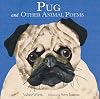
I really liked this book. I thought the poems and illustrations were really appropriate. There's a poem about a fox that's always hiding, so the illustration only shows the hind legs of a fox. You can also sense a personal connection between the author and all the animals she writes about. She probably owns a pug, there is a rat in the trash can, which can be a common problem, etc. I also like that she wrote poems about some animals that aren't popular with children, like possums.
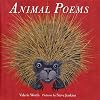
Twenty-three poems, each about an animal – some common, others not so often written about – comprise this rather thought-provoking collection. Written in free verse, the poems are eloquent and vivid. Steve Jenkins' illustrations, made from a mixture of torn and precisely cut textured papers, depict each creature as elegantly as Worty's words. I imagine having children close their eyes and listen to the poems while imagining what the animals look like. In “Wren,” the imagery is so show more vibrant that it almost doesn't require an illustration. Recommended Grade 3 – 8. Younger children will enjoy the illustrations and hearing the poems, whereas older tweens/teens will appreciate the depth and creativity of Worty's poems. show less
Lists
Sonlight Books (1)
Awards


You May Also Like


Associated Authors
Statistics
- Works
- 19
- Also by
- 17
- Members
- 1,864
- Popularity
- #13,806
- Rating
- 3.8
- Reviews
- 95
- ISBNs
- 30
- Languages
- 1
- Favorited
- 1