

Joseph E. Persico (1930–2014)
Author of My American Journey: An Autobiography
About the Author
Was a contributing writer for Colin Powell's My American Journey. He also wrote Piercing the Reich, which is about the penetration of Nazi Germany by American Agents, and Nuremburg, which was made into a major television docudrama. (Publisher Provided) Joseph E. Persico was born in Gloversville, show more New York on July 19, 1930. He graduated from the New York State College for Teachers in 1952 and entered the Navy, serving aboard a minesweeper during the Korean War. Before becoming a speechwriter for Nelson A. Rockefeller, he worked for the United States Information Agency in Rio de Janeiro, Buenos Aires, and Washington. He stopped working for Rockefeller in 1977. During his lifetime, he wrote 12 books including The Imperial Rockefeller, Roosevelt's Secret War: FDR and World War II Espionage, and Franklin and Lucy: President Roosevelt, Mrs. Rutherfurd, and the Other Remarkable Women in His Life. He co-wrote My American Journey: An Autobiography with Colin L. Powell. Nuremberg: Infamy on Trial was adapted into an Emmy-winning TNT mini-series in 2000. He died after a long illness on August 30, 2014 at the age of 84. (Bowker Author Biography) show less
Image credit: Joseph E. Persico Papers. M.E. Grenander Department of Special Collections & Archives, University at Albany Libraries, State University of New York
Works by Joseph E. Persico
Eleventh Month, Eleventh Day, Eleventh Hour: Armistice Day, 1918, World War I and Its Violent Climax (2004) 400 copies, 7 reviews
Franklin and Lucy : President Roosevelt, Mrs. Rutherfurd, and the other remarkable women in his life (2008) 307 copies, 69 reviews
Roosevelt's Centurions: FDR and the Commanders He Led to Victory in World War II (2013) 178 copies, 6 reviews
Associated Works
MHQ: The Quarterly Journal of Military History — Autumn 1990 (1990) — Author "Casey's German Gamble" — 12 copies
MHQ: The Quarterly Journal of Military History — Summer 2008 (2008) — Author "FDR Sees the Elephant" — 12 copies
MHQ: The Quarterly Journal of Military History — Summer 1994 (1994) — Author "The Guilt of Alfred Jodl" — 11 copies
Reader's Digest World's Greatest Biographies: George Washington | Mary Queen of Scots | Colin Powell (2001) 6 copies
MHQ: The Quarterly Journal of Military History — Spring 2012 (2012) — Author "Did FDR Doom Us to a Longer War?" — 1 copy
Tagged
Common Knowledge
- Canonical name
- Persico, Joseph E.
- Legal name
- Persico, Joseph Edward
- Birthdate
- 1930-07-19
- Date of death
- 2014-08-30
- Gender
- male
- Education
- State University of New York, Albany (New York State College for Teachers ∙ BA ∙ English and Political Science ∙ 1952)
- Occupations
- military officer (United States Navy)
speechwriter (Nelson Rockefeller)
author
historian
biographer - Organizations
- United States Navy
United States Information Agency - Nationality
- USA
- Birthplace
- Gloversville, New York, USA
- Places of residence
- Guilderland, New York, USA
- Place of death
- Albany, New York, USA
- Map Location
- USA
Members
Reviews
Franklin and Lucy : President Roosevelt, Mrs. Rutherford, and the other remarkable women in his life by Joseph E. Persico

Joe Persico deftly takes on a delicate subject -- the status of Franklin Roosevelt's marriage to Eleanor. Relations between these two well-loved figures were notoriously strained, though this was not common knowledge during their lifetimes. Following an affair between FDR and Lucy Mercer in the 1910s, the marriage became more of a platonic partnership. After that, Franklin surrounded himself with the companionship of several significant women. Whether these relationships were sexual is show more unknown, but the relationships were certainly a major part of his life. Persico does an excellent job of explaining how these close friendships both shaped and revealed his character. This book provides a great look at Roosevelt, the man, beyond Roosevelt the President. show less
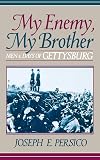
Although the author specifies that the fictional elements "make up less than ten percent of the whole book" they are a very distracting ten percent. If I wanted a fictional account to make me feel like a witness to the battle of Gettysburg, I would just re-read [b:The Killer Angels|682804|The Killer Angels|Michael Shaara|http://photo.goodreads.com/books/1177117936s/682804.jpg|1044737]. Since the author's "novelistic connective tissue" is so very speculative and intrusive, this book fails show more both as a historical record and as a novelistic interpretation. I certainly will not seek out more books by this author. show less
Eleventh Month, Eleventh Day, Eleventh Hour: Armistice Day, 1918 World War I and Its Violent Climax by Joseph Persico
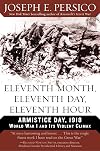
I vividly remember reading [b:The Donkeys by Alan Clarke] (the title comes from the phrase, "lions led by donkeys") many years ago that described the total incompetence of the British Expeditionary Force generals in WW I. They were completely unable to adapt to new technologies and insisted on fighting with tactics of previous wars. Joseph Persico doesn't let them off lightly either although that's not his primary mission. The Eleventh Month, Eleventh Day... refers to the time and date of show more the eventual Armistice. He jumps back and forth between the Armistice and the deeds that lead up to it (a process I found somewhat disconcerting at first.)
General Douglas Haig, a master at manipulating his social contacts, eventually rose to the top (slimy oil usually does) even though he failed the entrance exams to the British Staff College, usually a prerequisite for command. He also had no regard for the machine gun ("unremarkable weapon") that was to revolutionize the battlefield and kill virtually an entire male generation. (In one battle it cost the deaths of 9 men per yard gained -- and in most cases that same piece of ground was traded back within a few days.) Apparently, there is a new book out that attempts to resurrect Haig’s reputation, but I have not read it.
Lest anyone doubt the power of the cast system, Stephen Budiansky in [b:Battle of Wits: The Complete Story of Codebreaking in World War II|171202|Battle of Wits The Complete Story of Codebreaking in World War II|Stephen Budiansky|http://photo.goodreads.com/books/1172386125s/171202.jpg|165319] remarks on Robert Graves entrance into the Royal Welsh Fusiliers whose members were expected to have a private income in order to "play polo and hunt and keep up the social reputation of that regiment." For those odd cases in which the rules were waived (as in Graves' situation) they were always referred to as "warts." and were informed "that they could not expect to receive a medal for any feats on the battlefield." The donkeys were a major part of the caste system.
Persico uses the last minutes of the war (multiple examples of the ending of [b:All Quiet on the Western Front|355697|All Quiet on the Western Front|Erich Maria Remarque|http://photo.goodreads.com/books/1285704153s/355697.jpg|2662852] - great book) as a springboard to reflect on events leading up to the last minutes of the war. Ironically, often the decision when to quit fighting was left up to individual unit commanders, and even though they knew the armistice had been signed and exactly when it was to take effect, some decided to continue fighting until the absolute last minute.
Some nifty quotes. Douglas MacArthur was an infantry officer known for his bravado and reluctance to stay in proper uniform. When asked why he adopted this behavior, he replied, “It’s the orders you disobey that make you famous.” I wonder if Harry Truman was aware of that proclivity.
Several reviewers have complained the book wasn’t kind enough to the generals nor supportive enough of the war, in general. Tough shit. Some 6500 allied soldiers died in the six hours between signing the armistice and 11:00 when it was to take effect. That’s appalling. Other reviewers complain it’s too elementary or not comprehensive, etc. Nonsense.
After reading WW I books, one is often left with a huge question mark: just what did the millions of deaths accomplish other than to set the stage for Hitler and the next big one? It was cousins fighting each other (King George, Tsar Nicholas, and Kaiser Wilhelm were all grandchildren of Queen Victoria) over diplomatic slights and tensions that had been brewing for the previous four decades leading to misperceptions and a continuing battle between those who wanted to whip up a nationalist frenzy and imperialists. One can only have wished the family might have slugged it out in the backyard somewhere rather than by killing off almost an entire generation of men.
Persico has done a marvelous job of integrating individual stories with their context in the larger scheme of things. It’s very readable and And the peace barely lasted a generation before falling apart. show less
General Douglas Haig, a master at manipulating his social contacts, eventually rose to the top (slimy oil usually does) even though he failed the entrance exams to the British Staff College, usually a prerequisite for command. He also had no regard for the machine gun ("unremarkable weapon") that was to revolutionize the battlefield and kill virtually an entire male generation. (In one battle it cost the deaths of 9 men per yard gained -- and in most cases that same piece of ground was traded back within a few days.) Apparently, there is a new book out that attempts to resurrect Haig’s reputation, but I have not read it.
Lest anyone doubt the power of the cast system, Stephen Budiansky in [b:Battle of Wits: The Complete Story of Codebreaking in World War II|171202|Battle of Wits The Complete Story of Codebreaking in World War II|Stephen Budiansky|http://photo.goodreads.com/books/1172386125s/171202.jpg|165319] remarks on Robert Graves entrance into the Royal Welsh Fusiliers whose members were expected to have a private income in order to "play polo and hunt and keep up the social reputation of that regiment." For those odd cases in which the rules were waived (as in Graves' situation) they were always referred to as "warts." and were informed "that they could not expect to receive a medal for any feats on the battlefield." The donkeys were a major part of the caste system.
Persico uses the last minutes of the war (multiple examples of the ending of [b:All Quiet on the Western Front|355697|All Quiet on the Western Front|Erich Maria Remarque|http://photo.goodreads.com/books/1285704153s/355697.jpg|2662852] - great book) as a springboard to reflect on events leading up to the last minutes of the war. Ironically, often the decision when to quit fighting was left up to individual unit commanders, and even though they knew the armistice had been signed and exactly when it was to take effect, some decided to continue fighting until the absolute last minute.
Some nifty quotes. Douglas MacArthur was an infantry officer known for his bravado and reluctance to stay in proper uniform. When asked why he adopted this behavior, he replied, “It’s the orders you disobey that make you famous.” I wonder if Harry Truman was aware of that proclivity.
Several reviewers have complained the book wasn’t kind enough to the generals nor supportive enough of the war, in general. Tough shit. Some 6500 allied soldiers died in the six hours between signing the armistice and 11:00 when it was to take effect. That’s appalling. Other reviewers complain it’s too elementary or not comprehensive, etc. Nonsense.
After reading WW I books, one is often left with a huge question mark: just what did the millions of deaths accomplish other than to set the stage for Hitler and the next big one? It was cousins fighting each other (King George, Tsar Nicholas, and Kaiser Wilhelm were all grandchildren of Queen Victoria) over diplomatic slights and tensions that had been brewing for the previous four decades leading to misperceptions and a continuing battle between those who wanted to whip up a nationalist frenzy and imperialists. One can only have wished the family might have slugged it out in the backyard somewhere rather than by killing off almost an entire generation of men.
Persico has done a marvelous job of integrating individual stories with their context in the larger scheme of things. It’s very readable and And the peace barely lasted a generation before falling apart. show less
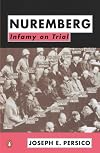
This book was a natural one to read after I had read a number of books on the Holocaust. I don't consider this to be a very well-crafted book, but I hadn't read much about the Nuremberg trials before, so I did learn a lot from reading it. Some things that stuck in my mind:
(a) The defendants come across as a rather pathetic bunch. I guess this isn't a very original observation, since the phrase "the banality of evil" was coined at the trial of a Nazi war criminal.
(b) The ground rules set at show more Nuremberg made tu quoque--"so did you"--an inadmissible defense. In the context of a specific trial, I think this makes good sense, but as an overall approach to the acts performed by the various sides in World War II it strikes me as the worst sort of hypocritical victors' justice.
(c) In Persico's words, it took some of the defendants an "unconscionable amount of time" to die on the gallows: German Foreign Minister Joachim von Ribbentrop took 17 minutes; Colonel General Alfred Jodl took 18 minutes; Field Marshal Wilhelm Keitel took 28 minutes. I'm glad that Goring was able to commit suicide; the fewer people we put through this sort of torture the better. show less
(a) The defendants come across as a rather pathetic bunch. I guess this isn't a very original observation, since the phrase "the banality of evil" was coined at the trial of a Nazi war criminal.
(b) The ground rules set at show more Nuremberg made tu quoque--"so did you"--an inadmissible defense. In the context of a specific trial, I think this makes good sense, but as an overall approach to the acts performed by the various sides in World War II it strikes me as the worst sort of hypocritical victors' justice.
(c) In Persico's words, it took some of the defendants an "unconscionable amount of time" to die on the gallows: German Foreign Minister Joachim von Ribbentrop took 17 minutes; Colonel General Alfred Jodl took 18 minutes; Field Marshal Wilhelm Keitel took 28 minutes. I'm glad that Goring was able to commit suicide; the fewer people we put through this sort of torture the better. show less
Lists
Awards


You May Also Like


Associated Authors
Statistics
- Works
- 15
- Also by
- 7
- Members
- 4,665
- Popularity
- #5,404
- Rating
- 3.9
- Reviews
- 119
- ISBNs
- 83
- Languages
- 5
