
Steven C. Harper
Author of Saints, Vol. 1: The Standard of Truth, 1815–1846
About the Author
Works by Steven C. Harper
Saints, Vol. 1: The Standard of Truth, 1815–1846 (2018) — Writer; General Editor — 419 copies, 8 reviews
Making Sense of the Doctrine & Covenants: A Guided Tour Through Modern Revelations (2008) 43 copies, 1 review
Prelude to the Restoration: From Apostasy to the Restored Church: The 33rd Annual Sidney B. Sperry Symposium (2004) — Editor; Contributor — 24 copies
The Joseph Smith Papers Documents, Volume 5, October 1835 - January 1838 (2017) — Editor — 22 copies, 1 review
Joseph Smith and His First Vision: Context, Place, and Meaning, 2020 Church History Symposium (2021) — Editor — 8 copies
Promised Land: Penn's Holy Experiment, the Walking Purchase, And the Dispossession of Delawares, 1600-1763 (2006) 7 copies, 1 review
Yet to be Revealed: Open Questions in Latter-day Saint Theology (BYU Studies Quarterly, Vol. 60, No. 3, 2021) (2021) — Editor — 3 copies
BYU Studies Vol. 61 No. 3, 2022 2 copies
Journal of Mormon History - Vol. 38, No. 3, Summer 2012 (2012) — Guest editor; Introduction — 2 copies
BYU Studies 1 copy
Associated Works
The Joseph Smith Papers: Revelations and Translations, Volume 1: Manuscript Revelation Books (2011) — Editor — 115 copies, 1 review
Revelations in Context: The Stories Behind the Sections of the Doctrine and Covenants (2016) — Contributor — 99 copies, 3 reviews
Opening the Heavens: Accounts of Divine Manifestations, 1820-1844 (Documents in Latter-Day Saint History) (2005) — Contributor — 41 copies
Joseph: Leading Church Scholars Explore the Life and Ministry of the Prophet (2005) — Contributor — 32 copies
Friends and Enemies in Penn's Woods: Indians, Colonists, and the Racial Construction of Pennsylvania (2004) — Contributor — 32 copies
A Reason for Faith: Navigating LDS Doctrine and Church History (2016) — Contributor — 29 copies, 2 reviews
You Shall Have My Word: Exploring the Text of the Doctrine and Covenants: The 41st Annual Sidney B. Sperry Symposium (2012) — Contributor — 28 copies
The Ministry of Peter, the Chief Apostle, The 43rd Annual Brigham Young University Sidney B. Sperry Symposium (2014) — Contributor — 21 copies
The Doctrine and Covenants, Revelations in Context: The 37th Annual Brigham Young University Sidney B. Sperry Symposium (2008) — Contributor — 20 copies
Oliver Cowdery: Scribe, Elder, Witness: Essays from BYU Studies and Farms (2006) — Contributor — 13 copies
Regional Studies in Latter-Day Saint Church History: Ohio and Upper Canada (2006) — Contributor — 6 copies
By What Authority?: The Vital Questions of Religious Authority in Christianity (2010) — Contributor — 5 copies
Tagged
Common Knowledge
- Legal name
- Harper, Steven Craig
- Birthdate
- 1970
- Gender
- male
- Education
- Lehigh University (PhD|History)
- Occupations
- professor of church history and doctrine
historian
writer - Organizations
- The Church of Jesus Christ of Latter-day Saints
Brigham Young University
BYU Jerusalem Center for Near Eastern Studies
Joseph Smith Papers Project (volume editor)
BYU Studies (journal editor)
LDS Church History Department - Places of residence
- Utah, USA
- Associated Place (for map)
- Utah, USA
Members
Reviews

4.5 Stars
I must admit I was underwhelmed at the beginning. The pacing was done well ("started with a bang" as someone somewhere said) but the language was simple. Definitely not the type of historical style that is or has been popular lately and, I must admit, I was unprepared for that. The writers aimed for simplicity and clarity. I still wish it had been the beautiful prose I love (hence the -.5 stars) BUT, and I'm not sure when this redirection happened, upon personal reassessment at 3 show more chapters in I loved it. *
In spite of the language, I found the story to be full of the drama that is human life. Not the triangle type, but the living, dying, trying to provide a living, trying to do the best and failing and then trying again type. I found people that were indisputably good and still indisputably human and bending under the day-to-day cares and troubles that I know so well.
Most history books previously had focused on Joseph Smith with a dose of Emma thrown in. But here! There were women, scores of women, whose voices told their own story. There were women who traveled the world, women who were single, women who were old, from every type of life imaginable. I wish I had been able to read this when I was single because I would have felt in good company. There were people from all over the world (listed by name!) who challenged my inadvertently preconceived notions about early congregations and communities of that time period.
They shied away from telling the popular stories, if they weren't necessary (Goodbye Father Tanner), and went for the stories you didn't hear all the time (whatever happened to Edward Partridge anyway?).
I got lost in the footnotes, just like I did in [a:Gerald N. Lund's|207452|Gerald N. Lund|https://images.gr-assets.com/authors/1458916871p2/207452.jpg] similar series, only these were better because it was their handwriting and contained so much more details about life then than the part that corresponded to that event. I learned things at times and at other times-- for example Parley's escape from prison and Orson Hyde's and Orson Pratt's returning to Nauvoo-- I thought "There's a little bit more to the story according to Susan Easton Black, but that's the general gist."
Couple of notes regarding some complaints:
Some reviewers pointed out that certain facts were not "dealt with." So, therefore, I was absolutely blindsided when they were addressed. Not with suppositions, but with the available primary sources which, as Dr. Underwood always stressed in my history class, are the only sources one should ever use. The text is quite bluntly honest when it doesn't have such sources. For more questions/answers look here.
* Minor question: Where was Lorenzo Snow? His story would have added some texture to several points of history, I'm sure. Also, here's wishing Anson had showed up at least once. show less
I must admit I was underwhelmed at the beginning. The pacing was done well ("started with a bang" as someone somewhere said) but the language was simple. Definitely not the type of historical style that is or has been popular lately and, I must admit, I was unprepared for that. The writers aimed for simplicity and clarity. I still wish it had been the beautiful prose I love (hence the -.5 stars) BUT, and I'm not sure when this redirection happened, upon personal reassessment at 3 show more chapters in I loved it. *
In spite of the language, I found the story to be full of the drama that is human life. Not the triangle type, but the living, dying, trying to provide a living, trying to do the best and failing and then trying again type. I found people that were indisputably good and still indisputably human and bending under the day-to-day cares and troubles that I know so well.
Most history books previously had focused on Joseph Smith with a dose of Emma thrown in. But here! There were women, scores of women, whose voices told their own story. There were women who traveled the world, women who were single, women who were old, from every type of life imaginable. I wish I had been able to read this when I was single because I would have felt in good company. There were people from all over the world (listed by name!) who challenged my inadvertently preconceived notions about early congregations and communities of that time period.
They shied away from telling the popular stories, if they weren't necessary (Goodbye Father Tanner), and went for the stories you didn't hear all the time (whatever happened to Edward Partridge anyway?).
I got lost in the footnotes, just like I did in [a:Gerald N. Lund's|207452|Gerald N. Lund|https://images.gr-assets.com/authors/1458916871p2/207452.jpg] similar series, only these were better because it was their handwriting and contained so much more details about life then than the part that corresponded to that event. I learned things at times and at other times-- for example Parley's escape from prison and Orson Hyde's and Orson Pratt's returning to Nauvoo-- I thought "There's a little bit more to the story according to Susan Easton Black, but that's the general gist."
Couple of notes regarding some complaints:
Some reviewers pointed out that certain facts were not "dealt with." So, therefore, I was absolutely blindsided when they were addressed. Not with suppositions, but with the available primary sources which, as Dr. Underwood always stressed in my history class, are the only sources one should ever use. The text is quite bluntly honest when it doesn't have such sources. For more questions/answers look here.
* Minor question: Where was Lorenzo Snow? His story would have added some texture to several points of history, I'm sure. Also, here's wishing Anson had showed up at least once. show less
Promised Land: Penn's Holy Experiment, the Walking Purchase, And the Dispossession of Delawares, 1600-1763 by Steven C. Harper

An excellent account of the systematic dispossession of the Leni Lenape (Delaware Indians). Craig delves into the relationships between native groups, questions the conclusions of previous historians who clung to the Penn family paper trail, and thereby makes a strong case for the Walking Purchase as a major factor in the development of hostilities among the dispossessed Lenape who retreated first to the Wyoming valley of PA and then the Ohio region (current day Pittsburgh and its show more environs).
Promised Land got me excited about returning to the subject of my Masters degree work, culture contact in colonial America. I am wondering now how the conflict between New Englanders from Connecticut and the province of Pennsylvania contributed to the death of Teedyuscung, the Lenape chief who brought formal complaint to Pennsylvania and Sir William Johnson.
Great stuff. I cannot recommend it enough. show less
Promised Land got me excited about returning to the subject of my Masters degree work, culture contact in colonial America. I am wondering now how the conflict between New Englanders from Connecticut and the province of Pennsylvania contributed to the death of Teedyuscung, the Lenape chief who brought formal complaint to Pennsylvania and Sir William Johnson.
Great stuff. I cannot recommend it enough. show less
One of the tactics that critics have used recently to try to destroy faith is to describe a lesser known event in church history in a way that is intended to shock the reader. By sensationalizing and removing it from its context, and often even misrepresenting what actually happened, the victim is left feeling betrayed by the Church, thinking they have been lied to or that the Church has been hiding or whitewashing its history. Sadly, much of this history has been available (though perhaps show more not readily accessible), but not emphasized in the curriculum that is taught, requiring independent study, which has not been happening as much in recent generations.
The Church has recognized this problem and is producing a solution. The first volume of a projected four-volume series has now been published in 14 languages and is available in paperback and e-book, as well as online text and audiobook formats. It is written in an easy to understand style, which although entirely factual, draws you in like a novel. This was done intentionally by having literary writers on the project, not just historians. For those who want more information, there are extensive footnotes that point you to online resources, including both in-depth essays and videos, as well as original documents from the Joseph Smith Papers.
The book begins with a message from the First Presidency and a preface explaining the purpose of the series. The body of the book continues, contained in four parts, which are broken up by historic periods. There are also maps, but no other illustrations beyond the small ornaments at the head of each chapter. The back of the book has Notes, a Note on Sources, Sources Cited, Acknowledgements, and a fairly good 15-page Index.
The first volume covers the period preceding the First Vision up to two years after the death of Joseph Smith, when the Saints were able to receive the endowment in the Nauvoo Temple. It covers nearly every criticism and puts them in their proper context, where they can be more easily understood. It concentrates on telling stories of the actual men and women involved, rather than just the institutional church, as previous official histories produced by the Church have done. The result is a detailed history of the Church that includes the sensitive issues while building faith, which already has some critics worried that their work will become irrelevant.
An example is the story of how the Word of Wisdom was received:
Some of the other topics addressed include the multiple accounts of the First Vision, the use of seer stones for finding buried treasure as well as translating the Book of Mormon, tensions in Missouri, the Kirtland Safety Society, plural marriage (beginning with Fanny Alger and including polyandry), Freemasonry, the Nauvoo Expositor, and Joseph’s possession and use of a gun in Carthage Jail.
I only have a couple minor criticisms of the book. The style is actually a little too simple for my tastes (it reminds me of a bit of the “For Beginning Readers” graphic novel-style books that the Church came out with when I was a kid). But this is unavoidable because they want these books to be read and understood by every member of the Church, no matter their education level, including Primary kids. And I did eventually get used to it. The associated essays that are linked to in the footnotes are more academic. And the placement of the footnotes is my other criticism—I really prefer them to be at the bottom of the page, rather than all together as a set of notes at the back of the book (of course, the online version has very nice clickable links all over).
I really like what has been done with this book. The Church has really done about all they can to make its history accessible for anyone that will put in the effort to read it, or even just to listen to it. They have made it affordable for every LDS home to have a copy. They are also making a great effort to ensure that everyone is aware of it, such as publishing it serially in the Ensign, creating a podcast discussing it, and even holding a “Face to Face” event for Young Adults. And they have truly accomplished their goal of making it an informative, captivating, and faith-building read. show less
The Church has recognized this problem and is producing a solution. The first volume of a projected four-volume series has now been published in 14 languages and is available in paperback and e-book, as well as online text and audiobook formats. It is written in an easy to understand style, which although entirely factual, draws you in like a novel. This was done intentionally by having literary writers on the project, not just historians. For those who want more information, there are extensive footnotes that point you to online resources, including both in-depth essays and videos, as well as original documents from the Joseph Smith Papers.
The book begins with a message from the First Presidency and a preface explaining the purpose of the series. The body of the book continues, contained in four parts, which are broken up by historic periods. There are also maps, but no other illustrations beyond the small ornaments at the head of each chapter. The back of the book has Notes, a Note on Sources, Sources Cited, Acknowledgements, and a fairly good 15-page Index.
The first volume covers the period preceding the First Vision up to two years after the death of Joseph Smith, when the Saints were able to receive the endowment in the Nauvoo Temple. It covers nearly every criticism and puts them in their proper context, where they can be more easily understood. It concentrates on telling stories of the actual men and women involved, rather than just the institutional church, as previous official histories produced by the Church have done. The result is a detailed history of the Church that includes the sensitive issues while building faith, which already has some critics worried that their work will become irrelevant.
An example is the story of how the Word of Wisdom was received:
While the School of the Prophets was in session, Emma watched the students arrive and make their way up the stairs to the small, tightly packed room where they met. Some men came to the school freshly washed and neatly dressed out of respect for the sacred nature of the school. Some also skipped breakfast so they could come to the meeting fasting.
After class got out and the men left for the day, Emma and some young women hired to help would clean the schoolroom. Since the men smoked pipes and chewed tobacco during the lessons, the room was hazy and the floorboards were covered in tobacco spit when they left. Emma would scrub with all her might, but tobacco stains remained on the floor.
She complained to Joseph about the mess. Joseph did not normally use tobacco, but he did not mind if the other men did. Emma’s complaints, however, caused him to question if tobacco use was right in God’s eyes.
Emma was not alone in her concerns. Reformers in the United States and other countries throughout the world thought smoking and chewing tobacco, as well as drinking alcohol, were filthy habits. But some doctors believed tobacco could cure a host of ailments. Similar claims were made about drinking alcohol and hot drinks like coffee and tea, which people drank liberally.
When Joseph took the matter to the Lord, he received a revelation—a “word of wisdom for the benefit of the Saints in these last days.” In it, the Lord cautioned His people against consuming alcohol, declaring that distilled liquor was for washing their bodies while wine was for occasions like the sacrament. He also warned them against tobacco and hot drinks.
The Lord emphasized a healthy diet, encouraging the Saints to eat grains, herbs, and fruits and to consume meat sparingly. He promised blessings of health, knowledge, and strength to those who chose to obey.
The revelation had been declared not as a commandment but as a caution. Many people would find it hard to give up using these powerful substances, and Joseph did not insist on strict conformity. He continued to drink alcohol occasionally, and he and Emma sometimes drank coffee and tea.
Still, after Joseph read the words to the School of the Prophets, the men in the room tossed their pipes and plugs of chewing tobacco into the fire to show their willingness to obey the Lord’s counsel. (Pages 167-168.)
Some of the other topics addressed include the multiple accounts of the First Vision, the use of seer stones for finding buried treasure as well as translating the Book of Mormon, tensions in Missouri, the Kirtland Safety Society, plural marriage (beginning with Fanny Alger and including polyandry), Freemasonry, the Nauvoo Expositor, and Joseph’s possession and use of a gun in Carthage Jail.
I only have a couple minor criticisms of the book. The style is actually a little too simple for my tastes (it reminds me of a bit of the “For Beginning Readers” graphic novel-style books that the Church came out with when I was a kid). But this is unavoidable because they want these books to be read and understood by every member of the Church, no matter their education level, including Primary kids. And I did eventually get used to it. The associated essays that are linked to in the footnotes are more academic. And the placement of the footnotes is my other criticism—I really prefer them to be at the bottom of the page, rather than all together as a set of notes at the back of the book (of course, the online version has very nice clickable links all over).
I really like what has been done with this book. The Church has really done about all they can to make its history accessible for anyone that will put in the effort to read it, or even just to listen to it. They have made it affordable for every LDS home to have a copy. They are also making a great effort to ensure that everyone is aware of it, such as publishing it serially in the Ensign, creating a podcast discussing it, and even holding a “Face to Face” event for Young Adults. And they have truly accomplished their goal of making it an informative, captivating, and faith-building read. show less
Saints: The Story of the Church of Jesus Christ in the Latter Days: Volume 1: The Standard of Truth: 1815–1846 by The Church of Jesus Christ of Latter-day Saints
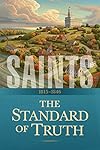
This is a really fascinating book and I now see why it caused a lot of Mormons to start questioning LDS church history.
Lists
Awards

You May Also Like
Associated Authors
Statistics
- Works
- 47
- Also by
- 33
- Members
- 697
- Popularity
- #36,316
- Rating
- 4.4
- Reviews
- 11
- ISBNs
- 25