
Zeina Abirached
Author of A Game for Swallows: To Die, To Leave, To Return
About the Author
Image credit: photo by Morgan Dresse
Works by Zeina Abirached
Associated Works
Tagged
Common Knowledge
- Other names
- أبي راشد، زينة،
- Birthdate
- 1981
- Gender
- female
- Education
- Lebanese Academy of Fine Arts
Ecole Nationale Supérieure des Arts Décoratifs, Paris - Nationality
- Lebanon
France (naturalization) - Birthplace
- Beirut, Lebanon
- Places of residence
- Paris, France
- Associated Place (for map)
- Beirut, Lebanon
Members
Reviews
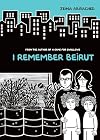
One of the challenges in American education is teaching the threats of war and its impact on daily living, especially for middle schoolers. Like ZLATA'S DIARY in past decades, which brought the Yugoslavian war into child-friendly focus with a narrator whose war memories included watching MURPHY BROWN, I REMEMBER BEIRUT takes a few moments on the daily American nightly news and replaces it with a human lens. The thick black lines of the art is reminiscent (as is the plot) of Persepolis, but show more the memory-based approach of I REMEMBER BEIRUT is unique. As with Natalie Goldberg's classic writing prompt, new ideas are provoked by the words, "I remember ..." The memories range from a bullet-ridden family car to a platter of cigarettes to the pleasures of unwrapping each of a Kit Kat bar's three wrappers. While these ideas might be difficult for middle-grade learners to read about and contextualize on their own, it is a welcome addition to the literary canon for use in the classroom. Cheers to Lerner for publishing this brave, difficult, and compelling piece. Highly recommended. Review based on digital galley received from publisher via NetGalley.com. (71) show less
I Remember Beirut by Zeina Abirached is a graphic novel style memoir about growing up in Beirut during the fighting between Muslims and Christians. Though her block wasn't in the contested area, it was close enough to make life difficult and sometimes dangerous.
Rather than focusing on the danger and destruction, Abirached hones in on the mundanity of childhood. She talks about hair cuts, and paper folding, and favorite songs. The scenes of her curly hair vs the overly conservative barber are show more hilarious.
The fighting is there too, of course. It comes in the form of memories of the ever moving bus stop, the trips to the coast to avoid the worst of the fighting, the repeatedly broken windshield on the car, and her brother's interest in collecting shrapnel.
Recommended for readers who enjoy the works of Marjane Satrapi (Persepolis, Chicken with Plums, etc.). show less
Rather than focusing on the danger and destruction, Abirached hones in on the mundanity of childhood. She talks about hair cuts, and paper folding, and favorite songs. The scenes of her curly hair vs the overly conservative barber are show more hilarious.
The fighting is there too, of course. It comes in the form of memories of the ever moving bus stop, the trips to the coast to avoid the worst of the fighting, the repeatedly broken windshield on the car, and her brother's interest in collecting shrapnel.
Recommended for readers who enjoy the works of Marjane Satrapi (Persepolis, Chicken with Plums, etc.). show less
A Game for Swallows: To Die, to Leave, to Return (Single Titles) (Graphic Universe) by Zeina Abirached
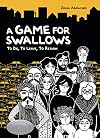
The black & white artwork in this autobiographical graphic novel is impressive, particularly at the opening where the author uses stark contrast & abstraction to create the wartime Lebanon of her childhood. Zeina & her brother live with their parents in an apartment overlooking the demarcation line btw East Beirut (Christian) & West Beirut (Muslim). Powerful images underscore the matter-of-fact tone as Zeina describes her parents route to visit her grandmother: "Crossing the handful of show more streets between us meant following complicated and perilous choreography." (p. 17). It is this potent contrast between the child's voice & the dire circumstances she describes that absolves some of the choppiness of the narrative. While the children await their parents' return, they retreat to their foyer, the safest place in the building during bombing while neighbors trickle in with food, stories & solace.
So, even as the parents return & all resume life amid civil war, the reader is left with the dual taste of the kindness of others & the banality of war. Given current circumstances in Syria & other countries similarly fraught, this title might provide a glimpse of circumstances for those not yet ready to read Satrapi's outstanding "Persepolis." show less
So, even as the parents return & all resume life amid civil war, the reader is left with the dual taste of the kindness of others & the banality of war. Given current circumstances in Syria & other countries similarly fraught, this title might provide a glimpse of circumstances for those not yet ready to read Satrapi's outstanding "Persepolis." show less
A Game for Swallows: To Die, to Leave, to Return (Single Titles) (Graphic Universe) by Zeina Abirached
The black & white artwork in this autobiographical graphic novel is impressive, particularly at the opening where the author uses stark contrast & abstraction to create the wartime Lebanon of her childhood. Zeina & her brother live with their parents in an apartment overlooking the demarcation line btw East Beirut (Christian) & West Beirut (Muslim). Powerful images underscore the matter-of-fact tone as Zeina describes her parents route to visit her grandmother: "Crossing the handful of show more streets between us meant following complicated and perilous choreography." (p. 17). It is this potent contrast between the child's voice & the dire circumstances she describes that absolves some of the choppiness of the narrative. While the children await their parents' return, they retreat to their foyer, the safest place in the building during bombing while neighbors trickle in with food, stories & solace.
So, even as the parents return & all resume life amid civil war, the reader is left with the dual taste of the kindness of others & the banality of war. Given current circumstances in Syria & other countries similarly fraught, this title might provide a glimpse of circumstances for those not yet ready to read Satrapi's outstanding "Persepolis." show less
So, even as the parents return & all resume life amid civil war, the reader is left with the dual taste of the kindness of others & the banality of war. Given current circumstances in Syria & other countries similarly fraught, this title might provide a glimpse of circumstances for those not yet ready to read Satrapi's outstanding "Persepolis." show less
Lists
Awards


You May Also Like


Associated Authors
Statistics
- Works
- 8
- Also by
- 2
- Members
- 656
- Popularity
- #38,460
- Rating
- 3.8
- Reviews
- 25
- ISBNs
- 49
- Languages
- 9
