

Riad Sattouf
Author of The Arab of the Future: A Childhood in the Middle East, 1978-1984: A Graphic Memoir
About the Author
Image credit: Riad Sattouf
Series
Works by Riad Sattouf
The Arab of the Future: A Childhood in the Middle East, 1978-1984: A Graphic Memoir (2014) — Author — 893 copies, 33 reviews
The Arab of the Future 4: A Graphic Memoir of a Childhood in the Middle East, 1987-1992 (2018) 223 copies, 8 reviews
Pascal Brutal, Cube : Plus fort que les plus forts - Prix du meilleur album du festival d'Angoulême 2010 (2009) 11 copies
Pauvres aventures de Jérémie (Les) - Intégrale - tome 1 - Les pauvres aventures de Jérémie - intégrale (2013) 3 copies
Riad Sattouf en direct du 19ème Rendez-vous de l'histoire de Blois — Author — 1 copy
Riad Sattouf : sommes-nous tous des exilés? — Author — 1 copy
Associated Works
Linus. Settembre 2018 (Linus 2018) — Author — 1 copy
Linus. Dicembre 2018 (Linus 2018) — Author — 1 copy
Tagged
Common Knowledge
- Canonical name
- Sattouf, Riad
- Legal name
- رياض سطوف
- Birthdate
- 1978-05-05
- Gender
- male
- Occupations
- cartoonist
film director - Nationality
- France
- Birthplace
- Paris, France
- Map Location
- France
Members
Reviews
The Arab of the future : a graphic memoir : a childhood in the Middle East (1978-1984) by Riad Sattouf
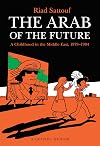
Brutal honesty from a 4-year-old’s perspective. It’s so innocent and yet so devastating. Riad’s mother is French, his dad Syrian. Born in France, his family first moves to Libya then to Syria. This is a fierce look at Riad’s view of his parents and his homes. The countries are filthy, bleak, garbage strewn, misogynistic, & racist. His father, claiming to be an atheist, finds every single bit of it beautiful. Qaddafi and Assad are his heroes. Riad loves his Arab family. He wants the show more gun his father has promised. He wants to be part of the all-out bruising fights with cousins. But upon returning to France, finally, and staying with his French grandparents he realizes he doesn’t want to go back. And there it ends. I’ve been looking for volume 2 and 3 (I have the last volume 4). Like Riad, I don’t want to see where his life goes from here. But it seems he’s grown up well, so I’m ready to travel this journey with him. And now I’m forewarned of how bad it could be. Serious trigger warnings, especially given Muslims’ extreme dislike of dogs (I didn’t know this) and so there is a horrific episode near the end. Your heart will be crushed. So beware. show less
The Arab of the Future 2: A Childhood in the Middle East, 1984-1985: A Graphic Memoir by Riad Sattouf
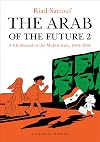
Riad is like a modern day Huck Finn, absorbing the sometimes disturbing culture that surrounds him with the innocent, dispassionate, questioning eyes of a young child. This technique allows the author to observe and report without needing to provide commentary. This is best seen in his portrayal of his, what I would call, tremendously flawed parents. (How his mother can choose to live in this world of sexism and put up with his father's delusional visions of grandeur, I will never show more understand.) However, overall, it's a very insightful look into a cultural history with which I have very little experience. show less
 This review was written for LibraryThing Early Reviewers.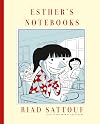
Riad Sattouf is following the life of a real French girl as part of a newspaper comic strip, giving the reader a weekly check-in with her energetic and opinionated personality. This large and slightly awkward omnibus brings together the first three collections, taking Esther A. from 9-years-old to 12-years-old, from a private primary school to a public secondary school.
It's a little slow-going at times, heavy on text and too often letting Esther go off on boring monologues about playground show more soap opera, her favorite celebrities, detailed dreams, or other flights of fancy. But despite an initial expectation of girlish sappiness, I found a mean streak threaded through that occasionally slapped me in the face as Esther displays childish callousness and cruelty as well as racism, homophobia, and Islamophobia. I like her relationship with her parents, especially her doting father, but her brother's behavior is irritating and even disturbing.
It's hard to read this at a shot, but by doling it out over a week I found myself looking forward to my next glimpse into Esther's life and am now looking forward to seeing the next collection. I see that Sattouf has books in French for Esther's life up through age 15 already.
Side note: Due to the large size of the book and the small size of the text-heavy panels with their tiny asides in a cursive-like font, I'd recommend reading this book electronically instead of physically, especially if you've aging eyes like mine. show less
It's a little slow-going at times, heavy on text and too often letting Esther go off on boring monologues about playground show more soap opera, her favorite celebrities, detailed dreams, or other flights of fancy. But despite an initial expectation of girlish sappiness, I found a mean streak threaded through that occasionally slapped me in the face as Esther displays childish callousness and cruelty as well as racism, homophobia, and Islamophobia. I like her relationship with her parents, especially her doting father, but her brother's behavior is irritating and even disturbing.
It's hard to read this at a shot, but by doling it out over a week I found myself looking forward to my next glimpse into Esther's life and am now looking forward to seeing the next collection. I see that Sattouf has books in French for Esther's life up through age 15 already.
Side note: Due to the large size of the book and the small size of the text-heavy panels with their tiny asides in a cursive-like font, I'd recommend reading this book electronically instead of physically, especially if you've aging eyes like mine. show less
The Arab of the Future 2: A Childhood in the Middle East, 1984-1985: A Graphic Memoir by Riad Sattouf
Mr. Riad Sattouf's masterpiece no. 2 starts a bit like Moby Dick: "My name is Riad. In 1984, I was six years old and I was just as gorgeous as ever."
This graphic novel is a reminiscence of two years of Riad's childhood in the village of Ter Maalch, near Homs in Syria.
This narrative is squarely placed during the time period during which Hafez el Hassad's dictatorship, surrounded by a clique of Generals, was slowly rotting away.
Stylistically Riad's uses only white light, an achromatic grey show more and black to create comical or dramatic faces; himself, his mother and father, his grandmother who has a bad back and a variety of ordinary Syrians men and women; school children, peasants, smugglers, hotel workers, teachers, elders, generals and their entourage. We are told that Riad has "flowing blond hair like a Hollywood actress", yet Riad uses only the white light and grey shades to suggest it.
This story can be grouped in central themes essential to any child: parents, sleep and the fear of darkness, school life, teachers and the fear they inspire, school friends and relatives of the same age, the social dreams of Riad's father and mother aspiring to a better life, games and role play with other children and escapes. Riad escapes the dullness of his rural school where one has to wear a school uniform, complete with a patriotic cap and one has to learn Arabic by chanting the national anthem or on dated school books depicting Baath socialism inspired characters' life in which Riad notes that women do not wear veils while Riad's Syrian life is happening in an increasingly religious society.
His forms of escapes are his own thoughts in the dark of his bedroom or when he goes to play in the "countryside" with his friends. Other escapes, that are not necessarily escapes, are when his father drives him to one of the Generals' house that has the same foundations' cracks that his father's apartment and where he meets the General's child who has an impressive array of toy modern weaponry.
Noteworthy is Riad's escape, in the General's car, complete with a bodyguard, to the ruins of Palmyre where for Riad: " the ground was covered with strange bits of pottery and stones. Each one looked mysterious and precious."
Note how Mr. Sattouf makes the reader perceive the child's unique field of vision as he draws the whole monumental ruins but is more interested in his childhood vision of it from the ground.
Then there are other escapes, at the Meridien Hotel in Damas, or to France during a vacation or when playing with lego pieces.
The elements, rain, floods or sun are also central to this story.
The schooling in the Arabic language conversations in French and English play a part in how Riad comprehends the world that surrounds him and the use of language by adults. Important in young Riad's story is the pleasure he gets from drawing. First Arabic letters and their changing shapes depending in where they are in the word and then through being taught French; how by reading Herge's Tintin comics Riad suddently understands the graphic novel "Le Crabe aux Pinces d'Or", the crab with the golden claws, discovering the meaning through the arrest of Captain Haddock of a story which until this time he could only imagine looking at frames and images.
Then Riad has reactions to important societal issues at school and during his escapes: money and the lack thereof, pregnancy outside marriage in a rural society, education, antisemitism, nationalism, military dictatorship, social distance...
At the end of the story, Riad's father, an associate professor who dreams to become an Assistant Professor, renounces his vision of luxury by planting an orchard where he intended to build a villa that could have rivaled, in his dreams, that of one of El Assad's generals.
The Author grew up in Libya and Syria and received for the first installment of this book the Best Graphic Novel Price of the Angouleme comic festival in France. show less
This graphic novel is a reminiscence of two years of Riad's childhood in the village of Ter Maalch, near Homs in Syria.
This narrative is squarely placed during the time period during which Hafez el Hassad's dictatorship, surrounded by a clique of Generals, was slowly rotting away.
Stylistically Riad's uses only white light, an achromatic grey show more and black to create comical or dramatic faces; himself, his mother and father, his grandmother who has a bad back and a variety of ordinary Syrians men and women; school children, peasants, smugglers, hotel workers, teachers, elders, generals and their entourage. We are told that Riad has "flowing blond hair like a Hollywood actress", yet Riad uses only the white light and grey shades to suggest it.
This story can be grouped in central themes essential to any child: parents, sleep and the fear of darkness, school life, teachers and the fear they inspire, school friends and relatives of the same age, the social dreams of Riad's father and mother aspiring to a better life, games and role play with other children and escapes. Riad escapes the dullness of his rural school where one has to wear a school uniform, complete with a patriotic cap and one has to learn Arabic by chanting the national anthem or on dated school books depicting Baath socialism inspired characters' life in which Riad notes that women do not wear veils while Riad's Syrian life is happening in an increasingly religious society.
His forms of escapes are his own thoughts in the dark of his bedroom or when he goes to play in the "countryside" with his friends. Other escapes, that are not necessarily escapes, are when his father drives him to one of the Generals' house that has the same foundations' cracks that his father's apartment and where he meets the General's child who has an impressive array of toy modern weaponry.
Noteworthy is Riad's escape, in the General's car, complete with a bodyguard, to the ruins of Palmyre where for Riad: " the ground was covered with strange bits of pottery and stones. Each one looked mysterious and precious."
Note how Mr. Sattouf makes the reader perceive the child's unique field of vision as he draws the whole monumental ruins but is more interested in his childhood vision of it from the ground.
Then there are other escapes, at the Meridien Hotel in Damas, or to France during a vacation or when playing with lego pieces.
The elements, rain, floods or sun are also central to this story.
The schooling in the Arabic language conversations in French and English play a part in how Riad comprehends the world that surrounds him and the use of language by adults. Important in young Riad's story is the pleasure he gets from drawing. First Arabic letters and their changing shapes depending in where they are in the word and then through being taught French; how by reading Herge's Tintin comics Riad suddently understands the graphic novel "Le Crabe aux Pinces d'Or", the crab with the golden claws, discovering the meaning through the arrest of Captain Haddock of a story which until this time he could only imagine looking at frames and images.
Then Riad has reactions to important societal issues at school and during his escapes: money and the lack thereof, pregnancy outside marriage in a rural society, education, antisemitism, nationalism, military dictatorship, social distance...
At the end of the story, Riad's father, an associate professor who dreams to become an Assistant Professor, renounces his vision of luxury by planting an orchard where he intended to build a villa that could have rivaled, in his dreams, that of one of El Assad's generals.
The Author grew up in Libya and Syria and received for the first installment of this book the Best Graphic Novel Price of the Angouleme comic festival in France. show less
This review was written for LibraryThing Early Reviewers.Lists
Awards


You May Also Like


Associated Authors
Statistics
- Works
- 55
- Also by
- 2
- Members
- 2,903
- Popularity
- #8,823
- Rating
- 4.0
- Reviews
- 99
- ISBNs
- 179
- Languages
- 15
- Favorited
- 5
