
Lewis Trondheim
Author of Dungeon - Zenith, Vol. 1: Duck Heart
About the Author
Image credit: Credit: Georges Seguin, 2006
Series
Works by Lewis Trondheim
A.L.I.E.E.E.N.: Archives of Lost Issues and Earthly Editions of Extraterrestrial Novelties (2007) 176 copies, 13 reviews
Les formidables aventures de Lapinot, tome 05 : Vacances de printemps (1999) — Illustrator — 65 copies, 2 reviews
Les formidables aventures sans Lapinot, tome 01 : Les aventures de l'univers (1997) 35 copies, 1 review
Texas Cowboys - Tome 2 - Tome 2 (Dupuis "Tous Publics") (French Edition) (1937) — Author — 20 copies
Petits Riens de Lewis Trondheim T8 - Tout est à sa place dans ce chaos exponentiel (2018) 11 copies, 1 review
The Nimrod, #3 3 copies
The Nimrod #01 3 copies
The Nimrod, #5 3 copies
Oddballz #6 3 copies
The Nimrod, #2 2 copies
Zero Zero #27 — Illustrator — 2 copies
The Nimrod #04 2 copies
La poule et la pétanque 1 copy
Zero Zero #24 — Illustrator — 1 copy
LAS INCREÍBLES AVENTURAS SIN LAPINOT 3. CIBERCULTURA MI AMOR (EXTRA COLOR) (Spanish Edition) (2008) 1 copy
Dungeon #2 1 copy
Dungeon #1 1 copy
Dungeon #04 1 copy
Dungeon #7 1 copy
Ralph Azham - Intégrale T2/2 1 copy
Dungeon #06 1 copy
Dungeon #05 1 copy
Dungeon #03 1 copy
Los tres caminos 1 copy
Die erstaunlichen Abenteuer des Herrn Hase 08. Die Rückkehr aufs Land. Farbe der Hölle (2014) 1 copy, 1 review
Mildiu 1 copy
The Nimrod #06 1 copy
Chloé Densité 1 copy
L'Hiver en noir et blanc 1 copy
Associated Works
Tagged
Common Knowledge
- Legal name
- Chabosy, Laurent
- Other names
- Frantico
- Birthdate
- 1964-12-11
- Gender
- male
- Relationships
- Findakly, Brigitte (spouse)
- Nationality
- France
- Associated Place (for map)
- France
Members
Reviews
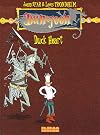
It had to be fate. I saw these books at the library and they looked like they might be good BUT... they didn't have the first one. I'm a completist, I could NOT start with volume 2 so I gave up. A week later, digging through a box of comics a friend had given me to sell more than a year ago, I find the first 8 comics in the series (the first 2 graphic novels). The dark, most-likely unclean, hand of some god of comedic fantasy had obviously reached into my life.
I grew up reading Finieous show more Fingers and What's New and have read some of the newer stuff like Knights of the Dinner Table etc... but it's been a while sense I enjoy funny fantasy comics as much as I enjoyed this. I love the "crappy" art, the zany and unpredictable laws of physics, and the occasional social commentary. I can definitely see myself hunting down and collecting this entire series.
On a side note the individual comics (not the collections) are in black and white, I can't wait to read the others in color.
Recommended for ages 8 to 108. This 45 year old child is enjoying them as much as, if not more than, he would have so many years ago before adult life shackled him to a desk and crushed all (okay just some) of his dreams. show less
I grew up reading Finieous show more Fingers and What's New and have read some of the newer stuff like Knights of the Dinner Table etc... but it's been a while sense I enjoy funny fantasy comics as much as I enjoyed this. I love the "crappy" art, the zany and unpredictable laws of physics, and the occasional social commentary. I can definitely see myself hunting down and collecting this entire series.
On a side note the individual comics (not the collections) are in black and white, I can't wait to read the others in color.
Recommended for ages 8 to 108. This 45 year old child is enjoying them as much as, if not more than, he would have so many years ago before adult life shackled him to a desk and crushed all (okay just some) of his dreams. show less
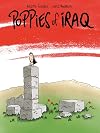
Despite many good vignettes and anecdotes, this autobiography is too random and unstructured for me, skipping around through the upbringing of the co-author in Iraq and France. The intermittent inclusion of real family photos drove home the impression I had of sitting on the sofa in a stranger's house as she flips through pages of a family scrapbook telling occasionally humorous stories about a bunch of people I don't really know. While it isn't painful, I'm mostly going to nod politely show more until I can find an opportunity to leave. show less
A.L.I.E.E.E.N.: Archives of Lost Issues and Earthly Editions of Extraterrestrial Novelties by Lewis Trondheim
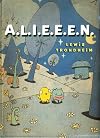
Lewis Trondheim makes me feel like the laziest person on the planet, or on any planet: he's been working for 16 or 17 years and made about a billion jillion comics, and they're all good, and he keeps working with more people and trying new things. A.L.I.E.E.E.N. (original title A.L.I.E.E.N.; in French, two E's are as funny as three) is like the result of some unwise bet by the devil: "Sure you're versatile, you can do minimalist wordless slapstick strips, and you can do funny animals for show more grownups, and you can do fantasy parody comics full of sick humor for kids, but I bet you can't do all three at once!" So this is a minimalist wordless slapstick funny animal fantasy grownup comic for kids, and it's like almost nothing else, and it is hilarious and sick, sick, sick, sick.
Allegedly it's a kids' comic from another planet, found discarded on Earth (so some of the pages look artfully weather-beaten), written in an unknown language, about a few dozen different kinds of brightly colored critters having a variety of serious problems. Some of the problems are pretty basic: one character accidentally pokes his eyes out on page two (Wertham was right!); another wants to give people presents, but they're not appreciated; another has to figure out what to do with a pet/friend/colleague who literally can't stop crapping, ever. Others are more complicated: why do cheerful Pokemon-looking people like to club little blue shrimpy people on the head?; why does the mad scientist(?) want to dissect a floating weeping ghost(?) that looks like the creature he just smooshed and fed to his plants(?)?; did the little birdie guy just die, or was that his clone that grew out of a clonifying eel type thing? Since you can't read the words, part of the fun is trying to figure out what the rules are, and in some cases you realize that you really just can't. It doesn't really matter, because the characters are so expressive - it's like Trondheim is playing an instrument whose notes are Happy, Hopeful, Hungry, Perplexed, Greedy, Bored, Scared, etc.
The one thing it kind of resembles is Jim Woodring's great Frank, which has a similar setting (mostly pastoral), things that turn into other things without warning, and no words. But where Frank is more haunting and esoteric - a chronicle of currents inside Woodring's head - A.L.I.E.E.E.N. reads like a plain fun narrative that just happens to include some incomprehensible and/or highly disturbing events. The overall message seems to be: the laws of nature are harsh, and all physical beings commit outrages or endure grossness, and these things are funny. show less
Allegedly it's a kids' comic from another planet, found discarded on Earth (so some of the pages look artfully weather-beaten), written in an unknown language, about a few dozen different kinds of brightly colored critters having a variety of serious problems. Some of the problems are pretty basic: one character accidentally pokes his eyes out on page two (Wertham was right!); another wants to give people presents, but they're not appreciated; another has to figure out what to do with a pet/friend/colleague who literally can't stop crapping, ever. Others are more complicated: why do cheerful Pokemon-looking people like to club little blue shrimpy people on the head?; why does the mad scientist(?) want to dissect a floating weeping ghost(?) that looks like the creature he just smooshed and fed to his plants(?)?; did the little birdie guy just die, or was that his clone that grew out of a clonifying eel type thing? Since you can't read the words, part of the fun is trying to figure out what the rules are, and in some cases you realize that you really just can't. It doesn't really matter, because the characters are so expressive - it's like Trondheim is playing an instrument whose notes are Happy, Hopeful, Hungry, Perplexed, Greedy, Bored, Scared, etc.
The one thing it kind of resembles is Jim Woodring's great Frank, which has a similar setting (mostly pastoral), things that turn into other things without warning, and no words. But where Frank is more haunting and esoteric - a chronicle of currents inside Woodring's head - A.L.I.E.E.E.N. reads like a plain fun narrative that just happens to include some incomprehensible and/or highly disturbing events. The overall message seems to be: the laws of nature are harsh, and all physical beings commit outrages or endure grossness, and these things are funny. show less
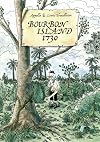
Looks almost like a straightforward story about pirates and slavery, but there's a lot going on here. It's a thoughtful historical drama, a comedy of manners and a political satire, based on ugly events. I would totally recommend it for young adults, but older people will appreciate it on other levels too.
Most of the plots and characters are about escape: the fugitive slaves who just want to live, the naive ornithologist who wants to be a pirate, the pirates who are trying to be respectable show more citizens, the plantation owner's daughter who wants to join the fugitive slaves. And the whole book is an escape - you come into this strange place with more or less the same point of view as the ornithologist, that maybe this would be a good place to have adventures. By the end, it's clear that none of it is likely to work out that way, but it's not cynical; just an exhilarating trip that's also really sad.
It's got a deceptively light tone -- Trondheim's style is made for comedy, and not just because he always draws everyone with animal heads (using an ethnic category system like Maus, but more expressive); his timing, the way he draws action, everything is basically playful. (More than other Trondheim books I've seen, the backgrounds are very lush; the tropical foliage bursts across the panels with a kind of friendly wildness, and he saves most of his solid black inking for the plants, giving them a texture that reminds me a little of Tove Jansson's beautiful Moomin books.) But the writer uses this to sly advantage, because the darkest parts of the story are all about what we only barely see or just hear about -- all the things the cheerful colonialists have managed to ignore. In the most disturbing scene, with almost no movement, an ex-pirate turned rebel slave leader (drawn as a finely dressed, emaciated dog whose face is all bitter lines and shadows) whispers through a jail window to a newly-arrived slave (drawn as a tiny, nearly featureless, child-like puppy), tells him about the awful life that's in store, tells him it's hopeless... then throws him a knife and urges him to do some damage while he can. We see the result later, from a distance, in the corner of a panel, and none of the main characters notice. show less
Most of the plots and characters are about escape: the fugitive slaves who just want to live, the naive ornithologist who wants to be a pirate, the pirates who are trying to be respectable show more citizens, the plantation owner's daughter who wants to join the fugitive slaves. And the whole book is an escape - you come into this strange place with more or less the same point of view as the ornithologist, that maybe this would be a good place to have adventures. By the end, it's clear that none of it is likely to work out that way, but it's not cynical; just an exhilarating trip that's also really sad.
It's got a deceptively light tone -- Trondheim's style is made for comedy, and not just because he always draws everyone with animal heads (using an ethnic category system like Maus, but more expressive); his timing, the way he draws action, everything is basically playful. (More than other Trondheim books I've seen, the backgrounds are very lush; the tropical foliage bursts across the panels with a kind of friendly wildness, and he saves most of his solid black inking for the plants, giving them a texture that reminds me a little of Tove Jansson's beautiful Moomin books.) But the writer uses this to sly advantage, because the darkest parts of the story are all about what we only barely see or just hear about -- all the things the cheerful colonialists have managed to ignore. In the most disturbing scene, with almost no movement, an ex-pirate turned rebel slave leader (drawn as a finely dressed, emaciated dog whose face is all bitter lines and shadows) whispers through a jail window to a newly-arrived slave (drawn as a tiny, nearly featureless, child-like puppy), tells him about the awful life that's in store, tells him it's hopeless... then throws him a knife and urges him to do some damage while he can. We see the result later, from a distance, in the corner of a panel, and none of the main characters notice. show less
Lists
Awards


You May Also Like


Associated Authors
Statistics
- Works
- 290
- Also by
- 7
- Members
- 6,778
- Popularity
- #3,606
- Rating
- 3.8
- Reviews
- 145
- ISBNs
- 667
- Languages
- 16
- Favorited
- 24