
Appollo
Author of Bourbon Island 1730
About the Author
Disambiguation Notice:
Olivier Appollodorus (b. 1969), called Appollo
Image credit: Credit: Jean-Noël Lafargue, 2004, Paris, France
Series
Works by Appollo
Tagged
Common Knowledge
- Legal name
- Appollodorus, Olivier
- Birthdate
- 1969-03-26
- Gender
- male
- Nationality
- Tunisia (birth)
- Map Location
- Tunisia
- Disambiguation notice
- Olivier Appollodorus (b. 1969), called Appollo
Members
Reviews
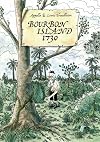
Looks almost like a straightforward story about pirates and slavery, but there's a lot going on here. It's a thoughtful historical drama, a comedy of manners and a political satire, based on ugly events. I would totally recommend it for young adults, but older people will appreciate it on other levels too.
Most of the plots and characters are about escape: the fugitive slaves who just want to live, the naive ornithologist who wants to be a pirate, the pirates who are trying to be respectable show more citizens, the plantation owner's daughter who wants to join the fugitive slaves. And the whole book is an escape - you come into this strange place with more or less the same point of view as the ornithologist, that maybe this would be a good place to have adventures. By the end, it's clear that none of it is likely to work out that way, but it's not cynical; just an exhilarating trip that's also really sad.
It's got a deceptively light tone -- Trondheim's style is made for comedy, and not just because he always draws everyone with animal heads (using an ethnic category system like Maus, but more expressive); his timing, the way he draws action, everything is basically playful. (More than other Trondheim books I've seen, the backgrounds are very lush; the tropical foliage bursts across the panels with a kind of friendly wildness, and he saves most of his solid black inking for the plants, giving them a texture that reminds me a little of Tove Jansson's beautiful Moomin books.) But the writer uses this to sly advantage, because the darkest parts of the story are all about what we only barely see or just hear about -- all the things the cheerful colonialists have managed to ignore. In the most disturbing scene, with almost no movement, an ex-pirate turned rebel slave leader (drawn as a finely dressed, emaciated dog whose face is all bitter lines and shadows) whispers through a jail window to a newly-arrived slave (drawn as a tiny, nearly featureless, child-like puppy), tells him about the awful life that's in store, tells him it's hopeless... then throws him a knife and urges him to do some damage while he can. We see the result later, from a distance, in the corner of a panel, and none of the main characters notice. show less
Most of the plots and characters are about escape: the fugitive slaves who just want to live, the naive ornithologist who wants to be a pirate, the pirates who are trying to be respectable show more citizens, the plantation owner's daughter who wants to join the fugitive slaves. And the whole book is an escape - you come into this strange place with more or less the same point of view as the ornithologist, that maybe this would be a good place to have adventures. By the end, it's clear that none of it is likely to work out that way, but it's not cynical; just an exhilarating trip that's also really sad.
It's got a deceptively light tone -- Trondheim's style is made for comedy, and not just because he always draws everyone with animal heads (using an ethnic category system like Maus, but more expressive); his timing, the way he draws action, everything is basically playful. (More than other Trondheim books I've seen, the backgrounds are very lush; the tropical foliage bursts across the panels with a kind of friendly wildness, and he saves most of his solid black inking for the plants, giving them a texture that reminds me a little of Tove Jansson's beautiful Moomin books.) But the writer uses this to sly advantage, because the darkest parts of the story are all about what we only barely see or just hear about -- all the things the cheerful colonialists have managed to ignore. In the most disturbing scene, with almost no movement, an ex-pirate turned rebel slave leader (drawn as a finely dressed, emaciated dog whose face is all bitter lines and shadows) whispers through a jail window to a newly-arrived slave (drawn as a tiny, nearly featureless, child-like puppy), tells him about the awful life that's in store, tells him it's hopeless... then throws him a knife and urges him to do some damage while he can. We see the result later, from a distance, in the corner of a panel, and none of the main characters notice. show less
Pirates, colonies, and slavery. Arrrgh, it’s really not all that funny. Based on the history of La Réunion island, Bourbon Island 1730 is a graphic novel co-written and illustrated by the great French novelist Lewis Trondheim. Originally uninhabited, Reunion Island (at times called Bourbon Island) was settled by the French in 1640 and is still part of France.
The theme is Freedom—the pursuit of it and the failure to find it. Pirates became civilized through amnesty, and yet the civilized show more looked just as ugly as the former plunderers did. Better personal hygiene, sure, but just as dirty inside. The former pirates became either rich slave owners or drunks mourning their former freebooting days. French naturalists visited the island and shot hundred of birds to catalog them. Slaves escaped and formed their own communities but were hunted like animals. The French government set up a colony on an island with no natives, but by importing slaves they quickly create a colonized state.
Were “freebooters” free? They were in many cases, murderers, rapists and kidnappers so they didn’t necessarily use their freedom for anything other than selfish pursuits. One might argue they plundered to survive, but clearly they weren’t subscribers to Simple magazine. Freedom does not necessarily have to equate to compassion. In this novel, the freebooters are only idolized by the naïve, but they can be contrasted with the various Governments of the time, which put their own legal imprimatur on the murder, rape and kidnapping of slaves. And certainly in a state of war, the Governments plundered their enemies. Many pirates were former slaves to add further complexity to the equation. They were mainly preying upon official ships of the governments that enslaved them (as well as Arab ships, which were often crewed with slaves). Neither side had strong moral ground to stand on and, both were cultural products of their times. Yet, the pirates did have a level of freedom not experienced by the bourgeoisie land-owner.
It’s interesting to consider these themes in the context of the “War on Terror.” Terrorists who commit murder are despicable and immoral. But so is the government that falsifies the evidence for a war responsible for the deaths of many.
Bourbon Island 1730 touches on the possibly apocryphal stories of a Pirate republic called Libertalia in Madagascar. It was a utopian community set up as a place for pirates to retire in peace (and freedom). But there is some evidence this was a fiction planted by Daniel Defoe in an otherwise fairly accurate history of pirates. Perhaps his wishful thinking, Libertalia was supposedly destroyed by a Malagasy native tribe from the interior of the island, ending the pirates’ attempts to find a peaceful freedom instead of a warring freedom.
I knew nothing about Reunion Island before I read this. The history is quite fascinating, and I found this fictionalized account of one brief period of that history to be an honest and intriguing exploration of pirates and the sad, casual exploitation of slaves by the French colonies. show less
The theme is Freedom—the pursuit of it and the failure to find it. Pirates became civilized through amnesty, and yet the civilized show more looked just as ugly as the former plunderers did. Better personal hygiene, sure, but just as dirty inside. The former pirates became either rich slave owners or drunks mourning their former freebooting days. French naturalists visited the island and shot hundred of birds to catalog them. Slaves escaped and formed their own communities but were hunted like animals. The French government set up a colony on an island with no natives, but by importing slaves they quickly create a colonized state.
Were “freebooters” free? They were in many cases, murderers, rapists and kidnappers so they didn’t necessarily use their freedom for anything other than selfish pursuits. One might argue they plundered to survive, but clearly they weren’t subscribers to Simple magazine. Freedom does not necessarily have to equate to compassion. In this novel, the freebooters are only idolized by the naïve, but they can be contrasted with the various Governments of the time, which put their own legal imprimatur on the murder, rape and kidnapping of slaves. And certainly in a state of war, the Governments plundered their enemies. Many pirates were former slaves to add further complexity to the equation. They were mainly preying upon official ships of the governments that enslaved them (as well as Arab ships, which were often crewed with slaves). Neither side had strong moral ground to stand on and, both were cultural products of their times. Yet, the pirates did have a level of freedom not experienced by the bourgeoisie land-owner.
It’s interesting to consider these themes in the context of the “War on Terror.” Terrorists who commit murder are despicable and immoral. But so is the government that falsifies the evidence for a war responsible for the deaths of many.
Bourbon Island 1730 touches on the possibly apocryphal stories of a Pirate republic called Libertalia in Madagascar. It was a utopian community set up as a place for pirates to retire in peace (and freedom). But there is some evidence this was a fiction planted by Daniel Defoe in an otherwise fairly accurate history of pirates. Perhaps his wishful thinking, Libertalia was supposedly destroyed by a Malagasy native tribe from the interior of the island, ending the pirates’ attempts to find a peaceful freedom instead of a warring freedom.
I knew nothing about Reunion Island before I read this. The history is quite fascinating, and I found this fictionalized account of one brief period of that history to be an honest and intriguing exploration of pirates and the sad, casual exploitation of slaves by the French colonies. show less

"Don't be silly, Raphael, there are no more pirates. And in any event there is no way you'd be able to drink enough rum to follow one of their conversations."
Set on Bourbon Island, now known as Réunion and one of the few countries left where my reading has not already taken me. An ornithologist is searching for the dodo bird (was there ever any on Bourbon Island?), where there are the aforementioned pirates, colonists, slavery, and terrorists. Fictionalized history, humorous in a way, show more detailed art, but only mildly entertaining. This might be enjoyed more by someone who appreciates graphic novels more than I do. show less
Set on Bourbon Island, now known as Réunion and one of the few countries left where my reading has not already taken me. An ornithologist is searching for the dodo bird (was there ever any on Bourbon Island?), where there are the aforementioned pirates, colonists, slavery, and terrorists. Fictionalized history, humorous in a way, show more detailed art, but only mildly entertaining. This might be enjoyed more by someone who appreciates graphic novels more than I do. show less
For the most part I did enjoy the novel, the characters were varied and interesting, and the story weaves in some nice interesting historical information, and it was most certainly an entertaining read. But, when the it was all over and done and the final page turned (at least of the novel itself). Something was missing. Looking back, nothing much seemed to happen in it, some of the plot threads promised more than they delivered.
This was made up for a little bit by the appendix at the end, show more which explains some of the facts around which the story is based, and these really did add something to the experience.
But, I was still left with the feeling, that whilst what was there was excellent, it could have been even better.
Read and comment on my full review at:
http://www.bartsbookshelf.co.uk/2009/03/25/bourbon-island-1730-by-appollo-lewis-... show less
This was made up for a little bit by the appendix at the end, show more which explains some of the facts around which the story is based, and these really did add something to the experience.
But, I was still left with the feeling, that whilst what was there was excellent, it could have been even better.
Read and comment on my full review at:
http://www.bartsbookshelf.co.uk/2009/03/25/bourbon-island-1730-by-appollo-lewis-... show less
Awards


You May Also Like


Associated Authors
Statistics
- Works
- 31
- Members
- 269
- Popularity
- #85,898
- Rating
- 3.7
- Reviews
- 9
- ISBNs
- 37
- Languages
- 6