
Tom Cain (1) (1959–)
Author of The Accident Man
For other authors named Tom Cain, see the disambiguation page.
About the Author
Tom Cain is the pen name of British author David Thomas. He was born on January 17, 1959 in Moscow, Russia. He was educated at Eton College and studied Philosophy and History of Art at King's College, Cambridge. He was a journalist for 25 years and worked for various newspapers and magazines in show more Britain and the United States. He is the author of the Samuel Carver thriller series. His books include The Accident Man, No Survivors, The Survivors, Assassin, Dictator, Carver, and Predator (written along with Wilbur Smith). (Bowker Author Biography) show less
Image credit:
www.vjbooks.com
Series
Works by Tom Cain
Bloodsport 1 copy
Associated Works
Tagged
Common Knowledge
- Legal name
- Thomas, David William Penrose
- Other names
- Cain, Tom (pseudonym)
- Birthdate
- 1959-01-17
- Gender
- male
- Occupations
- journalist
editor (Punch, 1989-1992) - Organizations
- Punch
- Nationality
- UK
- Birthplace
- Moscow
Members
Reviews
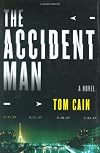
Fictional stories that spin off of historical events are always fascinating. I don't mean fictional accounts of the lives of historical people...although those are fascinating as well. I mean novels that take a historical event and ask, "what if?" That is what Tom Cain does with The Accident Man, and he chooses a particularly sensitive subject historically: the death of Princess Diana. Specifically, Cain uses the fictional premise (although he specifically denies attempting to set forth or show more support any sort of conspiracy theory in his preface) that Princess Diana's death was not accidental, but rather an assassination. His protagonist, Samuel Carver (who will debut here and will recur in future novels), is the assassin. He specializes in making his hits look like accidents, and only assassinates people whom he deems to truly deserve their fate, without knowing from whom his orders come. With this job, however, Carver has been double-crossed, and unknowingly murders one of the world's most loved public figures, in order to further the political and financial goals of his employers. The rest of the book is about his discovery of this, his employers' attempts to in turn kill him when he displays a conscience, and his quest for revenge.
I've always loved the espionage and suspense genre, and have gravitated toward books like The Girl with the Dragon Tattoo or the Bourne trilogy. I grew up devouring the entirety of the James Bond library, from Ian Fleming's original works forward. What strikes me the most about this book is the consistency between Cain's world and Fleming's world for Bond. For example, when Carver takes a shower, he first takes a steaming hot shower, followed by an ice cold shower. This was a trademark of James Bond when Ian Fleming wrote him; Bond always took his showers this way. I was also struck by the female character's (an unwitting spy who is drawn into a job she hates by people she hates) line after they sleep together, something to the effect of "it's never been like that before." I thought to myself, if that wasn't a James Bond-like line, I don't know what is.
The reason that I find this fascinating is because this is the first of Cain's books featuring Carver's character. He is creating a character much like Bond, and doing it well. However, he is creating a darker version of Bond, one that doesn't function with patriotic allegiance, but rather with allegiance to the highest bidder, justifying his relativistic ethics with a survival instinct. This can be taken as an interesting commentary on how our world is now as opposed to the Cold War era of Fleming. In essence, Cain is asking a second question in this novel: what would James Bond look like in a modern world of blurred lines between nations where patriotism is no longer an acceptable motive and anyone or anything can be purchased, including life and death?
Cain develops his protagonist fully as he follows a very Bond-like plot, mastering what Fleming did so well with his master spy: balancing his human vulnerability with his deadly professional expertise. Carver's backstory is interspersed well throughout the book, never bogging the reader down and always contributing to what Carver is doing at that moment. Cain uses interesting language choices for his narration, drawing emotional analogies to the sorts of physical items that would appear in a spy's life, for example. Cain also develops his other characters, although his villain is not nearly as original or even as memorable as a Bond villain. He makes up for this, however, in the brutality of his villain.
And therein lies part of the problem. The story absorbs the reader breathlessly until around page 300. From that point until the end of the book, Cain moves the plot in a direction that is decidedly like Casino Royale, with some notable differences: the twist with the female character doubles back on itself, the torture scene is even more savage (as unbelievable as that sounds), and the protagonist is not pictured as recovering well. In fact, we wonder how he will return in future books at all after the abuse he survives and the condition in which it leaves him. The interrogation and torture scene goes on for multiple chapters, and left me disturbed well into the next day. I found this to be un-necessary (especially as other characters undergo interrogation during the course of the book, with significantly less graphic descriptions) and so long that it completely robbed the story of its momentum in the closing chapters. The plot line for these adventures, after all, is relatively predictable: we know the protagonist will be captured and interrogated. That's just part of the genre. This is one area, however, in which Cain shouldn't have attempted to out-do Fleming, especially as Cain had done so well at making his violence succinct and effective up until this point.
Cain's dark, post-modern version of Bond is worth reading, if only to experience this contemporary take on the master-spy character in literature. If you like the genre, and can handle the graphic violence in the closing chapters, this would be a good book for you. Tom Cain has given us a character to consider, and Samuel Carver may well be a spy that will be mentioned in all future discussions of the genre. Time will tell. Will I read another Samuel Carver novel? Only time will tell that, as well. show less
I've always loved the espionage and suspense genre, and have gravitated toward books like The Girl with the Dragon Tattoo or the Bourne trilogy. I grew up devouring the entirety of the James Bond library, from Ian Fleming's original works forward. What strikes me the most about this book is the consistency between Cain's world and Fleming's world for Bond. For example, when Carver takes a shower, he first takes a steaming hot shower, followed by an ice cold shower. This was a trademark of James Bond when Ian Fleming wrote him; Bond always took his showers this way. I was also struck by the female character's (an unwitting spy who is drawn into a job she hates by people she hates) line after they sleep together, something to the effect of "it's never been like that before." I thought to myself, if that wasn't a James Bond-like line, I don't know what is.
The reason that I find this fascinating is because this is the first of Cain's books featuring Carver's character. He is creating a character much like Bond, and doing it well. However, he is creating a darker version of Bond, one that doesn't function with patriotic allegiance, but rather with allegiance to the highest bidder, justifying his relativistic ethics with a survival instinct. This can be taken as an interesting commentary on how our world is now as opposed to the Cold War era of Fleming. In essence, Cain is asking a second question in this novel: what would James Bond look like in a modern world of blurred lines between nations where patriotism is no longer an acceptable motive and anyone or anything can be purchased, including life and death?
Cain develops his protagonist fully as he follows a very Bond-like plot, mastering what Fleming did so well with his master spy: balancing his human vulnerability with his deadly professional expertise. Carver's backstory is interspersed well throughout the book, never bogging the reader down and always contributing to what Carver is doing at that moment. Cain uses interesting language choices for his narration, drawing emotional analogies to the sorts of physical items that would appear in a spy's life, for example. Cain also develops his other characters, although his villain is not nearly as original or even as memorable as a Bond villain. He makes up for this, however, in the brutality of his villain.
And therein lies part of the problem. The story absorbs the reader breathlessly until around page 300. From that point until the end of the book, Cain moves the plot in a direction that is decidedly like Casino Royale, with some notable differences: the twist with the female character doubles back on itself, the torture scene is even more savage (as unbelievable as that sounds), and the protagonist is not pictured as recovering well. In fact, we wonder how he will return in future books at all after the abuse he survives and the condition in which it leaves him. The interrogation and torture scene goes on for multiple chapters, and left me disturbed well into the next day. I found this to be un-necessary (especially as other characters undergo interrogation during the course of the book, with significantly less graphic descriptions) and so long that it completely robbed the story of its momentum in the closing chapters. The plot line for these adventures, after all, is relatively predictable: we know the protagonist will be captured and interrogated. That's just part of the genre. This is one area, however, in which Cain shouldn't have attempted to out-do Fleming, especially as Cain had done so well at making his violence succinct and effective up until this point.
Cain's dark, post-modern version of Bond is worth reading, if only to experience this contemporary take on the master-spy character in literature. If you like the genre, and can handle the graphic violence in the closing chapters, this would be a good book for you. Tom Cain has given us a character to consider, and Samuel Carver may well be a spy that will be mentioned in all future discussions of the genre. Time will tell. Will I read another Samuel Carver novel? Only time will tell that, as well. show less
Any book that discusses the Holocaust and those who implemented it invariably touches on the question of how good people could end up acting in such a cold-blooded manner. The answers are as varied as the number of books that exist about this topic, but the search for an understandable answer does not cease. Ostland is one more exploration of this topic as it discusses the background of one Georg Heuser and his rise from up-and-coming police detective to mass murderer on the Eastern show more Front.
Told in the guise of trial preparations, the story flips back and forth between Georg’s first-person narrative and the efforts of lawyer Paula Siebert to amass evidence against Georg for his trial twenty years later. As is often the case, the two stories are unequal. Paula’s discoveries and frustrations are not nearly as absorbing as Georg’s experiences. Readers will find themselves speeding through those short chapters of Paula’s in order to get back to Georg’s more disturbing ones. This does not mean that those scenes involving Paula’s efforts are less important than those told by Georg. In fact, there is an interesting message that arises from the court case itself – one that Paula and the readers are slow to discover. However, it is Georg’s experiences in Minsk that will draw a reader’s attention.
The idea of guilt for Nazi war criminals is always a tricky one. Does following orders automatically excuse one’s behavior or is there a fundamentally human requirement to challenge orders that are so basically wrong? Ostland does not attempt to answer such questions but lays out Georg’s case methodically and unemotionally in an effort for readers to draw their own conclusions. It starts with his rise to detective and his introduction to real-world police procedures and culminates in his Minsk leadership. Throughout his story, readers get the full gamut of Nazi atrocities as seen through the eyes and experienced through the mind of an ambitious young man anxious to make a name for himself and conditioned to follow orders to the letter without question and without fail.
Ostland, in spite of using as much real-life evidence as possible, never sets out to indict Heuser for his crimes nor to critique Siebert on her preparations. Instead, it forces readers to evaluate each piece of evidence on their own, to judge based on Georg’s state of mind, as presented in the novel with fictional license, as well as on the facts. It also requires readers to extrapolate their deductions based on Georg’s story and apply them to the entire German populace. That Heuser epitomizes the quintessential Nazi soldier is neither here nor there as his attitude towards leadership and rules is as much cultural as it is personal, thereby further complicating the issue of guilt.
As horrific as one imagines it will be given its subject matter, Ostland is still a compelling read for the picture it paints of a world gone mad by war and hate. It makes no excuses for what happened but serves to offer up a warning that it is easy to fall into the trap of following orders. It raises questions about individual responsibility versus the collective good and does so in a way that requires readers to stop and reflect. In such a mad world in which the rules plainly flout common sense, there are no easy answers, nor can there be. However, taking the time to think and assess is one step towards avoiding future atrocities because it forces readers to answer the tough questions before they become reality. To that end, Ostland provides a chilling reminder of not only what occurred during the Nazi regime but also that guilt, in such instances, is never as black and white as one likes to think it will be. show less
Told in the guise of trial preparations, the story flips back and forth between Georg’s first-person narrative and the efforts of lawyer Paula Siebert to amass evidence against Georg for his trial twenty years later. As is often the case, the two stories are unequal. Paula’s discoveries and frustrations are not nearly as absorbing as Georg’s experiences. Readers will find themselves speeding through those short chapters of Paula’s in order to get back to Georg’s more disturbing ones. This does not mean that those scenes involving Paula’s efforts are less important than those told by Georg. In fact, there is an interesting message that arises from the court case itself – one that Paula and the readers are slow to discover. However, it is Georg’s experiences in Minsk that will draw a reader’s attention.
The idea of guilt for Nazi war criminals is always a tricky one. Does following orders automatically excuse one’s behavior or is there a fundamentally human requirement to challenge orders that are so basically wrong? Ostland does not attempt to answer such questions but lays out Georg’s case methodically and unemotionally in an effort for readers to draw their own conclusions. It starts with his rise to detective and his introduction to real-world police procedures and culminates in his Minsk leadership. Throughout his story, readers get the full gamut of Nazi atrocities as seen through the eyes and experienced through the mind of an ambitious young man anxious to make a name for himself and conditioned to follow orders to the letter without question and without fail.
Ostland, in spite of using as much real-life evidence as possible, never sets out to indict Heuser for his crimes nor to critique Siebert on her preparations. Instead, it forces readers to evaluate each piece of evidence on their own, to judge based on Georg’s state of mind, as presented in the novel with fictional license, as well as on the facts. It also requires readers to extrapolate their deductions based on Georg’s story and apply them to the entire German populace. That Heuser epitomizes the quintessential Nazi soldier is neither here nor there as his attitude towards leadership and rules is as much cultural as it is personal, thereby further complicating the issue of guilt.
As horrific as one imagines it will be given its subject matter, Ostland is still a compelling read for the picture it paints of a world gone mad by war and hate. It makes no excuses for what happened but serves to offer up a warning that it is easy to fall into the trap of following orders. It raises questions about individual responsibility versus the collective good and does so in a way that requires readers to stop and reflect. In such a mad world in which the rules plainly flout common sense, there are no easy answers, nor can there be. However, taking the time to think and assess is one step towards avoiding future atrocities because it forces readers to answer the tough questions before they become reality. To that end, Ostland provides a chilling reminder of not only what occurred during the Nazi regime but also that guilt, in such instances, is never as black and white as one likes to think it will be. show less
A chilling book in every possible way. Based on real people and events, it left me very disturbed.
Set in Nazi Germany during WWll, the protagonist is a young German who has just graduated from Berlin's police academy where he was top student and gained all the honours.
He is sent to work with the Berlin Murder Squad which is led by a very famous detective. The squad are in the thick of a complex situation as they try to track down a serial killer. Heuser, a rather earnest young man but with show more his heart in the right place, is determined to make his mark, he is a stickler for being loyal and obedient and for following the rules. Thanks to hard work, and some luck the Kripo get their man.
Thus far the book is an interesting but traditional police crime novel. Then the focus suddenly shifts and darkens when thanks to having helped catch the killer he is given promotion and sent to work in 'Ostland' a huge area of Russia which Germany has conquered, and which the German leadership intend to be populated with good German volk once it has been cleared. Heuser assumes he will be helping to set up a police system there.
However, when he arrives it is quickly made clear to him that what is actually going on there is the killing of Jews in large numbers. Because Russia had far more Jews in their population than Germany or Austria ever did, the numbers to be 'dealt' with are huge. He is horrified and unsure as to how he should proceed, but little by little his humanity is stripped away from him as it is with all the other German officers and men sent to the area.
It is as though this evil is a deadly virus which overcomes them all.
This is not the 'Final Solution' of the big industrial scale Concentration camps such as Austwizch or Bergen-Belsen, they have no gas chambers to speed the hideous demands of their superiors to kill all the Jews delivered to them.
The killing is close up and personal, every Jew has to be shot. Thousands and thousands and thousands of them. Heuser becomes almost inured to what he is doing, and the reader watches aghast as a decent young man slides inexorably into becoming a monster in what is a relatively short time.
There is a parallel story running through the book, that of a young German lawyer who, in the 1960s is set to gathering evidence for the criminal prosecution of Heuser and the other surviving officers who were at Minsk. Heuser has led a blameless life since the war, and she is finding it hard to get any evidence to bring him to trial. Finally he is tried and the outcome is surprising.
All through these sections of the book, which are nothing like as dramatic or gripping like Heuser's tale of his time in Ostland, I was asking myself - what would I have done? could I be sure I would not sink into the pit of hell that the Nazi regime created? could it happen in Britain, or the USA? Big questions.
What I had to keep reminding myself was that all the situations - and indiviuals - in this book really did exist and they really did do these frightful things
This book is very strong meat, and some readers would undoubtedly find it upsetting. show less
Set in Nazi Germany during WWll, the protagonist is a young German who has just graduated from Berlin's police academy where he was top student and gained all the honours.
He is sent to work with the Berlin Murder Squad which is led by a very famous detective. The squad are in the thick of a complex situation as they try to track down a serial killer. Heuser, a rather earnest young man but with show more his heart in the right place, is determined to make his mark, he is a stickler for being loyal and obedient and for following the rules. Thanks to hard work, and some luck the Kripo get their man.
Thus far the book is an interesting but traditional police crime novel. Then the focus suddenly shifts and darkens when thanks to having helped catch the killer he is given promotion and sent to work in 'Ostland' a huge area of Russia which Germany has conquered, and which the German leadership intend to be populated with good German volk once it has been cleared. Heuser assumes he will be helping to set up a police system there.
However, when he arrives it is quickly made clear to him that what is actually going on there is the killing of Jews in large numbers. Because Russia had far more Jews in their population than Germany or Austria ever did, the numbers to be 'dealt' with are huge. He is horrified and unsure as to how he should proceed, but little by little his humanity is stripped away from him as it is with all the other German officers and men sent to the area.
It is as though this evil is a deadly virus which overcomes them all.
This is not the 'Final Solution' of the big industrial scale Concentration camps such as Austwizch or Bergen-Belsen, they have no gas chambers to speed the hideous demands of their superiors to kill all the Jews delivered to them.
The killing is close up and personal, every Jew has to be shot. Thousands and thousands and thousands of them. Heuser becomes almost inured to what he is doing, and the reader watches aghast as a decent young man slides inexorably into becoming a monster in what is a relatively short time.
There is a parallel story running through the book, that of a young German lawyer who, in the 1960s is set to gathering evidence for the criminal prosecution of Heuser and the other surviving officers who were at Minsk. Heuser has led a blameless life since the war, and she is finding it hard to get any evidence to bring him to trial. Finally he is tried and the outcome is surprising.
All through these sections of the book, which are nothing like as dramatic or gripping like Heuser's tale of his time in Ostland, I was asking myself - what would I have done? could I be sure I would not sink into the pit of hell that the Nazi regime created? could it happen in Britain, or the USA? Big questions.
What I had to keep reminding myself was that all the situations - and indiviuals - in this book really did exist and they really did do these frightful things
This book is very strong meat, and some readers would undoubtedly find it upsetting. show less

Hoping for a fun action thriller, but got another DNF. The Accident Man irritated me early with too much description (didn’t need to know the paneling was walnut or that diving gear got clipped to a D ring) and a walking cliche for a lead man, but I let it go, reset my expectations and kept on. Another cliche walked in the door in the shape of the female lead I knew would come. Of course she’s gorgeous, just competent enough not to get killed right away and so I waited for the fucking to show more ensue. Right on schedule, complete with sharing of real feelings and some pillow talk. Bleah.
After that she became a girl despite being almost 30 (because one has to still be in their 20s to be desired by middle-aged men). And of course lots of bad guys get spun, slammed and thrown out of their keds by bullets, a thing that never happens (seriously, have you seen hunting videos of deer spinning around before dying from the hunter’s shot? Oy vey.). Then came some boring domesticity crap as our hero and heroine started up the whole romantic, getting-to-know-you schtick. Ugh. Gave up when she became just another object to be saved/won. A reward for good performance. Vomit. show less
After that she became a girl despite being almost 30 (because one has to still be in their 20s to be desired by middle-aged men). And of course lots of bad guys get spun, slammed and thrown out of their keds by bullets, a thing that never happens (seriously, have you seen hunting videos of deer spinning around before dying from the hunter’s shot? Oy vey.). Then came some boring domesticity crap as our hero and heroine started up the whole romantic, getting-to-know-you schtick. Ugh. Gave up when she became just another object to be saved/won. A reward for good performance. Vomit. show less
Lists
Awards


You May Also Like


Associated Authors
Statistics
- Works
- 22
- Also by
- 1
- Members
- 1,261
- Popularity
- #20,345
- Rating
- 3.6
- Reviews
- 33
- ISBNs
- 172
- Languages
- 11
- Favorited
- 1