

H. Warner Munn (1903–1981)
Author of Merlin's Ring
About the Author
Series
Works by H. Warner Munn
The Black Captain 2 copies
A Sprig of Rosemary 1 copy
The Well 1 copy
The Sleeper and the Seer 1 copy
Lost Fantasies #4 1 copy
Lost Fantasies #5 1 copy
Stirpe di lupo 1 copy
Associated Works
Weird Tales: The Best of the 1920s — Contributor — 14 copies
Weird Tales Volume 11 Number 1, January 1928 — Contributor — 3 copies
Weird Tales Volume 12 Number 6, December 1928 — Contributor — 1 copy
Tagged
Common Knowledge
- Legal name
- Munn, Harold Warner
- Other names
- Munn, H. W.
- Birthdate
- 1903-11-05
- Date of death
- 1981-01-10
- Gender
- male
- Awards and honors
- Balrog Award for Professional Achievement (1981)
- Nationality
- USA
- Birthplace
- Athol, Massachusetts, USA
- Place of death
- Tacoma, Washington, USA
- Associated Place (for map)
- USA
Members
Reviews
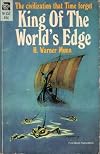
King of the World’s Edge by H. Warner Munn is truly a pulp era story, first serialized in Weird Tales in September of 1939. A bold tale with massive scope, this is an alternative history of both the Americas and the last remnants of Romano-Britain that works in myth and legend from two continents. It holds up pretty well eighty-two years later.
I picked this book up because of a blog post by Paul Lucas. Lucas wrote up a compelling review of Munn’s book, so when I saw the collected show more paperback version with King of the World’s Edge and The Ship From Atlantis titled Merlin’s Godson at a used bookstore, I picked it up immediately.
The King of the World’s Edge hits a lot of my interests: alternative history, Arthurian legends, the archaeology and anthropology of pre-Columbian America. The opening of the book, as Lucas notes, is a succinct retelling of a modern take on King Arthur as the last of the Romano-Britons. I can easily imagine that this is one of the versions of the tale that Tim Powers had in mind when he wrote The Drawing of the Dark or Last Call, participating in that Great Conversation that makes the kind of adventure story I like more than merely disposable entertainment.
After Ventidius Varro, the last of Arthur’s centurions, and Myrdhinn, the mage of reknown, escape the ruin of Arthur’s doomed attempt to unite Britain, Munn’s story then borrows heavily from Bernal Diaz’ The Conquest of New Spain, especially the early Expedition of Francisco Hernandez de Córdoba that was the first contact between the peoples of the Yucatan and the Spanish. The sequence of events and locations in Munn’s book when the Romans approach the New World is nearly the same, except that Córdoba’s men weren’t run off by frog men.
By luck, I had been reading Diaz’ account at the same time as King of the World’s Edge, and was thus able to clearly see this narrative debt. While I prefer to read fiction over non-fiction for pleasure, I’ve found that adding in some relevant historical works leavens my appreciation of popular fiction like this considerably. Pulp fiction in my experience has a pretty thorough grounding in real events and real people, and I’ve often read something later that gave me an “Aha!” moment when a reference was unfamiliar.
For example, reading Ross Douthat’s NY Times editorial and followup Substack on the French & Indian War, and in particular his account on how the defeat of General Braddock at Fort William Henry and the subsequent massacre of the survivors by the native allies of the French general Montcalm was a key turning point in the war, and in history, I was struck by how Munn described war in his fictional pre-Columbian America in much the same way as it was waged in the sixteenth century. The behavior and motives of the combatants were much the same. Which is not implausible.
But a work like this is not just aiming for historic verisimilitude, but also at mythic resonance. I was particularly interested in Munn’s take on the legends of Aztlan, the northern home of the Aztecs, having seen Jerry Pournelle and Larry Niven’s version of it in Burning Tower. I had wondered why Niven and Pournelle had included an Arthur-type character in that story. Maybe they were harkening back to King of the World’s Edge.
In Munn’s telling, the remarkable and horrifying civilization of the Aztecs was partly due to an inheritance from these voyagers. The war-like Varro gave them some of the Roman genius for war, and the wise and learned Myrdhinn gifted them arts, science, and less successfully, Christianity. Varro’s influence found better and more receptive soil in which to take root, and so warfare dominated the destiny of the Aztecs.
All of the other peoples that come into contact with Varro and Myrdhinn are also changed by the experience. From the formation of the Peoples of the Long House to the downfall of the mound builders of the Ohio river valley, Munn does a remarkable job keeping the story moving with all of this going on. The book covers many years, from the flight of the last Legions of Britain to the culmination of Varro and Myrdhinn’s coalition- and nation-building in a climatic battle.
Modern epic fantasy would tell this kind of story in several volumes each approaching a thousand pages. Munn does it in less than two hundred. Lots of details that are now common get skipped, but I admire the pacing that makes this possible. In a way, the story is all the grander for being so short. Contemporary books are longer because they just include more quotidian details, which are not particularly mythic.
There are another two books that Munn wrote over the decades of his long career in this world, I’m curious to see where he takes it from here. show less
I picked this book up because of a blog post by Paul Lucas. Lucas wrote up a compelling review of Munn’s book, so when I saw the collected show more paperback version with King of the World’s Edge and The Ship From Atlantis titled Merlin’s Godson at a used bookstore, I picked it up immediately.
The King of the World’s Edge hits a lot of my interests: alternative history, Arthurian legends, the archaeology and anthropology of pre-Columbian America. The opening of the book, as Lucas notes, is a succinct retelling of a modern take on King Arthur as the last of the Romano-Britons. I can easily imagine that this is one of the versions of the tale that Tim Powers had in mind when he wrote The Drawing of the Dark or Last Call, participating in that Great Conversation that makes the kind of adventure story I like more than merely disposable entertainment.
After Ventidius Varro, the last of Arthur’s centurions, and Myrdhinn, the mage of reknown, escape the ruin of Arthur’s doomed attempt to unite Britain, Munn’s story then borrows heavily from Bernal Diaz’ The Conquest of New Spain, especially the early Expedition of Francisco Hernandez de Córdoba that was the first contact between the peoples of the Yucatan and the Spanish. The sequence of events and locations in Munn’s book when the Romans approach the New World is nearly the same, except that Córdoba’s men weren’t run off by frog men.
By luck, I had been reading Diaz’ account at the same time as King of the World’s Edge, and was thus able to clearly see this narrative debt. While I prefer to read fiction over non-fiction for pleasure, I’ve found that adding in some relevant historical works leavens my appreciation of popular fiction like this considerably. Pulp fiction in my experience has a pretty thorough grounding in real events and real people, and I’ve often read something later that gave me an “Aha!” moment when a reference was unfamiliar.
For example, reading Ross Douthat’s NY Times editorial and followup Substack on the French & Indian War, and in particular his account on how the defeat of General Braddock at Fort William Henry and the subsequent massacre of the survivors by the native allies of the French general Montcalm was a key turning point in the war, and in history, I was struck by how Munn described war in his fictional pre-Columbian America in much the same way as it was waged in the sixteenth century. The behavior and motives of the combatants were much the same. Which is not implausible.
But a work like this is not just aiming for historic verisimilitude, but also at mythic resonance. I was particularly interested in Munn’s take on the legends of Aztlan, the northern home of the Aztecs, having seen Jerry Pournelle and Larry Niven’s version of it in Burning Tower. I had wondered why Niven and Pournelle had included an Arthur-type character in that story. Maybe they were harkening back to King of the World’s Edge.
In Munn’s telling, the remarkable and horrifying civilization of the Aztecs was partly due to an inheritance from these voyagers. The war-like Varro gave them some of the Roman genius for war, and the wise and learned Myrdhinn gifted them arts, science, and less successfully, Christianity. Varro’s influence found better and more receptive soil in which to take root, and so warfare dominated the destiny of the Aztecs.
All of the other peoples that come into contact with Varro and Myrdhinn are also changed by the experience. From the formation of the Peoples of the Long House to the downfall of the mound builders of the Ohio river valley, Munn does a remarkable job keeping the story moving with all of this going on. The book covers many years, from the flight of the last Legions of Britain to the culmination of Varro and Myrdhinn’s coalition- and nation-building in a climatic battle.
Modern epic fantasy would tell this kind of story in several volumes each approaching a thousand pages. Munn does it in less than two hundred. Lots of details that are now common get skipped, but I admire the pacing that makes this possible. In a way, the story is all the grander for being so short. Contemporary books are longer because they just include more quotidian details, which are not particularly mythic.
There are another two books that Munn wrote over the decades of his long career in this world, I’m curious to see where he takes it from here. show less

H. Warner Munn’s _Merlin’s Ring_ is one of the odder fantasies I have come across in my reading, but also one for which I have a deep affection. The book is equal parts pseudo-Arthurian Romance (in both the medieval and modern sense of the word), era-spanning historical fantasy à la [b:Phra the Phoenician|7493992|Phra the Phoenician|Edwin Arnold|http://d.gr-assets.com/books/1267778332s/7493992.jpg|9643764], and epic hero’s journey; there is even some mild pulp sci-fi thrown in for show more good measure. Despite (or maybe because of) all of this melding and mixing, _Merlin’s Ring_ manages to be something all its own.
Written by one of the old standbys of the Weird Tales pulp magazine (Munn was an associate of Lovecraft and Seabury Quinn) _Merlin’s Ring_ was probably Munn’s masterwork. It is actually the second volume in a series of stories that purport to tell the tale of what happened to Arthur’s followers after the great King’s fall, but it can be read on its own quite easily. All one needs to know from the first volume (collecting two original novellas under the title [b:Merlin's Godson|3173143|Merlin's Godson|H. Warner Munn|http://d.gr-assets.com/books/1314643795s/3173143.jpg|3064559]) is that it describes how the wizard Merlin and the Romano-British centurion Ventidius Varro fled Britain with their followers and sailed in Arthur’s ship Prydwen to the New World. There they became kings among the Aztecs and a son is born to Varro, Gwalchmai, who has for godfather none other than the famous Merlin. Varro sends his son back to the Old World on a quest to find the current emperor and offer to him overlordship of Varro’s new domain. On the way across the Atlantic Gwalchmai has many adventures and even comes across an ancient Atlantean Swan-Ship which houses a strange robotic statue inhabited by the transmigrating spirit of an undying Atlantean princess. The two of course fall in love, but as the tale ends Gwalchmai is trapped beneath a glacier with his love, Corenice, promising they will meet again.
This volume opens several hundred years later as Corenice, now inhabiting the body of a Viking maiden, forces her family to steer their ship towards the glacier that houses Gwalchmai’s body. Thanks to having drunk his godfather’s elixir of life, as well as having possession of his magical ring, Gwalchmai has been able to weather the centuries in the ice unharmed and no older than when he was first frozen. He is freed from the ice by Corenice and so begins his renewed quest to find the emperor to whom he can give the message of his father. What follows is a meandering journey from western Europe to the far East and back again which spans centuries (Merlin’s elixir exacts periods of a death-like sleep in order to pay for long life) and takes Gwalchmai into a variety of adventures. These adventures include a somewhat admittedly twee stay in Faery where he retrieves Arthur’s sword Excalibur, a journey to China (initially in search of the supposed Christian King Prester John) in a humourous style reminiscent of Bramah’s Kai Lung stories, a voyage to feudal Japan, and a return west where he comes across Joan of Arc (an apparent descendant of his and Corenice’s) and ultimately tangles with an old foe, the alien-god Oduarpa who had been responsible for the fall of Atlantis.
In many ways it is a strange tale and not every element of it works as well as others. Still, Munn has an easy prose style and was a meticulous researcher who brings vivid life to the era-spanning adventures of his hero. Gwalchmai’s ostensible quest is really little more than a macguffin meant to propel the hero forward through time and across space as he lives out his not-quite-immortal term. The lynchpin of the story is the romance between Gwalchmai and his transmigrating love Corenice. Sometimes this romance can be stretched to the point of excess, but ultimately Munn is able to pull the story back and make us care about these characters whose fate as semi-supernatural heroes seems to always get in the way of their true desire to simply live a simple life with each other. Munn creates an interesting world populated both with real historical figures (among them Kublai Khan, Joan of Arc, Gilles de Rais and Christopher Columbus), alongside mythical figures such as King Arthur, the Norse god Thor, and the Fae, as well as his own inventions in the form of Corenice, last daughter of high-tech Atlantis, and their alien foe the dark lord Oduarpa.
I imagine this book will not be to everyone’s taste, but if you like historically flavoured fantasy with a strong dose of romance and optimism then I’d recommend giving _Merlin’s Ring_ a try (either with or without the companion volume [b:Merlin's Godson|3173143|Merlin's Godson|H. Warner Munn|http://d.gr-assets.com/books/1314643795s/3173143.jpg|3064559]). show less
Written by one of the old standbys of the Weird Tales pulp magazine (Munn was an associate of Lovecraft and Seabury Quinn) _Merlin’s Ring_ was probably Munn’s masterwork. It is actually the second volume in a series of stories that purport to tell the tale of what happened to Arthur’s followers after the great King’s fall, but it can be read on its own quite easily. All one needs to know from the first volume (collecting two original novellas under the title [b:Merlin's Godson|3173143|Merlin's Godson|H. Warner Munn|http://d.gr-assets.com/books/1314643795s/3173143.jpg|3064559]) is that it describes how the wizard Merlin and the Romano-British centurion Ventidius Varro fled Britain with their followers and sailed in Arthur’s ship Prydwen to the New World. There they became kings among the Aztecs and a son is born to Varro, Gwalchmai, who has for godfather none other than the famous Merlin. Varro sends his son back to the Old World on a quest to find the current emperor and offer to him overlordship of Varro’s new domain. On the way across the Atlantic Gwalchmai has many adventures and even comes across an ancient Atlantean Swan-Ship which houses a strange robotic statue inhabited by the transmigrating spirit of an undying Atlantean princess. The two of course fall in love, but as the tale ends Gwalchmai is trapped beneath a glacier with his love, Corenice, promising they will meet again.
This volume opens several hundred years later as Corenice, now inhabiting the body of a Viking maiden, forces her family to steer their ship towards the glacier that houses Gwalchmai’s body. Thanks to having drunk his godfather’s elixir of life, as well as having possession of his magical ring, Gwalchmai has been able to weather the centuries in the ice unharmed and no older than when he was first frozen. He is freed from the ice by Corenice and so begins his renewed quest to find the emperor to whom he can give the message of his father. What follows is a meandering journey from western Europe to the far East and back again which spans centuries (Merlin’s elixir exacts periods of a death-like sleep in order to pay for long life) and takes Gwalchmai into a variety of adventures. These adventures include a somewhat admittedly twee stay in Faery where he retrieves Arthur’s sword Excalibur, a journey to China (initially in search of the supposed Christian King Prester John) in a humourous style reminiscent of Bramah’s Kai Lung stories, a voyage to feudal Japan, and a return west where he comes across Joan of Arc (an apparent descendant of his and Corenice’s) and ultimately tangles with an old foe, the alien-god Oduarpa who had been responsible for the fall of Atlantis.
In many ways it is a strange tale and not every element of it works as well as others. Still, Munn has an easy prose style and was a meticulous researcher who brings vivid life to the era-spanning adventures of his hero. Gwalchmai’s ostensible quest is really little more than a macguffin meant to propel the hero forward through time and across space as he lives out his not-quite-immortal term. The lynchpin of the story is the romance between Gwalchmai and his transmigrating love Corenice. Sometimes this romance can be stretched to the point of excess, but ultimately Munn is able to pull the story back and make us care about these characters whose fate as semi-supernatural heroes seems to always get in the way of their true desire to simply live a simple life with each other. Munn creates an interesting world populated both with real historical figures (among them Kublai Khan, Joan of Arc, Gilles de Rais and Christopher Columbus), alongside mythical figures such as King Arthur, the Norse god Thor, and the Fae, as well as his own inventions in the form of Corenice, last daughter of high-tech Atlantis, and their alien foe the dark lord Oduarpa.
I imagine this book will not be to everyone’s taste, but if you like historically flavoured fantasy with a strong dose of romance and optimism then I’d recommend giving _Merlin’s Ring_ a try (either with or without the companion volume [b:Merlin's Godson|3173143|Merlin's Godson|H. Warner Munn|http://d.gr-assets.com/books/1314643795s/3173143.jpg|3064559]). show less

Sometimes, a good, old-fashioned pulp horror story is just the thing.
This edition consists of the title story and a follow-up story, 'The Werewolf's Daughter'.
The idea of the story, "The Werewolf of Ponkert", was actually suggested by H.P. Lovecraft in a letter published in Weird Tales. In the letter Lovecraft wondered why there has never been a werewolf story told from the point of view of the werewolf. Unbeknownst to Lovecraft, Munn's story was published in that same issue of the magazine. show more The story is told from the perspective of a man reading and translating from the original Latin the memoir of the werewolf of Ponkert. The story also introduces a character that recurs in many of Munn's works; the Master. The Master is the proto-werewolf, an entity that creates and controls other werewolves. The journal describes how the werewolf of Ponkert is created, the horrible things he does in service of the Master, and how the townsfolk deal with it.
"The Werewolf's Daughter" takes place in Ponkert some 15 - 20 years later and describes events related to the first story.
Both stories are enjoyable, if a bit dated as most 1920s pulp stories are. show less
This edition consists of the title story and a follow-up story, 'The Werewolf's Daughter'.
The idea of the story, "The Werewolf of Ponkert", was actually suggested by H.P. Lovecraft in a letter published in Weird Tales. In the letter Lovecraft wondered why there has never been a werewolf story told from the point of view of the werewolf. Unbeknownst to Lovecraft, Munn's story was published in that same issue of the magazine. show more The story is told from the perspective of a man reading and translating from the original Latin the memoir of the werewolf of Ponkert. The story also introduces a character that recurs in many of Munn's works; the Master. The Master is the proto-werewolf, an entity that creates and controls other werewolves. The journal describes how the werewolf of Ponkert is created, the horrible things he does in service of the Master, and how the townsfolk deal with it.
"The Werewolf's Daughter" takes place in Ponkert some 15 - 20 years later and describes events related to the first story.
Both stories are enjoyable, if a bit dated as most 1920s pulp stories are. show less

This is a reprint of two much earlier stories by the author, 'King of the World's Edge' and 'The Ship from Atlantis', collected into one volume. As this reprint is dated after "Merlin's Ring" by the same author, I began reading "Merlin's Ring" first, then realised it was a sequel so stopped reading that in favour of reading this book first - unfortunately the early section of the sequel contains massive spoilers for the second story in the present volume.
Most of the present book is taken up show more by the story of Ventidius Varro, a soldier in the army of Roman Britain who witnessed the gradual withdrawal of the legions back to Rome. He tells, forty years after the event, of how he had fought in the war against the Saxon invasions, following Arthur of legendary fame. When Arthur was fatally wounded, Myrdhinn (the Welsh name for Merlin) arranged for his body to be entombed in a safe place until he would revive some time in the far future to lead the defence of the British. Ventidius, Myrdhinn, and various others from Arthur's army embarked on a ship and sailed to a land they believe to be a haven: the New World/North America.
Initially meeting friendly people on an island, they are attacked by hostile fishmen on the mainland who kill some of their number and carry off a Saxon who had become part of the crew. That character later returns to cause some havoc. The ship is sunk soon after and many of the crew drown, and the survivors, Ventidius and some of his fellow soldiers, are taken captive by local native Americans. Gradually they learn that these people are oppressed themselves, and Ventidius and Myrrhdin form friendships which will stand them in good stead later on. They are drawn into the conflicts between various tribal groups.
The bulk of the story is a version of the early history of the Americas, including the Mayans who are called Maians and portrayed as very bloodthirsty and oppressive, a somewhat different take on them than I've heard before, and the people who later become the Aztecs who seem more deserving of that reputation. There is a lot of fighting and both Ventidius and Myrrhdin are later viewed as gods. This story has a brief 'frame' which tops and tails it and in which it is explained that this is the first person account of a Roman, uncovered following a storm at Key West and translated by a scholar. Rather incredibly, it was meant to have been delivered by the son of Ventidius, Merlin's godson, to the emperor of Rome in the belief that the Romans require a safe haven to retreat from the barbarians besetting what is left of the empire. I found it hard to believe that the emperor would be expected to read a long novel just to be given that message!
The second story in the book is about Ventidius' son, Gwalchmai, who goes to deliver the message ('The King of the World's Edge') but soon loses it. He is becalmed and, desperate for moisture, drinks a potion of Merlin's (Merlin is only called Myrrdhin in the first story) which he realises later is the substance that his godfather had doled out in occasional drops to prolong his own life. By drinking the potion in one go, Gwalchmai becomes not only long lived but also has great powers of recuperation.
He comes across a strange swan shaped metal vessel, becalmed like his own, which is far in advance of current technology, and turns out to be a survivor of Atlantis. Aboard is a metal statue of a young woman, inhabited by the transferred spirit of Corenice, a young Atlantean woman who had died after the loss of Atlantis, and the two eventually fall in love. But after they help a community who are being attacked by a decadent remnant of Atlantean civilisation, disaster befalls them. I found this second segment a bit boring in places and there were too many farfetched things to have to suspend disbelief about, not least that the Atlanteans were below sealevel and preserved by a forcefield but had nevertheless learned enough of what was going on in the outside world to have been able to send fighting men to the conflicts in the first story. Corenice also has the ability to send her consciousness into other living things and she teaches Gwalchmai how to do this, a skill which becomes crucially useful in the follow up volume.
Despite all the stories about battles, this book is a bit more lively than the sequel as the main part of it is told in first person. The author has a tendency to headhop and act as an omniscient narrator when writing in the third person, which is shown in 'The Ship from Atlantis' and the sequel. So I am awarding it a 3 star rating overall. show less
Most of the present book is taken up show more by the story of Ventidius Varro, a soldier in the army of Roman Britain who witnessed the gradual withdrawal of the legions back to Rome. He tells, forty years after the event, of how he had fought in the war against the Saxon invasions, following Arthur of legendary fame. When Arthur was fatally wounded, Myrdhinn (the Welsh name for Merlin) arranged for his body to be entombed in a safe place until he would revive some time in the far future to lead the defence of the British. Ventidius, Myrdhinn, and various others from Arthur's army embarked on a ship and sailed to a land they believe to be a haven: the New World/North America.
Initially meeting friendly people on an island, they are attacked by hostile fishmen on the mainland who kill some of their number and carry off a Saxon who had become part of the crew. That character later returns to cause some havoc. The ship is sunk soon after and many of the crew drown, and the survivors, Ventidius and some of his fellow soldiers, are taken captive by local native Americans. Gradually they learn that these people are oppressed themselves, and Ventidius and Myrrhdin form friendships which will stand them in good stead later on. They are drawn into the conflicts between various tribal groups.
The bulk of the story is a version of the early history of the Americas, including the Mayans who are called Maians and portrayed as very bloodthirsty and oppressive, a somewhat different take on them than I've heard before, and the people who later become the Aztecs who seem more deserving of that reputation. There is a lot of fighting and both Ventidius and Myrrhdin are later viewed as gods. This story has a brief 'frame' which tops and tails it and in which it is explained that this is the first person account of a Roman, uncovered following a storm at Key West and translated by a scholar. Rather incredibly, it was meant to have been delivered by the son of Ventidius, Merlin's godson, to the emperor of Rome in the belief that the Romans require a safe haven to retreat from the barbarians besetting what is left of the empire. I found it hard to believe that the emperor would be expected to read a long novel just to be given that message!
The second story in the book is about Ventidius' son, Gwalchmai, who goes to deliver the message ('The King of the World's Edge') but soon loses it. He is becalmed and, desperate for moisture, drinks a potion of Merlin's (Merlin is only called Myrrdhin in the first story) which he realises later is the substance that his godfather had doled out in occasional drops to prolong his own life. By drinking the potion in one go, Gwalchmai becomes not only long lived but also has great powers of recuperation.
He comes across a strange swan shaped metal vessel, becalmed like his own, which is far in advance of current technology, and turns out to be a survivor of Atlantis. Aboard is a metal statue of a young woman, inhabited by the transferred spirit of Corenice, a young Atlantean woman who had died after the loss of Atlantis, and the two eventually fall in love. But after they help a community who are being attacked by a decadent remnant of Atlantean civilisation, disaster befalls them. I found this second segment a bit boring in places and there were too many farfetched things to have to suspend disbelief about, not least that the Atlanteans were below sealevel and preserved by a forcefield but had nevertheless learned enough of what was going on in the outside world to have been able to send fighting men to the conflicts in the first story. Corenice also has the ability to send her consciousness into other living things and she teaches Gwalchmai how to do this, a skill which becomes crucially useful in the follow up volume.
Despite all the stories about battles, this book is a bit more lively than the sequel as the main part of it is told in first person. The author has a tendency to headhop and act as an omniscient narrator when writing in the third person, which is shown in 'The Ship from Atlantis' and the sequel. So I am awarding it a 3 star rating overall. show less
Lists
Awards


You May Also Like


Associated Authors
Statistics
- Works
- 23
- Also by
- 18
- Members
- 876
- Popularity
- #29,232
- Rating
- 3.6
- Reviews
- 11
- ISBNs
- 19
- Languages
- 1
- Favorited
- 2