
Debra Frasier
Author of On the Day You Were Born
About the Author
Image credit: Courtesy of Debra Frasier
Works by Debra Frasier
The Incredible Water Show 2 copies
Aiming for Excellence 1 copy
Associated Works
Tagged
Common Knowledge
- Birthdate
- 1953-04-03
- Gender
- female
- Education
- Florida State University
Penland School of Crafts - Nationality
- USA
- Birthplace
- Vero Beach, Florida, USA
- Places of residence
- Florida, USA
Minnesota, USA - Associated Place (for map)
- Florida, USA
Members
Reviews

The author has taken her years of beachcombing and the photographs she made of her many finds and turned them into a nice little picture book. Well, actually, the picture book portion didn't do much for me, being a bit soppy and sappy and entirely too pro-ocean.
Yes, yes, I firmly believe that having driven our ancient ancestors out of the ocean, that water is angered by any attempt by humanity to return to its embrace. This book proves my point, by displaying many remnants the ocean has show more spit back onto shore having taken care of the rest of the boat and its human occupants. The ocean is coming for us, people, and that's the reason I live in the most landlocked state in the U.S.
Anyway, the best part of the book for me was the six-pages of endmatter, "An Ocean Journal," that documents the origins of the objects integrated into the main story. History and science is way better than ocean-hugger propaganda. show less
Yes, yes, I firmly believe that having driven our ancient ancestors out of the ocean, that water is angered by any attempt by humanity to return to its embrace. This book proves my point, by displaying many remnants the ocean has show more spit back onto shore having taken care of the rest of the boat and its human occupants. The ocean is coming for us, people, and that's the reason I live in the most landlocked state in the U.S.
Anyway, the best part of the book for me was the six-pages of endmatter, "An Ocean Journal," that documents the origins of the objects integrated into the main story. History and science is way better than ocean-hugger propaganda. show less
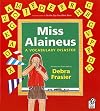
I thought I was pretty good at definitions until this week.
Sage, a fifth-grade student, comes down with a cold and must rest in bed for several days. Her best friend, Starr, phones to dictate and spell the weekly vocabulary list, but Starr is rushed and isn’t able to spell the last word on the list: miscellaneous.
The usual assignment is to define each word. A student gets extra credit for an accompanying illustration. This time Sage completes the work in bed. Otherwise, her technique is show more pretty much the same as always. Since she takes pride in her extensive vocabulary, she’s able to produce many accurate, dictionary-style definitions without having to consult a dictionary at all. The rule still holds, even though she’s sick. However, the word “miscellaneous” does give her a bit of trouble, mainly because (unbeknownst to her) she misspelled it when her friend Starr called her with the (rushed) vocabulary list: Miss Alaineus. Sage goes on to make the mistake of assuming it’s an eponym (a word based on a discovery, object, or theory associated with an actual person).She thinks back to the time when her mother said she was picking up some “miscellaneous” items at the supermarket, one of which was a box of spaghetti noodles with an illustration of a long-haired woman on the front of the package. Sage now concludes that Miss Alaineus is the woman associated with that brand, and she defines the word as “the woman on the green spaghetti boxes whose hair is the colour of uncooked pasta and turns into spaghetti at the ends.”
Sage’s mother has been known to remark that “Pride goeth before a fall,” and the fifth grader experiences that for herself when she returns to school. Instead of their usual Monday test, the class has a vocabulary bee. Sage is asked to spell and define the word miscellaneous. She spells it incorrectly and then provides a definition which causes her classmates to burst into a falling-down fit of laughter. She’s utterly humiliated and has no end of adjectives to describe her shame: devastated, wasted, ravaged, destroyed, ruined, finished, brought to an end. Her peers call her Miss Alaineus for the rest of the day.
Sage’s error isn’t easily forgotten. When her class makes a trip to the science museum and the word “miscellaneous” is used by the tour guide, laughter erupts yet again from her peers.
Sage’s humiliation persists until a remark from her mother about there being “gold in every mistake” gives her an idea for the costume she will wear for the school’s annual vocabulary parade. The event requires each student to choose a vocabulary word and provide a “creative interpretation” by dressing in clothes and accessories to suggest the word’s meaning. Sage goes as “Miss Alaineus, Queen of All Miscellaneous Things.” She receives loud applause, gets lots of laughs, and wins a gold trophy for “The Most Original Use of a Word in the Tenth Annual Vocabulary Parade.”
Frasier’s educational book is clever and bright (rendered mostly in primary-coloured markers). I do think it’s a bit on the long (and verbose side) and I’m doubtful about the premise. It’s hard to believe that a girl like Sage, with such an extensive vocabulary, would make an error of this kind.
The narrative itself appears as Sage’s fulfillment of a class assignment which involves going through the dictionary and choosing three words for each letter of the alphabet—preferably different, unusual, or surprising ones—and creating sentences that relate to the student’s daily life. In the end, there will be 26 sentences. (I’m always curious about the X page in alphabet books, and Frasier handles this well. Sage writes the following about the vocabulary parade: “If x=happy, then we were all x X 10 and chiming like xylophones.”)
Honestly? I don’t think this is a picture book that children would pick up and read on their own. It’s just too obviously educational. The word “vocabulary” alone in the subtitle is enough to put most kids off. However, it might have a place as a read-aloud in an elementary school classroom, and I think some teachers would find the idea of having a vocabulary parade at their own school quite fun. show less
Sage, a fifth-grade student, comes down with a cold and must rest in bed for several days. Her best friend, Starr, phones to dictate and spell the weekly vocabulary list, but Starr is rushed and isn’t able to spell the last word on the list: miscellaneous.
The usual assignment is to define each word. A student gets extra credit for an accompanying illustration. This time Sage completes the work in bed. Otherwise, her technique is show more pretty much the same as always. Since she takes pride in her extensive vocabulary, she’s able to produce many accurate, dictionary-style definitions without having to consult a dictionary at all. The rule still holds, even though she’s sick. However, the word “miscellaneous” does give her a bit of trouble, mainly because (unbeknownst to her) she misspelled it when her friend Starr called her with the (rushed) vocabulary list: Miss Alaineus. Sage goes on to make the mistake of assuming it’s an eponym (a word based on a discovery, object, or theory associated with an actual person).
Sage’s mother has been known to remark that “Pride goeth before a fall,” and the fifth grader experiences that for herself when she returns to school. Instead of their usual Monday test, the class has a vocabulary bee. Sage is asked to spell and define the word miscellaneous. She spells it incorrectly and then provides a definition which causes her classmates to burst into a falling-down fit of laughter. She’s utterly humiliated and has no end of adjectives to describe her shame: devastated, wasted, ravaged, destroyed, ruined, finished, brought to an end. Her peers call her Miss Alaineus for the rest of the day.
Sage’s error isn’t easily forgotten. When her class makes a trip to the science museum and the word “miscellaneous” is used by the tour guide, laughter erupts yet again from her peers.
Sage’s humiliation persists until a remark from her mother about there being “gold in every mistake” gives her an idea for the costume she will wear for the school’s annual vocabulary parade. The event requires each student to choose a vocabulary word and provide a “creative interpretation” by dressing in clothes and accessories to suggest the word’s meaning. Sage goes as “Miss Alaineus, Queen of All Miscellaneous Things.” She receives loud applause, gets lots of laughs, and wins a gold trophy for “The Most Original Use of a Word in the Tenth Annual Vocabulary Parade.”
Frasier’s educational book is clever and bright (rendered mostly in primary-coloured markers). I do think it’s a bit on the long (and verbose side) and I’m doubtful about the premise. It’s hard to believe that a girl like Sage, with such an extensive vocabulary, would make an error of this kind.
The narrative itself appears as Sage’s fulfillment of a class assignment which involves going through the dictionary and choosing three words for each letter of the alphabet—preferably different, unusual, or surprising ones—and creating sentences that relate to the student’s daily life. In the end, there will be 26 sentences. (I’m always curious about the X page in alphabet books, and Frasier handles this well. Sage writes the following about the vocabulary parade: “If x=happy, then we were all x X 10 and chiming like xylophones.”)
Honestly? I don’t think this is a picture book that children would pick up and read on their own. It’s just too obviously educational. The word “vocabulary” alone in the subtitle is enough to put most kids off. However, it might have a place as a read-aloud in an elementary school classroom, and I think some teachers would find the idea of having a vocabulary parade at their own school quite fun. show less
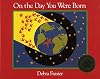
The premise of this book - that the entire world bows to newborn humans - makes me want to barf. But: after reading it one hundred times, I've come to appreciate the things the author chose to depict and the funky art style. And I sometimes get a little teary-eyed at the end.
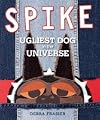
I really enjoyed this book for a number of reasons. First and foremost, the way it is illustrated captured my attention. I think it's so creative how Debra Frasier used cut up jeans as the main way to illustrate her story; it created a depth and texture that I just completely love. I also liked how the dog has a personality. He has his own voice in the story: "A dog can't help the way he looks. Get to know me! I'm good-hearted. Loyal. Smart." He continues to fight to show everyone his worth, show more even though he has been abandoned by his owner and no one wants to adopt him. The big idea of this story is not judging a book by its cover. The people in the story don't think much of Spike because he is so ugly. Spike shows that he still loves himself and is frustrated and sad that others cannot see passed his looks, and I think that makes him a strong character. The child in the story offers another dynamic to the book, which offers hope that there are people who can see what is important about someone, even if it is a dog. The only reason I would say I didn't like this book is how the plot seems a little disorganized, with characters moving in and out of the story quickly in ways that I could not follow completely. For example, Spike's owner who abandoned him at the beginning of the story, suddenly comes back into the story and tries to kidnap the cat next door, for what seems like no reason at all. show less
Lists
Reading Rainbow (1)
Awards


You May Also Like


Associated Authors
Statistics
- Works
- 14
- Also by
- 1
- Members
- 4,275
- Popularity
- #5,880
- Rating
- 4.0
- Reviews
- 77
- ISBNs
- 46
- Languages
- 3
- Favorited
- 2