

Rachel Singer Gordon
Author of The Nextgen Librarian's Survival Guide
About the Author
Rachel Singer Gordon is a part-time librarian at Franklin Park Public Library, Illinois, and a columnist for Library Journal
Works by Rachel Singer Gordon
Associated Works
Tagged
Common Knowledge
- Birthdate
- 1970-04-16
- Gender
- female
- Education
- Carleton College (B.A.|Religion|1992)
Northwestern University (M.A.|Modern Judaism|1994)
Rosary College (now Dominican University) (M.L.S|1996) - Occupations
- librarian
- Awards and honors
- Library Journal Mover and Shaker (2002)
EBSCO/ALA Conference Attendance Scholarship (2004)
Marquis Who's Who in America (2007) - Nationality
- USA
- Places of residence
- Illinois, USA
- Associated Place (for map)
- Illinois, USA
Members
Reviews
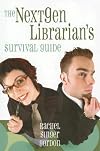
For me, the most relevant librarian book that I've read. It gives an overview of what to look for in library schools, stereotypes and issues younger librarians have to overcome, and the future of the library's role in society. Plus, I've been worrying that I've been idealizing the librarian career, thus wanting honest opinions/critiques from librarians to get a better picture of what I'm getting myself into--I got that from this book.
http://pixxiefishbooks.blogspot.com/2...
I believe I stumbled across this book when getting some other books on librarianship that I had recently read reviews for. The author, Rachel Singer Gordon, is a name I already knew - she is the editor of the Info Career Trends Newsletter to which I subscribe, amonst other things. She is one of those people who, in the world of librarianship at least, always seems to have something interesting to say. Plus I figured I am a NextGen librarian (I guess?) show more and so might learn something useful or two.
I probably had a larger need for this book a few years ago, but I still found it useful. Gordon provides advice and tips on many different issues in librarianship, from surviving library school*, to finding a first job, to perceptions of librarianship, to working with older colleagues who might perhaps be a bit more - ahem - traditional.
Another important aspect to note is that Gordon is focusing on the American library job market, which, from what I know, is significantly different from the Canadian one. It is really hard for many graduates of American library schools to snag that first job. Canadian library school graduates - and my evidence is largely anecdotal on this account, I admit - have a much easier time. Gordon gives some good general advice on job-hunting; for example, no matter how broke you might feel upon graduation, don't necessarily just snap up the first job that comes your way.
What I really found useful in this book is that Gordon also sent out surveys to both NextGen (under-40) and older librarians (over-40), in order to solicit feedback on the issues covered in her book. Some of the responses to these are very telling. Others are quick to point out that the under-40, over-40 divide is a bit of a false dichotomy, which Gordon (to her credit) acknowledges whenever possible. (You have to draw a line in the sand somewhere, right?)
The final chapter in the book tackles the subject from a completely different angle. It is written for current administrators and managers, rather than the NextGen librarians working for those administrators and managers. This gives an interesting perspective from 'the other side of the fence', so to speak.
Well-written, and a quick, easy read, I would recommend this to people still in library school, or those recently graduated (within the last few years). Beyond that, you've probably figured out most of what's in the book - maybe the hard way! I would also recommend it to older librarians, administrators and managers, who might be having a hard time relating to or understanding their younger colleagues.
* Those of you who are not librarians will not necessarily know that while most librarians are very content and happy in their day-to-day jobs, library school itself is almost universally disliked. show less
I believe I stumbled across this book when getting some other books on librarianship that I had recently read reviews for. The author, Rachel Singer Gordon, is a name I already knew - she is the editor of the Info Career Trends Newsletter to which I subscribe, amonst other things. She is one of those people who, in the world of librarianship at least, always seems to have something interesting to say. Plus I figured I am a NextGen librarian (I guess?) show more and so might learn something useful or two.
I probably had a larger need for this book a few years ago, but I still found it useful. Gordon provides advice and tips on many different issues in librarianship, from surviving library school*, to finding a first job, to perceptions of librarianship, to working with older colleagues who might perhaps be a bit more - ahem - traditional.
Another important aspect to note is that Gordon is focusing on the American library job market, which, from what I know, is significantly different from the Canadian one. It is really hard for many graduates of American library schools to snag that first job. Canadian library school graduates - and my evidence is largely anecdotal on this account, I admit - have a much easier time. Gordon gives some good general advice on job-hunting; for example, no matter how broke you might feel upon graduation, don't necessarily just snap up the first job that comes your way.
What I really found useful in this book is that Gordon also sent out surveys to both NextGen (under-40) and older librarians (over-40), in order to solicit feedback on the issues covered in her book. Some of the responses to these are very telling. Others are quick to point out that the under-40, over-40 divide is a bit of a false dichotomy, which Gordon (to her credit) acknowledges whenever possible. (You have to draw a line in the sand somewhere, right?)
The final chapter in the book tackles the subject from a completely different angle. It is written for current administrators and managers, rather than the NextGen librarians working for those administrators and managers. This gives an interesting perspective from 'the other side of the fence', so to speak.
Well-written, and a quick, easy read, I would recommend this to people still in library school, or those recently graduated (within the last few years). Beyond that, you've probably figured out most of what's in the book - maybe the hard way! I would also recommend it to older librarians, administrators and managers, who might be having a hard time relating to or understanding their younger colleagues.
* Those of you who are not librarians will not necessarily know that while most librarians are very content and happy in their day-to-day jobs, library school itself is almost universally disliked. show less
This book provided a lot of research and quotes from on-the-job librarians about what it's like to be a recent transplant to the profession or a new graduate. Gordon discusses the difference between "Millennials" just beginning a career in library science and the "Gen Xers" who may be beginning a 2nd career as a librarian. Valuable insight and stories highlighting the challenges and rewards of working in librarianship and what skills are useful in dealing with older co-workers who may be put show more off by your youth/inexperience. I learned a lot about what the job market is really like from this book and gained some valuable resources to help in the job hunt, professional development and answers to questions. show less
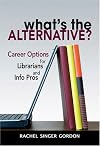
Rachel Singer Jordon has made a big name for herself writing career advice books for librarians and maintaining the job hunting website, LISJOBS.com.
This book addresses the career possibilities that librarians and other information professionals can explore if they are no longer interested in working at public or academic libraries. The book covers everything from consulting to taking up systems work. The best part of the book was the short email interviews with information professionals who show more have gone through big transitions.
This is a valuable and accessible work in career planning, one area of writing where it can be difficult to locate substantive and reliable information. show less
This book addresses the career possibilities that librarians and other information professionals can explore if they are no longer interested in working at public or academic libraries. The book covers everything from consulting to taking up systems work. The best part of the book was the short email interviews with information professionals who show more have gone through big transitions.
This is a valuable and accessible work in career planning, one area of writing where it can be difficult to locate substantive and reliable information. show less
You May Also Like


Associated Authors
Statistics
- Works
- 11
- Also by
- 1
- Members
- 685
- Popularity
- #36,933
- Rating
- 3.8
- Reviews
- 12
- ISBNs
- 29
- Favorited
- 3