
Dwight Jon Zimmerman
Author of Lincoln's Last Days: The Shocking Assassination That Changed America Forever
About the Author
Dwight Jon Zimmerman began his career in publishing at Marvel Comics, where he held a variety of editorial positions. In 1992, he became executive editor of Topps Comics. His first book, First Command: Paths to Leadership, was published in 2005. His other books include The Hammer and the Anvil, The show more Book of War, The Book of Weapons, The Vietnam War: A Graphic History, and Tecumseh: Shooting Star of the Shawnee. He has also adapted books for young readers by numerous authors including Dee Brown, James McPherson, and Bill O'Reilly. (Bowker Author Biography) show less
Series
Works by Dwight Jon Zimmerman
Lincoln's Last Days: The Shocking Assassination That Changed America Forever (2012) 491 copies, 4 reviews
Saga of the Sioux: An Adaptation from Dee Brown's Bury My Heart at Wounded Knee (2011) 88 copies, 6 reviews
The Day the World Exploded: The Earthshaking Catastrophe at Krakatoa (2008) — Adaptation — 85 copies, 7 reviews
The Hammer and the Anvil: Frederick Douglass, Abraham Lincoln, and the End of Slavery in America (2012) 48 copies, 2 reviews
Beyond Hell and Back: How America's Special Operations Forces Became the World's Greatest Fighting Unit (2007) 47 copies, 2 reviews
Uncommon Valor: The Medal of Honor and the Six Warriors Who Earned It in Afghanistan and Iraq (2010) 34 copies, 1 review
Area 51: The Graphic History of America's Most Secret Military Installation (2014) 17 copies, 1 review
Associated Works
Marvel Fanfare #48 — Author — 2 copies
Tagged
Common Knowledge
- Canonical name
- Zimmerman, Dwight Jon
- Other names
- Zimmerman, Dwight
- Gender
- male
- Nationality
- USA
- Associated Place (for map)
- USA
Members
Reviews

The 1883 eruption and subsequent destruction of the volcanic island of Krakatoa, in the Sunda Straight between Sumatra and Java, is retold in this engaging and informative picture book, a children's adaptation of Simon Winchester's adult book, Krakatoa: The Day the World Exploded. Background sections are devoted to understanding volcanoes, the history of the spice trade in that part of the world, the century of scientific discoveries which preceded the event, the early warning signs of the show more disaster, a history of the conflagration itself, and what happened afterward. Back matter includes a glossary, suggested volcano websites, and suggested reading...
At 96 pages, The Day the World Exploded: The Earthshaking Catastrophe at Krakatoa is definitely a picture book aimed at older children, perhaps upper elementary and middle-school-aged. It is a large book, physically, and contains copious illustrations, including contemporary photographs, period illustrations, and original illustrations from Caldecott Medal-winning illustrator Jason Chin. As it happens, Chin is the reason I tracked this one down, as I am an admirer of his work. That said, while I appreciated his contribution, in the end I was more impressed by the story itself and by the way in which it was presented—kudos to original author Simon Winchester, and to Dwight Jon Zimmerman, who adapted the book for younger readers. I appreciated all of the background information, which enriches the reader's understanding of the events at Krakatoa, and the reasons they became a worldwide sensation. Recommended to children who are interested in volcanoes, disasters, and world history. show less
At 96 pages, The Day the World Exploded: The Earthshaking Catastrophe at Krakatoa is definitely a picture book aimed at older children, perhaps upper elementary and middle-school-aged. It is a large book, physically, and contains copious illustrations, including contemporary photographs, period illustrations, and original illustrations from Caldecott Medal-winning illustrator Jason Chin. As it happens, Chin is the reason I tracked this one down, as I am an admirer of his work. That said, while I appreciated his contribution, in the end I was more impressed by the story itself and by the way in which it was presented—kudos to original author Simon Winchester, and to Dwight Jon Zimmerman, who adapted the book for younger readers. I appreciated all of the background information, which enriches the reader's understanding of the events at Krakatoa, and the reasons they became a worldwide sensation. Recommended to children who are interested in volcanoes, disasters, and world history. show less
Saga of the Sioux: An Adaptation from Dee Brown's Bury My Heart at Wounded Knee by Dwight Jon Zimmerman

As a fan of both Dee Brown and Dwight Zimmerman, I was excited to hear about SAGA OF THE SIOUX based on the book BURY MY HEART AT WOUNDED KNEE. Although I recently read Dee Brown's WONDROUS TIMES ON THE FRONTIER, it's been decades since I read BURY MY HEART AT WOUNDED KNEE.
SAGA OF THE SIOUX is an amazing book highlighting Brown's original work for a new generation, while showcasing Zimmerman's skills in presenting information for middle readers.
The text begins with a well-written "Note to show more the Reader" and "Introduction" that provides an essential historical and cultural context for readers. Zimmerman wisely chose to focus the book on the plight of the Sioux retelling the story in an easy-to-follow conversational style. Skillfully weaving together historical facts, stories, visuals, and quotes, Zimmerman is able to effectively convey the epic struggle of the Sioux people.
Divided into short chapters with an excellent index, the text lends itself to student reading assignments and research. Well-placed maps and images contribute to the power of the story and will keep reluctant readers engaged. The timeline, calendar, websites, and other added resources are also valuable educational resources. Students will enjoy the viewpoints of great chiefs and warriors as well as understanding the plight of the individual people impacted by events such as the Massacre of Wounded Knee.
Reading of nonfiction is a wonderful way to nurture curious young minds. There are a few nonfiction authors for middle readers such as Jim Murphy, Russell Freedman, and Candace Fleming that I follow closely. Dwight Zimmerman is also a leader in this field. I look forward to his next groundbreaking adaptation or graphic history.
I highly recommend SAGA OF THE SIOUX. I hope the committees remember this wonderful book at award time! show less
SAGA OF THE SIOUX is an amazing book highlighting Brown's original work for a new generation, while showcasing Zimmerman's skills in presenting information for middle readers.
The text begins with a well-written "Note to show more the Reader" and "Introduction" that provides an essential historical and cultural context for readers. Zimmerman wisely chose to focus the book on the plight of the Sioux retelling the story in an easy-to-follow conversational style. Skillfully weaving together historical facts, stories, visuals, and quotes, Zimmerman is able to effectively convey the epic struggle of the Sioux people.
Divided into short chapters with an excellent index, the text lends itself to student reading assignments and research. Well-placed maps and images contribute to the power of the story and will keep reluctant readers engaged. The timeline, calendar, websites, and other added resources are also valuable educational resources. Students will enjoy the viewpoints of great chiefs and warriors as well as understanding the plight of the individual people impacted by events such as the Massacre of Wounded Knee.
Reading of nonfiction is a wonderful way to nurture curious young minds. There are a few nonfiction authors for middle readers such as Jim Murphy, Russell Freedman, and Candace Fleming that I follow closely. Dwight Zimmerman is also a leader in this field. I look forward to his next groundbreaking adaptation or graphic history.
I highly recommend SAGA OF THE SIOUX. I hope the committees remember this wonderful book at award time! show less
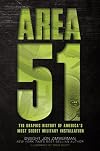
I wasn't really sure what to expect when I started reading Area 51. Was it going to be another UFO conspiracy piece, disguised as the "actual" story of the governments secret facility near Groom Lake, Nevada? Was it going to be something chock full of misinformation and deflection to keep everyone still guessing about the actual nature of the installation? Was it going to be full blown, open the doors, no holds-barred here are all the secrets? It was none of the above -- but it was still a show more fantastic read.
Avoiding just about all mention of conspiracy and UFOs, and everything else that surrounds most stories of the facility known as Area 51, this graphic novel sticks to basic facts about the United States spy and experimental air craft programs from 1947-2013. Working with recently declassified documents, Zimmerman and Scott create a blow-by-blow breakdown of just about every spy plane, reconnaissance craft, stealth vessel, and drone that the US military has worked on and produced since the dawn of the Cold War. All of these were either built, or extensively tested at Area 51 and many gave rise to the popular waves of UFO sightings and conspiracies surrounding secrecy on the base. Ostensibly, this secrecy is solely due to the fact that the government was hiding technological secrets about our intelligence gathering technology from our enemies, namely the Soviets and the Chinese, rather than hiding extraterrestrials.
Short, sweet, and to the point, Area 51 checks in at a hair under 100 pages, but it packs a good punch for the history buff or student. Seeing as by being a graphic novel history, this book will most likely be read more by young adults, it works perfectly in providing a history of Cold War spy technology. In some areas, actions and projects became seemingly oversimplified, and I am not sure if this is a part of the writing, or simply the lack of information in the declassified source material. There were not enough of these instances to detract from the overall impact of the history, however. It's very interesting to see how our technologies at this time evolved, and frankly, how long ago some such as the stealth technologies and predator drones were devised!
I would highly recommend this to anyone interested more in aviation and Cold War history than I would the Area 51 UFO seeker. For most of the time I spent reading this, I completely forgot that Area 51 was the focal point, as the planes and technology took center stage more than the facility itself. I will definitely be looking to add a physical copy to my own and my school library collection soon! show less
Avoiding just about all mention of conspiracy and UFOs, and everything else that surrounds most stories of the facility known as Area 51, this graphic novel sticks to basic facts about the United States spy and experimental air craft programs from 1947-2013. Working with recently declassified documents, Zimmerman and Scott create a blow-by-blow breakdown of just about every spy plane, reconnaissance craft, stealth vessel, and drone that the US military has worked on and produced since the dawn of the Cold War. All of these were either built, or extensively tested at Area 51 and many gave rise to the popular waves of UFO sightings and conspiracies surrounding secrecy on the base. Ostensibly, this secrecy is solely due to the fact that the government was hiding technological secrets about our intelligence gathering technology from our enemies, namely the Soviets and the Chinese, rather than hiding extraterrestrials.
Short, sweet, and to the point, Area 51 checks in at a hair under 100 pages, but it packs a good punch for the history buff or student. Seeing as by being a graphic novel history, this book will most likely be read more by young adults, it works perfectly in providing a history of Cold War spy technology. In some areas, actions and projects became seemingly oversimplified, and I am not sure if this is a part of the writing, or simply the lack of information in the declassified source material. There were not enough of these instances to detract from the overall impact of the history, however. It's very interesting to see how our technologies at this time evolved, and frankly, how long ago some such as the stealth technologies and predator drones were devised!
I would highly recommend this to anyone interested more in aviation and Cold War history than I would the Area 51 UFO seeker. For most of the time I spent reading this, I completely forgot that Area 51 was the focal point, as the planes and technology took center stage more than the facility itself. I will definitely be looking to add a physical copy to my own and my school library collection soon! show less
The Hammer and the Anvil: Frederick Douglass, Abraham Lincoln, and the End of Slavery in America by Dwight Jon Zimmerman
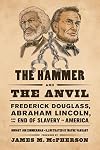
A trailblazer and a game-changer? I am not referring to the protagonists in Dwight J. Zimmerman’s book The Hammer and The Anvil: Frederick Douglass, Abraham Lincoln and the End of Slavery in America, I am speaking of the book itself.
Yes, the book is a duel biography of Frederick Douglass and Abraham Lincoln and the relationship they shared for a short while during Lincoln’s term in office. Yes, they are historically accurate, but quite brief. This can be understood knowing that dual show more biographies can be tough. Yes, they are blended quite well throughout the book. One storyline is quite evident from the next and more so when their experiences intertwine.
No, I am not speaking about any of that when I say it is a trailblazer or a game-changer. This title is a graphic novel. Graphic novels are somewhat of a rarity in the field of history, though not unheard of (an excellent example is Maus by Art Spiegelman). What is so fantastic about this is the quality of the scholarship, the flow of the story, the clarity of the narrative, the artwork and its use of colors. To the extent I have not yet seen or enjoyed.
The facts of the story had been reviewed by the eminent 19th century scholar Craig L. Symonds. The author went over each person’s story quickly, but not without the feel like they missed something. The work always seemed to cover enough to give the reader understanding. The narrative and conversations within the story were chosen well. The speech clouds and quotes that were known to be true or if need be, could be researched easily. The writing was kept short and was not too scholarly as to lose sight of who their audience was. The artwork was very nice, though I think Lincoln would be very flattered with his portrayal. He seems like he could have been quite the handsome man, which most of us know was not the case. They used color to indicate separate story lines. Douglass was a shade of blue-grey and Lincoln was a rust-pink. When their storylines interconnected, full color story panes were used. An effect that I thought made the book more arresting and original.
If I had an issue with the book, it would be with the long lasting effects they believed the relationship had on the future of society. I do not believe it was to the extent they imply, when writing history one must stick to fact based findings and not assumptions and cherry picking of historical incidents to support future events.
When all is said and done, I would recommend this title to all Abraham Lincoln fans, students of Fredrick Douglass, American history buffs and fans of graphic novels. If more history is written in graphic novel form, and I hope there is, one can look to the quality of The Hammer and The Anvil and and find a trail blazer. show less
Yes, the book is a duel biography of Frederick Douglass and Abraham Lincoln and the relationship they shared for a short while during Lincoln’s term in office. Yes, they are historically accurate, but quite brief. This can be understood knowing that dual show more biographies can be tough. Yes, they are blended quite well throughout the book. One storyline is quite evident from the next and more so when their experiences intertwine.
No, I am not speaking about any of that when I say it is a trailblazer or a game-changer. This title is a graphic novel. Graphic novels are somewhat of a rarity in the field of history, though not unheard of (an excellent example is Maus by Art Spiegelman). What is so fantastic about this is the quality of the scholarship, the flow of the story, the clarity of the narrative, the artwork and its use of colors. To the extent I have not yet seen or enjoyed.
The facts of the story had been reviewed by the eminent 19th century scholar Craig L. Symonds. The author went over each person’s story quickly, but not without the feel like they missed something. The work always seemed to cover enough to give the reader understanding. The narrative and conversations within the story were chosen well. The speech clouds and quotes that were known to be true or if need be, could be researched easily. The writing was kept short and was not too scholarly as to lose sight of who their audience was. The artwork was very nice, though I think Lincoln would be very flattered with his portrayal. He seems like he could have been quite the handsome man, which most of us know was not the case. They used color to indicate separate story lines. Douglass was a shade of blue-grey and Lincoln was a rust-pink. When their storylines interconnected, full color story panes were used. An effect that I thought made the book more arresting and original.
If I had an issue with the book, it would be with the long lasting effects they believed the relationship had on the future of society. I do not believe it was to the extent they imply, when writing history one must stick to fact based findings and not assumptions and cherry picking of historical incidents to support future events.
When all is said and done, I would recommend this title to all Abraham Lincoln fans, students of Fredrick Douglass, American history buffs and fans of graphic novels. If more history is written in graphic novel form, and I hope there is, one can look to the quality of The Hammer and The Anvil and and find a trail blazer. show less
Lists
Awards


You May Also Like


Associated Authors
Statistics
- Works
- 51
- Also by
- 4
- Members
- 1,186
- Popularity
- #21,674
- Rating
- 3.9
- Reviews
- 30
- ISBNs
- 60