
Andrew Ridker
Author of The Altruists
About the Author
Image credit: Andrew Ridker
Works by Andrew Ridker
Tagged
Common Knowledge
- Birthdate
- 1991
- Gender
- male
- Education
- Iowa Writers' Workshop
Members
Reviews

Arthur Alter is in a tight spot. He took the visiting professor job at Danforth College, convinced he'd quickly be hired full-time and be given tenure. Despite moving his family across the country and derailing his wife's more successful career, he never moves into a permanent posting, instead being given fewer classes to teach over the years, so that now he's down to one. His children live far away and don't speak to him. And his wife may have had money when she died, but she left it all to show more the children. Maybe because Arthur coincidentally started an affair the same day Francine received her diagnosis? Arthur prefers not to think about that. He's got a bigger problem. When they first moved to St. Louis, they bought a house in keeping with Arthur's aspirations, and not his circumstances, which are that he's making a little less each year. And his girlfriend is thinking of taking a better paying job elsewhere. But Arthur can fix it all if he can get his son and daughter to come and visit. He'll convince them to give him the money they inherited from their mother. And once he has the money to pay off the mortgage, he's sure he can convince his girlfriend to turn down the new job and move in with him.
The only problem with this plan is that Arthur has once again over-estimated his powers of persuasion, his girlfriend's willingness to do what he wants and his job prospects, while under-estimating the sheer animosity his children hold for him.
Yes, this is another WMFuN*, that perennial staple of American literature. But this has some redeeming features. It's set in St. Louis and not New York City. Arthur may be the classic WMFuN protagonist, being both self-involved and oblivious to the harm he causes, but Andrew Ridker isn't asking the reader to side with Arthur, in fact he goes out of the way to clearly show the harm Arthur does. And it's well written, with a relaxed solidity to the writing that is surprising in a debut novel. No, I never warmed completely to Arthur and his equally self-involved off-spring, but no matter how I tried, I was never able to not care about what happened to them.
* White Male Fuck-up Novel show less
The only problem with this plan is that Arthur has once again over-estimated his powers of persuasion, his girlfriend's willingness to do what he wants and his job prospects, while under-estimating the sheer animosity his children hold for him.
Yes, this is another WMFuN*, that perennial staple of American literature. But this has some redeeming features. It's set in St. Louis and not New York City. Arthur may be the classic WMFuN protagonist, being both self-involved and oblivious to the harm he causes, but Andrew Ridker isn't asking the reader to side with Arthur, in fact he goes out of the way to clearly show the harm Arthur does. And it's well written, with a relaxed solidity to the writing that is surprising in a debut novel. No, I never warmed completely to Arthur and his equally self-involved off-spring, but no matter how I tried, I was never able to not care about what happened to them.
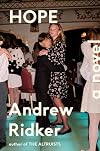
This novel begins in the summer of 2013, in the pleasant, upscale community of Brookline, Massachusetts, where Scott and Deborah Greenspan are throwing a dinner party, a dinner party that is abruptly ended when Scott receives a phone call that signals the downfall of the Greenspan family. Taking place over the following year, Ridker follows each member of the Greenspan family, from Scott, watching his career and his marriage collapse when he is caught cheating on signing up his patients for show more a medical study; to Deborah, who runs to her lover, a woman who runs a chain of charter schools and who may be less compatible with Deborah than she had initially thought; to their two adult children, Gideon, whose hero-worship of his father is taking a serious beating, and Maya, whose past has just grabbed her and forced her to reassess what happened to her in high school.
This is a traditionally structured novel, well-told and well-written, which means that it was a very enjoyable book to read. I like experimentation and authors trying new things, but there is little more satisfying than a well-executed traditional novel. As in his previous novel, The Altruists, the characters are all a little silly, their conflicts a little exaggerated, but here it holds together better, as Ridker finds his feet as a novelist. There's a lot of heart here, and even thought it takes place a scant decade ago, it feels almost like a historical novel, the Obama years feel so far away now. show less
This is a traditionally structured novel, well-told and well-written, which means that it was a very enjoyable book to read. I like experimentation and authors trying new things, but there is little more satisfying than a well-executed traditional novel. As in his previous novel, The Altruists, the characters are all a little silly, their conflicts a little exaggerated, but here it holds together better, as Ridker finds his feet as a novelist. There's a lot of heart here, and even thought it takes place a scant decade ago, it feels almost like a historical novel, the Obama years feel so far away now. show less
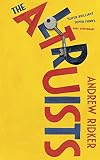
I do not envy comic novelists. Besides the challenges facing any novel writer, they have to elicit a smile, chuckle or smirk from their readers at regular intervals. Then - if and when they get it right - they face the risk of seeing their work dismissed as ‘(s)light’ fare. A case in point, in my opinion, was Andrew Sean Greer’s Less, which I greatly enjoyed and which I think really did deserve the Pulitzer, but which was slated in some quarters, including by friends and reviewers show more whose opinion I greatly respect.
It is therefore great news that a fresh talent has now joined the ranks of comic novelists. Andrew Ridker was born in 1991 (which makes me feel terribly old), and his debut novel The Altruists is published later this year. Admittedly, on the cynicism/bleakness scale, this novel is closer to Richard Ford than to Andrew Sean Greer, which might make it more palatable to the literati. Indeed, it’s already attracting glowing advance reviews. As for me, I admired most of it, although I find it harder to actually like it.
The protagonists of The Altruists are the Alters, a Jewish middle-class family from St Louis. The mother, Francine, haunts the novel, despite being dead for most of it. Indeed, it is her inheritance which serves as the catalyst of the plot. Incensed at the fact that her sixty-something professor husband Arthur has taken up a much younger lover whilst she is dying of cancer, Francine bequeaths a secret fortune to her two children, Ethan and Maggie. Faced with the prospect of losing his girlfriend and also his heavily mortgaged house, Arthur invites his children back to St Louis for a reconciliatory weekend, hoping to convince them to bail him out.
But Ethan and Maggie have their own problems. Ethan (whose homosexuality Arthur has never quite accepted) is out of a job, and is now living off his mother’s money in Brooklyn, whilst trying to sort out his messy love life. On her part, Maggie is a hard-headed would-be altruist, whose obsession with causes and ideals often leads her to actually overlook the needs of the people who surround her. Although Arthur’s plans seem to be failing miserably (but quite entertainingly for us readers), they do lead the Alters to come to term with their history and to understand that they are possible more like each other than they like to think.
To be honest, I found it hard to symphatize with any of the characters, who are complexly drawn but seem to have few, if any, redeeming features. If likable rogues exist, Arthur Alter is certainly not one of them. And his children are, frankly, chips off the old block. This ultimately detracted from my enjoyment of the novel. At the same time, however, there is much that is brilliant about The Altruists – it is an undeniably insightful work, it has some crisply humorous dialogue, and memorable set pieces. I particularly enjoyed the final showdown between the Alters and Arthur’s young lover, and the Zimbabwe episode feels like something out of Evelyn Waugh. If this debut is anything to go by, Ridker is certainly an author to look out for. show less
It is therefore great news that a fresh talent has now joined the ranks of comic novelists. Andrew Ridker was born in 1991 (which makes me feel terribly old), and his debut novel The Altruists is published later this year. Admittedly, on the cynicism/bleakness scale, this novel is closer to Richard Ford than to Andrew Sean Greer, which might make it more palatable to the literati. Indeed, it’s already attracting glowing advance reviews. As for me, I admired most of it, although I find it harder to actually like it.
The protagonists of The Altruists are the Alters, a Jewish middle-class family from St Louis. The mother, Francine, haunts the novel, despite being dead for most of it. Indeed, it is her inheritance which serves as the catalyst of the plot. Incensed at the fact that her sixty-something professor husband Arthur has taken up a much younger lover whilst she is dying of cancer, Francine bequeaths a secret fortune to her two children, Ethan and Maggie. Faced with the prospect of losing his girlfriend and also his heavily mortgaged house, Arthur invites his children back to St Louis for a reconciliatory weekend, hoping to convince them to bail him out.
But Ethan and Maggie have their own problems. Ethan (whose homosexuality Arthur has never quite accepted) is out of a job, and is now living off his mother’s money in Brooklyn, whilst trying to sort out his messy love life. On her part, Maggie is a hard-headed would-be altruist, whose obsession with causes and ideals often leads her to actually overlook the needs of the people who surround her. Although Arthur’s plans seem to be failing miserably (but quite entertainingly for us readers), they do lead the Alters to come to term with their history and to understand that they are possible more like each other than they like to think.
To be honest, I found it hard to symphatize with any of the characters, who are complexly drawn but seem to have few, if any, redeeming features. If likable rogues exist, Arthur Alter is certainly not one of them. And his children are, frankly, chips off the old block. This ultimately detracted from my enjoyment of the novel. At the same time, however, there is much that is brilliant about The Altruists – it is an undeniably insightful work, it has some crisply humorous dialogue, and memorable set pieces. I particularly enjoyed the final showdown between the Alters and Arthur’s young lover, and the Zimbabwe episode feels like something out of Evelyn Waugh. If this debut is anything to go by, Ridker is certainly an author to look out for. show less
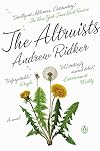
This is the sort of novel destined to divide readers into camps. Ridker’s social satire is of the overt type, resulting in characters that are too ridiculous to like and situations that are too silly to generate sympathy or empathy. If you enjoy your satire spread thick, then you’ll enjoy this. If, however, you prefer your social commentary on the subtle side, or if you were hoping for a thoughtful exploration of dysfunctional familihood, then you’ll want to look elsewhere. Those show more blurbs promising a tale that is “big hearted” or “moving” are stretching it - fundamentally, this is a social parody in which egoism, obtuseness, privilege, passivity, neurosis, and profound hypocrisy play featured roles.
The altruists in the novel are, of course, nothing of the sort: they are, instead, absurdly self-absorbed. The pater familias, Arthur Alter, is a failed professor whose one shining accomplishment was traveling to Zimbabwe as an idealistic youth to install sanitation infrastructure – an endeavor that, predictably, goes horribly awry. Since then he’s become the opposite of an altruist: a whiny parasite of a man living off of the pity and passivity of others. The daughter, Maggie, having convinced herself that self-deprivation is the ultimate measure of character, imagines she is living a life of enlightened virtue even as she engages in increasingly outrageous acts of borishness, narcissism, and theft. The son, Ethan, is obsessed with the quioxitic fixation that his gay childhood crush is just waiting for him (Ethan) to help him accept his true sexuality. And the mater familias, Francine, is the enabler who makes it all possible – so much so that, when she dies, the whole family immediately implodes, the event that ostensibly sets the events of this novel in motion.
Don’t get me wrong: Ridkin can bring the funny. Understated passages like “The university had recently consolidated the College of Fine Arts, the Center for Media Studies, and their entrepreneurship MBA into the centralized Institute for Business Arts” made me laugh aloud. But the more exaggerated elements of the novel – Arthur’s selfishness and parsimony, Maggie’s hypocrisy, the author’s constant sniping at “political correctness” - were just a bit too crude for my tastes. Moreover, I couldn’t help wondering whether Ridkin’s purpose here was less about entertaining readers than trying to impress the hipster peers at the New Yorker or the Iowa Writer’s Workshop with his wit. show less
The altruists in the novel are, of course, nothing of the sort: they are, instead, absurdly self-absorbed. The pater familias, Arthur Alter, is a failed professor whose one shining accomplishment was traveling to Zimbabwe as an idealistic youth to install sanitation infrastructure – an endeavor that, predictably, goes horribly awry. Since then he’s become the opposite of an altruist: a whiny parasite of a man living off of the pity and passivity of others. The daughter, Maggie, having convinced herself that self-deprivation is the ultimate measure of character, imagines she is living a life of enlightened virtue even as she engages in increasingly outrageous acts of borishness, narcissism, and theft. The son, Ethan, is obsessed with the quioxitic fixation that his gay childhood crush is just waiting for him (Ethan) to help him accept his true sexuality. And the mater familias, Francine, is the enabler who makes it all possible – so much so that, when she dies, the whole family immediately implodes, the event that ostensibly sets the events of this novel in motion.
Don’t get me wrong: Ridkin can bring the funny. Understated passages like “The university had recently consolidated the College of Fine Arts, the Center for Media Studies, and their entrepreneurship MBA into the centralized Institute for Business Arts” made me laugh aloud. But the more exaggerated elements of the novel – Arthur’s selfishness and parsimony, Maggie’s hypocrisy, the author’s constant sniping at “political correctness” - were just a bit too crude for my tastes. Moreover, I couldn’t help wondering whether Ridkin’s purpose here was less about entertaining readers than trying to impress the hipster peers at the New Yorker or the Iowa Writer’s Workshop with his wit. show less
Lists
Awards


You May Also Like


Associated Authors
Statistics
- Works
- 3
- Members
- 323
- Popularity
- #73,308
- Rating
- 3.4
- Reviews
- 19
- ISBNs
- 28
- Languages
- 6