

Rex Warner (1905–1986)
Author of The Aerodrome
About the Author
Series
Works by Rex Warner
British Writers and Their Work No 3: Virginia Woolf, E. M. Foster, Katherine Mansfield (1963) 4 copies
Escapade: A tale of Average 3 copies
Men of Stones: A Melodrama 2 copies
Poems 1 copy
Blandt Smuglere i Ægypten 1 copy
The kite 1 copy
Associated Works
The Oresteia: Agamemnon, Women at the Graveside, Orestes in Athens (0458) — Translator, some editions; Introduction, some editions — 11,737 copies, 87 reviews
The Anabasis [in translation] (0370) — Preface, some editions; Translator, some editions — 2,736 copies, 53 reviews
4 Plays: Alcestis / Children of Heracles / Hippolytus / Medea (1955) — Translator, some editions; Translator — 2,670 copies, 10 reviews
The Fall of the Roman Republic: Six Lives (0120) — Translator, some editions — 1,867 copies, 8 reviews
Prometheus Bound(Aeschylus) and Prometheus Unbound(Shelley) (in Slipcase) (2011) — Translator, some editions — 94 copies, 3 reviews
9 Plays: Alcestis / Bacchae / Electra / Heracles / Hippolytus / Iphigenia in Tauris / Medea / Orestes / Trojan Women — Translator, some editions — 2 copies
Tagged
Common Knowledge
- Legal name
- Warner, Reginald Ernest
- Birthdate
- 1905-03-09
- Date of death
- 1986-06-24
- Gender
- male
- Education
- St George's School, Harpenden
University of Oxford (Wadham College) - Occupations
- head teacher
professor - Organizations
- British Institute Athens (Director, 1945-1947)
Bowdoin College
University of Connecticut - Nationality
- UK
- Birthplace
- Birmingham, Warwickshire, England, UK
- Places of residence
- Storrs, Connecticut, USA
Amberley, Gloucestershire, England, UK - Place of death
- Wallingford, Oxfordshire, England, UK
- Map Location
- England, UK
Members
Reviews

I enjoyed Warner's poems more than I'd expected to. I bought this collection recognising his name as the editor of some books of myths and folklore I'd enjoyed as a child, and feeling curious as to what sort of a poet he might be.
Well, Warner was apparently a keen bird-watcher judging by the number of poems he wrote about them, of which my favourite was Chough, about the slow decline of the Cornish chough, which actually did go extinct in the few years after Warner wrote his poem, though, show more according to the RSPB (and they'd know), it naturally returned from other breeding areas in 2001. Yay!
Overall, there are some poems that feel dated or rather fusty (which had been my initial expectation), but then there are others where he seems to forget formalism (though not structure) and his voice comes through more naturally. The sonnets in the second half of the book were fine, particularly the first few about conception, birth and childhood.
A pleasant surprise, and an interesting volume with its creamy wartime economy paper, cut page edges and clear typeface. show less
Well, Warner was apparently a keen bird-watcher judging by the number of poems he wrote about them, of which my favourite was Chough, about the slow decline of the Cornish chough, which actually did go extinct in the few years after Warner wrote his poem, though, show more according to the RSPB (and they'd know), it naturally returned from other breeding areas in 2001. Yay!
Overall, there are some poems that feel dated or rather fusty (which had been my initial expectation), but then there are others where he seems to forget formalism (though not structure) and his voice comes through more naturally. The sonnets in the second half of the book were fine, particularly the first few about conception, birth and childhood.
A pleasant surprise, and an interesting volume with its creamy wartime economy paper, cut page edges and clear typeface. show less
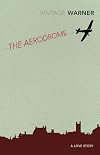
I found ‘The Aerodrome: A Love Story’ via the dystopia library catalogue keyword search, having never heard of it before. As has been the case with the majority of books I discovered in said search, I wouldn’t call it a dystopia. It’s an allegorical fable and seems to me very much like the oeuvre of [a:Magnus Mills|38164|Magnus Mills|https://images.gr-assets.com/authors/1244124475p2/38164.jpg]. Perhaps a little more pointed, yet the deadpan tone, dark humour, and level of abstraction show more are very similar. Of course, Mills started publishing nearly sixty years after ‘The Aerodrome’ - I wonder if it was an influence on him? Anyway, the narrative is an evident allegory for the rise of fascism. The titular aerodrome impinges upon and then takes over the village; Roy the narrator joins the ranks of the air force then comes to see how empty it is. Woven into the tale are an extraordinary series of melodramas worthy of Sophoclean tragedy or perhaps a soap opera. Is anyone in the village who they say they are? Are they all secretly related to one another? Who will dramatically die next?
While I could appreciate the acuity of the allegory, my enjoyment was limited somewhat by the tiresomeness of Roy the narrator. His romantic travails take up a lot of space, perhaps demonstrating that people get so caught up in their love lives that they fail to notice fascist takeovers. None of the characters are particularly good people and, to his credit, Warner doesn’t suggest that the pre-aerodrome village and it’s residents were perfect. They appear to have spent most of their time getting drunk and covering up dark secrets. Nonetheless, the casual brutality and horror of the fascist aerodrome are much worse. The book clearly shows how a young man like Roy can be sucked into such a regime, while also demonstrating the emptiness of an ideology obsessed with discipline and cleanliness. The most memorable passages concerned the Air Vice-Marshall, who is quite possibly a pen portrait of a specific nazi. Here Roy reflects on the man’s effect during an incredibly misogynistic speech on sex:
This later speech from the Air Vice-Marshall is especially chilling:
It occurred to me when I finished the book what was missing from the fascism allegory: racism. The village is apparently without any minorities who can be persecuted; the villagers are all condemned of a piece in the speech above. They are killed accidentally and when they rebel, but there's no genocide. It’s an interesting omission. This leaves the regime to be defined by militarism, nationalism, an implied shift from agriculture to industry, and this expressed desire for social transformation. The gender politics are somewhat peculiar and don’t map to fascism well at all. Airmen are not allowed to have children, rather than being expected to spawn a master race. The roles of women seem to be as sex objects and sympathetic confidantes rather than mothers, both inside and outside the aerodrome. On the other hand, two women lead what resistance there is to the aerodrome and one them lays down her life for it. I think Roy’s point of view minimises their actual role, as he only seems to pay attention to women while judging their attractiveness (‘in her youth she must have been a remarkably handsome woman’ recurs) or actually having sex with them. He also comments constantly on the attractiveness of the Flight-Lieutenant, who inducts him into the aerodrome. Roy introduces him as ‘remarkably handsome’ and continues make similar references even when they are at odds. Is this making a point about the psycho-sexual subtext of fascism, or just incidental melodrama? Who knows.
The 2007 edition that I read includes an introduction by Michael Moorcock, which provides some useful background on Warner (apparently Roy is a bit of a self-insert). Moorcock compares ‘The Aerodrome’ with [b:The Old Men at the Zoo|1654440|The Old Men at the Zoo|Angus Wilson|https://images.gr-assets.com/books/1438545564s/1654440.jpg|1649057], which I was distinctly disappointed by. I found Warner’s allegory much more effective, albeit not without flaws. The combination of romantic drama and political metaphor sometimes jarred. The deus ex machina ending was downright unsatisfactory. Nonetheless, there are moments of profundity and an effective message that rural England could slide into fascism through sheer inertia. Although I didn’t like him at all, I found Roy an interesting narrative voice. Also, I have a soft spot for long sentences and cynicism. This struck me as a very cynical novel. show less
While I could appreciate the acuity of the allegory, my enjoyment was limited somewhat by the tiresomeness of Roy the narrator. His romantic travails take up a lot of space, perhaps demonstrating that people get so caught up in their love lives that they fail to notice fascist takeovers. None of the characters are particularly good people and, to his credit, Warner doesn’t suggest that the pre-aerodrome village and it’s residents were perfect. They appear to have spent most of their time getting drunk and covering up dark secrets. Nonetheless, the casual brutality and horror of the fascist aerodrome are much worse. The book clearly shows how a young man like Roy can be sucked into such a regime, while also demonstrating the emptiness of an ideology obsessed with discipline and cleanliness. The most memorable passages concerned the Air Vice-Marshall, who is quite possibly a pen portrait of a specific nazi. Here Roy reflects on the man’s effect during an incredibly misogynistic speech on sex:
Surprising as had been much that we had heard, no one, it seemed, had for that reason allowed his attention to wander; and this fact seemed to me a tribute to the personal force of the man before us who, without any obvious effort or deliberate style of oratory, still compelled us to hang upon his words and to remember them, as I knew we should do, long after his speech was finished. Even now, though we as yet did not perfectly understand the creed and faith that was being put before us, and though there was more of severity than of comfort in what was being said, nevertheless we listened to him with a kind of joy, for it seemed that his own confidence was was infused into us so that we believed that any conclusion which he reached must be accurate, necessary, and inspiring.
This later speech from the Air Vice-Marshall is especially chilling:
”I should like you to understand,” he would say, “that it is by no means sufficient to blame society for its inefficiency, its waste, its stupidity. These are merely symptoms. It is against the souls of the people themselves that we are fighting. It is each and every one of their ideas that we must detest. Think of them as earth-bound, grovelling from one piece of mud to another, and feebly imagining distinctions between the two, incapable of envisaging a distant objective, tied up forever in their miserable and unimportant histories, indeed in the whole wretched and blind history of life on earth. Religion, which for many centuries was did exercise an ennobling, if a misleading, effect, has gone. The race which we, of all people, are now required to protect is a race of money-makers and sentimentalists, undisciplined except by forces which they do not understand, insensitive to all except the lowest, the most ordinary, the most mechanical stimuli. Protect it! We shall destroy what we cannot change.”
It occurred to me when I finished the book what was missing from the fascism allegory: racism. The village is apparently without any minorities who can be persecuted; the villagers are all condemned of a piece in the speech above. They are killed accidentally and when they rebel, but there's no genocide. It’s an interesting omission. This leaves the regime to be defined by militarism, nationalism, an implied shift from agriculture to industry, and this expressed desire for social transformation. The gender politics are somewhat peculiar and don’t map to fascism well at all. Airmen are not allowed to have children, rather than being expected to spawn a master race. The roles of women seem to be as sex objects and sympathetic confidantes rather than mothers, both inside and outside the aerodrome. On the other hand, two women lead what resistance there is to the aerodrome and one them lays down her life for it. I think Roy’s point of view minimises their actual role, as he only seems to pay attention to women while judging their attractiveness (‘in her youth she must have been a remarkably handsome woman’ recurs) or actually having sex with them. He also comments constantly on the attractiveness of the Flight-Lieutenant, who inducts him into the aerodrome. Roy introduces him as ‘remarkably handsome’ and continues make similar references even when they are at odds. Is this making a point about the psycho-sexual subtext of fascism, or just incidental melodrama? Who knows.
The 2007 edition that I read includes an introduction by Michael Moorcock, which provides some useful background on Warner (apparently Roy is a bit of a self-insert). Moorcock compares ‘The Aerodrome’ with [b:The Old Men at the Zoo|1654440|The Old Men at the Zoo|Angus Wilson|https://images.gr-assets.com/books/1438545564s/1654440.jpg|1649057], which I was distinctly disappointed by. I found Warner’s allegory much more effective, albeit not without flaws. The combination of romantic drama and political metaphor sometimes jarred. The deus ex machina ending was downright unsatisfactory. Nonetheless, there are moments of profundity and an effective message that rural England could slide into fascism through sheer inertia. Although I didn’t like him at all, I found Roy an interesting narrative voice. Also, I have a soft spot for long sentences and cynicism. This struck me as a very cynical novel. show less

A gem of a historical novel, one which opens wide, picturesque windows onto life in the Roman Empire in the 5th Century. Curiously, if not eerily enough, the view is a mirror to our own time.
The 'windows' the novel provides for us to peer through are the sharply intelligent eyes of Alypius, the young, sensitive friend of Saint Augustine of Hippo. When the story starts, Augustine is far from being a saint but through Alypius' journaling, we follow the struggles of Alypius, Augustine and their show more close circle of wisdom seekers as they wend their philosophical way through the various religions and schools of thought competing for the minds and souls of the empire and the world. Their journey to Christianity is not merely intellectual however; it is also emotionally exacting, even torturous for both Augustine and his lover, Lucilla and for Saint Monica, whose fear for Augustine's soul is made quite palpable by Rex Warner's deft writing. There's even a cameo by a cantankerous Saint Jerome that had me giggling with delight.
I recommend it highly! show less
The 'windows' the novel provides for us to peer through are the sharply intelligent eyes of Alypius, the young, sensitive friend of Saint Augustine of Hippo. When the story starts, Augustine is far from being a saint but through Alypius' journaling, we follow the struggles of Alypius, Augustine and their show more close circle of wisdom seekers as they wend their philosophical way through the various religions and schools of thought competing for the minds and souls of the empire and the world. Their journey to Christianity is not merely intellectual however; it is also emotionally exacting, even torturous for both Augustine and his lover, Lucilla and for Saint Monica, whose fear for Augustine's soul is made quite palpable by Rex Warner's deft writing. There's even a cameo by a cantankerous Saint Jerome that had me giggling with delight.
I recommend it highly! show less
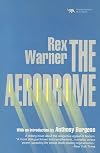
Great story, but it took till most of the way through the book to figure out if the author was satirizing the philosophy of the Air Vice-Admiral or presenting it as (forgive me) admirable. On the whole, I tended to sympathize with the "bad guy," even after I was sure he was supposed to *be* the bad guy.
Lists
Awards


You May Also Like


Associated Authors
Statistics
- Works
- 37
- Also by
- 23
- Members
- 1,527
- Popularity
- #16,844
- Rating
- 4.0
- Reviews
- 29
- ISBNs
- 87
- Languages
- 7
- Favorited
- 1