
Isaac Watts (1674–1748)
Author of Logic: The Right Use of Reason in the Inquiry After Truth
About the Author
Isaac Watts, 1674 - 1748 English theologian Issac Watts was born in Southampton in 1674. He was educated at an academy of Dissenters at Stoke Newington, which is now part of London. He spent many years as a tutor, preacher, and assistant pastor and in 1702, became minister of a Dissenting church in show more London. Watts wrote books on theological subjects, such as "Scripture History" (1732), and a collection of religious poems titled "Horae Lyricae" (1706). He also published two hymn collections, "Hymns" (1707; 2nd edition 1709), and "The Psalms of David" (1719). Among his hymns still sung are "When I Survey the Wondrous Cross" and "O God, Our Help in Ages Past." (Bowker Author Biography) show less
Image credit: Source: "The story of the hymns and tunes,"
by Theron Brown and Hezekiah Butterworth
(New York, 1906)
(Project Guttenberg)
by Theron Brown and Hezekiah Butterworth
(New York, 1906)
(Project Guttenberg)
Works by Isaac Watts
The Improvement of the Mind: A Supplement to the Art of Logic With a Discourse on the Education of Children and Youth (Great Awakening Writings, 1725-1760) (1998) 213 copies, 5 reviews
An arrangement of the Psalms, hymns, and spiritual songs of the Rev. Isaac Watts; to which are added indexes, very much enlarged and improved, to facilitate the use of the whole… (2017) 12 copies, 2 reviews
The Works of the Rev. Isaac Watts 9 copies
CHILDHOOD SONGS OF LONG AGO Divine and Moral Songs, Sonnets, Prayers, and Simplified Piano Accompaniments (2007) 5 copies
Hymns and Spiritual Songs 4 copies
Sermons on Various Subjects, Divine and Moral: with a sacred hymn suited to each subject 4 copies, 1 review
The Psalms of David imitated in the Language of the New Testament and applied to the Christian State and Worship 3 copies, 2 reviews
The Psalms of David imitated in the Language of the New Testament and applied to the Christian State and Worship together with Hymns and Spiritual Songs in three Books. 2 copies, 2 reviews
Alas! And Did My Savior Bleed — Lyricist — 2 copies
No Pain Among the Blessed 2 copies
My Shepherd Will Supply My Need 2 copies
Evangelical Discourses on Several Subjects (Classic Reprint): To Which Is Added, an Essay on the Powers and Contests of Flesh and Spirit (2015) 2 copies
The Psalms of David imitated in the language of the New Testement and applied to the Christian Worship by Isazzc Watts. D.D. 1 copy, 1 review
The Psalms of David imitated in the language of the New Testement and applied to the Christian State and Worship 1 copy, 1 review
Sermons on Various Subjects, Divine and Moral with a Sacred Hymn suited to each Subject, Vol II 1 copy
Psalms carefully suited to Christian Worship in the United States of America being an improvement of the Older versions of the Psalms of David 1 copy, 1 review
Sermons on Various Subjects, Divine and Moral with a Sacred Hymn suited to each Subject, Vol I 1 copy
The psalms of David, imitated in the language of the New Testament, and applied to the Christian use and worship 1 copy, 1 review
Dr. Watts' Plain and Easy Catechisms for Children: Together With a Collection of Hymns and Prayers (Classic Reprint) (2017) 1 copy
Watts's Scripture History 1 copy
Caniadau Dwyfol: Wedi Eu Hamcanu Mewn Iaith Esmwyth, Er Budd a Gwasanaeth I Blant, a Gyfieithwyd Gan D. Jones (2010) 1 copy
Break of Day in the Eighteenth Century: A History and a Specimen of Its First Book of English Sacred Song (2009) 1 copy
The Psalms of David 1 copy
Scripture History 1 copy
Joy to the World 1 copy
Joy to the World 1 copy
Exhortation To Ministers, An 1 copy
The Psalms of David imitated in the Language of the New Testement and applied to the Christian State of Worship 1 copy, 1 review
The Christian doctrine of the Trinity: or Father, Son, and spirit, three persons and one God, ... By I. Watts. (2010) 1 copy
World to Come or Discourses on the Joys or Sorrows of Departed Souls at Death and the Glory or Terror of the Resurrection (2003) 1 copy
Joy! G-7393 1 copy
The poems of Isaac Watts 1 copy
Ko nga katikihama etoru 1 copy
Twelve sermons, on various subjects, divine and moral ... with a hymn, suited to each subject 1 copy
Logic (Abridged) 1 copy
Heaven And Hell 1 copy
Against Pride in Clothes 1 copy
O Write Upon My Memory Lord 1 copy
Church Psalmody: A Collection of Psalms and Hymns, Adapted to Public Worship. Selected From Watts and Other Authors (2016) 1 copy
A discourse on the way of instruction by catechisms, and of the best method of composing them 1 copy
An Essay on the Freedom of Will in God and in Creatures: And on Various Subjects Connected Therewith (Classic Reprint) (2016) 1 copy
Hymn Makers - Isaac Watts 1 copy
Doctor Watts's imitation of the Psalms of David: Corrected and enlarged. Fourth Edition (2017) 1 copy
Hymns for Chilren 1 copy
Associated Works
Hymns of the Church of Jesus Christ of Latter-day Saints (1985) — Contributor — 319 copies, 3 reviews
English Verse: Volume 3: The Eighteenth Century: Swift to Crabbe (Penguin English Verse) (1995) — Contributor — 12 copies
Tagged
Common Knowledge
- Canonical name
- Watts, Isaac
- Birthdate
- 1674-07-17
- Date of death
- 1748-11-25
- Gender
- male
- Education
- King Edward VI School, Southampton, UK
Dissenting Academy, Newington Green, London - Occupations
- minister
schoolmaster - Short biography
- Iaasc Watts was an invalid schoolmaster who wrote over 500 hymns. He acquired his gift of poetry from his father, a Southhampton schoolmaster. He became a tutor when he grew up, and then a minister, and received the degree of doctor of divinity from a Scottish university. He was taken ill when thirty-eight years old, and went for a rest at the home of Sir Thomas Abney at Theobalds, which he never left till he died, thirty-six years later. --- Adapted from The Writers of the Hymns, The Book of Knowledge (1912) Vol. VII, page 1998.
- Nationality
- England
- Birthplace
- Southhampton, Hampshire, England, UK
- Place of death
- Stoke Newington, London, Middlesex, England, UK
- Burial location
- Bunhill Fields Cemetery, London, Middlesex, England, UK
- Map Location
- England, UK
Members
Reviews

First appearing in 1715, Isaac Watts' Divine Songs Attempted in Easy Language for the Use of Children, which has also been published as Divine and Moral Songs for Children, as well as just Divine Songs, was one of the most popular English-language collections of children's poetry and hymns throughout the 18th and 19th centuries. It attempts to educate children on the conduct that Watts, a Congregationalist minister, considered proper to a young Christian. In his preface the author describes show more the four advantages of using the medium of poetry to teach children, and then he presents twenty-eight hymns and two sonnets, all on moral themes. From giving thanks to God for his creation, to praising the fact that one was born in a Christian country, from warning against fighting and name-calling to cautions about the evils of swearing, many topics are covered by Watts in his slim volume. One of the most enduringly famous of his poems is "Song XX - Against Idleness and Mischief," which begins:
"How doth the little busy bee
Improve each shining hour,
And gather honey all the day
From every opening flower!"
Many readers will perceive, in this poem, the inspiration for Lewis Carroll's parody verse, "How Doth the Little Crocodile," which appears in the Victorian classic, Alice's Adventures in Wonderland. British and American children of the 18th and 19th centuries were made to memorize these poems, and they crop up in all sorts of places, in addition to Carroll's work. Song XVII, which warns against fighting amongst siblings, contains the line: "Birds in their little nests agree," which any reader of Louisa May Alcott's American children's classic, Little Women, will immediately recognize as a line spoken by Beth March during an argument between her sisters. These and other connections make Watts' book a fascinating read for those with an interest in children's books. It was an assigned tex, in fact, in one of my masters courses, on early children's literature. I have seen some reviewers comparing it unfavorably to more recent children's titles, and it certainly won't be to the taste of most of today's adults, let alone children. That said, it is an important book, in the history of Anglophone children's literature, and it paved the way for later works. Recommended to those interested in religious Christian children's books, and/or 18th-century English children's literature. show less
"How doth the little busy bee
Improve each shining hour,
And gather honey all the day
From every opening flower!"
Many readers will perceive, in this poem, the inspiration for Lewis Carroll's parody verse, "How Doth the Little Crocodile," which appears in the Victorian classic, Alice's Adventures in Wonderland. British and American children of the 18th and 19th centuries were made to memorize these poems, and they crop up in all sorts of places, in addition to Carroll's work. Song XVII, which warns against fighting amongst siblings, contains the line: "Birds in their little nests agree," which any reader of Louisa May Alcott's American children's classic, Little Women, will immediately recognize as a line spoken by Beth March during an argument between her sisters. These and other connections make Watts' book a fascinating read for those with an interest in children's books. It was an assigned tex, in fact, in one of my masters courses, on early children's literature. I have seen some reviewers comparing it unfavorably to more recent children's titles, and it certainly won't be to the taste of most of today's adults, let alone children. That said, it is an important book, in the history of Anglophone children's literature, and it paved the way for later works. Recommended to those interested in religious Christian children's books, and/or 18th-century English children's literature. show less
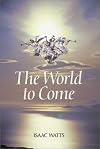
As in any collection of essays, stories, sermons, and the like, there are always some selections that 'hit home' or satisfy more than others, and that is certainly the case here. There is no indication that the original prose has been edited or modernized -- as such, I am amazed at how easily Watts reads. One must pay careful attention, of course, as seems always to be the case with me these days whenever I am reading something theological or philosophical, but Watt pays great dividends. I show more was particularly struck by the clarity of his reasoning, his mastery of Scripture, and, perhaps most of all, by his warm pastoral heart. (A passage [pps.253-4] designed to reassure a struggling Christian against his feelings of inadequacy could have been written just for me!) Watts's words marveling that the Gospel's sublime truths can be cherished by "the sprightly, the studious and the stupid" (p. 161) have made me chortle with delight on more than one occasion. -- My favorite among the discourses, though, is probably XI, "Safety in the grave, and joy at the resurrection," which is filled with wisdom about life here and now -- and life hereafter. -- This is indeed a book to re-read, savor, and treasure! show less

Watts's legacy was described in a recent Church Times article as mostly pernicious, and I am inclined to agree. Some are amusing, but most are quite horrid, threatening children with damnation for the slightest of childish misdemeanours. If any should show insufficient respect to parental authority, the ravens will peck out his eyes. "One stroke of his almighty rod Shall send young sinners quick to hell". No doubt this oppressive interpretation of Christianity was commonplace in early 19th show more century Britain, but from today's perspective it is pretty repellent. MB 15-iv-07 show less

A true Christian classic. Isaac Watts approaches prayer with both form and freedom. This is not a book of prayer, where prayers are given to us complete. Nor is it a mere call to prayer, instructing us to pray with no guidance, but rather it is a biblical structure to prayer, giving us a form by which to conform our prayer, but leaving the content to us.
Prayer is largely regarded as an improvised activity, to move as the person praying moves. The result of that idea has been, in my own show more prayers and many I've heard, almost a rambling and directionless prayer, full of distractions and pauses. What Watts advocates is more structure to these prayers. We should still pray for particular situations and events and thereby add our own content, but Watts uses the Bible to promote structure to hold up that personalized content.
The result has made an immediate difference in my prayer life. It has lost none of the personal nature, but has gained a direction and control that lacked before. I recommend this book to all Christians. show less
Prayer is largely regarded as an improvised activity, to move as the person praying moves. The result of that idea has been, in my own show more prayers and many I've heard, almost a rambling and directionless prayer, full of distractions and pauses. What Watts advocates is more structure to these prayers. We should still pray for particular situations and events and thereby add our own content, but Watts uses the Bible to promote structure to hold up that personalized content.
The result has made an immediate difference in my prayer life. It has lost none of the personal nature, but has gained a direction and control that lacked before. I recommend this book to all Christians. show less
Lists
You May Also Like


Associated Authors
Statistics
- Works
- 169
- Also by
- 9
- Members
- 1,679
- Popularity
- #15,311
- Rating
- 4.4
- Reviews
- 46
- ISBNs
- 124
- Favorited
- 2

