
Evan Wright (1964–2024)
Author of Generation Kill: Devil Dogs, Iceman, Captain America, and the New Face of American War
About the Author
Evan Wright is the New York Times bestselling, award-winning author of Generation Kill, recently an HBO miniseries, which he co-wrote. A contributing editor to Vanity Fair, he has also written for Rolling Stone, the New York Times, and the Los Angeles Times, among numerous other publications.
Image credit: GodSpy
Works by Evan Wright
Generation Kill: Devil Dogs, Iceman, Captain America, and the New Face of American War (2004) 1,770 copies, 39 reviews
Hella Nation: Looking for Happy Meals in Kandahar, Rocking the Side Pipe, Wingnut's War Against the Gap, and Other Adventures with the Totally Lost Tribes of America (2009) 168 copies, 7 reviews
American Desperado: My Life - From Mafia Soldier to Cocaine Cowboy to Secret Government Asset (2011) 160 copies, 3 reviews
Associated Works
Boots on the Ground: Stories of American Soldiers from Iraq and Afghanistan (2004) — Contributor — 8 copies
Tagged
Common Knowledge
- Birthdate
- 1964-12-28
- Date of death
- 2024-07-12
- Gender
- male
- Education
- Vassar College
- Occupations
- journalist
writer
television writer - Organizations
- Hustler magazine
Rolling Stone
Vanity Fair - Agent
- Keppler Speakers (speaking tours)
- Cause of death
- suicide
- Nationality
- USA
- Birthplace
- Cleveland, Ohio, USA
- Associated Place (for map)
- Ohio, USA
Members
Reviews
American Desperado: My Life--From Mafia Soldier to Cocaine Cowboy to Secret Government Asset by Jon Roberts
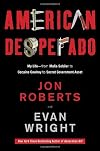
American Desperado is an extremely well written account of the life of a major cocaine importer. Evan Wright tells Jon Roberts story from his days as a minor organized crime figure in New York to becoming a hardened killer in Vietnam and finally a smuggler known to authorities for years only as “the bearded gringo.”
Roberts is clear about his brutality and seldom shows remorse. Unintended humor sometimes creeps into his recollections. About one notorious Colombian smuggler:
“Carlos show more Lehder hero-worshipped Hitler. He talked about this openly.
I don’t care who you are, if you talk about how you want to make a Nazi state in South America and become the new Hitler, people will lose confidence in you.”
Describing another acquaintance:
“Joe was a professional killer. He was also a dog breeder and a really good guy.” In his world you could be both a killer and good.
Roberts fascinating story fills in a lot about how the Colombian cartels moved massive amounts of cocaine into the U.S. in the 1980s and beyond. show less
Roberts is clear about his brutality and seldom shows remorse. Unintended humor sometimes creeps into his recollections. About one notorious Colombian smuggler:
“Carlos show more Lehder hero-worshipped Hitler. He talked about this openly.
I don’t care who you are, if you talk about how you want to make a Nazi state in South America and become the new Hitler, people will lose confidence in you.”
Describing another acquaintance:
“Joe was a professional killer. He was also a dog breeder and a really good guy.” In his world you could be both a killer and good.
Roberts fascinating story fills in a lot about how the Colombian cartels moved massive amounts of cocaine into the U.S. in the 1980s and beyond. show less
Generation Kill: Devil Dogs, Iceman, Captain America, and the New Face of American War by Evan Wright
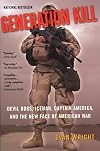
Generation Kill is the definitive cultural history of the invasion of Iraq, an honest account of war and the men who fight in it, and a damn good read.
Wright spent the invasion embedded with Bravo Company, First Marine Recon, and he mostly lets the men speak for themselves, liberally quoting their personal philosophies, reflections on battle, and back-and-forth bullshit. These vignettes are balanced by Wright's personal reflections on being shot at, mortared, and taking part in what I can show more only describe as History's Worst Roadtrip.
A little criticism and comparison. Wright occasionally flubs some technical military stuff (how mortars work, FLIR) which some people might find annoying. He gives more 'screen-time' to outspoken Marines who match his attitudes, like Espera and Reyes, than the quieter and more conservative southerners. This is a just a month-long slice of the American military at the peak of its power and confidence, before the worst effects of the Long War took hold. Compared to the HBO miniseries, the book is better paced--war truly is long periods of boredom interspersed with absolute terror--and that makes for problematic TV. Generation Kill is generally easier to read and grasp than Fick's One Bullet Away because Wright, like most of us, is an outsider to the Marines (not that Fick is a bad writer: he's quite skilled, but Wright makes a living with the pen and there's a clear difference), while at the same time being more sensationalized. Really though, there's no reason not to check out all of these versions of the story.
The Marines of First Recon are depicted as supremely skilled killers eager to test themselves against the Ultimate. They're ironic patriots, mocking the Marines indoctrination and moto BS while enthusiastically basing their identified around warrior machismo. The best of them balance cold-blooded sharpshooting with moral sensitivity. They keep going, despite nonsensical orders, no sleep, no supplies, and a mission that they didn't train for.
Generation Kill is a great book, one that can only be described with the two most important words in the whole Marine Corps: Get some! show less
Wright spent the invasion embedded with Bravo Company, First Marine Recon, and he mostly lets the men speak for themselves, liberally quoting their personal philosophies, reflections on battle, and back-and-forth bullshit. These vignettes are balanced by Wright's personal reflections on being shot at, mortared, and taking part in what I can show more only describe as History's Worst Roadtrip.
A little criticism and comparison. Wright occasionally flubs some technical military stuff (how mortars work, FLIR) which some people might find annoying. He gives more 'screen-time' to outspoken Marines who match his attitudes, like Espera and Reyes, than the quieter and more conservative southerners. This is a just a month-long slice of the American military at the peak of its power and confidence, before the worst effects of the Long War took hold. Compared to the HBO miniseries, the book is better paced--war truly is long periods of boredom interspersed with absolute terror--and that makes for problematic TV. Generation Kill is generally easier to read and grasp than Fick's One Bullet Away because Wright, like most of us, is an outsider to the Marines (not that Fick is a bad writer: he's quite skilled, but Wright makes a living with the pen and there's a clear difference), while at the same time being more sensationalized. Really though, there's no reason not to check out all of these versions of the story.
The Marines of First Recon are depicted as supremely skilled killers eager to test themselves against the Ultimate. They're ironic patriots, mocking the Marines indoctrination and moto BS while enthusiastically basing their identified around warrior machismo. The best of them balance cold-blooded sharpshooting with moral sensitivity. They keep going, despite nonsensical orders, no sleep, no supplies, and a mission that they didn't train for.
Generation Kill is a great book, one that can only be described with the two most important words in the whole Marine Corps: Get some! show less
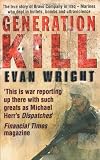
[b:Generation Kill|6357099|Generation Kill|Evan Wright|https://i.gr-assets.com/images/S/compressed.photo.goodreads.com/books/1327571775l/6357099._SY75_.jpg|908023] is a favourite book of mine that I hadn't reread for about 15 years. Then I picked it up for reference while reviewing [b:Occupational Hazards|594673|Occupational Hazards|Rory Stewart|https://i.gr-assets.com/images/S/compressed.photo.goodreads.com/books/1356125412l/594673._SY75_.jpg|29349] and accidentally reread all 450 pages in show more an evening. It was just as involving and brilliantly observed as when I first read it. The author, Evan Wright, was embedded with the recon marines who were at 'the tip of the spear' of the 2003 Iraq invasion. It's pretty wild that the marine corps thought bringing a reporter from Rolling Stone magazine onto the front line of an invasion was a solid idea. Showing a remarkable lack of self-preservation instincts, Wright rode along in an unarmoured humvee with a recon marine platoon during the first weeks of the war. First recon were sent ahead of the main American forces in an erratic series of missions that repeatedly took them through built-up areas in order to draw out Iraqi forces.
What makes Wright's book truly compelling is his portraits of the recon marines he accompanied and their reactions to the invasion. He gets way past the superficial macho hoo-rah, which is particularly potent in the elite all-male recon marines. Wright devotes a lot of time to the marines' bullshit and banter in order to establish their culture, dynamics, and relationships. The personalities he depicts are so compelling that HBO adapted the book into a miniseries. I highly recommend that as well. With the warning that, as with all war TV that tries to be authentic with uniforms, it will take several episodes to recognise anyone as they all look the same. This is only appropriate, as Wright mentions his initial struggle to distinguish between all these guys:
By experiencing the mayhem and danger of the invasion along with the marines, Wright provides a raw and visceral account of what happened. It is unflattering to overall military command and doesn't show the marine corps in a remotely good light. But the individual marines he accompanied are presented in a nuanced, sympathic manner, providing a fascinating insight into what made them join recon. (There seems to be a fair amount of masochism involved.) Yet he never loses sight of the fact that they are killers:
[b:Generation Kill|6357099|Generation Kill|Evan Wright|https://i.gr-assets.com/images/S/compressed.photo.goodreads.com/books/1327571775l/6357099._SY75_.jpg|908023] is excellent at conveying the terrible contradictions and cruelties of the Iraq invasion. It seems a matter of chance whether the marines are shooting Iraqi children or offering them humanitarian rations and medical care at any given point. The narrative is also intensely entertaining, as Wright is a brilliant journalist who was put in an extraordinary situation. His account covers two extremely intense months, concluding with his departure from Iraq on May 4th 2003. For involving accounts of the subsequent occupation, which echo Fick's observation in April 2003 that "As far as I can see, there's no American plan for Baghdad", try [b:Imperial Life in the Emerald City: Inside Baghdad's Green Zone|1151312|Imperial Life in the Emerald City Inside Baghdad's Green Zone|Rajiv Chandrasekaran|https://i.gr-assets.com/images/S/compressed.photo.goodreads.com/books/1347802069l/1151312._SY75_.jpg|1275660] and [b:Occupational Hazards|594673|Occupational Hazards|Rory Stewart|https://i.gr-assets.com/images/S/compressed.photo.goodreads.com/books/1356125412l/594673._SY75_.jpg|29349]. show less
What makes Wright's book truly compelling is his portraits of the recon marines he accompanied and their reactions to the invasion. He gets way past the superficial macho hoo-rah, which is particularly potent in the elite all-male recon marines. Wright devotes a lot of time to the marines' bullshit and banter in order to establish their culture, dynamics, and relationships. The personalities he depicts are so compelling that HBO adapted the book into a miniseries. I highly recommend that as well. With the warning that, as with all war TV that tries to be authentic with uniforms, it will take several episodes to recognise anyone as they all look the same. This is only appropriate, as Wright mentions his initial struggle to distinguish between all these guys:
In my first couple of days at the camp I'm placed in a tent with officers. I can't tell anybody apart; they all look the same in their desert camouflage fatigues. Most of the officers seem to be square-jawed, blue-eyed white guys in their mid to late twenties. The initial reason I strike up an acquaintance with Lt. Fick, commander of the platoon I end up spending the war with, is he's easily recognisable. Though he's twenty-five, he has a loping, adolescent stride you can spot from a hundred metres away. He's one of fifty men who introduce themselves to me during my first twenty-four hours at the camp, but he's the only one I'm able to call by name on my way to the mess tent and ask if I can join him for dinner.
By experiencing the mayhem and danger of the invasion along with the marines, Wright provides a raw and visceral account of what happened. It is unflattering to overall military command and doesn't show the marine corps in a remotely good light. But the individual marines he accompanied are presented in a nuanced, sympathic manner, providing a fascinating insight into what made them join recon. (There seems to be a fair amount of masochism involved.) Yet he never loses sight of the fact that they are killers:
However admirable the military's attempts are to create ROE [rules of engagement],
they basically create an illusion of moral order where there is none. The Marines operate in chaos. It doesn't matter if a Marine is following orders and ROE, or disregarding them. The fact is, as soon as a Marine pulls the trigger on his rifle, he's on his own. He's entered a game of moral chance. When it's over, he's as likely to go down as a hero or as a baby killer. The only difference between Trombley and any number of other Marines who've shot or killed people they shouldn't have is that he got caught. And this only happened because the battalion stopped moving long enough for the innocent victims to catch up with it.
[b:Generation Kill|6357099|Generation Kill|Evan Wright|https://i.gr-assets.com/images/S/compressed.photo.goodreads.com/books/1327571775l/6357099._SY75_.jpg|908023] is excellent at conveying the terrible contradictions and cruelties of the Iraq invasion. It seems a matter of chance whether the marines are shooting Iraqi children or offering them humanitarian rations and medical care at any given point. The narrative is also intensely entertaining, as Wright is a brilliant journalist who was put in an extraordinary situation. His account covers two extremely intense months, concluding with his departure from Iraq on May 4th 2003. For involving accounts of the subsequent occupation, which echo Fick's observation in April 2003 that "As far as I can see, there's no American plan for Baghdad", try [b:Imperial Life in the Emerald City: Inside Baghdad's Green Zone|1151312|Imperial Life in the Emerald City Inside Baghdad's Green Zone|Rajiv Chandrasekaran|https://i.gr-assets.com/images/S/compressed.photo.goodreads.com/books/1347802069l/1151312._SY75_.jpg|1275660] and [b:Occupational Hazards|594673|Occupational Hazards|Rory Stewart|https://i.gr-assets.com/images/S/compressed.photo.goodreads.com/books/1356125412l/594673._SY75_.jpg|29349]. show less
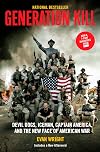
A depressing book about men who mainly joined the Marines because they think it’ll make them men, or don’t have anything more promising to do, and end up going to war in Iraq. The war they go to is dumb, though they don’t care about the whys; they’re both wastefully oversupplied and tragically short on a few crucial things (including batteries for the night vision goggles that can be the difference between life and death). They’re glancingly led and mostly lost in the fog of war, show more once the war starts. They kill, and sometimes they know they killed civilians and sometimes they just hope it was hostiles, and they tell themselves it’s us or them. It’s just layer on layer of pointless, bloody waste. show less
Lists
Awards


You May Also Like


Associated Authors
Statistics
- Works
- 5
- Also by
- 3
- Members
- 2,155
- Popularity
- #11,924
- Rating
- 4.1
- Reviews
- 55
- ISBNs
- 51
- Languages
- 5
- Favorited
- 3
