
Michael Castleman
Author of The Healing Herbs: The Ultimate Guide to the Curative Power of Nature's Medicines
About the Author
Michael Castleman: A graduate of the University of California, Berkeley, Graduate School of Journalism, he has written about both mainstream and alternative medicine since 1972
Series
Works by Michael Castleman
The Healing Herbs: The Ultimate Guide to the Curative Power of Nature's Medicines (1991) 481 copies, 3 reviews
Nature's Cures: From Acupressure and Aromatherapy to Walking and Yoga--The Ultimate Guide to the Best, Scientifically Proven, Drug-Free Healing Methods (1995) 122 copies, 1 review
There's Still a Person in There: The Complete Guide to Treating and Coping with Alzheimer's (1999) 37 copies
Sizzling Sex for Life: Everything You Need to Know to Maximize Erotic Pleasure at Any Age (2021) 12 copies, 1 review
Gyógynövény enciklopédia 1 copy
The Moon & The Silence 1 copy
Tagged
Common Knowledge
- Canonical name
- Castleman, Michael
- Birthdate
- 1950
- Gender
- male
Members
Reviews
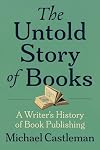
Interesting and informal overview of the book publishing business. The text is leavened by anecdotes from his own publishing experiences, as well as more than a few arcane factoids. It is a shame that Castleman includes no citations for these unusual statements, meaning they can't be reported further without redoing the research from scratch.
The greatest problem for me is that in his goal to make life better for authors, he endorses a use tax on libraries either per book loaned or per user. show more The example he gives is Canada paying up to 4500 to circulate one title in its public libraries.
Beyond this being a horrendous suggestion that would decimate many library budgets which would have to compensate for this tax, Castleman seems oblivious to what that move would entail in US law. He's saying we need to remove the First Sale Doctrine from our law (17 USC 109), which says that persons who legally acquire a copyrighted work are free to do what they wish with it. It is under this exemption that libraries are free to operate as we know them. Eliminating the FSD means no more used book stores (presumptively a major influence on book publishing, but which receive no mention at all in this account), since there would be no right to resell without payments to authors. That would make book purchases more like buying software, which is a lease, not an owned thing. More likely, he wants the US system to recognize not merely copyright, but rather European moral rights, which allow creators to continue to exercise control over their works even after you bought it ("Yes, I know you own the painting, but as the artist I deny you the right to hang it in your bathroom, and can sue you if you don't hang it as I wish!).
Given that the author harbors such a library-destroying notion for his ideal world, the book certainly suffers overall in my estimation. show less
The greatest problem for me is that in his goal to make life better for authors, he endorses a use tax on libraries either per book loaned or per user. show more The example he gives is Canada paying up to 4500 to circulate one title in its public libraries.
Beyond this being a horrendous suggestion that would decimate many library budgets which would have to compensate for this tax, Castleman seems oblivious to what that move would entail in US law. He's saying we need to remove the First Sale Doctrine from our law (17 USC 109), which says that persons who legally acquire a copyrighted work are free to do what they wish with it. It is under this exemption that libraries are free to operate as we know them. Eliminating the FSD means no more used book stores (presumptively a major influence on book publishing, but which receive no mention at all in this account), since there would be no right to resell without payments to authors. That would make book purchases more like buying software, which is a lease, not an owned thing. More likely, he wants the US system to recognize not merely copyright, but rather European moral rights, which allow creators to continue to exercise control over their works even after you bought it ("Yes, I know you own the painting, but as the artist I deny you the right to hang it in your bathroom, and can sue you if you don't hang it as I wish!).
Given that the author harbors such a library-destroying notion for his ideal world, the book certainly suffers overall in my estimation. show less
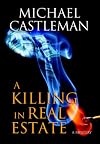
I don't read mystery novels often, but I really enjoyed this page-turner, set in San Francisco and balanced between the chaotic and rapidly-changing world of print journalism and the greedy world of real estate development. Early in the book, an editor observes that the main character, Ed Rosenberg, who writes a column about city history with a strong emphasis on politics, has “a tendency to use history to comment on current events.” She wants him to stop, to write “happy news.” show more Castleman uses the mystery genre to comment on current events as well, and I hope he doesn’t stop. show less
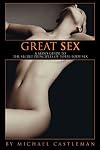
Despite its title and cover its a fairly clinical and serious book, with a lot about the mechanics of sex and sexual reponse, but little that's going to get anyone's fires started. Still it is worthwhile for its detailed coverage of common sexual problems. The Kama Sutra it is not, but if you're after a decent well-written sex manual thats heavy on the theory, its probably an eminently suitable addition to your library.
The Healing Herbs: The Ultimate Guide To The Curative Power Of Nature's Medicines by Michael Castleman

Perhaps not the best book on herbs, but definitely an informative resource. Easy to navigate, this book contains a huge listing of herbs and their properties, preparation notes, cautionary notes, and more. I'm not always happy with the images and physical descriptions, but I've always been glad I purchased this.
You May Also Like


Associated Authors
Statistics
- Works
- 24
- Members
- 1,114
- Popularity
- #23,058
- Rating
- 3.7
- Reviews
- 8
- ISBNs
- 72
- Languages
- 7