
Lydia Maria Francis Child (1802–1880)
Author of Over the River and Through the Wood
About the Author
Lydia Maria Child was born in Medford, Massachusetts on February 11, 1802. She was educated at home, at a local dame school, and at a nearby women's seminary. Her first novel, Hobomok, was published in 1824. Her other novels include The Rebels or Boston before the Revolution, The First Settlers, show more Philothea, and Romance of the Republic. She wrote advice books including The Frugal Housewife, The Mother's Book, The Little Girl's Own Book, and The Freedmen's Book. She was an abolitionist, women's rights activist, and Indian rights advocate. She wrote books about these causes including An Appeal in Favor of That Class of Americans Called Africans, Anti-Slavery Catechism, and An Appeal for the Indians. She was also the author of Over the River and Through the Wood (A Boy's Thanksgiving Day). She died on October 20, 1880. (Bowker Author Biography) show less
Disambiguation Notice:
Lydia Maria Child (1802-1880), American activist, abolitionist and author; name frequently given on works as: Mrs. Child
Image credit: Courtesy of the NYPL Digital Gallery (image use requires permission from the New York Public Library)
Works by Lydia Maria Francis Child
Good wives 3 copies
The Little Girl’s Own Book 2 copies
The Juvenile Miscellany Vol. IV 2 copies
The juvenile miscellany. 1 copy
The American Anti-slavery Almanac, for ...: Calculated for Boston, New York, and Pittsburgh ..; 1838 (2021) 1 copy
An appeal in favor of Americans called Africans (The American Negro, his history and literature) (1968) 1 copy
"Mrs. Child's Reply" 1 copy
Over the River and Through the Wood (Blue Ribbon Book) by Lydia Maria Francis Child (1974-06-05) 1 copy
Rosa and Flora 1 copy
The Rival Mechanicians 1 copy
The Right Way The Safe Way 1 copy
Associated Works
Choice Cuts: A Savory Selection of Food Writing from Around the World and Throughout History (2002) — Contributor — 367 copies, 2 reviews
The Heath Anthology of American Literature, Volume 1 (1990) — Contributor, some editions — 252 copies, 1 review
American Antislavery Writings: Colonial Beginnings to Emancipation (2012) — Contributor — 145 copies
Women's Rights Emerges within the Anti-Slavery Movement, 1830-1870 (2000) — Contributor — 107 copies, 2 reviews
Grand Mothers: Poems, Reminiscences, and Short Stories About the Keepers of Our Traditions (1994) — Contributor — 89 copies
The Heath Anthology of American Literature, Concise Edition (2003) — Contributor — 72 copies, 1 review
Women in the Trees: U.S. Women's Short Stories About Battering and Resistance, 1839-1994 (1996) — Contributor — 45 copies
The Tavern Lamps Are Burning: Literary Journeys through Six Regions and Four Centuries of New York State (1964) — Contributor — 25 copies
Tagged
Common Knowledge
- Legal name
- Child, Lydia Maria
Francis, Lydia Maria (birth name) - Birthdate
- 1802-02-11
- Date of death
- 1880-10-20
- Gender
- female
- Education
- dame school
- Occupations
- teacher
novelist
editor
publisher
abolitionist - Organizations
- American Anti-Slavery Society
Underground Railroad - Relationships
- Francis, Convers (brother)
Child, David Lee (husband)
Fuller, Margaret (friend)
Sewall, Harriet Winslow (friend) - Short biography
- Lydia Maria Child, née Francis, was born in Medford, Massachusetts, the youngest of six children. She received her early education at a local dame school. Her mother died when she was 12 years old, and she spent her teenage years living with a married sister in rural Maine, where she studied to be a teacher. She read an article in the North American Review about novels on early New England history, and immediately wrote the first chapter of a novel called Hobomok: A Tale of Early Times, which she completed in six weeks and published in 1824. It became an overnight sensation. Two years later, she founded the Juvenile Miscellany, the first American children's magazine. In 1828, she married David Lee Child, a Boston lawyer, journalist, and aspiring politician. He went into debt and she supported them with her prolific writings, which included more novels, short stories, pamphlets, and journalism. She became a leading anti-slavery activist in the 1830s, and was elected to the executive committee of the American Anti-Slavery Society, whose journal, the National Anti-Slavery Standard, she edited and made into an influential publication. She quit the AASS in 1843 after a major disagreement, and although she worked for the equality of women and Native Americans, she never again joined an organized society. Today she is considered a major link between the worlds of American literature and social reform.
- Nationality
- USA
- Birthplace
- Medford, Massachusetts, USA
- Places of residence
- Medford, Massachusetts, USA
Wayland, Massachusetts, USA
New Rochelle, New York, USA
Northampton, Massachusetts, USA - Place of death
- Wayland, Massachusetts, USA
- Burial location
- North Cemetery, Wayland, Massachusetts, USA
- Disambiguation notice
- Lydia Maria Child (1802-1880), American activist, abolitionist and author; name frequently given on works as: Mrs. Child
- Associated Place (for map)
- Massachusetts, USA
Members
Reviews
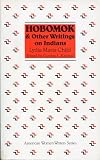
Hobomok, A Tale of Early Times is the provocative story of an upperclass white woman who marries an Indian chief, has a child, then leaves him--with the child--for another man. This novel, originally published in 1824, is a powerful first among antipatriarchal and antiracist novels in American literature. In addition, this collection contains seven remarkable short stories; an extract on Indian women from Child's groundbreaking History of the Condition of Women in Various Ages and Nations show more (1835); a selection from her best-selling volume of journalistic sketches, Letters from New-York (1843); and her eloquent Appeal for Indians (1868). This revised edition of "Hobomok" and Other Writings on Indians includes three new stories--"The Church in the Wilderness," "Willie Wharton," and "The Indians"--as well as explanatory notes and an updated bibliography. show less
Over the River and Through the Wood: The New England Boy's Song About Thanksgiving Day by Lydia Maria Child

Over the River and Through the Wood, illustrated by Matt Tavares.
"Over the river, and through the wood, / To Grandfather's house we go; / The horse knows the way to carry the sleigh / through the white and drifted snow." And so begins this classic Thanksgiving poem, which first saw print in 1844, in Lydia Maria Child's three-volume anthology for young readers, Flowers for Children. It's a well-known and well-loved poem and song, although I've recently discovered (to my surprise) that some show more people think it is a Christmas poem. Apparently, it is not so uncommon to substitute "Christmas Day" for "Thanksgiving Day," in the reciting/singing! In any case, as well known as Child's poem may be, what is less well known is that there are two versions of it: the original twelve-verse version, published in 1844, and the abridged six-verse version, included in John Greenleaf Whittier's 1871 Child Life: A Collection of Poems. It is this latter version which seems to be the better known, making the publication of this lovely picture-book presentation of the full twelve-verse original, earlier this year, very welcome indeed!
With one verse per two-page spread, and gorgeous watercolor, gouache and pencil illustrations, this edition from Candlewick Press has immense textual and artistic appeal. I'd never actually read the complete poem before, and was thrilled to see "new" verses, like: "Over the river, and through the wood- / Old Jowler hears our bells; / He shakes his paw with a loud bow-wow, / and thus the news he tells." The artwork by Matt Tavares is lovely, with a painterly quality that is very different from the woodcut illustrations done by Christopher Manson for Over the River and Through the Wood: A Thanksgiving Poem (which I have also read and enjoyed). I loved the sense of light in these pictures, and the warmth of the indoor scenes, after the long cold sleigh ride! This is just a wonderful presentation of this classic holiday poem - available in its entirety for young readers! - and I highly recommend it to anyone looking for a good picture-book version, or for the original text.
Note: The edition illustrated by Brinton Turkle, Over the River and Through the Wood, also contains the full text. show less
"Over the river, and through the wood, / To Grandfather's house we go; / The horse knows the way to carry the sleigh / through the white and drifted snow." And so begins this classic Thanksgiving poem, which first saw print in 1844, in Lydia Maria Child's three-volume anthology for young readers, Flowers for Children. It's a well-known and well-loved poem and song, although I've recently discovered (to my surprise) that some show more people think it is a Christmas poem. Apparently, it is not so uncommon to substitute "Christmas Day" for "Thanksgiving Day," in the reciting/singing! In any case, as well known as Child's poem may be, what is less well known is that there are two versions of it: the original twelve-verse version, published in 1844, and the abridged six-verse version, included in John Greenleaf Whittier's 1871 Child Life: A Collection of Poems. It is this latter version which seems to be the better known, making the publication of this lovely picture-book presentation of the full twelve-verse original, earlier this year, very welcome indeed!
With one verse per two-page spread, and gorgeous watercolor, gouache and pencil illustrations, this edition from Candlewick Press has immense textual and artistic appeal. I'd never actually read the complete poem before, and was thrilled to see "new" verses, like: "Over the river, and through the wood- / Old Jowler hears our bells; / He shakes his paw with a loud bow-wow, / and thus the news he tells." The artwork by Matt Tavares is lovely, with a painterly quality that is very different from the woodcut illustrations done by Christopher Manson for Over the River and Through the Wood: A Thanksgiving Poem (which I have also read and enjoyed). I loved the sense of light in these pictures, and the warmth of the indoor scenes, after the long cold sleigh ride! This is just a wonderful presentation of this classic holiday poem - available in its entirety for young readers! - and I highly recommend it to anyone looking for a good picture-book version, or for the original text.
Note: The edition illustrated by Brinton Turkle, Over the River and Through the Wood, also contains the full text. show less

Over the River and Through the Wood, illustrated by Nadine Bernard Westcott.
Lydia Maria Child's classic New England Thanksgiving poem, which first appeared in 1844, is given a modern treatment by illustrator Nadine Bernard Westcott in this fun seasonal picture-book. As the rhyming text rollicks along, following a family as they journey to their grandparents' house for a Thanksgiving feast, the artwork alternates between depicting that family on the road and depicting Grandmother and show more Grandfather preparing for them. The setting is modern, so the family travels in a car, driving from city to country, but the textual references to horses and sleighs are not neglected, as they pass such equipages on their journey. Eventually they arrive, and the poem/song concludes with a big hurrah for the pumpkin pie. The musical notation for the song is included at the rear...
Over the River and Through the Wood: A Song for Thanksgiving, published in 1992, is the fourth picture-book presentation of this beloved seasonal poem/song that I have read, following upon the versions illustrated by Matt Tavares, Christopher Manson and Brinton Turkle. I found it enjoyable and engaging, although not the equal, aesthetically speaking, of those other three versions. I appreciated the fact that Westcott has "updated" the Thanksgiving journey described in the poem—her family are modern city dwellers, and drive a modern car—while still retaining the traditional elements in the song, such as horse-drawn sleighs. I also appreciated that the artwork alternated between the grandparents preparing for visitors, and the family journeying toward them. The text was rather abbreviated—in its full form this poem has twelve stanzas, but the version here uses only three—although it still makes for an engaging read-aloud. This wouldn't be the first picture-book presentation of this poem that I would recommend to readers—that would be either the Tavares or the Turkle versions, both of which contain the full twelve verses, and both of which feature artwork I prefer—but it is still a fun picture-book for the season. show less
Lydia Maria Child's classic New England Thanksgiving poem, which first appeared in 1844, is given a modern treatment by illustrator Nadine Bernard Westcott in this fun seasonal picture-book. As the rhyming text rollicks along, following a family as they journey to their grandparents' house for a Thanksgiving feast, the artwork alternates between depicting that family on the road and depicting Grandmother and show more Grandfather preparing for them. The setting is modern, so the family travels in a car, driving from city to country, but the textual references to horses and sleighs are not neglected, as they pass such equipages on their journey. Eventually they arrive, and the poem/song concludes with a big hurrah for the pumpkin pie. The musical notation for the song is included at the rear...
Over the River and Through the Wood: A Song for Thanksgiving, published in 1992, is the fourth picture-book presentation of this beloved seasonal poem/song that I have read, following upon the versions illustrated by Matt Tavares, Christopher Manson and Brinton Turkle. I found it enjoyable and engaging, although not the equal, aesthetically speaking, of those other three versions. I appreciated the fact that Westcott has "updated" the Thanksgiving journey described in the poem—her family are modern city dwellers, and drive a modern car—while still retaining the traditional elements in the song, such as horse-drawn sleighs. I also appreciated that the artwork alternated between the grandparents preparing for visitors, and the family journeying toward them. The text was rather abbreviated—in its full form this poem has twelve stanzas, but the version here uses only three—although it still makes for an engaging read-aloud. This wouldn't be the first picture-book presentation of this poem that I would recommend to readers—that would be either the Tavares or the Turkle versions, both of which contain the full twelve verses, and both of which feature artwork I prefer—but it is still a fun picture-book for the season. show less

Over the River and Through the Wood, illustrated by Brinton Turkle.
First published in 1974, this picture-book edition of Lydia Maria Child's classic Thanksgiving poem is illustrated by Brinton Turkle, and contains the original, twelve-verse version from 1844, rather than the six-verse version (which first appeared in 1871) that seems to be better known these days. Alternating between two-page color paintings, that depict the young narrator (a New England boy) and his family on their show more sleigh-ride to grandfather's house for Thanksgiving dinner, and black and white single-page illustrations - with text on the facing page - which show the preparations going forward in anticipation of their arrival, the book has a distinctively vintage sensibility and charm, and is immensely appealing. The two-page vistas open up entire worlds to the reader, and are simply lovely. I'm so glad that I gave this third presentation of the poem a chance - I have already read both the Christopher Manson version, Over the River and Through the Wood: A Thanksgiving Poem, and the newer Matt Tavares edition, Over the River and Through the Wood: The New England Boy's Song about Thanksgiving Day this season - when I spotted it at the public library this past weekend, as it really is a beauty! Recommended to anyone looking for a picture-book with the full original text of Over the River and Through the Wood, or who appreciates picture-book illustrations with a cozy, old-fashioned feeling to them.
Note: the Matt Tavares version also contains the full twelve-verse version of the poem, whereas the Christopher Manson edition contains the six-verse version from 1871. show less
First published in 1974, this picture-book edition of Lydia Maria Child's classic Thanksgiving poem is illustrated by Brinton Turkle, and contains the original, twelve-verse version from 1844, rather than the six-verse version (which first appeared in 1871) that seems to be better known these days. Alternating between two-page color paintings, that depict the young narrator (a New England boy) and his family on their show more sleigh-ride to grandfather's house for Thanksgiving dinner, and black and white single-page illustrations - with text on the facing page - which show the preparations going forward in anticipation of their arrival, the book has a distinctively vintage sensibility and charm, and is immensely appealing. The two-page vistas open up entire worlds to the reader, and are simply lovely. I'm so glad that I gave this third presentation of the poem a chance - I have already read both the Christopher Manson version, Over the River and Through the Wood: A Thanksgiving Poem, and the newer Matt Tavares edition, Over the River and Through the Wood: The New England Boy's Song about Thanksgiving Day this season - when I spotted it at the public library this past weekend, as it really is a beauty! Recommended to anyone looking for a picture-book with the full original text of Over the River and Through the Wood, or who appreciates picture-book illustrations with a cozy, old-fashioned feeling to them.
Note: the Matt Tavares version also contains the full twelve-verse version of the poem, whereas the Christopher Manson edition contains the six-verse version from 1871. show less
Lists
Awards


You May Also Like


Associated Authors
Statistics
- Works
- 63
- Also by
- 23
- Members
- 3,104
- Popularity
- #8,232
- Rating
- 3.9
- Reviews
- 42
- ISBNs
- 164
- Favorited
- 1
