
Roy Hattersley
Author of The Edwardians: Biography of the Edwardian Age
About the Author
Roy Hattersley divide their time between London and Derbyshire, England. (Bowker Author Biography)
Image credit:
Monire Childs
Works by Roy Hattersley
Associated Works
Great Spirits 1000-2000: The Fifty-Two Christians Who Most Influenced Their Millennium (2002) — Contributor — 30 copies, 1 review
Tagged
Common Knowledge
- Canonical name
- Hattersley, Roy
- Legal name
- Hattersley, Roy Sydney George
- Birthdate
- 1932-12-28
- Gender
- male
- Occupations
- politician
journalist
columnist - Organizations
- Labour Party (UK)
- Nationality
- UK
- Associated Place (for map)
- UK
Members
Reviews
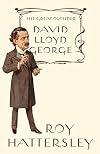
Last summer I spent a while researching whether there were any decent biographies of Lloyd George. I have his multi-volume War Diaries purchased in a moment of financial whim in a charity shop in Preston, Lancs but if you were looking for a comprehensive take on Lloyd George's life, then last summer there was not one to be found. This is interesting in itself, David Lloyd George was the man who lead Great Britain to victory in the Great War surely, as with Churchill, there should have been show more dozens of titles. Part of the reason for this one wonders may have to do with how the book came to be written. Roy Jenkins, the stalwart of British political Biography whose titles include Gladstone, Asquith, Baldwin and Churchill, suggested to Roy Hattersley that he write the biography because he disliked Lloyd George 'so heartily that he could not write the book himself'
Money played an important part in Lloyd George's life and it was probably the lack of it in childhood that made him so desirous of it in later life. Born in Manchester he spent most of his childhood in North Wales, the country with which he would be so closely associated with. His later financial dealings nearly ruined his career as with his disastrous gold mining operations in Argentina where he continued to solicit investment even after he was aware there was no gold, and the Marconi scandal where a number of cabinet ministers were involved in speculating in the share value prior to the awarding of a large government contract. It was the issue of money that finally ended his run as Prime Minister when the extent of his involvement in selling honours became known.
After receiving the reputation of being something of a womaniser (a reputation that later led to his nickname of 'the goat'), at the age of 21 Lloyd George realised that he needed a woman who could provide 'the stability of indomitable domesticity'. The woman was Margaret Lloyd George (nee Owen). They stayed together until her death in 1944 although he was hardly faithful. In 1910 he met Frances Stevenson when she was hired as the childrens' tutor. She became Lloyd George's mistress and was to remain with him until his death, becoming the second Mrs Lloyd George following Margaret's death in 1944.
I said that Lloyd George was the man who lead Great Britain to victory in the Great War but he should be remembered for far more than that. He was the man who essentially started the modern welfare state by introducing state pensions and employment insurance, the man who strengthened British democracy by forcing the House of Lords into breaking a constitutional convention which led to the Parliament Act 1911 that limited the power of the unelected Lords to a suspensory veto. He is also a man to be remembered for two wars. For his vehement opposition to the Boer War (that almost made him the most unpopular man in the country) to his stalwart leadership during the First World War. There is so much more to say about his achievements but my précis would be a poor substitution to reading the book itself.
Roy Jenkins book is an interesting one. He tries to be dispassionate about Lloyd George and I think like me he genuinely admires what he achieved but with each chapter you sense a growing dislike of the person. His treatment of his wife although mitigated by the fact that she refused to leave her native Leeds to join him in London, cannot be condoned. The book could have done with a concluding chapter just to sum up his thoughts on the man but sadly all we are given is half a paragraph. Otherwise this was a thoroughly interesting book on a very interesting period in British politics and I highly recommend it.
http://paolosinterweblog.blogspot.com/2011/07/david-lloyd-george-by-roy-hattersl... show less
Money played an important part in Lloyd George's life and it was probably the lack of it in childhood that made him so desirous of it in later life. Born in Manchester he spent most of his childhood in North Wales, the country with which he would be so closely associated with. His later financial dealings nearly ruined his career as with his disastrous gold mining operations in Argentina where he continued to solicit investment even after he was aware there was no gold, and the Marconi scandal where a number of cabinet ministers were involved in speculating in the share value prior to the awarding of a large government contract. It was the issue of money that finally ended his run as Prime Minister when the extent of his involvement in selling honours became known.
After receiving the reputation of being something of a womaniser (a reputation that later led to his nickname of 'the goat'), at the age of 21 Lloyd George realised that he needed a woman who could provide 'the stability of indomitable domesticity'. The woman was Margaret Lloyd George (nee Owen). They stayed together until her death in 1944 although he was hardly faithful. In 1910 he met Frances Stevenson when she was hired as the childrens' tutor. She became Lloyd George's mistress and was to remain with him until his death, becoming the second Mrs Lloyd George following Margaret's death in 1944.
I said that Lloyd George was the man who lead Great Britain to victory in the Great War but he should be remembered for far more than that. He was the man who essentially started the modern welfare state by introducing state pensions and employment insurance, the man who strengthened British democracy by forcing the House of Lords into breaking a constitutional convention which led to the Parliament Act 1911 that limited the power of the unelected Lords to a suspensory veto. He is also a man to be remembered for two wars. For his vehement opposition to the Boer War (that almost made him the most unpopular man in the country) to his stalwart leadership during the First World War. There is so much more to say about his achievements but my précis would be a poor substitution to reading the book itself.
Roy Jenkins book is an interesting one. He tries to be dispassionate about Lloyd George and I think like me he genuinely admires what he achieved but with each chapter you sense a growing dislike of the person. His treatment of his wife although mitigated by the fact that she refused to leave her native Leeds to join him in London, cannot be condoned. The book could have done with a concluding chapter just to sum up his thoughts on the man but sadly all we are given is half a paragraph. Otherwise this was a thoroughly interesting book on a very interesting period in British politics and I highly recommend it.
http://paolosinterweblog.blogspot.com/2011/07/david-lloyd-george-by-roy-hattersl... show less
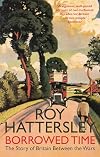
I met Roy Hattersley nearly twenty-five years ago in the marvellous old Hatchards bookshop on the Strand when both of us reached for the same copy of Julian Barnes's "A History of the World in Ten and a Half Chapters". Our subsequent conversation was bordered on the bland - I think that I said, "After you" and he muttered a brief "Thank you".
Despite this burgeoning friendship (reference to which was strangely omitted from his memoir "Who Goes Home) I had often felt that he tended to be show more unnecessarily long-winded when speaking on television or radio, even to the point of being a bit of a windbag.
However, there is son such problem when he puts pen to paper (or fingers to keyboard). This book is remarkably lucid and gives a well-structured and surprisingly politically objective account of Britain during the years between the First and Second World Wars.
I found his chapter on the events leading up to the abdication of King Edward VIII particularly enlightening. it is difficult now to appreciate how alarming the constitutional crisis was at the time, and Hattersley captures the mood with great clarity. Similarly the economic crisis of 1931 is handled with great lucidity, rendering the detailed and convoluted transactions readily accessible to the non-specialist reader.
I particularly enjoyed his chapters on literary and culture developments during that period, including the explosion in numbers of people visiting the cinema (with over a billion cinema tickets being bought in Britain in 1938).
Hattersley has a particular ability to convey a lot of statistics unobtrusively and without causing the reader’s eyes to glaze over.
Although this book does not offer any startling new insights to the period I found it very enjoyable and informative. show less
Despite this burgeoning friendship (reference to which was strangely omitted from his memoir "Who Goes Home) I had often felt that he tended to be show more unnecessarily long-winded when speaking on television or radio, even to the point of being a bit of a windbag.
However, there is son such problem when he puts pen to paper (or fingers to keyboard). This book is remarkably lucid and gives a well-structured and surprisingly politically objective account of Britain during the years between the First and Second World Wars.
I found his chapter on the events leading up to the abdication of King Edward VIII particularly enlightening. it is difficult now to appreciate how alarming the constitutional crisis was at the time, and Hattersley captures the mood with great clarity. Similarly the economic crisis of 1931 is handled with great lucidity, rendering the detailed and convoluted transactions readily accessible to the non-specialist reader.
I particularly enjoyed his chapters on literary and culture developments during that period, including the explosion in numbers of people visiting the cinema (with over a billion cinema tickets being bought in Britain in 1938).
Hattersley has a particular ability to convey a lot of statistics unobtrusively and without causing the reader’s eyes to glaze over.
Although this book does not offer any startling new insights to the period I found it very enjoyable and informative. show less
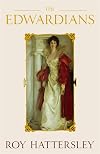
In this intricate, self-assured and insightfully anecdotal account of British social and political history from 1901 to 1914, Hattersley, a former Labour MP and cabinet minister, challenges the notion of the Edwardian age as "a long and sunlit afternoon," instead presenting it as a time of massive upheaval. After dissecting the louche temperament of King Edward VII, Hattersley profiles the period's leading political protagonists, including the "young turks" A.J. Balfour and Joseph show more Chamberlain (each "handicapped by character weaknesses") and analyzes the politically efficacious if "unlikely partnership" of soldier Winston Churchill and Welsh solicitor David Lloyd George. Pithy chapters delineate the raging issues that fatally divided the Liberal Party: empire and the Boer War, Irish nationalism, women's suffrage, the trade union movement and the rise of the Labour Party. Throughout Hattersley emphasizes the House of Commons' transformation in this period from a "gentleman's Parliament" into a professional legislature. He also summarizes cultural and social highlights, such as the professionalization of sports; new movements in the arts; intellectual life and church politics; and of course the advent of WWI. Illuminating the motivations of individuals and the age-old tensions between prominent elite families, Hattersley also challenges the traditional leftist view of Churchill. A convincing account of a watershed epoch, Hattersley's concise yet comprehensive history casts new light on a much-misunderstood era. show less
The Edwardians: Biography of the Edwardian Age by Roy Hattersley (2-Mar-2006) Paperback by Roy Hattersley
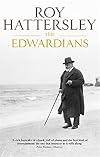
Growing pains all round as the old certainties loosened to give shape to our age (or at least to the 20th century world of recent memory). Hattersley covers all the key “Strange Death” trends - women’s suffrage, Ireland, the People’s Budget - as well as now forgotten crazes: the Blue Riband of the Atlantic, a prize for the fastest liner crossing, or the madcap 1910 air race from London to Manchester. The author is drawn to mavericks like Joseph Chamberlain, or Northcliffe so show more there’s always a tinge of admiration as he recounts their sallies and switches. Not so with the injudicious Kaiser Wilhelm or King Edward though, nor adventurers like Aurel Stein, a new name to me, meting out plunder and condescension beyond the Hindu Kush. There and elsewhere the old Boys Own icons of imperial heroism, the Scotts and Baden Powells, are nodded to, but of course, deflated somewhat. Eminent Edwardians right? The storytelling is sometimes a bit uneven, but in a sense the detail is more of interest than the broad sweep of the period, which is familiar enough. show less
You May Also Like


Associated Authors
Statistics
- Works
- 30
- Also by
- 4
- Members
- 1,166
- Popularity
- #22,047
- Rating
- 3.7
- Reviews
- 15
- ISBNs
- 90
- Languages
- 1