
Cheryl Misak
Author of Frank Ramsey: A Sheer Excess of Powers
About the Author
Cheryl Misak is Professor of Philosophy at the University of Toronto.
Image credit: University of Toronto Bulletin
Works by Cheryl Misak
Associated Works
Tagged
Common Knowledge
- Birthdate
- 1961
- Gender
- female
- Education
- University of Oxford (D.Phil|1988)
Columbia University (MA|1984)
University of Lethbridge (BA|1983) - Occupations
- Professor of Philosophy, University of Toronto
- Organizations
- University of Toronto
- Awards and honors
- Royal Society of Canada (Fellow, 2001)
Rhodes Scholar (1984) - Relationships
- Dyzenhaus, David (husband)
- Nationality
- Canada
- Birthplace
- Lethbridge, Alberta, Canada
- Associated Place (for map)
- Alberta, Canada
Members
Reviews
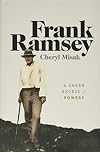
Even a short life can be full. Frank Ramsey lived a full life. He was born with an immense talent for logical thought, but it may have been his talent for living a fully human life that set him most apart from his philosophical peers such as Wittgenstein, Russell, or Keynes. Cheryl Misak brings those human qualities to life in this biography. She also, thankfully, is able to situate Ramsey’s intellectual contributions, render reasonable judgement as to their merits, and draw connections to show more Ramsey’s influence on future scholars in mathematics, economics, and philosophy. This is a fine work of biography and history of ideas.
Ramsey was not a moody, self-tortured genius; he was no Wittgenstein. He was sensible of his actions in the world and how they affected others. He found it “pleasanter to be thrilled than to be depressed, and not merely pleasanter but better for all one’s activities.” He was a large man with a large and infectious laugh who was not afraid to experience and express his joy in life. And this was not merely a disposition. It both resulted from and influenced the development of his philosophical stance, which moved ever away from the logicism of his youth toward a modest Peircean pragmatism.
As one might expect from a fine philosopher such as Misak, the technical elucidation of Ramsey’s important insights and discoveries are handled with great care. Since he delved in many fields, at least some of this will be new (perhaps startlingly so) to most readers. But Misak is also sensitive when dealing with the more strictly biographical aspects of Ramsey’s life. She always presents him as the well-rounded person that he was rather than as some freakish intellectual giant, despite his noted sheer excess of powers. The writing is clear and crisp and rarely slips into eddies of rumination. I enjoyed the reading as much as the content and feel that an important piece of the puzzle of the development of analytic philosophy has finally been put in place.
Recommended. show less
Ramsey was not a moody, self-tortured genius; he was no Wittgenstein. He was sensible of his actions in the world and how they affected others. He found it “pleasanter to be thrilled than to be depressed, and not merely pleasanter but better for all one’s activities.” He was a large man with a large and infectious laugh who was not afraid to experience and express his joy in life. And this was not merely a disposition. It both resulted from and influenced the development of his philosophical stance, which moved ever away from the logicism of his youth toward a modest Peircean pragmatism.
As one might expect from a fine philosopher such as Misak, the technical elucidation of Ramsey’s important insights and discoveries are handled with great care. Since he delved in many fields, at least some of this will be new (perhaps startlingly so) to most readers. But Misak is also sensitive when dealing with the more strictly biographical aspects of Ramsey’s life. She always presents him as the well-rounded person that he was rather than as some freakish intellectual giant, despite his noted sheer excess of powers. The writing is clear and crisp and rarely slips into eddies of rumination. I enjoyed the reading as much as the content and feel that an important piece of the puzzle of the development of analytic philosophy has finally been put in place.
Recommended. show less
Frank Ramsey was one of the most influential British thinkers of the early 20th century but his death at the age of 26 cut short his career and, for many years, hindered the recognition of his work by other philosophers, mathematicians and economists. He was in the middle of a golden age of intellectual life at Cambridge University, and had close relationships with Maynard Keynes, Bertrand Russell, G.E. Moore, Ludwig Wittgenstein, Piero Sraffa and many more, including members of the Vienna show more Circle that he met in Austria.
While he published several important articles in his lifetime, at the time of his death he was working on his first book, Truth and Philosophy. His close friend Braithwaite arranged for publication of some of the chapters and other papers posthumously, but, busy with his own career, he did not fully comprehend the significance of some of Ramsey’s writings. Accordingly, many were not published until the 1970s.
The book not only zeros in on Ramsey’s achievements but also provides necessary context on philosophical, mathematical and economic thinking of the time. Misak examines both his personal and intellectual life. For the advanced reader, she includes boxed discussions of Ramsey’s achievements, written by other specialists in the field. The lay reader can follow most of what she discusses in the text and experts can turn to the special boxes for more technical discussions.
Ramsey was a man of his age: he underwent psychoanalysis (which helped him overcome sexual inhibitions), and he and his wife Letice lived a fairly free lifestyle influenced by Bloomsbury culture, even though the mores of his family and of Cambridge University were quite strict. A large man, he was likable and friendly, and showed much toleration for Wittgenstein’s difficult personality. (One of the entertaining parts of the book addresses occasions on which Keynes, who fully recognized Wittgenstein’s genius and wanted to help him, nevertheless sought to avoid personal interactions with him as much as possible and thus would shunt Wittgenstein in Ramsey’s direction.) His influence on Wittgenstein’s changing views is one of the most fascinating parts of the book. Unquestionably a genius, it is difficult for the author to predict what Ramsey would have achieved if he lived, beyond being a leading philosophical presence at Cambridge who would have extended the golden age of Cambridge philosophy.
She recounts numerous occasions on which later economists, mathematicians or philosophers thought they were discovering a new concept or theorem only to find that Ramsey had already identified it in his published or posthumous writings. This became known as the Ramsey effect, i.e., a scholar’s discovery of a new principle only to find that Ramsey had been there first.
The book is an interesting read, combining life at Cambridge University, developments in Britain and Europe, Ramsey’s interaction with other intellectuals and his personal life. By setting aside more technical discussions of his discoveries in separate boxes, Misak provides a service to those of us not eager to take on complex analyses in the general text of a biography. show less
While he published several important articles in his lifetime, at the time of his death he was working on his first book, Truth and Philosophy. His close friend Braithwaite arranged for publication of some of the chapters and other papers posthumously, but, busy with his own career, he did not fully comprehend the significance of some of Ramsey’s writings. Accordingly, many were not published until the 1970s.
The book not only zeros in on Ramsey’s achievements but also provides necessary context on philosophical, mathematical and economic thinking of the time. Misak examines both his personal and intellectual life. For the advanced reader, she includes boxed discussions of Ramsey’s achievements, written by other specialists in the field. The lay reader can follow most of what she discusses in the text and experts can turn to the special boxes for more technical discussions.
Ramsey was a man of his age: he underwent psychoanalysis (which helped him overcome sexual inhibitions), and he and his wife Letice lived a fairly free lifestyle influenced by Bloomsbury culture, even though the mores of his family and of Cambridge University were quite strict. A large man, he was likable and friendly, and showed much toleration for Wittgenstein’s difficult personality. (One of the entertaining parts of the book addresses occasions on which Keynes, who fully recognized Wittgenstein’s genius and wanted to help him, nevertheless sought to avoid personal interactions with him as much as possible and thus would shunt Wittgenstein in Ramsey’s direction.) His influence on Wittgenstein’s changing views is one of the most fascinating parts of the book. Unquestionably a genius, it is difficult for the author to predict what Ramsey would have achieved if he lived, beyond being a leading philosophical presence at Cambridge who would have extended the golden age of Cambridge philosophy.
She recounts numerous occasions on which later economists, mathematicians or philosophers thought they were discovering a new concept or theorem only to find that Ramsey had already identified it in his published or posthumous writings. This became known as the Ramsey effect, i.e., a scholar’s discovery of a new principle only to find that Ramsey had been there first.
The book is an interesting read, combining life at Cambridge University, developments in Britain and Europe, Ramsey’s interaction with other intellectuals and his personal life. By setting aside more technical discussions of his discoveries in separate boxes, Misak provides a service to those of us not eager to take on complex analyses in the general text of a biography. show less
A surprisingly lively intellectual biography of a polymathic teen prodigy.
As a mathematician, I was aware of Ramsey because of the Ramsey Theory of combinatorics (but didn't know that he invented it to assist in his work on the Entscheidungsproblem). This book dwells much more on Ramsey's work in economics and philosophy. The description of his work in economics was clear and fairly interesting to me, even though it's not a subject I think about much. The description of his philosophical show more work was amazingly jargon-free but confirmed my opinion that the topic is a bore.
Actually, maybe it's not right to call this an intellectual biography, because it informs us about all aspects of Ramsey's life. He was very much a modernist and socialist and atheist with an "open" marriage. He and his social group overwhelmingly rejected the values of the preceding Victorian era. show less
As a mathematician, I was aware of Ramsey because of the Ramsey Theory of combinatorics (but didn't know that he invented it to assist in his work on the Entscheidungsproblem). This book dwells much more on Ramsey's work in economics and philosophy. The description of his work in economics was clear and fairly interesting to me, even though it's not a subject I think about much. The description of his philosophical show more work was amazingly jargon-free but confirmed my opinion that the topic is a bore.
Actually, maybe it's not right to call this an intellectual biography, because it informs us about all aspects of Ramsey's life. He was very much a modernist and socialist and atheist with an "open" marriage. He and his social group overwhelmingly rejected the values of the preceding Victorian era. show less
You May Also Like


Associated Authors
Statistics
- Works
- 12
- Also by
- 1
- Members
- 360
- Popularity
- #66,629
- Rating
- 4.3
- Reviews
- 3
- ISBNs
- 40
- Languages
- 1