
Matthew Black (1) (1908–1994)
Author of Peake's Commentary on the Bible
For other authors named Matthew Black, see the disambiguation page.
About the Author
Image credit: Matthew Black by Walter Bird bromide print, 8 April 1965 NPG x165287 © National Portrait Gallery, London
Works by Matthew Black
Operation Underworld: How the Mafia and U.S. Government Teamed Up to Win World War II (2022) 95 copies, 3 reviews
The Scrolls and Christian Origins: Studies in the Jewish Background of the New Testament (Brown Judaic Studies 48) (1969) 75 copies
The Book of Enoch or I Enoch: A New English Edition : With Commentary and Textual Notes (Studia in Veteris Testamenti Pseudepigrapha) (1985) 7 copies
On language, culture and religion: In honor of Eugene A. Nida (Approaches to semiotics) (1974) 4 copies
New Testament studies 4 copies
The Essene problem 1 copy
Associated Works
On Paul and John: Some Selected Theological Themes (Studies in Biblical Theology, First) (1963) — Editor — 35 copies, 1 review
Creation, Christ and Culture: Studies in Honour of T. F. Torrance (1976) — Contributor, some editions — 23 copies
Tagged
Common Knowledge
- Other names
- Black, Rev. Matthew
- Birthdate
- 1908-09-03
- Date of death
- 1994-10-02
- Gender
- male
- Education
- University of Glasgow (MA, BD | Old Testament, D.Litt)
University of Bonn - Occupations
- professor
Minister of Dunbarney
Professor of Biblical Criticism and Antiquities, Edinburgh University
Professor of Divinity and Biblical Criticism, St. Andrews University
President of the Society of Old Testament Studies - Organizations
- Church of Scotland
Edinburgh University
St. Andrews University
Society of Old Testament Studies
United Bible Society - Short biography
- Rev Matthew Black was a Scottish minister and biblical scholar. He was the first editor of the journal, New Testament Studies.
- Nationality
- Scotland
- Birthplace
- Kilmarnock, Ayrshire, Scotland, UK
- Place of death
- St. Andrews, Scotland, UK
- Map Location
- UK
Members
Reviews

I thought it might be a good idea to read the Bible, but with some idea of what it was I was reading. And so it was. Knowing nothing about biblical commentaries it was a case of trial and error and I just happened to be lucky first time.
First up, there are a whole load of essays on a whole range of subjects. Some of them, like those on archaeology or money are now hopelessly outdated, but the vast majority and still useful and/or interesting. They really are an education in themselves.
As for show more the commentaries, cast your eye down the list of contributors and you’ll see certain biases. They are all of them male. All white. All Protestant; mostly Anglian. Mostly British; some American. You’re never going to find an unbiased book on such a controversial subject, so my advice is to find one whose biases you understand. Well, I’m white, male, and from a Protestant country so I’m laughing. I think the most important bias in this context is the religious one. There’s something about the way they see the world that I understand.
Taking the Old Testament first, what they are attempting to do is to discover who wrote these books, when, and why. What did the words mean to those who wrote them, and what did they mean to the first people to read them? I think it would be fair to say that for these men the attempt to gain that knowledge is in itself an act of worship. There’s quite a range in the quality, from the masterpiece that is S. H. Hooke’s go at Genesis, to the one on Jeremiah that had me wondering if the author could even read Hebrew. Most are very good.
Moving to the New Testament, it’s the same sort of approach, but you do need to turn your Bullshit Detector up to 11 because now they’re writing directly about their own religion. My detector did beep a few times, but on the whole they acquit themselves admirably. I did sometimes find that they didn’t answer the questions that I as a non-Christian was asking. But you could do a lot worse. One thing that I think the commentaries on both testaments are very good at is explaining contexts. It’s very easy when you’re dealing with such alien cultures to read something in to an innocuous word or to miss something fundamental because our concepts have changed. show less
First up, there are a whole load of essays on a whole range of subjects. Some of them, like those on archaeology or money are now hopelessly outdated, but the vast majority and still useful and/or interesting. They really are an education in themselves.
As for show more the commentaries, cast your eye down the list of contributors and you’ll see certain biases. They are all of them male. All white. All Protestant; mostly Anglian. Mostly British; some American. You’re never going to find an unbiased book on such a controversial subject, so my advice is to find one whose biases you understand. Well, I’m white, male, and from a Protestant country so I’m laughing. I think the most important bias in this context is the religious one. There’s something about the way they see the world that I understand.
Taking the Old Testament first, what they are attempting to do is to discover who wrote these books, when, and why. What did the words mean to those who wrote them, and what did they mean to the first people to read them? I think it would be fair to say that for these men the attempt to gain that knowledge is in itself an act of worship. There’s quite a range in the quality, from the masterpiece that is S. H. Hooke’s go at Genesis, to the one on Jeremiah that had me wondering if the author could even read Hebrew. Most are very good.
Moving to the New Testament, it’s the same sort of approach, but you do need to turn your Bullshit Detector up to 11 because now they’re writing directly about their own religion. My detector did beep a few times, but on the whole they acquit themselves admirably. I did sometimes find that they didn’t answer the questions that I as a non-Christian was asking. But you could do a lot worse. One thing that I think the commentaries on both testaments are very good at is explaining contexts. It’s very easy when you’re dealing with such alien cultures to read something in to an innocuous word or to miss something fundamental because our concepts have changed. show less
Operation Underworld: How the Mafia and U.S. Government Teamed Up to Win World War II by Matthew Black
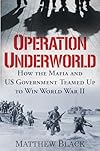
Operation Underworld is dadly historical narrative non-fiction about one of the weirder alliances in a war full of weird alliances. In early 1942, as the United States entered the war and Nazi U-boats sank ships by the scores up and down the coast, security of the ports was a major concern. A naval reserve intelligence officer, Commander Charles Radcliffe Haffenden, with a unclear remit, limited resources, and immense personal daring, decided to do whatever it took to develop sources along show more the New York waterfront, and that meant the Mafia.
An immense amount of war material moved through the port of New York, and sabotage was the first major concern. The waterfront was intensely mobbed up, a network of territories and bosses all ruled by the iron code of silence the Mafia called omerta. Collaborating with the authorities was forbidden. Haffenden managed to convince a capo working out of a fish market, a beefy man by the name of "Socko" Lanza that it was his patriotic duty to help the Navy, and Lanza agreed, and also said that real cooperation required the approval of Charles 'Lucky' Luciano, the currently imprisoned head of the five families.
Haffenden sent word to Luciano, Luciano said yes out of a combination of patriotism and self-interest, and the partnership started up. It's military effects are mixed at best. Sabotage appears to be a largely overblown threat, with Nazi special agents bumbling their way into the hands of the FBI, and local radicals equally incompetent. Mafia-connected individuals provided intelligence for the landings in Sicily, as well as some on-the-ground help. Most key, supplies kept flowing through the ports without strikes or stoppages.
Neither of the participants got what they wanted out of the deal. Haffenden wound up thrown under the bus by the Navy, since he had greatly exceeded his authority and blemished their reputation. Luciano used Operation Underworld meetings as a cover for setting up his gambling syndicate, and while his sentence was commuted, he was deported to Italy and never returned to New York.
In one of those weird historical twists, Operation Underworld would likely have been completely buried, except Luciano was obsessed with the idea that New York Governor Thomas Dewey (of "Dewey Defeats Truman" fame) owed him favors, and Dewey commissioned an extensive report to clear his name, which didn't really do much, but set down thousands of pages of primary sources. These sources have been declassified since the late 1970s, and there are other books, but Black has added a novelistic flair, which adds interest to what is otherwise a rather vague and bureaucratic story that happens to involve the Mafia, but also isn't quite history. show less
An immense amount of war material moved through the port of New York, and sabotage was the first major concern. The waterfront was intensely mobbed up, a network of territories and bosses all ruled by the iron code of silence the Mafia called omerta. Collaborating with the authorities was forbidden. Haffenden managed to convince a capo working out of a fish market, a beefy man by the name of "Socko" Lanza that it was his patriotic duty to help the Navy, and Lanza agreed, and also said that real cooperation required the approval of Charles 'Lucky' Luciano, the currently imprisoned head of the five families.
Haffenden sent word to Luciano, Luciano said yes out of a combination of patriotism and self-interest, and the partnership started up. It's military effects are mixed at best. Sabotage appears to be a largely overblown threat, with Nazi special agents bumbling their way into the hands of the FBI, and local radicals equally incompetent. Mafia-connected individuals provided intelligence for the landings in Sicily, as well as some on-the-ground help. Most key, supplies kept flowing through the ports without strikes or stoppages.
Neither of the participants got what they wanted out of the deal. Haffenden wound up thrown under the bus by the Navy, since he had greatly exceeded his authority and blemished their reputation. Luciano used Operation Underworld meetings as a cover for setting up his gambling syndicate, and while his sentence was commuted, he was deported to Italy and never returned to New York.
In one of those weird historical twists, Operation Underworld would likely have been completely buried, except Luciano was obsessed with the idea that New York Governor Thomas Dewey (of "Dewey Defeats Truman" fame) owed him favors, and Dewey commissioned an extensive report to clear his name, which didn't really do much, but set down thousands of pages of primary sources. These sources have been declassified since the late 1970s, and there are other books, but Black has added a novelistic flair, which adds interest to what is otherwise a rather vague and bureaucratic story that happens to involve the Mafia, but also isn't quite history. show less
Operation Underworld: How the Mafia and U.S. Government Teamed Up to Win World War II by Matthew Black
An informative, well researched and well written book that offers a glimpse inside the complexities of the alliance between the Mafia and the US Naval Department during WWII. The story explains how the Mafia assisted, through operatives in the US and Sicily, in things like averting possible sabotage of shipments, aiding in keeping supplies exiting ports, providing intelligence on possible landing sites in Sicily, as well as, with more hands on support in Sicily. The book also covers how show more "Lucky" Luciano, Mafia crime boss used the operation to further his gambling empire and to aid in getting his sentence commuted from prison to deportation. show less
Operation Underworld: How the Mafia and U.S. Government Teamed Up to Win World War II by Matthew Black
historical-figures, historical-places-events, historical-research, historical-setting, history, history-and-culture, WW2, OSS, ONI espionage, mafia, nonfiction*****
The book and its ramifications all began with the sinking of the Normandie in the harbor of New York.
Anything with research this extensive cannot be read in a day or two despite the fact that some records could not be verified because they were BURNED by government authorities!
There have been a number of fiction (Andrea Camilleri show more and Clive Cussler are the first to come to mind) and nonfiction books ((OSS by R. Harris Smith, for instance) with a few pages or even a chapter or two on this aspect of WW2 espionage in the past few years. But this is the first meticulously researched and documented book on the subject that I am aware of. Excellent!
I requested and received an EARC from Kensington Books/Citadel via NetGalley. Thank you! show less
The book and its ramifications all began with the sinking of the Normandie in the harbor of New York.
Anything with research this extensive cannot be read in a day or two despite the fact that some records could not be verified because they were BURNED by government authorities!
There have been a number of fiction (Andrea Camilleri show more and Clive Cussler are the first to come to mind) and nonfiction books ((OSS by R. Harris Smith, for instance) with a few pages or even a chapter or two on this aspect of WW2 espionage in the past few years. But this is the first meticulously researched and documented book on the subject that I am aware of. Excellent!
I requested and received an EARC from Kensington Books/Citadel via NetGalley. Thank you! show less
You May Also Like


Associated Authors
Statistics
- Works
- 20
- Also by
- 4
- Members
- 880
- Popularity
- #29,100
- Rating
- 4.4
- Reviews
- 6
- ISBNs
- 43
- Languages
- 1