
Cathie Pelletier
Author of Dancing at the Harvest Moon
About the Author
Cathie Pelletier was born in Allagash, Maine in 1953. She received a B.A. from the University of Maine in 1976. She has written books under her own name and the pseudonym K. C. McKinnon. The books written under her own name include The Funeral Makers, A Marriage Made at Woodstock, The Summer show more Experiment, and A Year After Henry. She has received several awards including the New England Booksellers Award for The Weight of Winter and the 2006 Paterson Prize for Running the Bulls. Under the pseudonym of K. C. McKinnon she wrote two novels, Dancing at the Harvest Moon and Candles on Bay Street. Both were adapted into television movies by CBS and Hallmark respectively. She writes country music lyrics. She has co-written several books with singers including 100 Ways to Beat the Blues with Tanya Tucker, The Christmas Note with Skeeter Davis, and The Ragin' Cajun with Doug Kershaw. (Bowker Author Biography) show less
Disambiguation Notice:
Also writes under the pseudonym K.C. McKinnon.
Works by Cathie Pelletier
Proving Einstein Right: The Daring Expeditions that Changed How We Look at the Universe (2019) 4 copies
Dancing at the Harvest Moon [2002 TV movie] — Writer — 2 copies
The Rearrangement 1 copy
Et lys i m 1 copy
Os Amantes do Lago 1 copy
Associated Works
Tagged
Common Knowledge
- Other names
- McKinnon, K.C.
- Birthdate
- 1953-01
- Gender
- female
- Education
- University of Maine at Fort Kent
- Occupations
- novelist
songwriter - Awards and honors
- Paterson Prize (2006)
- Nationality
- USA
- Birthplace
- Allagash, Maine, USA
- Places of residence
- Allagash, Maine, USA
Tennessee, USA - Disambiguation notice
- Also writes under the pseudonym K.C. McKinnon.
- Associated Place (for map)
- USA
Members
Reviews
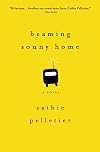
Most of Cathie Pelletier's “Beaming Sonny Home” (1996) takes place where so many people live most of their lives — in front of the television. So stationary is the novel that one is surprised by how much movement there is in the story, how much happens, how much changes in 284 pages.
Mattie Gifford's three grown daughters invade her home in Mattagash, Maine, and flip on the TV because their brother, Sonny, has taken two female hostages, supposedly at gunpoint, and is holding them in a show more mobile home in Bangor that belongs to his estranged wife. Why he does this is a mystery — something to do do with his wife, something to do with his dog, something to do with starving children, something to do with John Lennon. Sonny just seems to be having a good time.
For three days the standoff is at the top of each newscast, and these four women, plus various neighbors, friends and other relatives watch to see what happens next. The supposed hostages seem happy to be where they are, Sonny being a charismatic young man whom every woman loves. That is, except for his three sisters, who have always resented that their mother loves him best. Mattie doesn't deny this, and even now during this crisis she wishes her daughters would just go to their own homes and leave her alone.
Her love for Sonny seems surprising. for he is so much like her late husband — handsome, always smiling, unambitious, irresistible to women and faithful to none. Sonny may be the same kind of man as his father, yet Mattie loves him more than anyone else, certainly more than she ever loved Lester.
Pelletier is so gifted with imagery that she almost overdoes it, tossing out a new metaphor before a reader can digest the last one. Among these images is a jigsaw puzzle Mattie is working on in which the eye of Jesus is missing. Only when she finds the missing eye and places it in the puzzle does this story come together — or fall apart, as the case may be. show less
Mattie Gifford's three grown daughters invade her home in Mattagash, Maine, and flip on the TV because their brother, Sonny, has taken two female hostages, supposedly at gunpoint, and is holding them in a show more mobile home in Bangor that belongs to his estranged wife. Why he does this is a mystery — something to do do with his wife, something to do with his dog, something to do with starving children, something to do with John Lennon. Sonny just seems to be having a good time.
For three days the standoff is at the top of each newscast, and these four women, plus various neighbors, friends and other relatives watch to see what happens next. The supposed hostages seem happy to be where they are, Sonny being a charismatic young man whom every woman loves. That is, except for his three sisters, who have always resented that their mother loves him best. Mattie doesn't deny this, and even now during this crisis she wishes her daughters would just go to their own homes and leave her alone.
Her love for Sonny seems surprising. for he is so much like her late husband — handsome, always smiling, unambitious, irresistible to women and faithful to none. Sonny may be the same kind of man as his father, yet Mattie loves him more than anyone else, certainly more than she ever loved Lester.
Pelletier is so gifted with imagery that she almost overdoes it, tossing out a new metaphor before a reader can digest the last one. Among these images is a jigsaw puzzle Mattie is working on in which the eye of Jesus is missing. Only when she finds the missing eye and places it in the puzzle does this story come together — or fall apart, as the case may be. show less
“What’s going on here?” Ray asked.
Orville hunched his shoulders.
“I don’t know,” he answered honestly. “ I guess I ran out of self-control.”
— Cathie Pelletier, “The One-Way Bridge”
Running out of self-control is something that plagues several of Cathie Pelletier’s characters in “The One-Way Bridge.” Yet a one-way bridge, her novel’s main metaphor, is something that needs self-control to work. Whoever gets there first has right of way. Anyone coming from the show more opposite direction must wait his turn. A one-way bridge, like a four-way stop or society in general, requires a measure of patience and respect for others.
There were three such one-way bridges in Pelletier’s hometown of Allagash in northern Maine when she was growing up. (Now she has returned and lives in the same house where she was born.) And so it was easy for her to imagine a one-way bridge in her fictional town of Mattagash in northern Maine. A map at the front of the novel’s helps readers visualize the town, the bridge at its center and the homes and businesses of her various characters.
These characters include Orville, the Mattagash mail carrier in his last week of work who now regrets his decision to retire; Edna, mother of identical twin boys who, fantasizing about a man she conversed with when he passed through town, tells her husband she wants a divorce; Harry, who still recovering from the shocks of a rough experience in Vietnam and the death of his wife, gets a different kind of shock when the woman who runs the local eatery makes it plain she desires him; and Billy Thunder, impatient for Orville to deliver his latest shipment of illicit drugs so he can sell them and pay off a couple of hapless hoods, as well as an ex-girlfriend he stole from.
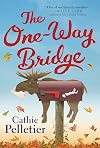
All this sounds like serious business, and it is, but Pelletier mixes in so much humor that it seems like a comic novel, a suggestion buttressed by the cover illustration, which the author said she hated when I saw her in St. Petersburg in January. I love the cover and think it's perfect for the book.
A bridge is something that joins, not just two sides of a town separated by a river but also people separated by whatever. Pelletier’s one-way bridge, instead of just being the source of a crisis when two vehicles enter it at the same time, becomes the catalyst for the solution to just about everyone’s conflict, or loss of self-control.
This novel won't suit everyone. Some will find it too pat, too light or too unrealistic. I, however, found it wonderful. show less
Orville hunched his shoulders.
“I don’t know,” he answered honestly. “ I guess I ran out of self-control.”
— Cathie Pelletier, “The One-Way Bridge”
Running out of self-control is something that plagues several of Cathie Pelletier’s characters in “The One-Way Bridge.” Yet a one-way bridge, her novel’s main metaphor, is something that needs self-control to work. Whoever gets there first has right of way. Anyone coming from the show more opposite direction must wait his turn. A one-way bridge, like a four-way stop or society in general, requires a measure of patience and respect for others.
There were three such one-way bridges in Pelletier’s hometown of Allagash in northern Maine when she was growing up. (Now she has returned and lives in the same house where she was born.) And so it was easy for her to imagine a one-way bridge in her fictional town of Mattagash in northern Maine. A map at the front of the novel’s helps readers visualize the town, the bridge at its center and the homes and businesses of her various characters.
These characters include Orville, the Mattagash mail carrier in his last week of work who now regrets his decision to retire; Edna, mother of identical twin boys who, fantasizing about a man she conversed with when he passed through town, tells her husband she wants a divorce; Harry, who still recovering from the shocks of a rough experience in Vietnam and the death of his wife, gets a different kind of shock when the woman who runs the local eatery makes it plain she desires him; and Billy Thunder, impatient for Orville to deliver his latest shipment of illicit drugs so he can sell them and pay off a couple of hapless hoods, as well as an ex-girlfriend he stole from.
All this sounds like serious business, and it is, but Pelletier mixes in so much humor that it seems like a comic novel, a suggestion buttressed by the cover illustration, which the author said she hated when I saw her in St. Petersburg in January. I love the cover and think it's perfect for the book.
A bridge is something that joins, not just two sides of a town separated by a river but also people separated by whatever. Pelletier’s one-way bridge, instead of just being the source of a crisis when two vehicles enter it at the same time, becomes the catalyst for the solution to just about everyone’s conflict, or loss of self-control.
This novel won't suit everyone. Some will find it too pat, too light or too unrealistic. I, however, found it wonderful. show less

Debut novel about Mattagash, Maine, a small, remote, small-minded town populated with the McKinnons, who control the town, and the Giffords who because of one thieving ancestor have been made to feel low and insignificant and are now proud of being a family of thieves, cheats and bullies.
Pelletier’s incredible skill in creating some of the funniest scenes while simultaneously showing the dark, dysfunctional side of the main characters’ lives – cruel parenting, loveless marriages, show more unfulfilled dreams – exacerbated by the drudgery of a provincial, deliberately unsophisticated town - makes it difficult to believe this is her first novel. show less
Pelletier’s incredible skill in creating some of the funniest scenes while simultaneously showing the dark, dysfunctional side of the main characters’ lives – cruel parenting, loveless marriages, show more unfulfilled dreams – exacerbated by the drudgery of a provincial, deliberately unsophisticated town - makes it difficult to believe this is her first novel. show less
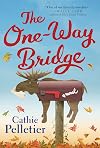
Cathy Pelletier knows her subject matter. She has captured the dialect, the life-style, the scenery, and the personalities of the fiercely independent population of Mattagash, "the last town in the middle of the northern Maine wilderness." The cover illustration opens the book as about-to-retire postman Orville Craft is confronted with the Moose mailbox of town resident and Vietnam vet Harry Plunkett. Plunkett has turned the mailbox so that Orville must insert the mail into the "$%X"end of show more the giant mammal container. Orville is convinced that Plunkett has it in for him.
The one -way bridge probably exists in many towns. In Mattagash, the unwritten rule states that when two vehicles approach the bridge from opposite ends, the car whose wheels enter the bridge first has the right-of-way. The other must back off and wait. This rule will eventually become central to the story.
But in addition to Orville and Harry, there's small time, homeless, jobless thug Billy Thunder. He's actually not homeless...he can sleep in his vintage Mustang convertible, except that the top won't go up, and winter is coming. And he's not actually jobless - he's a "salesman" of sorts and it's just that his suppliers (the thugs one step up in the food chain) are refusing to send him any more "supplies" until he pays what he owes. His resorting to selling faux goods of a slightly different composition nets him funds for a short time only.
There are an assortment of other lovable, laughable characters, each one symbolic of a specific social ill, whether it's boredom, unemployment, divorce, empty nests, unfulfilled fantasies, or post traumatic stress. Pelletier has painted a picture of a town that is trying, of a citizenry that still has a can-do attitude, and of a way of life that seems at once surreal and actual. The dialect is spot on. The scenery is painted with a broad brush enhanced with subtle shadings.
Without spoilers, this is not just a fun or funny book. The life issues of a variety of inhabitants are addressed with empathy, compassion and well-researched knowledge of cause and effect. The drama that develops as Orville and Harry's feud escalates serves to highlight a myriad of problems residents would rather not contemplate. It's a deep book, and one that would make an excellent choice for book discussion groups.
If you want eccentric but credible characters, beautiful scenery, and poignant emotional situations, this one's for you. show less
The one -way bridge probably exists in many towns. In Mattagash, the unwritten rule states that when two vehicles approach the bridge from opposite ends, the car whose wheels enter the bridge first has the right-of-way. The other must back off and wait. This rule will eventually become central to the story.
But in addition to Orville and Harry, there's small time, homeless, jobless thug Billy Thunder. He's actually not homeless...he can sleep in his vintage Mustang convertible, except that the top won't go up, and winter is coming. And he's not actually jobless - he's a "salesman" of sorts and it's just that his suppliers (the thugs one step up in the food chain) are refusing to send him any more "supplies" until he pays what he owes. His resorting to selling faux goods of a slightly different composition nets him funds for a short time only.
There are an assortment of other lovable, laughable characters, each one symbolic of a specific social ill, whether it's boredom, unemployment, divorce, empty nests, unfulfilled fantasies, or post traumatic stress. Pelletier has painted a picture of a town that is trying, of a citizenry that still has a can-do attitude, and of a way of life that seems at once surreal and actual. The dialect is spot on. The scenery is painted with a broad brush enhanced with subtle shadings.
Without spoilers, this is not just a fun or funny book. The life issues of a variety of inhabitants are addressed with empathy, compassion and well-researched knowledge of cause and effect. The drama that develops as Orville and Harry's feud escalates serves to highlight a myriad of problems residents would rather not contemplate. It's a deep book, and one that would make an excellent choice for book discussion groups.
If you want eccentric but credible characters, beautiful scenery, and poignant emotional situations, this one's for you. show less
Lists
Awards


You May Also Like


Associated Authors
Statistics
- Works
- 28
- Also by
- 2
- Members
- 1,373
- Popularity
- #18,735
- Rating
- 3.6
- Reviews
- 34
- ISBNs
- 107
- Languages
- 11
- Favorited
- 4

