
Dylan Scholinski
Author of The Last Time I Wore A Dress
About the Author
Works by Dylan Scholinski
Mein Leben gehört mir. 1 copy
Associated Works
Tagged
Common Knowledge
- Canonical name
- Scholinski, Dylan
- Other names
- Scholinski, Dylan
Scholinski, Daphne - Birthdate
- 1967
- Gender
- male
Members
Reviews
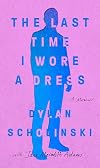
It's hard to know how to review this memoir. When it first came out, I remember deciding not to buy it after reading a shelf tag at a feminist bookstore. That tag said that there was contention between staff members because some of them apparently knew the author and believed that she was representing her experiences in a way that differed from how they remembered events unfolding.
Finally reading it around 10 years later, I find myself with many questions as well. I don't want to doubt show more Scholinski's narrative, but I found myself doing so repeatedly. I'm well aware that psychiatry, psychology, and social work can be used oppressively, especially to people who are seen as socially deviant. I know that the depathologizing of homosexuality (and its removal from the DSM) took far longer than the 1973 declaration by the American Medical Association. Indeed, like Scholinski, I was on the receiving end of well-intentioned but pathologizing interventions. I don't doubt that her presentation of self along gender lines evoked a negative response from at least some professionals. Yet of the many books and articles I've read and conversations I've had with people about the abuse of power in psychiatric settings, Scholinki's is one that does not ring entirely true. I should qualify that by saying that so far as it goes, I imagine that it is a reasonably accurate representation of what she thought and felt. I don't have the impression that the people around her would tell the story in a similar way. I don't think that this is because they were entirely dismissive and oppressive, but because Scholinski does not seem to recognize her own antisocial behavior. Being queer and oppressed does not mean that a person is not also cruel and difficult to be with.
I don't think that Scholinski is particularly truthful with either the reader or herself. The picture that emerges from her self-portrait is that she was a mean, impulsive, conduct disordered child and adolescent who also was lesbian or trans. I do doubt that she would be kept in treatment for so long as a youth in her era simply in order to force her to wear makeup and dresses. She appears to fight treatment and express a great deal of disdain for it, while also berating her treatment teams for not adequately treating her. She lies and then is contemptuous that her lies are believed, yet if she is challenged or disbelieved, she is also angry. Like Wurtzel (Prozac Nation, interestingly also published by Riverhead), she externalizes most of the responsibility for her actions while fiercely contesting any threat to her autonomy. Yes, her family was chaotic and contributed to her difficulties. Yes, it seems very possible that some or much of her care was inadequate and damaging. However, every time she was held accountable for her egregiously bad behavior, I identified more with the people around her than with her. Where Noah Levine (Dharma Punx) ultimately claims his part in how he alienates and exploits others, I don't see a corresponding degree of self-awareness in Scholinski's report. That she seems to think that she was being treated primarily for not conforming to gender expectations is, to my mind, evidence of how disconnected she was from her own behaviors. For many reviewers, Scholinski is a heroic figure. To me, she is an unreliable narrator more akin to James Frey.
At some point since writing this book, Daphne has become Dylan. Leaving aside the question of whether Gender Identity ought to be a DSM disorder, it interests me that Scholinski was so admant that the use of a GID diagnosis was such an outrageous act of misunderstanding. It seems it might have been true. show less
Finally reading it around 10 years later, I find myself with many questions as well. I don't want to doubt show more Scholinski's narrative, but I found myself doing so repeatedly. I'm well aware that psychiatry, psychology, and social work can be used oppressively, especially to people who are seen as socially deviant. I know that the depathologizing of homosexuality (and its removal from the DSM) took far longer than the 1973 declaration by the American Medical Association. Indeed, like Scholinski, I was on the receiving end of well-intentioned but pathologizing interventions. I don't doubt that her presentation of self along gender lines evoked a negative response from at least some professionals. Yet of the many books and articles I've read and conversations I've had with people about the abuse of power in psychiatric settings, Scholinki's is one that does not ring entirely true. I should qualify that by saying that so far as it goes, I imagine that it is a reasonably accurate representation of what she thought and felt. I don't have the impression that the people around her would tell the story in a similar way. I don't think that this is because they were entirely dismissive and oppressive, but because Scholinski does not seem to recognize her own antisocial behavior. Being queer and oppressed does not mean that a person is not also cruel and difficult to be with.
I don't think that Scholinski is particularly truthful with either the reader or herself. The picture that emerges from her self-portrait is that she was a mean, impulsive, conduct disordered child and adolescent who also was lesbian or trans. I do doubt that she would be kept in treatment for so long as a youth in her era simply in order to force her to wear makeup and dresses. She appears to fight treatment and express a great deal of disdain for it, while also berating her treatment teams for not adequately treating her. She lies and then is contemptuous that her lies are believed, yet if she is challenged or disbelieved, she is also angry. Like Wurtzel (Prozac Nation, interestingly also published by Riverhead), she externalizes most of the responsibility for her actions while fiercely contesting any threat to her autonomy. Yes, her family was chaotic and contributed to her difficulties. Yes, it seems very possible that some or much of her care was inadequate and damaging. However, every time she was held accountable for her egregiously bad behavior, I identified more with the people around her than with her. Where Noah Levine (Dharma Punx) ultimately claims his part in how he alienates and exploits others, I don't see a corresponding degree of self-awareness in Scholinski's report. That she seems to think that she was being treated primarily for not conforming to gender expectations is, to my mind, evidence of how disconnected she was from her own behaviors. For many reviewers, Scholinski is a heroic figure. To me, she is an unreliable narrator more akin to James Frey.
At some point since writing this book, Daphne has become Dylan. Leaving aside the question of whether Gender Identity ought to be a DSM disorder, it interests me that Scholinski was so admant that the use of a GID diagnosis was such an outrageous act of misunderstanding. It seems it might have been true. show less
Daphne spent most of her teen years in a mental institution (or rather, several) due to gender nonconformity, among other issues. It blows my mind that people can just send their kids away because they are out of control and hope that someone else can just "fix" them. She is lucky that she didn't end up with bigger issues because she spent formative time with all these people who had real mental health issues. Infuriating.
So heartbreaking. I briefly met Dylan Scholinski (the author has transitioned since he wrote the book in 1997) last year when he came to my college campus. I finally got around to reading his memoir this year. This book, though short and not dense material, took me a few days to get through because it was so emotionally hard to read. I highly highly recommend this book to anyone interested in learning more about trans issues.

I thought this book jumped around quite a bit and the time frames were kind of all over. It was interesting to see how then this was looked at as a disorder and rebelling behavior compared to today it is not uncommon. It was also interesting how they didn't seem to realize part of the problem was home life, it was as though they blamed her for her home life. Intriguing to see how the different institutions ran.
Lists
Awards

You May Also Like


Associated Authors
Statistics
- Works
- 4
- Also by
- 1
- Members
- 606
- Popularity
- #41,483
- Rating
- 3.7
- Reviews
- 9
- ISBNs
- 6
- Languages
- 1
- Favorited
- 1