
Kenneth E. Bailey (1930–2016)
Author of Jesus through Middle Eastern Eyes
About the Author
Kenneth E. Bailey (ThD, Concordia Theological Seminary) is an author and lecturer in Middle Eastern New Testament studies. He spent forty years living and teaching New Testament in Egypt, Lebanon, Jerusalem and Cyprus. Bailey has written many books in English and Arabic, including The Cross and the show more Prodigal and Jesus Through Middle Eastern Eyes. show less
Image credit: From author's personal website for publicity and upload by individuals
Works by Kenneth E. Bailey
Poet and Peasant and Through Peasant Eyes: A Literary-Cultural Approach to the Parables in Luke (Combined edition) (1976) — Author — 787 copies, 5 reviews
The Cross & the Prodigal: Luke 15 Through the Eyes of Middle Eastern Peasants (1973) 374 copies, 1 review
The Good Shepherd: A Thousand-Year Journey from Psalm 23 to the New Testament (2014) 186 copies, 3 reviews
Decoding the da Vinci code [DVD] 2 copies
Arabic Speaking Christianity 1 copy
The Manger and the Inn 1 copy
Tagged
Common Knowledge
- Legal name
- Bailey, Kenneth Ewing
- Other names
- Bailey, Ken
貝里 - Birthdate
- 1930-11-24
- Date of death
- 2016-05-23
- Gender
- male
- Education
- Concordia Seminary (ThD)
Pittsburgh Seminary (MDiv | 1955)
Pittsburgh Seminary (MTh | 1961) - Organizations
- Studiorum Novi Testamenti Societas
- Birthplace
- Bloomington, Illinois, USA
- Places of residence
- Jerusalem, Israel
- Map Location
- USA
Members
Reviews
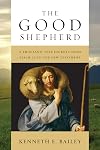
Summary: A study of the theme of the good shepherd beginning with Psalm 23 and considering consecutively eight other passages in which this theme is found.
We lost a giant of biblical scholarship this spring (2016) with the passing of Kenneth E. Bailey. Raised in the Middle East, he taught New Testament in Egypt, Lebanon, Jerusalem, and Cyprus. He brought to his scholarship an intimate knowledge of Middle Eastern culture, Arabic works, and the scriptures that shed fresh light on everything show more from the Nativity to the dearly loved Psalm that many of us memorized as children and have clung to in our darkest hours, Psalm 23.
Beginning with Psalm 23, Bailey considers eight other passages in the Old and New Testaments in which the theme is f0und of the shepherd and the sheep. These include Jeremiah 23:1-8, Ezekiel 34, Zechariah 10:2-12, Luke 15:1-10, Mark 6:7-52 (the feeding of the 5,000), Matthew 18:10-14, John 10:1-18, and 1 Peter 5:1-4. Bailey contends that in these ten dramatic elements recur in most of these passages:
1. The good shepherd.
2. The lost sheep (or lost flock)
3. The opponents of the shepherd
4. The good host(ess?)
5. The incarnation (promised or realized)
6. The high cost the shepherd sustains to find and restore the lost
7. The theme of repentance/return
8. Bad sheep
9. A celebration
10. The end of the story (in a house, in the land, or with God)
Bailey then exegetes each passage. Over and over he finds a “ring” or chiasmus structure in these passages and draws out the meaning of the passage cameo by cameo. Along the way, his background knowledge of the Middle Eastern setting of these passages comes in as he describes the skittishness of sheep, who will only drink at still pools of water, the mace-like rod of the shepherd with which he fights off wolves and other predators, repentance as a willingness to be found, and the supreme risk of the shepherd in John 10, who of his own volition lays down his life for his sheep. I loved this description of the good shepherd:
“The good shepherd ‘leads me’; he does not ‘drive me.’ There is a marked difference. In Egypt where this is no open pasture land I have often seen shepherds driving sheep from behind with sticks. But in the open wilderness of the Holy Land the shepherd walks slowly ahead of his sheep and either plays his own ten-second tune on a pipe or (more often) sings his own unique ‘call.’ The sheep appear to be attracted primarily by the voice of the shepherd, which they know and are eager to follow” (p. 41).
One often doesn’t think of the shepherd theme in the miracle of the feeding of the 5,000. Bailey draws out both the contrast with the evil banquet of Herod at which John the Baptist was beheaded, which precedes this miracle, and the counter-cultural statement of the feeding of the 5,000, in the green grass, by the Sea of Galilee, where the people eat their fill and are led in paths of righteousness. In contrast to decadent Herod, Jesus reveals himself as the Good Shepherd of Israel.
Likewise, I and many others have puzzled over the shepherd leaving the ninety-nine for the one lost sheep. Yes, sheep are valuable. Yet so are the ninety-nine. But what would it mean to the ninety-nine, Bailey asks, that the shepherd went after the lost one? It meant that should they get lost, the shepherd would search for them as well. Every sheep mattered.
This is both good scholarship and good devotional reading that leads one to praise the Great Shepherd and to aspire to be a good shepherd to the extent that God gives that opportunity. I do not know if there are further works of Bailey’s that will be published posthumously. But in this final major publication Bailey sums up a life of devotion and fine scholarship in a book that is a gift to the church and her shepherds. show less
We lost a giant of biblical scholarship this spring (2016) with the passing of Kenneth E. Bailey. Raised in the Middle East, he taught New Testament in Egypt, Lebanon, Jerusalem, and Cyprus. He brought to his scholarship an intimate knowledge of Middle Eastern culture, Arabic works, and the scriptures that shed fresh light on everything show more from the Nativity to the dearly loved Psalm that many of us memorized as children and have clung to in our darkest hours, Psalm 23.
Beginning with Psalm 23, Bailey considers eight other passages in the Old and New Testaments in which the theme is f0und of the shepherd and the sheep. These include Jeremiah 23:1-8, Ezekiel 34, Zechariah 10:2-12, Luke 15:1-10, Mark 6:7-52 (the feeding of the 5,000), Matthew 18:10-14, John 10:1-18, and 1 Peter 5:1-4. Bailey contends that in these ten dramatic elements recur in most of these passages:
1. The good shepherd.
2. The lost sheep (or lost flock)
3. The opponents of the shepherd
4. The good host(ess?)
5. The incarnation (promised or realized)
6. The high cost the shepherd sustains to find and restore the lost
7. The theme of repentance/return
8. Bad sheep
9. A celebration
10. The end of the story (in a house, in the land, or with God)
Bailey then exegetes each passage. Over and over he finds a “ring” or chiasmus structure in these passages and draws out the meaning of the passage cameo by cameo. Along the way, his background knowledge of the Middle Eastern setting of these passages comes in as he describes the skittishness of sheep, who will only drink at still pools of water, the mace-like rod of the shepherd with which he fights off wolves and other predators, repentance as a willingness to be found, and the supreme risk of the shepherd in John 10, who of his own volition lays down his life for his sheep. I loved this description of the good shepherd:
“The good shepherd ‘leads me’; he does not ‘drive me.’ There is a marked difference. In Egypt where this is no open pasture land I have often seen shepherds driving sheep from behind with sticks. But in the open wilderness of the Holy Land the shepherd walks slowly ahead of his sheep and either plays his own ten-second tune on a pipe or (more often) sings his own unique ‘call.’ The sheep appear to be attracted primarily by the voice of the shepherd, which they know and are eager to follow” (p. 41).
One often doesn’t think of the shepherd theme in the miracle of the feeding of the 5,000. Bailey draws out both the contrast with the evil banquet of Herod at which John the Baptist was beheaded, which precedes this miracle, and the counter-cultural statement of the feeding of the 5,000, in the green grass, by the Sea of Galilee, where the people eat their fill and are led in paths of righteousness. In contrast to decadent Herod, Jesus reveals himself as the Good Shepherd of Israel.
Likewise, I and many others have puzzled over the shepherd leaving the ninety-nine for the one lost sheep. Yes, sheep are valuable. Yet so are the ninety-nine. But what would it mean to the ninety-nine, Bailey asks, that the shepherd went after the lost one? It meant that should they get lost, the shepherd would search for them as well. Every sheep mattered.
This is both good scholarship and good devotional reading that leads one to praise the Great Shepherd and to aspire to be a good shepherd to the extent that God gives that opportunity. I do not know if there are further works of Bailey’s that will be published posthumously. But in this final major publication Bailey sums up a life of devotion and fine scholarship in a book that is a gift to the church and her shepherds. show less
Poet & Peasant and Through Peasant Eyes: A Literary-Cultural Approach to the Parables in Luke by Kenneth E. Bailey
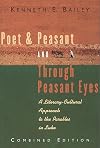
Reading Jesus’s parables with Kenneth Bailey was such an exciting and informative experience, as he unlocked layers of meaning typically lost to Western Christians. Having served as a missionary and professor for 40 years in Egypt, Lebanon, Israel, and Cyprus, Bailey has great insight into the Middle Eastern backdrop coloring these teachings of Christ. In this two-book combined edition, Bailey first defines and explores the literary form of the parable. He then proceeds to exposit many of show more Jesus’s parables from the Lukan Travel Narrative (Luke 9:51 – 19:44). As an academic, his writing can be very scholarly at points, but he is generally accessible for the lay reader. show less
Poet and Peasant and Through Peasant Eyes: A Literary-Cultural Approach to the Parables in Luke (Combined edition) by Kenneth E. Bailey
Suppose the apostle Luke, momentarily transported from biblical Palestine, were to listen in as I told a joke about George W. Bush, Oprah, and a used-car salesman fighting over the last parachute in a plummeting airplane. He would be pretty much guaranteed to miss the unexpected humor of the punchline. I am similarly disadvantaged when I read the parables of Jesus. I don’t know all the things the listeners assumed when Jesus introduced the situation, I don’t know how each character was show more expected to act and speak, and I am not the slightest bit shocked by the things that shocked his audience.
Kenneth Bailey’s two books Poet and Peasant and Through Peasant Eyes, published in the 1970s, were written to help contemporary Western readers overcome these deficiencies. He lived and taught in the Middle East for much of his life, including decades of residence in rural villages. He appears to have written the books in consultation with a large network of Middle Eastern friends and scholars, as well as with his own considerable knowledge and research of ancient Middle Eastern languages and literature.
These books were scholarly, but not at all in an abstract way. Bailey approached the parables of Luke a passage at a time, systematically and thoroughly, teasing out the literary form, the cultural presumptions of the audience, and the response Jesus might have meant to provoke from them.
Because the gospels were not written in the same language that Jesus spoke, and because the existing manuscripts were edited after the evangelists wrote them down, analyzing the original speech of Jesus often involves a fascinating detective quest. Bailey deduces much about the history of the manuscripts simply by analyzing the literary form. Often he includes his own guesses about Aramaic wordplay in the original parable, based on his research of regional languages and cultures. As a literature major and a language aficionado, I found these explorations delightful.
Reading Bailey’s analysis of each parable is intellectually satisfying, but a greater reward is a clearer understanding of Jesus as a person. I was struck when I read the following conclusion to Bailey’s treatment of Luke 16:1–13, in which he rejects textual criticism that would disunite the parable of the unjust steward from the ensuing poem about God and mammon:
Now maybe I had heard Jesus referred to as a skilled poet before, but if I did I had always gotten the sense that people were repeating things they had always been told were true about Jesus—the party line, so to say—without any supporting evidence. Because he was divine, of course he would be great at everything. Also, these kind of people generally seemed not to know anything about poetry. But with Bailey’s guidance through each passage, with his painstakingly-supplied evidence, I came to a much greater respect for its artistry, and I love the idea that Jesus enjoyed literary wordplay.
What is great about this book is that helps you see for yourself all those well-rehearsed attributes of Jesus: brilliant theologian, quick-witted, subtle, perceptive, compassionate, defender of women and the oppressed, bold, and fascinating. A committed Christian is meant to invest substantial time in getting to know Jesus better, and in fact the main goal of a Christian’s life is to become more like Jesus. But I have always found Jesus very hard to get to know.
Bailey takes the limited, cryptic biblical information we are given and vividly describes the dynamics of each situation. Time after time he brings out Jesus’s criticism of self-righteousness and his teaching of humble reliance on God’s righteousness and mercy. It is one thing to be told that these concepts generate from Jesus’s teaching in a vague, theoretical way. It is another thing to see for yourself how consistent the good news of grace was, and just how boldly and beautifully and surprisingly Jesus proclaimed it. show less
Kenneth Bailey’s two books Poet and Peasant and Through Peasant Eyes, published in the 1970s, were written to help contemporary Western readers overcome these deficiencies. He lived and taught in the Middle East for much of his life, including decades of residence in rural villages. He appears to have written the books in consultation with a large network of Middle Eastern friends and scholars, as well as with his own considerable knowledge and research of ancient Middle Eastern languages and literature.
These books were scholarly, but not at all in an abstract way. Bailey approached the parables of Luke a passage at a time, systematically and thoroughly, teasing out the literary form, the cultural presumptions of the audience, and the response Jesus might have meant to provoke from them.
Because the gospels were not written in the same language that Jesus spoke, and because the existing manuscripts were edited after the evangelists wrote them down, analyzing the original speech of Jesus often involves a fascinating detective quest. Bailey deduces much about the history of the manuscripts simply by analyzing the literary form. Often he includes his own guesses about Aramaic wordplay in the original parable, based on his research of regional languages and cultures. As a literature major and a language aficionado, I found these explorations delightful.
Reading Bailey’s analysis of each parable is intellectually satisfying, but a greater reward is a clearer understanding of Jesus as a person. I was struck when I read the following conclusion to Bailey’s treatment of Luke 16:1–13, in which he rejects textual criticism that would disunite the parable of the unjust steward from the ensuing poem about God and mammon:
Theories that suggest the second block of material to be a gradual collection of early Church comments on the parable prove to be inadequate to the structural and theological nature of the material. The poem is the work of a skilled Palestinian poet in the first century. There remains no reason to doubt that the author was Jesus of Nazareth.
Now maybe I had heard Jesus referred to as a skilled poet before, but if I did I had always gotten the sense that people were repeating things they had always been told were true about Jesus—the party line, so to say—without any supporting evidence. Because he was divine, of course he would be great at everything. Also, these kind of people generally seemed not to know anything about poetry. But with Bailey’s guidance through each passage, with his painstakingly-supplied evidence, I came to a much greater respect for its artistry, and I love the idea that Jesus enjoyed literary wordplay.
What is great about this book is that helps you see for yourself all those well-rehearsed attributes of Jesus: brilliant theologian, quick-witted, subtle, perceptive, compassionate, defender of women and the oppressed, bold, and fascinating. A committed Christian is meant to invest substantial time in getting to know Jesus better, and in fact the main goal of a Christian’s life is to become more like Jesus. But I have always found Jesus very hard to get to know.
Bailey takes the limited, cryptic biblical information we are given and vividly describes the dynamics of each situation. Time after time he brings out Jesus’s criticism of self-righteousness and his teaching of humble reliance on God’s righteousness and mercy. It is one thing to be told that these concepts generate from Jesus’s teaching in a vague, theoretical way. It is another thing to see for yourself how consistent the good news of grace was, and just how boldly and beautifully and surprisingly Jesus proclaimed it. show less

After benefiting immensely from Jesus Through Middle Eastern Eyes, I knew I had to read Bailey’s book on 1 Corinthians. I was not disappointed. Bailey did what he does best: he uses his knowledge of Middle Eastern culture along with Coptic, Syriac and Arabic sources to inform his reading of the New Testament.
When you read 1 Corinthians, it’s easy to get the impression that Paul’s frustration with this particular congregation produced a letter that’s intensely situational, jumping show more from issue to issue. Structure seems to take a back seat to passion. It turns out nothing could be further from the truth.
The best part of this commentary is the way that Bailey discerned the structure of 1 Corinthians. It’s a carefully crafted five essay letter that uses Old Testament prophetic styles and templates. At the start of each section Bailey lays out the text structurally which helps the reader to see what Paul’s emphasizing.
I read through this commentary as I taught an informal Bible study at my church. It provided insight into the text along with pastoral considerations and illustrations to bring each passage alive. If you want to go further in 1 Corinthians, pick up Thiselton: either his comprehensive entry in the NIGTC series or the digest version: 1 Corinthians: A Shorter Exegetical and Pastoral Commentary. show less
When you read 1 Corinthians, it’s easy to get the impression that Paul’s frustration with this particular congregation produced a letter that’s intensely situational, jumping show more from issue to issue. Structure seems to take a back seat to passion. It turns out nothing could be further from the truth.
The best part of this commentary is the way that Bailey discerned the structure of 1 Corinthians. It’s a carefully crafted five essay letter that uses Old Testament prophetic styles and templates. At the start of each section Bailey lays out the text structurally which helps the reader to see what Paul’s emphasizing.
I read through this commentary as I taught an informal Bible study at my church. It provided insight into the text along with pastoral considerations and illustrations to bring each passage alive. If you want to go further in 1 Corinthians, pick up Thiselton: either his comprehensive entry in the NIGTC series or the digest version: 1 Corinthians: A Shorter Exegetical and Pastoral Commentary. show less
Lists
Awards

You May Also Like


Statistics
- Works
- 21
- Members
- 3,528
- Popularity
- #7,198
- Rating
- 4.2
- Reviews
- 27
- ISBNs
- 59
- Languages
- 7
- Favorited
- 5