
Jules Pretty
Author of The Edge of Extinction: Travels with Enduring People in Vanishing Lands
About the Author
Jules Pretty OBE is Professor of Environment and Society in the Department of Biological Sciences at the University of Essex, UK, and author of a host of books, including the acclaimed Agri-Culture (2002). In 2006 he received an OBE for services to sustainable agriculture in the UK and overseas.
Works by Jules Pretty
Regenerating Agriculture: Policies and Practice for Sustainability and Self-Reliance (1995) 16 copies
Sustainable Intensification of Agriculture: Greening the World's Food Economy (Earthscan Food and Agriculture) (2018) 3 copies
Sustainable intensification increasing productiivty in African food and agricultural systems (2011) 2 copies
Tagged
Common Knowledge
- Gender
- male
Members
Reviews
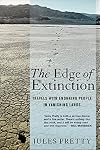
Following the sunrise, the author explores a dozen extreme environments where humans have lived for millennia by making judicious use of nature: hunting, fishing, gathering, little farming in what we in the West call subsistence. In our thirst for conquest, we called these humans lazy, because their way of life did not conform to ours, did not show 'growth', did not bring profit, and we devoted ourselves to the massive exploitation of these environments, forever altering them. Yet these show more environments and their inhabitants are resilient, and somehow try, now more than ever, to return to the pre-existing situation, or rather, to a new equilibrium.
The author, besides being a great observer, is a very fine pen, allowing the reader to see what he sees and to enter deeply into his thoughts and reflections.
The only limitation of this book is its conclusion. The concluding chapter, in fact, is a kind of solarpunk prophecy, splendid, but made a sad utopia by the events that followed the completion of the book: pandemic, war in Ukraine, food and energy crisis among others. Perhaps, it can be said, that the examples of subsistence presented in the book can be a guide to the unsafe life that lies ahead. show less
The author, besides being a great observer, is a very fine pen, allowing the reader to see what he sees and to enter deeply into his thoughts and reflections.
The only limitation of this book is its conclusion. The concluding chapter, in fact, is a kind of solarpunk prophecy, splendid, but made a sad utopia by the events that followed the completion of the book: pandemic, war in Ukraine, food and energy crisis among others. Perhaps, it can be said, that the examples of subsistence presented in the book can be a guide to the unsafe life that lies ahead. show less

Life in the world, and of it
The Edge of Extinction: Travels with Enduring People in Vanishing Lands by Jules Pretty (Cornell University Press, $27.95).
Jules Pretty’s thesis isn’t new; it’s his approach that is original. Many writers, environmentalists and foodies have been suggesting for close to a generation that we highly-evolved types have gotten too far away from the natural world and so have lost perspective and a certain spiritual connection to the planet.
What Pretty has done show more differently in this travelogue-slash-memoir-slash-polemic is to go out among groups of people who are still living in fairly traditional ways and bear witness to a life that is vanishing as rapidly as our climate changes.
Pretty visits 12 locales: coastal ecosystems among Maori in New Zealand and in Ireland, the deserts of Australia and California’s Death Valley, the mountains of China, snowy landscapes in Finland and Labrador, Russia’s steppes, a marshland farm in East Anglia and an Amish farm in Ohio, swamps in Louisiana’s Atchafalaya Basin and in Botswana. For each place, he provides enough background—both ecological and historical—to get a grasp of the context for the people he meets living there, but it seems as if he’s covering so much ground that he doesn’t have enough time to fully get to know the characters he introduces.
It’s a fascinating book, but one that is most successful as a travelogue. In order to fully address the possibilities for human life on the planet, Pretty might want to undertake a sequel.
Reviewed on Lit/Rant: www.litrant.tumblr.com show less
The Edge of Extinction: Travels with Enduring People in Vanishing Lands by Jules Pretty (Cornell University Press, $27.95).
Jules Pretty’s thesis isn’t new; it’s his approach that is original. Many writers, environmentalists and foodies have been suggesting for close to a generation that we highly-evolved types have gotten too far away from the natural world and so have lost perspective and a certain spiritual connection to the planet.
What Pretty has done show more differently in this travelogue-slash-memoir-slash-polemic is to go out among groups of people who are still living in fairly traditional ways and bear witness to a life that is vanishing as rapidly as our climate changes.
Pretty visits 12 locales: coastal ecosystems among Maori in New Zealand and in Ireland, the deserts of Australia and California’s Death Valley, the mountains of China, snowy landscapes in Finland and Labrador, Russia’s steppes, a marshland farm in East Anglia and an Amish farm in Ohio, swamps in Louisiana’s Atchafalaya Basin and in Botswana. For each place, he provides enough background—both ecological and historical—to get a grasp of the context for the people he meets living there, but it seems as if he’s covering so much ground that he doesn’t have enough time to fully get to know the characters he introduces.
It’s a fascinating book, but one that is most successful as a travelogue. In order to fully address the possibilities for human life on the planet, Pretty might want to undertake a sequel.
Reviewed on Lit/Rant: www.litrant.tumblr.com show less
Connected short essays from various interesting parts of the world. A pity there couldn't have been more and better images, and I wished many times for some more background than we got. But those are quibbles - it was still a very fascinating read.
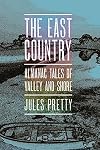
This is a lovely poetic celebration of the eastern part of England. It includes references every now and again to the state of the world and climate change but is not strident.
Throughout it there is a very personal thread with the death of author's father and the care needed by his mother.
I can only marvel at Jules Pretty's powers of observations and then getting it down on paper.
The book has a very powerful sense of place that is the east of England. However for me this is completely show more spoiled by the American spellings which have been used. They introduce such a jarring note to one's reading - two examples: 'Gray light' p.94 'Towards the harbor...' p.95. What a pity.
The author has a personal relationship with Ronald Blythe the author of 'Akenfield' which I found was such an arresting book when I was younger. I must re-read it. show less
Throughout it there is a very personal thread with the death of author's father and the care needed by his mother.
I can only marvel at Jules Pretty's powers of observations and then getting it down on paper.
The book has a very powerful sense of place that is the east of England. However for me this is completely show more spoiled by the American spellings which have been used. They introduce such a jarring note to one's reading - two examples: 'Gray light' p.94 'Towards the harbor...' p.95. What a pity.
The author has a personal relationship with Ronald Blythe the author of 'Akenfield' which I found was such an arresting book when I was younger. I must re-read it. show less
Awards

Statistics
- Works
- 20
- Members
- 164
- Popularity
- #129,116
- Rating
- 3.6
- Reviews
- 6
- ISBNs
- 55