
Katya Arnold
Author of Elephants Can Paint Too!
Works by Katya Arnold
Associated Works
The Valiant Red Rooster: A Story from Hungary (1995) — Illustrator, some editions — 21 copies, 1 review
Tagged
Common Knowledge
- Gender
- female
Members
Reviews

A series of animals take up residence in a teremok - a diminutive form of terem, a traditional Russian house - in this cumulative folktale told in rhyming verse. First comes Fly, "queen of the sky," then Mouse, "who needs a house," and so on, until the teremok is full to bursting! "Knock, knock, knock. Who lives in the teremok? asks each newcomer, and the answer grows longer every time. Finally, by the time Bear arrives, the teremok has reached capacity...
A variant on the well-known show more Ukrainian tale of The Mitten, this story of a string of animals who squeeze themselves into a small residence would be great fun to read aloud. As Arnold notes in her brief introductory comment, the form of the tale lends itself to acting out by storytellers and children. The bright watercolor illustrations express a great sense of motion, although I didn't care for them as much as Arnold's lubok-inspired work in Baba Yaga.
Observant adult readers will note that every depiction of the teremok contains a mini portrait of a man in profile, who looks suspiciously like Lenin. A little visual reference to Arnold's belief - expressed in her introduction - that this tale could serve as an allegory of the breakup of the Soviet Union, perhaps? show less
A variant on the well-known show more Ukrainian tale of The Mitten, this story of a string of animals who squeeze themselves into a small residence would be great fun to read aloud. As Arnold notes in her brief introductory comment, the form of the tale lends itself to acting out by storytellers and children. The bright watercolor illustrations express a great sense of motion, although I didn't care for them as much as Arnold's lubok-inspired work in Baba Yaga.
Observant adult readers will note that every depiction of the teremok contains a mini portrait of a man in profile, who looks suspiciously like Lenin. A little visual reference to Arnold's belief - expressed in her introduction - that this tale could serve as an allegory of the breakup of the Soviet Union, perhaps? show less
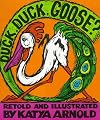
Goose thinks the proverbial grass is always greener and is tired of looking the way she is. She starts to swap body parts with other birds so that she will look prettier - soon she has the neck of a swan, the beak of a pelican, the tail of a peacock, etc. Just as she begins to feel herself superior to everyone else, she realizes how these new parts are not designed for the life she is used to living, making it more difficult for to join the other geese in eating, swimming, etc.
This story is show more based on a similar fable of Russian origin, and thus reads a bit like a morality tale. Goose learns that being so vain is detrimental to her well-being and by extension, children are meant to absorb the idea that being yourself is preferable to putting on airs and pretending to be someone else. The book is told with a fair amount of repeated refrains, which tends to be a style most children like. However, I found that my young toddlers simply didn't have the attention span for this book. (They have been okay with other books that are just as long so I think it had as much to do with their moods on the day I introduced this book than with the book itself.) Still, I think this could be a silly but useful tale for older kids to get across the message of being yourself.
The author of this book is known more as an illustrator, and she does a fine job here of making the wacky animals that result when Goose and the other birds start swapping body parts. Still, there is something about the illustrating style that I don't exactly love - I think it may be the overly bold outlines for the animals combined with the sparse backgrounds. The illustrations are not bad per se, but they just aren't my cup of tea. Overall, this was a book that I liked but didn't love. I might use it again in my classroom as well as recommend it to others in specific situations, but it's not one that I'm holding up as a poster "best book." show less
This story is show more based on a similar fable of Russian origin, and thus reads a bit like a morality tale. Goose learns that being so vain is detrimental to her well-being and by extension, children are meant to absorb the idea that being yourself is preferable to putting on airs and pretending to be someone else. The book is told with a fair amount of repeated refrains, which tends to be a style most children like. However, I found that my young toddlers simply didn't have the attention span for this book. (They have been okay with other books that are just as long so I think it had as much to do with their moods on the day I introduced this book than with the book itself.) Still, I think this could be a silly but useful tale for older kids to get across the message of being yourself.
The author of this book is known more as an illustrator, and she does a fine job here of making the wacky animals that result when Goose and the other birds start swapping body parts. Still, there is something about the illustrating style that I don't exactly love - I think it may be the overly bold outlines for the animals combined with the sparse backgrounds. The illustrations are not bad per se, but they just aren't my cup of tea. Overall, this was a book that I liked but didn't love. I might use it again in my classroom as well as recommend it to others in specific situations, but it's not one that I'm holding up as a poster "best book." show less

Katya Arnold, whose other picture-books taken from the Russian folk tradition include Knock, Knock Teremok! and Baba Yaga, returns to the world of the old forest witch in Baba Yaga & The Little Girl. When her cruel stepmother sends her to fetch a needle and thread from Baba Yaga's house, a little girl follows her aunt's advice, bringing along a ribbon for the birch tree, some oil for the gate-hinges, bread for the dogs, and some ham for the cat. With these gifts, as well as a pretty kerchief show more for Baba Yaga's maid, the girl manages to escape being made into a meal...
Collected by noted Russian folklorist Alexander Afanasyev in the nineteenth-century, this tale is part of the rich body of work devoted to Baba Yaga, a legendary witch whose exploits are always fascinating. But although the narrative reads well enough, Arnold's illustrations here are more of a hindrance to the story, than a help. Like her earlier Baba Yaga tale, she seems inspired by the lubok print style of Russian art, but somehow it just doesn't work here. Her prints look crowded and confused, and the overall effect is unappealing. It's unfortunate, because I found her first offering quite good, but I'd say that this is one that only Baba Yaga completists will want to hunt down. show less
Collected by noted Russian folklorist Alexander Afanasyev in the nineteenth-century, this tale is part of the rich body of work devoted to Baba Yaga, a legendary witch whose exploits are always fascinating. But although the narrative reads well enough, Arnold's illustrations here are more of a hindrance to the story, than a help. Like her earlier Baba Yaga tale, she seems inspired by the lubok print style of Russian art, but somehow it just doesn't work here. Her prints look crowded and confused, and the overall effect is unappealing. It's unfortunate, because I found her first offering quite good, but I'd say that this is one that only Baba Yaga completists will want to hunt down. show less
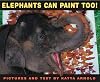
I love this book. The author starts out the book by saying, "I teach in two schools. One is in the city. The other in the jungle. Some of my students have hands. The others have trunks." This book goes on to show the similarities and differences between children and elephants. It shows that even though they are so different we can find similarites in everyone and everything. This book is fun to read to all ages. It can be used during a study on Elephants or Asia. It can also be used to show more address differences among students. And how everyone has unique talents and abilities no matter how different they are. I actually have a painting done by an elephant from a local zoo which would be great to show along with the book. show less
Lists
Storytime (1)
Awards


You May Also Like


Statistics
- Works
- 13
- Also by
- 2
- Members
- 547
- Popularity
- #45,592
- Rating
- 3.5
- Reviews
- 50
- ISBNs
- 28
- Languages
- 3