
Edward Sapir (1884–1939)
Author of Language: An Introduction to the Study of Speech
About the Author
Edward Sapir, an American anthropologist, was one of the founders of both modern linguistics and the field of personality and culture. He wrote poetry, essays, and music, as well as scholarly works. Margaret Mead noted that "it was in the vivid, voluminous correspondence with [Edward Sapir] that show more [Ruth Benedict's] own poetic interest and capacity matured." In the field of linguistics, Sapir developed phonemic theory---the analysis of the sounds of a language according to the pattern of their distribution---and he analyzed some 10 American Indian languages. In cultural anthropology, he contributed to personality-and-culture studies by insisting that the true locus of culture is in the interactions of specific individuals and in the meanings that the participants abstract from these interactions. (Bowker Author Biography) show less
Image credit: Edward Sapir, age 28, Chicago, IL. Frontispiece from The collected works of Edward Sapir (1900) Volume 3
Works by Edward Sapir
Nootka texts; tales and ethnological narratives, with grammatical notes and lexical materials (1978) 6 copies
Notes on the Culture of the Yana 5 copies
Time Perspective in Aboriginal American Culture: A Study in Method (Classic Reprint) (2017) 4 copies
The Whaling Indians: West Coast Legends & Stories Tales of Extraordinary Experience (Part 10: Sapir-Thomas Nootka Texts) (Part 10) (2000) 2 copies
Abnormal Types of Speech in Nootka [and] Noun Reduplication in Comox, a Salish Language of Vancouver Island. Canada Depa (2010) 2 copies
Family Origin Histories : The Whaling Indians : West Coast Legends and Stories, Part 11 of the Sapir-Thomas Nootka Texts (2009) 2 copies
Yana terms of relationship 2 copies
The Sapir-Kroeber Correspondence: Letters Between Edward Sapir and A. L. Kroeber, 1905-1925 2 copies
ANTHROPOLOGIE 1 copy
Folk Songs of French Canada 1 copy
Fashion / Edward Sapir 1 copy
Southern Paiute dictionary 1 copy
Language and environment 1 copy
Die Sprache 1 copy
语言论: 言语研究导论 1 copy
Associated Works
Left Handed, Son of Old Man Hat: A Navajo Autobiography (1967) — Foreword, some editions — 151 copies, 2 reviews
Taalgebruik : opstellen over de rol van de taal in de samenleving, de opvoeding en het onderwijs (1978) — Contributor — 2 copies
Tagged
Common Knowledge
- Birthdate
- 1884-01-26
- Date of death
- 1939-02-04
- Gender
- male
- Education
- Columbia University (B.A., Germanic Philology)
Columbia University (Ph.D., Anthropology) - Organizations
- Geological Survey of Canada (Anthropological Division)
- Relationships
- Benedict, Ruth (teacher)
- Birthplace
- Lauenburg, Prussia
- Places of residence
- Lauenburg, Pomerania, Prussia (birth)
- Place of death
- New Haven, Connecticut, USA
Members
Reviews

I gave this three stars for how it struck me, but it probably deserves four or more. While Sapir never puts forward a conclusion or deep insight that wows me, he assays into deep and meaningful topics like Montaigne. Probably the nine essays here would bear up on repeated readings; maybe even years later. They are very well organized and build from one to the other, starting with a long essay on language, his principal field of study. Not really an illuminating exploration, he does telegraph show more an awe and wonder of this hard to define and categorized subject that is universal in the human experience. Mixing in with the wonder is some linguistic science, such as a classification of languages:
This helps to explain why Chinese can be seen as so old (along with its many exports to other languages) and how we can see a taxon in Algonquin and other Native American languages that fit so much into a single word. This flows nicely into "The Function of an International Auxiliary Language", but comes to now conclusion. Sapir puts forward English as the example of promoting an existing language, and Esperanto for a manufactured one without opting for either or neither. But, no discussion of which previously identified type would be best.
Similarly, "The Meaning of Religion" is a courageous undertaking, but the cleverest observation was not even his own:
Maybe this floundering in essays like "Cultural Anthropology and Psychiatry," and "The Statue of Linguistics as a Science" is from the great mind admitting ideas as disparate as the "human spirit" and the taxonomy of languages and ending up not knowing whether he wants to philosophize or analyze. show less
Four stages of synthesis may be conveniently recognized; the isolating type, the weakly synthetic type, the fully synthetic type and the polysynthetic type.
This helps to explain why Chinese can be seen as so old (along with its many exports to other languages) and how we can see a taxon in Algonquin and other Native American languages that fit so much into a single word. This flows nicely into "The Function of an International Auxiliary Language", but comes to now conclusion. Sapir puts forward English as the example of promoting an existing language, and Esperanto for a manufactured one without opting for either or neither. But, no discussion of which previously identified type would be best.
Similarly, "The Meaning of Religion" is a courageous undertaking, but the cleverest observation was not even his own:
Tylor believed that the series: soul, ghost, spirit, god, was a necessary genetic chain. "God" would be no more than the individualized totality of all spirits, ...
Maybe this floundering in essays like "Cultural Anthropology and Psychiatry," and "The Statue of Linguistics as a Science" is from the great mind admitting ideas as disparate as the "human spirit" and the taxonomy of languages and ending up not knowing whether he wants to philosophize or analyze. show less

Based on Sapir's master's thesis, as I understand, this first of many rediscoveries of Herder considers the implications of his move in the Abhandlung über den Ursprung der Sprache from a position where language must have developed from cries of beasts to one where it is the innate human capacity, like the hiving of bees and the webbing of spiders, and the one that shows we were built to inhabit this world entire, in that it lets us adapt it--create new words--to come to grips with all show more conditions, all climes. There's a lot of "of course, he is no modern scientist"-type pooh-poohing, but it's gently done, especially by the standards of the era, and I must say that the erudite clarity of Sapir's writing puts all subsequent writers of master's theses on the same topic to shame, or me at least. Modern Philology 5(1). show less
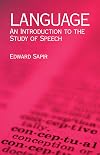
The origins of the Wharf-Sapir hypothesis - language creates reality, not the vice versa.

A classic early text. Highly influential among anthropologists and linguists
You May Also Like


Associated Authors
Statistics
- Works
- 72
- Also by
- 4
- Members
- 950
- Popularity
- #27,087
- Rating
- 3.7
- Reviews
- 9
- ISBNs
- 116
- Languages
- 11
- Favorited
- 2