
Ferdinand de Saussure (1857–1913)
Author of Course in General Linguistics (Open Court Classics)
About the Author
Works by Ferdinand de Saussure
Textos selecionados [de] Ferdinand de Saussure, Romam Jakobson, Louis Trolle Hjelmslev, Noam Ch (1978) 15 copies
Mémoire sur le système primitif des voyelles dans les langues indo-européennes (French Edition) (1987) 7 copies
Obras 5: historia moderna de México: el porfiriato: la vida política exterior 3 segunda parte (2016) 1 copy
محاضرات في علم اللسان العام 1 copy
GENEL DİLBİLİM DERSLERİ 1 1 copy
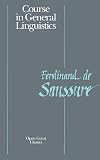
Course in General Linguistics (Open Court Classics) Publisher: Open Court; Reprint edition (2008) 1 copy
Opšta lingvistika 1 copy
GENEL DİLBİLİ DERSLERİ 2 1 copy
science du langage. de la double essence du langage et autres documents du ms. bge arch. de saussure (2011) 1 copy
De Saussure 1 copy
Kurs i allmän lingvistik 1 copy
Associated Works
Tagged
Common Knowledge
- Canonical name
- Saussure, Ferdinand de
- Birthdate
- 1857-11-26
- Date of death
- 1913-02-22
- Gender
- male
- Education
- University of Geneva
University of Leipzig - Occupations
- linguist
semiotician - Organizations
- École pratique des hautes études
- Awards and honors
- Chevalier de la Légion d'honneur
- Relationships
- Saussure, Raymond de (son)
Saussure, Rene de (brother) - Nationality
- Switzerland
- Birthplace
- Geneva, Geneva, Switzerland
- Places of residence
- Geneva, Switzerland
Paris, France - Place of death
- Vufflens-le-Château, Vaud, Switzerland
- Associated Place (for map)
- Switzerland
Members
Reviews
For literary critic, author, and professor Terry Eagleton, Structuralism is "rather like killing a person in order to examine more conveniently the circulation of the blood" ([b:Literary Theory: An Introduction|16939|Literary Theory An Introduction|Terry Eagleton|https://d2arxad8u2l0g7.cloudfront.net/books/1429361191s/16939.jpg|2454022], 95), and indeed Roland Barthes had something like this analogy in mind when he wrote the monumental little essay "The Death of the Author." As Mary Klages show more defines it, "In any field, a structuralist is interested in discovering the elements - the units - that make up any system, and in discovering the rules that govern how those units can be combined. And that's all" ([b:Literary Theory: A Guide for the Perplexed|771189|Literary Theory A Guide for the Perplexed|Mary Klages|https://d2arxad8u2l0g7.cloudfront.net/books/1347401535s/771189.jpg|757247], 31). For those of us far removed from the Russian formalists and the compiled lectures of Saussure, captivated as we are with the magic of literature, these aforementioned definitions must be borne in mind to keep a hold on Saussure's project.
Saussure is interested in bringing the field of linguistics up to a scientific standard. Taking cues from the historical progression of linguistics (from the Greeks' logical system of grammar to comparative literature to the Neogrammarians), he seeks to outline a rigorous discipline for the science of a language. Language, in his view, is composed of, at base, linguistic signs. These signs are themselves composed of a concept (signified) and a sound pattern (signifier). Here we see the foundation of the Structuralist mode: reductivism; hence, we're dealing with phonemes and morphemes which send or receive a concept/image. A crucial rule with these linguistic signs is that they have negative meaning--meaning, they have a specific correct meaning because they have not the meaning of other signs.
In terms of using the Structuralist mode to perform literary criticism, one would distill the text down to its most basic parts: again, down to the phonemes. What about the content, the story? Unnecessary. What about the author? Irrelevant. I cannot think of a single useful application of the Structuralist methodology in literary criticism that does not lead to the content or the author in some way except perhaps to yield the underlying symbols of the text. And still: now what? But, to be fair to Saussure's considerable work, we must bear in mind that his goal was linguistics, not literary criticism. In his own (or his students') words, at the close of this critical book: "...the only true object of study in linguistics is the language, considered in itself and for its own sake" (230). show less
Saussure is interested in bringing the field of linguistics up to a scientific standard. Taking cues from the historical progression of linguistics (from the Greeks' logical system of grammar to comparative literature to the Neogrammarians), he seeks to outline a rigorous discipline for the science of a language. Language, in his view, is composed of, at base, linguistic signs. These signs are themselves composed of a concept (signified) and a sound pattern (signifier). Here we see the foundation of the Structuralist mode: reductivism; hence, we're dealing with phonemes and morphemes which send or receive a concept/image. A crucial rule with these linguistic signs is that they have negative meaning--meaning, they have a specific correct meaning because they have not the meaning of other signs.
In terms of using the Structuralist mode to perform literary criticism, one would distill the text down to its most basic parts: again, down to the phonemes. What about the content, the story? Unnecessary. What about the author? Irrelevant. I cannot think of a single useful application of the Structuralist methodology in literary criticism that does not lead to the content or the author in some way except perhaps to yield the underlying symbols of the text. And still: now what? But, to be fair to Saussure's considerable work, we must bear in mind that his goal was linguistics, not literary criticism. In his own (or his students') words, at the close of this critical book: "...the only true object of study in linguistics is the language, considered in itself and for its own sake" (230). show less
This is a linguistics classic and a must-read for anyone wanting to delve into the history of linguistics. Just to be sure, however, this is a collection of notes from his course painstakingly collected into this volume by his students. The notes are based on a series of lectures, so it doesn't really read so much like a textbook.
If you're looking for a more specific understanding of general linguistics as the field stands today, I recommend picking up a contemporary introductory text and show more reading this after you've got a basic grounding in linguistics terms and concepts. show less
If you're looking for a more specific understanding of general linguistics as the field stands today, I recommend picking up a contemporary introductory text and show more reading this after you've got a basic grounding in linguistics terms and concepts. show less
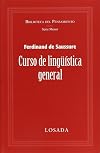
Basado en notas de su cátedra, correspondientes a los tres cursos sobre lingüística general dictados en 1906-1907, 1908-1909 y 1910-1911, cursos desarrollados en la Universidad de Ginebra, tras suceder a Jospeh Wertheimer en 1906. El texto es una reconstrucción hecha por sus alumnos, basándose particularmente en el último de los tres cursos y las notas recuperadas del maestro.
Edition: // Descr: xvi, 240 p. 21.5 cm. // Series: Call No. { } Shelved in Kade German Center, 116 Lawrence : Sprachunterricht // //
Awards

You May Also Like


Associated Authors
Statistics
- Works
- 31
- Also by
- 2
- Members
- 2,061
- Popularity
- #12,476
- Rating
- 3.8
- Reviews
- 11
- ISBNs
- 109
- Languages
- 19
- Favorited
- 5

