

Jim Ollhoff
Author of Japanese Mythology (World of Mythology (Abdo))
Works by Jim Ollhoff
Tagged
Common Knowledge
- Gender
- male
Members
Reviews

This book on DNA and genealogy written for children was published less than a couple years ago, yet some of the information is far more dated than that, and some of it was somewhat inaccurate even then. The author addresses only Y-DNA and mtDNA testing and completely ignores autosomal testing which was being offered by all the major players in genetic genealogy testing by that time. The author made a statement about the "two types" of DNA tests saying that "one test is for males, and the show more other is for females." This statement is completely wrong for the latter. The mtDNA test is offered to both sexes although it will only test the direct maternal line. He later clarifies that it is "usually conducted on females." There is a high enough percentage of males doing mtDNA testing that it is also an inaccurate statement. Some of the photos used to illustrate the book were dated. One such photo was illustrating "current genealogy work on a home computer," yet the photo showed a CRT monitor with a very dated looking genealogy program. I do think that the author's chapter on "Famous DNA Discoveries" would engage young readers. His stories about Christopher Columbus, Captain Cook, and "Cheddar Man" would be useful to use with the young readers. I would, however, encourage the use of a different book or website to discuss the types of genetic tests offered, even if they are written for adults. show less
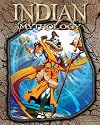
This book didn't start out well with me due to the title. A book on Indian Mythology would be quite long as there are dozens of recognized religions in India that have a large sized following including Islam, Christianity, Buddhism, Jainism, Sikhism, and so forth. It's true that most are Hindu but it's like writing a book on American mythology and only discussing early biblical parables.
Anyway, that aside, it's a decent book. It starts out with an introduction to mythology, the history of show more India, and the roots of Hinduism. There is a brief discussion of reincarnation, Dharma, and the caste system. In regard to the latter, the text is very neutral, including only a couple of phrases about people fighting it as always and a picture of a low caste man who barely makes a living. The rest of the text is very positive about everything so perhaps this neutrality is to be taken as a sign of disapproval. Take it as you will.
Then the book moves on to introduce some of the key players in the Hindu pantheon including Brahma, Vishnu, Shiva, and Kali as well as less well known Indra, Durga, Lakshmi, Ganesha, Rama and of course Krishna. The descriptions include a little historical context, i.e., how popular they were in worship throughout history, as well as brief relationships to other gods and sometimes a couple of sentences of a popular story about the deity.
The artwork is nice, representing a variety of traditions, media and skills. Many are clearly quite old as they are just stock images probably taken at palaces, temples and museums in India. There is a glossary section in the back that is good for the most part but is just silly in others. For example, in the first section of the book, when introducing the idea of myth, the writer mentions Luke Skywalker (quite a stretch but obviously geared to hook kids). Luke Skywalker appears in the glossary.
I like the idea of this book, introducing the vast and complicated mythos of Hinduism to children but I don't think this book succeeds very well. It tries to tell too much and gets confused about its target audience which I would guess is about 3rd to 5th grade reading levels. For example, there is a section on creation stories which is only one page long and includes three versions. Considering this is a large print book for kids, I feel this is way to many versions with too little detail. Another example is that I don't think children really care that Brahma grew less popular over time because he wasn't as exciting.
I think this age group would prefer stories over general information. I think the introductory sections could have been cut down, the index removed (for a 32 page large print book? Really?) and the glossary white space reduced so it took up only one page. Then the multiple versions of stories could be removed and more space given to fuller versions of stories for all of the gods mentioned.
This isn't a bad book but if you are looking for a children's book on Hindu Mythology, I recommend[b:Tales from India|11533338|Tales from India|Jamila Gavin|http://photo.goodreads.com/books/1320566363s/11533338.jpg|16471689] by [a:Jamila Gavin|43020|Jamila Gavin|http://photo.goodreads.com/authors/1308165170p2/43020.jpg]. (I don't find the title problematic because the book is just that: tales from India.) I gave that one five stars. show less
Anyway, that aside, it's a decent book. It starts out with an introduction to mythology, the history of show more India, and the roots of Hinduism. There is a brief discussion of reincarnation, Dharma, and the caste system. In regard to the latter, the text is very neutral, including only a couple of phrases about people fighting it as always and a picture of a low caste man who barely makes a living. The rest of the text is very positive about everything so perhaps this neutrality is to be taken as a sign of disapproval. Take it as you will.
Then the book moves on to introduce some of the key players in the Hindu pantheon including Brahma, Vishnu, Shiva, and Kali as well as less well known Indra, Durga, Lakshmi, Ganesha, Rama and of course Krishna. The descriptions include a little historical context, i.e., how popular they were in worship throughout history, as well as brief relationships to other gods and sometimes a couple of sentences of a popular story about the deity.
The artwork is nice, representing a variety of traditions, media and skills. Many are clearly quite old as they are just stock images probably taken at palaces, temples and museums in India. There is a glossary section in the back that is good for the most part but is just silly in others. For example, in the first section of the book, when introducing the idea of myth, the writer mentions Luke Skywalker (quite a stretch but obviously geared to hook kids). Luke Skywalker appears in the glossary.
I like the idea of this book, introducing the vast and complicated mythos of Hinduism to children but I don't think this book succeeds very well. It tries to tell too much and gets confused about its target audience which I would guess is about 3rd to 5th grade reading levels. For example, there is a section on creation stories which is only one page long and includes three versions. Considering this is a large print book for kids, I feel this is way to many versions with too little detail. Another example is that I don't think children really care that Brahma grew less popular over time because he wasn't as exciting.
I think this age group would prefer stories over general information. I think the introductory sections could have been cut down, the index removed (for a 32 page large print book? Really?) and the glossary white space reduced so it took up only one page. Then the multiple versions of stories could be removed and more space given to fuller versions of stories for all of the gods mentioned.
This isn't a bad book but if you are looking for a children's book on Hindu Mythology, I recommend[b:Tales from India|11533338|Tales from India|Jamila Gavin|http://photo.goodreads.com/books/1320566363s/11533338.jpg|16471689] by [a:Jamila Gavin|43020|Jamila Gavin|http://photo.goodreads.com/authors/1308165170p2/43020.jpg]. (I don't find the title problematic because the book is just that: tales from India.) I gave that one five stars. show less
This book didn't start out well with me due to the title. A book on Indian Mythology would be quite long as there are dozens of recognized religions in India that have a large sized following including Islam, Christianity, Buddhism, Jainism, Sikhism, and so forth. It's true that most are Hindu but it's like writing a book on American mythology and only discussing early biblical parables.
Anyway, that aside, it's a decent book. It starts out with an introduction to mythology, the history of show more India, and the roots of Hinduism. There is a brief discussion of reincarnation, Dharma, and the caste system. In regard to the latter, the text is very neutral, including only a couple of phrases about people fighting it as always and a picture of a low caste man who barely makes a living. The rest of the text is very positive about everything so perhaps this neutrality is to be taken as a sign of disapproval. Take it as you will.
Then the book moves on to introduce some of the key players in the Hindu pantheon including Brahma, Vishnu, Shiva, and Kali as well as less well known Indra, Durga, Lakshmi, Ganesha, Rama and of course Krishna. The descriptions include a little historical context, i.e., how popular they were in worship throughout history, as well as brief relationships to other gods and sometimes a couple of sentences of a popular story about the deity.
The artwork is nice, representing a variety of traditions, media and skills. Many are clearly quite old as they are just stock images probably taken at palaces, temples and museums in India. There is a glossary section in the back that is good for the most part but is just silly in others. For example, in the first section of the book, when introducing the idea of myth, the writer mentions Luke Skywalker (quite a stretch but obviously geared to hook kids). Luke Skywalker appears in the glossary.
I like the idea of this book, introducing the vast and complicated mythos of Hinduism to children but I don't think this book succeeds very well. It tries to tell too much and gets confused about its target audience which I would guess is about 3rd to 5th grade reading levels. For example, there is a section on creation stories which is only one page long and includes three versions. Considering this is a large print book for kids, I feel this is way to many versions with too little detail. Another example is that I don't think children really care that Brahma grew less popular over time because he wasn't as exciting.
I think this age group would prefer stories over general information. I think the introductory sections could have been cut down, the index removed (for a 32 page large print book? Really?) and the glossary white space reduced so it took up only one page. Then the multiple versions of stories could be removed and more space given to fuller versions of stories for all of the gods mentioned.
This isn't a bad book but if you are looking for a children's book on Hindu Mythology, I recommend[b:Tales from India|11533338|Tales from India|Jamila Gavin|http://photo.goodreads.com/books/1320566363s/11533338.jpg|16471689] by [a:Jamila Gavin|43020|Jamila Gavin|http://photo.goodreads.com/authors/1308165170p2/43020.jpg]. (I don't find the title problematic because the book is just that: tales from India.) I gave that one five stars. show less
Anyway, that aside, it's a decent book. It starts out with an introduction to mythology, the history of show more India, and the roots of Hinduism. There is a brief discussion of reincarnation, Dharma, and the caste system. In regard to the latter, the text is very neutral, including only a couple of phrases about people fighting it as always and a picture of a low caste man who barely makes a living. The rest of the text is very positive about everything so perhaps this neutrality is to be taken as a sign of disapproval. Take it as you will.
Then the book moves on to introduce some of the key players in the Hindu pantheon including Brahma, Vishnu, Shiva, and Kali as well as less well known Indra, Durga, Lakshmi, Ganesha, Rama and of course Krishna. The descriptions include a little historical context, i.e., how popular they were in worship throughout history, as well as brief relationships to other gods and sometimes a couple of sentences of a popular story about the deity.
The artwork is nice, representing a variety of traditions, media and skills. Many are clearly quite old as they are just stock images probably taken at palaces, temples and museums in India. There is a glossary section in the back that is good for the most part but is just silly in others. For example, in the first section of the book, when introducing the idea of myth, the writer mentions Luke Skywalker (quite a stretch but obviously geared to hook kids). Luke Skywalker appears in the glossary.
I like the idea of this book, introducing the vast and complicated mythos of Hinduism to children but I don't think this book succeeds very well. It tries to tell too much and gets confused about its target audience which I would guess is about 3rd to 5th grade reading levels. For example, there is a section on creation stories which is only one page long and includes three versions. Considering this is a large print book for kids, I feel this is way to many versions with too little detail. Another example is that I don't think children really care that Brahma grew less popular over time because he wasn't as exciting.
I think this age group would prefer stories over general information. I think the introductory sections could have been cut down, the index removed (for a 32 page large print book? Really?) and the glossary white space reduced so it took up only one page. Then the multiple versions of stories could be removed and more space given to fuller versions of stories for all of the gods mentioned.
This isn't a bad book but if you are looking for a children's book on Hindu Mythology, I recommend[b:Tales from India|11533338|Tales from India|Jamila Gavin|http://photo.goodreads.com/books/1320566363s/11533338.jpg|16471689] by [a:Jamila Gavin|43020|Jamila Gavin|http://photo.goodreads.com/authors/1308165170p2/43020.jpg]. (I don't find the title problematic because the book is just that: tales from India.) I gave that one five stars. show less
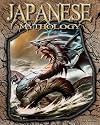
This book was lame. It was nice having pictures of really Japanese shrines, and the stories when they were initially told in Japanese are probably interesting. But the way they are written is terrible, and the pictures do not help sell the story for the most part. If we are being fair, at least it is a book about Japanese mythology, there are not many of those sadly.
You May Also Like


Statistics
- Works
- 105
- Members
- 561
- Popularity
- #44,551
- Rating
- 4.0
- Reviews
- 27
- ISBNs
- 306