
Eadweard Muybridge (1830–1904)
Author of The Human Figure in Motion
About the Author
Image credit: Credit: Frances Benjamin Johnston, circa 1890-1910
(Frances Benjamin Johnston Collection,
LoC Prints and Photographs Division,
LC-USZ62-33083)
(Frances Benjamin Johnston Collection,
LoC Prints and Photographs Division,
LC-USZ62-33083)
Series
Works by Eadweard Muybridge
Associated Works
Daemon Voices: On Stories and Storytelling (2017) — Photographer, some editions — 738 copies, 9 reviews
The Man Who Stopped Time: Eadweard Muybridge, Pioneer Photographer, Father of the Motion Picture, Murderer (2007) — Cover artist, some editions — 35 copies, 1 review
Tagged
Common Knowledge
- Canonical name
- Muybridge, Eadweard
- Legal name
- Muggeridge, Edward James (birth name)
- Birthdate
- 1830-04-09
- Date of death
- 1904-05-08
- Gender
- male
- Occupations
- bookseller
photographer - Relationships
- Selfe, Norman (cousin)
- Nationality
- UK
- Birthplace
- Kingston-upon-Thames, Surrey, England, UK
- Places of residence
- San Francisco, California, USA
Kingston-upon-Thames, Surrey, England, UK - Place of death
- Kingston-upon-Thames, Surrey, England, UK
- Burial location
- Woking Crematorium, Woking, Surrey, England, UK
- Associated Place (for map)
- Surrey, England, UK
Members
Reviews
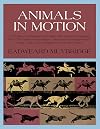
Muybridge's work has been called "one of the great monuments of 19th century photography" and almost everybody has seen bits of it even if they're not aware of the author. The sequential photos in these two volumes illustrate dozens of types of actions from different angles, making them, still today, an industry reference for artists, animators, art directors, etc.
The Human Figure presents subjects in the nude, so that muscles are visible. They are male, female, elderly, babies, performing show more 163 types of action shot from front, rear and three-quarter. Cycles (walk, run...) are presented in full.
Animals in Motion particularly focuses on the horse (and doesn't just show but also explains the different gaits) but also has plates for 32 other creatures, among which dogs, the elephant, small and big cats, the sloth, kangaroo, eagle and ostrich!
When I worked in an animation department, both books were prominent on our reference bookshelf, and I later purchased Animals in Motion for myself: as an illustrator it is still priceless to me. Human references are easy to find online if necessary (as long as I don't need a motion sequence), but it is harder to find exactly the position you need for an animal, so the book spares me much fruitless searching. The lighting in the pictures also really helps me with shading when I'm not bound to a different source of light.
A drawback of both books is that the photography being so old is not always very clear: it can be hard to make out the muscle lines or, at odd angles, the exact contours. There are also no plunging or upwards shots: all photos have a level perspective. This means a certain proficiency with drawing bodies in space is useful to fill these gaps, and beginners may find it frustrating at times. Just remember this is not a book to teach you to draw, but a reference book. Horse artists in particular will find it indispensable. show less
The Human Figure presents subjects in the nude, so that muscles are visible. They are male, female, elderly, babies, performing show more 163 types of action shot from front, rear and three-quarter. Cycles (walk, run...) are presented in full.
Animals in Motion particularly focuses on the horse (and doesn't just show but also explains the different gaits) but also has plates for 32 other creatures, among which dogs, the elephant, small and big cats, the sloth, kangaroo, eagle and ostrich!
When I worked in an animation department, both books were prominent on our reference bookshelf, and I later purchased Animals in Motion for myself: as an illustrator it is still priceless to me. Human references are easy to find online if necessary (as long as I don't need a motion sequence), but it is harder to find exactly the position you need for an animal, so the book spares me much fruitless searching. The lighting in the pictures also really helps me with shading when I'm not bound to a different source of light.
A drawback of both books is that the photography being so old is not always very clear: it can be hard to make out the muscle lines or, at odd angles, the exact contours. There are also no plunging or upwards shots: all photos have a level perspective. This means a certain proficiency with drawing bodies in space is useful to fill these gaps, and beginners may find it frustrating at times. Just remember this is not a book to teach you to draw, but a reference book. Horse artists in particular will find it indispensable. show less
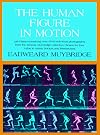
Nineteenth century California photographer Muybridge's collection of time-lapse nude photographs set against a ruled backgound shows men, women, and children moving through ordinary tasks, revealing what the human eye cannot see: the articulation of bone and muscle, balance with shifting weight and flesh, interacting with gravity through the sequence of each movement. Frames were captured at 1/6000th of a second. It remains the classic study for artists, teachers, and animators; and a show more technological triumph that also captures the beauty of the human form in motion. show less
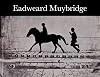
British-born Edweard Muybridge (1830-1904), who emigrated to the United States in the 1850s, is one of the most influential photographers of all time. Best known for his series "Animal Locomotion", which as a book has never been out of print in some form since its first publication, he was the inventor of the zoopraxiscope, a method of projecting moving images that predated celluloid. He constantly pushed the limits of the camera's possibilities, creating vast panoramas of the American show more landscape, capturing the lives of its people and documenting the nation's rapidly growing cities. His dramatic life included extensive travels in North and South America, a career as a successful lecturer in Europe and standing trial for the murder of his wife's lover. This magnificent book places Muybridge's life in the context of one of the most transformative periods of American and European history. It features high quality tri-tone and 4-color illustrations of many of Muybridge's works, along with additional ephemera. Its thematic sections, written by leading authorities on the artist, unfold chronologically, examining Muybridge's engagement with the landscape of the American West; his documenting of the development of San Francisco; his giant plate landscape images of Yosemite; his chronicling of the last war against Native Americans; his attempts to find ways of photographing human beings and animals in motion, using multiple cameras and new technologies; and, his first experiments with moving images. Including a timeline and facsimiles of Muybridge's correspondence, this will become a standard reference for people interested in a variety of disciplines, including photography, film, animation, art history, science, technology, historical and contemporary art. show less
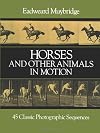
In 1887, the University of Pennsylvania first published pioneering photographer Eadweard Muybridge's Animal Locomotion, an extraordinary compilation of highspeed sequential photographs that has never been superseded as the most detailed, complete and useful visual analysis of living movement ever captured on film.
Lists
You May Also Like


Associated Authors
Statistics
- Works
- 38
- Also by
- 4
- Members
- 995
- Popularity
- #25,893
- Rating
- 4.1
- Reviews
- 5
- ISBNs
- 25
- Languages
- 1
- Favorited
- 1
