
Pieter M. Judson
Author of The Habsburg Empire: A New History
About the Author
Pieter M. Judson is Professor of Nineteenth- and Twentieth-Century History at the European University Institute in Florence, Italy. His books include Guardians of the Nation: Activists on the Language Frontiers of Imperial Austria (Harvard).
Works by Pieter M. Judson
História do Império Habsburgo 4 copies
Tagged
Common Knowledge
- Birthdate
- 1956
- Gender
- male
- Education
- Swarthmore College (BA|1978)
- Short biography
- Pieter M. Judson is Professor of Nineteenth- and Twentieth-Century History at the European University Institute in Florence, Italy.
- Nationality
- Netherlands
- Birthplace
- Utrecht, Netherlands
- Associated Place (for map)
- Utrecht, Netherlands
Members
Reviews
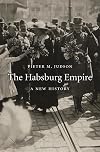
Since this work was published in 2016, I've picked it up and put it down several times. Due either to being over-booked, or feeling a lack of background knowledge to truly appreciate it.
Having finally made the time I'm here to tell you that I found this to be a mixed bag. Still, Judson is successful in disabusing the reader of the notion that the Habsburg regime was some sort of doomed enterprise, and that there was no alternative to the nation-state project and dismemberment, and all the show more dysfunction came in its wake.
Going back to the reign of Maria Theresa, Judson charts a struggle between Vienna, and the constituent elites of the Habsburg lands, for the allegiance and control of the general population. The House of Austria, at its best, seeking to improve the general condition of the people so as to generate more economic and military power, usually in the face of the higher nobility seeking to maintain its privileges.
Had there been a sustained push post-1814, maybe some sort of federal system could have been established, one capable of making rational choices in public finance and higher strategy. But the concerted effort ended after a few years of the installation of Francis Joseph as emperor. Still, there is no denying that when war came in 1914 people did generally answer the call, though war wound up breaking the Habsburg amalgam, and the rest, as they say, is history.
That I persevered with this book is a commentary on my grandparents having emigrated from the Empire when there was the chance, and my sustained interest in the lives they might have led, because this is a very meandering sort of book, saturated in political science and sociology. Also, Judson is not given to editorializing about the scions of the House of Habsburg that held the throne post-1814, nor is he given to speculating about what these men might otherwise have done.
What this means for me is that there is a big hole in this book shaped like Franz Ferdinand; there were many ways to federalize the Habsburg lands, and the archduke's hard-knuckled version was the most likely in the 1910s. Considering the poor performance of Franz Ferdinand's choices of military commanders for the Austro-Hungarian military, both in the field and in civil affairs (which Judson, to his credit, does not gloss over), my expectation is that there would have only been another form of military and political disaster. show less
Having finally made the time I'm here to tell you that I found this to be a mixed bag. Still, Judson is successful in disabusing the reader of the notion that the Habsburg regime was some sort of doomed enterprise, and that there was no alternative to the nation-state project and dismemberment, and all the show more dysfunction came in its wake.
Going back to the reign of Maria Theresa, Judson charts a struggle between Vienna, and the constituent elites of the Habsburg lands, for the allegiance and control of the general population. The House of Austria, at its best, seeking to improve the general condition of the people so as to generate more economic and military power, usually in the face of the higher nobility seeking to maintain its privileges.
Had there been a sustained push post-1814, maybe some sort of federal system could have been established, one capable of making rational choices in public finance and higher strategy. But the concerted effort ended after a few years of the installation of Francis Joseph as emperor. Still, there is no denying that when war came in 1914 people did generally answer the call, though war wound up breaking the Habsburg amalgam, and the rest, as they say, is history.
That I persevered with this book is a commentary on my grandparents having emigrated from the Empire when there was the chance, and my sustained interest in the lives they might have led, because this is a very meandering sort of book, saturated in political science and sociology. Also, Judson is not given to editorializing about the scions of the House of Habsburg that held the throne post-1814, nor is he given to speculating about what these men might otherwise have done.
What this means for me is that there is a big hole in this book shaped like Franz Ferdinand; there were many ways to federalize the Habsburg lands, and the archduke's hard-knuckled version was the most likely in the 1910s. Considering the poor performance of Franz Ferdinand's choices of military commanders for the Austro-Hungarian military, both in the field and in civil affairs (which Judson, to his credit, does not gloss over), my expectation is that there would have only been another form of military and political disaster. show less
Pieter Judson looks at the internal workings of the Habsburg Empire based in Vienna from the late 18th until its end after WWI. He focuses on attempts by the Habsburg's to modernize the empire amid continuing wars and its international decline. He looks at the devolution of power away from the monarchy because of the growth of nationalism and the demand for natural rights caused by the enlightenment and French Revolution.
The main thrust of the book is the multi-national character of the show more empire and the dynasty's attempts to modernize its governance. This was a difficult period because the Habsburg's had traditional ruled (although that is a loose term) the Holy Roman Empire but then established the Austrian Empire after its dissolution during the Napoleonic wars. Then the revolutions of 1848 put new pressure on the dynasty, leading to a new constitution based on a strong bureaucracy. That was eventually overturned with a new constitution which included the official divisions between Hungary and Austria. This division, which was made for political reasons at the time, reflected the different traditions of the two regions (which encompassed a lot more than the modern countries) and the growing power of nationalism within the empire. The division, and later concessions to nationalists, made it difficult for the Austrian government to modernize because it limited its ability to mobilize the resources of its empire in a uniform way.
Judson rarely discusses wars except in passing. He says that they happened and what their effects were, but glosses over all the details. He admits he will do this in the beginning of the book, but it is still a little frustration because he blames the wars of the 19th century for many of the economic and fiscal difficulties of the empire. He calls Austria's attempts in Crimea and against Prussia to be disastrous, but he doesn't say much about why the army couldn't do better, leaving the question hanging of whether this was a reflection of the internal difficulties of the empire. He does mention the issues of language, where conscripts were commanded in their own language even though German was used at higher levels. Other than that, it is hard to say what the connection was between internal and external problems.
He finished the book with WWI and its aftermath. He doesn't see the war as the final nail in the coffin, but as a traumatic event that created entirely new problems on a new scale. I see his point, but since one of the major points of the entire book is about conflicting loyalties between nation and empire and then he shows how the war exacerbated that tension, the problems of the war seem to be similar to what the empire faced before hand.
The final section is one of the most interesting. As he discusses the food shortages in the empire, he shows how it shifts many of the empire's subjects toward more loyalty toward the nation. There were rumors across the empire that other areas and nationalities were eating better and were exporting food, widening the divisions between the groups. When the war ended, the empire broke apart, but not in an orderly fashion. Each nationality tried to grab as much land as it could by force, regardless of whether the people living there belonged to their nation. The fundamental problem was that the peace treaty recognized national self-determination, but smaller ethnicities were swallowed up by larger ones and many people were left on the wrong side of the border, divided from the rest of their nation. Interestingly, the had the right to immigrate to their national territory, but many states, such as Germany and Italy, encouraged them to remain so that they would have cause to claim the territory in the future.
This is a good book as far as it goes. It's main interest is the inner workings the empire and the politics of nation vs. empire. I found it interesting and informative. It is a little dry at times, but that is the nature of this kind of analysis. And I would have liked more on foreign affairs, as mentioned earlier. show less
The main thrust of the book is the multi-national character of the show more empire and the dynasty's attempts to modernize its governance. This was a difficult period because the Habsburg's had traditional ruled (although that is a loose term) the Holy Roman Empire but then established the Austrian Empire after its dissolution during the Napoleonic wars. Then the revolutions of 1848 put new pressure on the dynasty, leading to a new constitution based on a strong bureaucracy. That was eventually overturned with a new constitution which included the official divisions between Hungary and Austria. This division, which was made for political reasons at the time, reflected the different traditions of the two regions (which encompassed a lot more than the modern countries) and the growing power of nationalism within the empire. The division, and later concessions to nationalists, made it difficult for the Austrian government to modernize because it limited its ability to mobilize the resources of its empire in a uniform way.
Judson rarely discusses wars except in passing. He says that they happened and what their effects were, but glosses over all the details. He admits he will do this in the beginning of the book, but it is still a little frustration because he blames the wars of the 19th century for many of the economic and fiscal difficulties of the empire. He calls Austria's attempts in Crimea and against Prussia to be disastrous, but he doesn't say much about why the army couldn't do better, leaving the question hanging of whether this was a reflection of the internal difficulties of the empire. He does mention the issues of language, where conscripts were commanded in their own language even though German was used at higher levels. Other than that, it is hard to say what the connection was between internal and external problems.
He finished the book with WWI and its aftermath. He doesn't see the war as the final nail in the coffin, but as a traumatic event that created entirely new problems on a new scale. I see his point, but since one of the major points of the entire book is about conflicting loyalties between nation and empire and then he shows how the war exacerbated that tension, the problems of the war seem to be similar to what the empire faced before hand.
The final section is one of the most interesting. As he discusses the food shortages in the empire, he shows how it shifts many of the empire's subjects toward more loyalty toward the nation. There were rumors across the empire that other areas and nationalities were eating better and were exporting food, widening the divisions between the groups. When the war ended, the empire broke apart, but not in an orderly fashion. Each nationality tried to grab as much land as it could by force, regardless of whether the people living there belonged to their nation. The fundamental problem was that the peace treaty recognized national self-determination, but smaller ethnicities were swallowed up by larger ones and many people were left on the wrong side of the border, divided from the rest of their nation. Interestingly, the had the right to immigrate to their national territory, but many states, such as Germany and Italy, encouraged them to remain so that they would have cause to claim the territory in the future.
This is a good book as far as it goes. It's main interest is the inner workings the empire and the politics of nation vs. empire. I found it interesting and informative. It is a little dry at times, but that is the nature of this kind of analysis. And I would have liked more on foreign affairs, as mentioned earlier. show less
The Habsburg Empire A New History, by Pieter M. Judson (read 6 Sep 2016) I have been fascinated by Austrian history ever since on 24 June 1945 I read Golden Fleece, by Bertita Harding--a novel-like life of Franz Josef and his wife Elizabeth. Books such The Fall of the House of Habsburg, by Edward Crankshaw (read 7 Dec 1969); Thunder at Twilght, by Frederic Morton (read 12 Oct 1996); The Eagles Die, by George R. Marek (read 28 Sep 2004); and A Nervous Splendor by Frederic Mortaon (read 28 May show more 2012) enthralled me. But this book by Judson seemed to be eager to take all the drama out of the history-making events and to make them seem as dry as dust. Much prose not telling what happened but expounding on why it happened fills this book. One paragraph suffices for the war in 1866. Crown Prince Rudolph's death is not mentioned at all. The book is full of argument as to reasons why some things happened--often not even telling what happened except by indirection. I am afraid I am not enough of a scholar to appreciate this book. show less
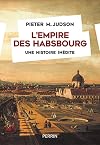
Une véritable somme parfaitement détaillée et argumentée. Et ce travail de précision dessine, peu à peu, une vision globale d'un ensemble complexe et offre de nombreux éléments de compréhensions sur cet empire et sur l'Europe du XXème siècle.
Lists
Awards


You May Also Like


Associated Authors
Statistics
- Works
- 8
- Members
- 415
- Popularity
- #58,724
- Rating
- 3.6
- Reviews
- 4
- ISBNs
- 26
- Languages
- 5
