
Slade Grayson
Author of Kill Your Heroes
Works by Slade Grayson
Tagged
Common Knowledge
There is no Common Knowledge data for this author yet. You can help.
Members
Reviews
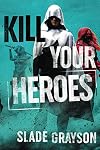
As someone who has read everything Slade Grayson has published, I realized after reading KILL YOUR HEROES that one of the things I like most about his writing is he respects my intelligence as a reader. In this one, Slade is wading into the well-trodden territory of superheroes, and he’s not only writing with the understanding that his readers are coming to this story with a lot of exposure to superhero storytelling and culture, but he’s also embracing that. KILL YOUR HEROES is a novel show more that takes everything you already know and love about superheroes and weaves that into the storytelling in an almost metafictional way. It’s clear from reading KILL YOUR HEROES that Slade is a lover of comic book superheroes, notably the classics, so this is a novel by a superhero lover for superhero lovers.
If there is one thing that might work against the immediate success of this book, it’s the current landscape of superhero stories. Specifically, no matter which side of the Marvel-vs.-DC divide you stand on, there’s a particular level of dark and broodiness that these stories have evolved into, and Slade has specifically designed the engine of KILL YOUR HEROES to contradict—maybe even criticize—that.
That is to say, I think, while you can pick this book up, enjoy and have fun with the story, be riveted and thrilled, the brilliance of KILL YOUR HEROES is in its context. Maybe you pick up this book and read about the Dark Revenger and the Puzzler and immediately understand their analogs to the comic book superheroes and supervillains that you love, and then you have expectations about the way the story is going to go, and then it just doesn’t do that. It begins in your comfort zone, triggering your familiarity in a way that instantly builds out the world, and I think Slade does this to, in a sense, get it out of the way so he can get to the story he really wants to tell. (That isn’t to say he neglects the world building and backstories, though; every major hero and villain has a fully developed backstory on the page.)
Some readers might be disappointed KILL YOUR HEROES isn’t a book that fits neatly into a slot they may already have lined up for it from the beginning, but I think the readers who approach it with the understanding that, while the book hits you up front with the idea Slade is doing something conventional, he’s doing something quite unique, those readers might find KILL YOUR HEROES is packaging an amazingly insightful narrative core into a story aesthetic we can be comfortable with.
I once heard Justin Cronin say the way he approached his Passage trilogy was that he felt he was sneaking literature to the masses, and while KILL YOUR HEROES is nothing like Cronin’s epic apocalyptic tale, I think that’s what Slade has done here. There’s something profound in the guts of this one, and what’s amazing is it lives in the relationship each reader will have with the book. I think Slade has really compelling ideas about superhero literature, and I think KILL YOUR HEROES is less a manifesto or treatise and more a catalyst for readers to understand those ideas.
All of that said, it’s apparent from the way Slade conducts himself in this novel (I mean, just read his about page, which other writers fill up with self-centered publishing credits and accolades) that he doesn’t want you to take this book too seriously. He wants you to read it and enjoy it. I very much did, but beyond that, I’ll be thinking of KILL YOUR HEROES for a long time not because of what it does with superhero stories but what it says about them. show less
If there is one thing that might work against the immediate success of this book, it’s the current landscape of superhero stories. Specifically, no matter which side of the Marvel-vs.-DC divide you stand on, there’s a particular level of dark and broodiness that these stories have evolved into, and Slade has specifically designed the engine of KILL YOUR HEROES to contradict—maybe even criticize—that.
That is to say, I think, while you can pick this book up, enjoy and have fun with the story, be riveted and thrilled, the brilliance of KILL YOUR HEROES is in its context. Maybe you pick up this book and read about the Dark Revenger and the Puzzler and immediately understand their analogs to the comic book superheroes and supervillains that you love, and then you have expectations about the way the story is going to go, and then it just doesn’t do that. It begins in your comfort zone, triggering your familiarity in a way that instantly builds out the world, and I think Slade does this to, in a sense, get it out of the way so he can get to the story he really wants to tell. (That isn’t to say he neglects the world building and backstories, though; every major hero and villain has a fully developed backstory on the page.)
Some readers might be disappointed KILL YOUR HEROES isn’t a book that fits neatly into a slot they may already have lined up for it from the beginning, but I think the readers who approach it with the understanding that, while the book hits you up front with the idea Slade is doing something conventional, he’s doing something quite unique, those readers might find KILL YOUR HEROES is packaging an amazingly insightful narrative core into a story aesthetic we can be comfortable with.
I once heard Justin Cronin say the way he approached his Passage trilogy was that he felt he was sneaking literature to the masses, and while KILL YOUR HEROES is nothing like Cronin’s epic apocalyptic tale, I think that’s what Slade has done here. There’s something profound in the guts of this one, and what’s amazing is it lives in the relationship each reader will have with the book. I think Slade has really compelling ideas about superhero literature, and I think KILL YOUR HEROES is less a manifesto or treatise and more a catalyst for readers to understand those ideas.
All of that said, it’s apparent from the way Slade conducts himself in this novel (I mean, just read his about page, which other writers fill up with self-centered publishing credits and accolades) that he doesn’t want you to take this book too seriously. He wants you to read it and enjoy it. I very much did, but beyond that, I’ll be thinking of KILL YOUR HEROES for a long time not because of what it does with superhero stories but what it says about them. show less
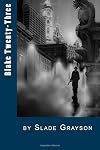
I don’t know if this is the book you deserve, but it’s the book you need. (That’s clever, you see, because there are a lot of Batman references in this book… ahem, anyway.)
Blake Twenty-Three by Slade Grayson begins with a message the literary world needs to hear: “Just have fun.” We often forget reading and storytelling is supposed to be something we enjoy. Many of us get so stilted and wooden with our critical analysis and pushing our nerd glasses up on the bridges of our noses show more that we overlook an integral part of the reading experience: escape. If one-half of storytelling is information conveyance, the other half is signal quality. Maybe “integrity” is the right word there. I don’t know, but what it boils down to is a measure of enjoyment.
I’m not going to reiterate the plot in detail here. You can go read that elsewhere (scroll up, maybe). But part of Blake Twenty-Three’s strength is its simplicity. Essentially, a guy gets suckered into working for a shadow organization that he’s pretty sure are the bad guys, and this particular mission could save the world. Or probably end it. Blake’s pretty sure it’s the latter, but there’s not much he can do except do his job.
Also, Blake is kind of a jerk. He’s not a jerk in a villainous way (although he does some pretty heinous things). He’s not quite a jerk in a way that you root for him to be a better bad guy. He’s not a jerk in a Walter White kind of way where you hope, one of these episodes, he’s going to turn it all around, but instead he keeps being the stupidest brilliant person on the planet.
No, the best way I can explain Blake is that he reads a little like I imagine a James Bond novel would read like if Quentin Tarantino wrote it. It is fast, fun, sarcastic, and stylized and never takes itself too seriously. It is also creative and meaningful.
It’s so honest. Beautifully honest and cynical in a fresh way. All of those pulp spy novels you think Blake Twenty-Three is, the ones that are over-the-top raunchy or hyperslick and dripping with the overflowing inkwells of noir? Blake scoffs at them because he just doesn’t care.
I hesitate to call it apathy, but Blake Twenty-Three unlocked a part of literature that’s been pent up in me for a long time. It realigns priorities. It doesn’t shake you and scream at you to pay attention. It frankly doesn’t care. The experience is almost autonomous, and you can follow along if you like. Or not. Again, Blake doesn’t care.
In a reverse psychology kind of way, it’s alluring. It doesn’t beckon you to come along on a ride. It shows you its back and walks away, and you’re left stunned on the sidewalk with nowhere to go but in the same direction Blake is going.
My final verdict is that Blake Twenty-Three is smart, fun, and ultimately impressive. In other words, inspiring. It may not be a novel that will change your life, but it’s a novel you need to read, if for nothing else, to remember why you started reading in the first place. I highly recommend it for anyone in the mood for a fast-reading spy thriller that will make you laugh out loud while launching you through tense action and conflict. show less
Blake Twenty-Three by Slade Grayson begins with a message the literary world needs to hear: “Just have fun.” We often forget reading and storytelling is supposed to be something we enjoy. Many of us get so stilted and wooden with our critical analysis and pushing our nerd glasses up on the bridges of our noses show more that we overlook an integral part of the reading experience: escape. If one-half of storytelling is information conveyance, the other half is signal quality. Maybe “integrity” is the right word there. I don’t know, but what it boils down to is a measure of enjoyment.
I’m not going to reiterate the plot in detail here. You can go read that elsewhere (scroll up, maybe). But part of Blake Twenty-Three’s strength is its simplicity. Essentially, a guy gets suckered into working for a shadow organization that he’s pretty sure are the bad guys, and this particular mission could save the world. Or probably end it. Blake’s pretty sure it’s the latter, but there’s not much he can do except do his job.
Also, Blake is kind of a jerk. He’s not a jerk in a villainous way (although he does some pretty heinous things). He’s not quite a jerk in a way that you root for him to be a better bad guy. He’s not a jerk in a Walter White kind of way where you hope, one of these episodes, he’s going to turn it all around, but instead he keeps being the stupidest brilliant person on the planet.
No, the best way I can explain Blake is that he reads a little like I imagine a James Bond novel would read like if Quentin Tarantino wrote it. It is fast, fun, sarcastic, and stylized and never takes itself too seriously. It is also creative and meaningful.
It’s so honest. Beautifully honest and cynical in a fresh way. All of those pulp spy novels you think Blake Twenty-Three is, the ones that are over-the-top raunchy or hyperslick and dripping with the overflowing inkwells of noir? Blake scoffs at them because he just doesn’t care.
I hesitate to call it apathy, but Blake Twenty-Three unlocked a part of literature that’s been pent up in me for a long time. It realigns priorities. It doesn’t shake you and scream at you to pay attention. It frankly doesn’t care. The experience is almost autonomous, and you can follow along if you like. Or not. Again, Blake doesn’t care.
In a reverse psychology kind of way, it’s alluring. It doesn’t beckon you to come along on a ride. It shows you its back and walks away, and you’re left stunned on the sidewalk with nowhere to go but in the same direction Blake is going.
My final verdict is that Blake Twenty-Three is smart, fun, and ultimately impressive. In other words, inspiring. It may not be a novel that will change your life, but it’s a novel you need to read, if for nothing else, to remember why you started reading in the first place. I highly recommend it for anyone in the mood for a fast-reading spy thriller that will make you laugh out loud while launching you through tense action and conflict. show less
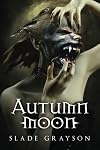
When I picked up Autumn Moon by Slade Grayson, I was excited because I couldn’t remember the last time I had read a werewolf novel that I enjoyed. Autumn Moon is enjoyable, satisfying, and so much more. It contains a world full of almost-magical intrigue and allure and a narrative that keeps moving logically and naturally to a fulfilling conclusion.
I think the thing I appreciated most about Autumn Moon is it seems self-aware. I’ve come to this novel with the knowledge that it will show more contain werewolves, and Slade never is coy with that idea. It might seem disingenuous to treat the revelation of the shapeshifters as some great mystery, and while there is a moderate surprise, it isn’t overdone. Mainly, it seems to be for the characters’ benefit, not for ours, a case of dramatic irony that is handled expertly.
But the characters certainly are the core of Autumn Moon. While the plot may be considered somewhat conventional, it never feels contrived. Each cog in the machine is moved by character motivation that feels authentic. Slade spares us melodramatic plot twists in favor of a narrative that makes sense and feels satisfying. Of course, that isn’t to say Autumn Moon is devoid of plot devices or twists. It has its share, but they are but one element in the formula, not a driving force.
One thing that’s interesting about Slade’s work in Autumn Moon is the change characters experience (in some cases, a physical change). Whereas change is a central theme of the story, what with shapeshifters and all, every primary character in the novel experiences meaningful, lasting change. There’s always a decision point, and during a pivotal scene, each character surprised me, as I learned they are not the character I met at the beginning of the book. Creating characters with such dimension is tough, but it’s a metric for gauging quality in fiction. As writers, we are taught every character must be dynamic to maintain intrigue for the reader, and Slade delivers here.
Drilling down through the large issues, Slade also delivers in his prose. Often, his writing is understated, but he comes through with punches at all the right spots. The dialog is neat and natural. It’s clear the writing is deliberate and meticulously crafted. At times, I felt what I call the “Stephen King effect,” where a writer strikes a perfect balance of technical prowess and natural language, almost as if he or she is speaking to you but using all the right words to do it, like a practiced or rehearsed speech that feels improvised or driven by impulse.
If I have one criticism for Autumn Moon, it’s that I felt the first half of the book, perhaps the first three-quarters, felt more carefully composed than the final act. In the novel’s opening chapters, Slade takes his time introducing us to his characters and following them as the pieces of his puzzle begin to connect, and it is this part of the novel that ensures a satisfying culmination of events. However, I felt a bit of a hitch in a twist that comes late in the novel. Slade shows a bit of his hand as he pulls us in a direction he wants to go. Ultimately, I think it’s worth it because the final stamp on the narrative is meaningful, satisfying, and logical, the three elements of any good ending.
Overall, I feel like that’s a really good way to sum up Autumn Moon: It’s meaningful, satisfying, and logical. In terms of value of product, it offers everything you could possibly want from a werewolf novel, plus a few surprises. It’s one of those novels that I can see any reader under the horror umbrella appreciating, and I genuinely believe that, given the appropriate exposure, Autumn Moon will find a place on many bookshelves (and e-readers). I thoroughly enjoyed it and plan to follow the series. show less
I think the thing I appreciated most about Autumn Moon is it seems self-aware. I’ve come to this novel with the knowledge that it will show more contain werewolves, and Slade never is coy with that idea. It might seem disingenuous to treat the revelation of the shapeshifters as some great mystery, and while there is a moderate surprise, it isn’t overdone. Mainly, it seems to be for the characters’ benefit, not for ours, a case of dramatic irony that is handled expertly.
But the characters certainly are the core of Autumn Moon. While the plot may be considered somewhat conventional, it never feels contrived. Each cog in the machine is moved by character motivation that feels authentic. Slade spares us melodramatic plot twists in favor of a narrative that makes sense and feels satisfying. Of course, that isn’t to say Autumn Moon is devoid of plot devices or twists. It has its share, but they are but one element in the formula, not a driving force.
One thing that’s interesting about Slade’s work in Autumn Moon is the change characters experience (in some cases, a physical change). Whereas change is a central theme of the story, what with shapeshifters and all, every primary character in the novel experiences meaningful, lasting change. There’s always a decision point, and during a pivotal scene, each character surprised me, as I learned they are not the character I met at the beginning of the book. Creating characters with such dimension is tough, but it’s a metric for gauging quality in fiction. As writers, we are taught every character must be dynamic to maintain intrigue for the reader, and Slade delivers here.
Drilling down through the large issues, Slade also delivers in his prose. Often, his writing is understated, but he comes through with punches at all the right spots. The dialog is neat and natural. It’s clear the writing is deliberate and meticulously crafted. At times, I felt what I call the “Stephen King effect,” where a writer strikes a perfect balance of technical prowess and natural language, almost as if he or she is speaking to you but using all the right words to do it, like a practiced or rehearsed speech that feels improvised or driven by impulse.
If I have one criticism for Autumn Moon, it’s that I felt the first half of the book, perhaps the first three-quarters, felt more carefully composed than the final act. In the novel’s opening chapters, Slade takes his time introducing us to his characters and following them as the pieces of his puzzle begin to connect, and it is this part of the novel that ensures a satisfying culmination of events. However, I felt a bit of a hitch in a twist that comes late in the novel. Slade shows a bit of his hand as he pulls us in a direction he wants to go. Ultimately, I think it’s worth it because the final stamp on the narrative is meaningful, satisfying, and logical, the three elements of any good ending.
Overall, I feel like that’s a really good way to sum up Autumn Moon: It’s meaningful, satisfying, and logical. In terms of value of product, it offers everything you could possibly want from a werewolf novel, plus a few surprises. It’s one of those novels that I can see any reader under the horror umbrella appreciating, and I genuinely believe that, given the appropriate exposure, Autumn Moon will find a place on many bookshelves (and e-readers). I thoroughly enjoyed it and plan to follow the series. show less
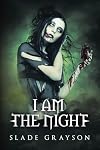
I loved Autumn Moon. In a genre where there just aren’t that many good stories, it shines as an example of the werewolf tale’s potential. Autumn Moon demonstrates how to tell a deeply human werewolf story in a fascinating, alluring world rich with mythos and intrigue.
I Am The Night does something else entirely.
Rooted in the Autumn Moon framework, I Am The Night continues the narrative of Drake Burroughs, but like Drake, the novel’s nature has evolved. This one puts Drake in the show more spotlight and focuses on his struggles in the aftermath of the first book.
Drake has changed, and the core of Slade Grayson’s storytelling has changed, too.
I think that’s what strikes me the most here: the theme of change. In most werewolf stories, the idea of shapeshifting into the wolf is the central conflict. When the full moon rises and the werewolf loses control, what if he hurts someone? Wouldn’t it be tragic, especially, if it’s someone he loves?
For Drake, though, the wolf is more a manifestation of his true self, skin he’s more comfortable in. I feel like part of Autumn Moon’s point is this man of God has always been a wolf, and now when he changes, there’s the idea that, even when he was human, that wolf was there inside him all along.
That theme comes full circle in I Am The Night.
As much as anything, then, I Am The Night is about the struggle to be human when the truth is it’s in your nature not to be. It’s about Drake struggling not to hurt someone as he moves among people and attempts to blend in.
As a foil to that idea, Slade introduces vampires to his universe, and before you groan because you immediately associate vampires with sparkling skin and teenage love, these vampires are amazingly original and terrifying. Whereas there’s something regal and beautiful about the shapeshifters in this world, the vampires are twisted, horrid, and repulsive monstrosities. They are absolutely vile creatures, and if Drake’s struggle is in living among humans, they’ve let it all go and enjoy living on the fringes while preying on the meek. In some ways, the vampires are like insects, living within the walls of society, in the dark places, and feeding on whatever they can get.
Even as I Am The Night simplifies, it ups the ante. Now, in Drake’s hometown, he has a connection to the locale, but more than that, far away from the town that had embraced the shapeshifters, Drake must hide his true nature, if not for the safety of those around him, for his own security in the instance that humanity discovers him.
Of course, much of the time, Drake is indifferent, an effect of his change. But time and again, something pulls him back to his human side. While I Am The Night is adamant that Drake Burroughs, human, is gone and Drake Burroughs, wolf, is the only one that exists now, the story at least suggests Drake isn’t completely beyond salvation.
Beyond all of these thematic and narrative concepts, I Am The Night is just a hell of a ride. There’s a savagery to the way the fight scenes and chase scenes play out in a way Autumn Moon just didn’t have. In Autumn Moon, we read about characters interacting with monsters. Now, we’re reading first-hand about a monster, and Slade has nailed that experience.
As these monsters face off and tear each other apart, it’s less a question about who will win and more about how far they’re willing to take it.
I Am The Night is absolutely its own story. Could you read this one without reading Autumn Moon? Probably, but I wouldn’t recommend it for the simple fact that it will be better if you start with Autumn Moon. Moreover, I Am The Night is the second book in a series that doesn’t just give you a continuation. It doesn’t just give you more of the same. It gives you new experiences and a new world within the old. Much like Drake after being reborn, it’s like returning to the world of Autumn Moon but seeing it for the first time through completely different eyes. show less
I Am The Night does something else entirely.
Rooted in the Autumn Moon framework, I Am The Night continues the narrative of Drake Burroughs, but like Drake, the novel’s nature has evolved. This one puts Drake in the show more spotlight and focuses on his struggles in the aftermath of the first book.
Drake has changed, and the core of Slade Grayson’s storytelling has changed, too.
I think that’s what strikes me the most here: the theme of change. In most werewolf stories, the idea of shapeshifting into the wolf is the central conflict. When the full moon rises and the werewolf loses control, what if he hurts someone? Wouldn’t it be tragic, especially, if it’s someone he loves?
For Drake, though, the wolf is more a manifestation of his true self, skin he’s more comfortable in. I feel like part of Autumn Moon’s point is this man of God has always been a wolf, and now when he changes, there’s the idea that, even when he was human, that wolf was there inside him all along.
That theme comes full circle in I Am The Night.
As much as anything, then, I Am The Night is about the struggle to be human when the truth is it’s in your nature not to be. It’s about Drake struggling not to hurt someone as he moves among people and attempts to blend in.
As a foil to that idea, Slade introduces vampires to his universe, and before you groan because you immediately associate vampires with sparkling skin and teenage love, these vampires are amazingly original and terrifying. Whereas there’s something regal and beautiful about the shapeshifters in this world, the vampires are twisted, horrid, and repulsive monstrosities. They are absolutely vile creatures, and if Drake’s struggle is in living among humans, they’ve let it all go and enjoy living on the fringes while preying on the meek. In some ways, the vampires are like insects, living within the walls of society, in the dark places, and feeding on whatever they can get.
Even as I Am The Night simplifies, it ups the ante. Now, in Drake’s hometown, he has a connection to the locale, but more than that, far away from the town that had embraced the shapeshifters, Drake must hide his true nature, if not for the safety of those around him, for his own security in the instance that humanity discovers him.
Of course, much of the time, Drake is indifferent, an effect of his change. But time and again, something pulls him back to his human side. While I Am The Night is adamant that Drake Burroughs, human, is gone and Drake Burroughs, wolf, is the only one that exists now, the story at least suggests Drake isn’t completely beyond salvation.
Beyond all of these thematic and narrative concepts, I Am The Night is just a hell of a ride. There’s a savagery to the way the fight scenes and chase scenes play out in a way Autumn Moon just didn’t have. In Autumn Moon, we read about characters interacting with monsters. Now, we’re reading first-hand about a monster, and Slade has nailed that experience.
As these monsters face off and tear each other apart, it’s less a question about who will win and more about how far they’re willing to take it.
I Am The Night is absolutely its own story. Could you read this one without reading Autumn Moon? Probably, but I wouldn’t recommend it for the simple fact that it will be better if you start with Autumn Moon. Moreover, I Am The Night is the second book in a series that doesn’t just give you a continuation. It doesn’t just give you more of the same. It gives you new experiences and a new world within the old. Much like Drake after being reborn, it’s like returning to the world of Autumn Moon but seeing it for the first time through completely different eyes. show less
Statistics
- Works
- 4
- Members
- 29
- Popularity
- #460,289
- Rating
- 3.9
- Reviews
- 6
- ISBNs
- 6