
Edgar Snow (1905–1972)
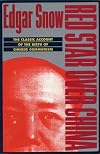
Author of Red Star Over China: The Classic Account of the Birth of Chinese Communism
About the Author
Image credit: Courtesy of the NYPL Digital Gallery (image use requires permission from the New York Public Library
Works by Edgar Snow
Red Star Over China: The Classic Account of the Birth of Chinese Communism (1937) 771 copies, 8 reviews
Associated Works
Communist China: Revolutionary Reconstruction and International Confrontation 1949 to the Present (1967) — Contributor — 102 copies, 1 review
Away with All Pests: An English Surgeon in People's China, 1954-1969 (1969) — Introduction, some editions — 67 copies
Tagged
Common Knowledge
- Birthdate
- 1905-07-17
- Date of death
- 1972-02-15
- Gender
- male
- Education
- University of Missouri (dropped out)
- Occupations
- journalist
- Organizations
- China Weekly Review
Yenching University
The Saturday Evening Post - Relationships
- Snow, Helen Foster (wife)
Epstein, Israel (friend) - Short biography
- Edgar Snow is best known for his books and reporting on the Chinese Communist revolution. He was the first Western journalist to interview Mao Zedong and one of the first in the world to recognize Mao's importance as the leader of the Communist movement. Although as a journalist he was supposed to be objective, many believe he romanticized the Communist Chinese and presented only a sympathetic view of their activities.
- Nationality
- USA
- Birthplace
- Kansas City, Missouri, USA
- Places of residence
- New York, New York, USA
Shanghai, China
Beijing, China - Place of death
- Geneva, Switzerland
- Associated Place (for map)
- USA
Members
Reviews

Firstly, this is a massive book, although the small format and the thin paper of the paperback edition belie this. In all of 750 pages, this iconic work, by one of the few persons familiar with China and its leaders, from the 1930s onwards, deals with the situation before the Cultural Revolution. The author has tried to go beneath the surface and pry out the 'reality' of the state of the country, the collective farms, agriculture, manufacturing, political mobilisation, and so on. On the show more whole the picture built up is fairly positive, and everywhere the people seem to have not just reconciled themselves to the relative regimentation, but positively owned it as the road to a more equal and prosperous nation. However, there does seem to be tendency to gloss over the negatives as minor errors in implementation, rather than as the horrifying and unconscionable gross excesses that we have come to see them as. When things were going so much better in the 1960s, it is all the more puzzling that Mao upset the whole trajectory with such top-down and irrational strategies as the Great Leap Forward and the Cultural Revolution. Perhaps the most interesting are some of the later chapters that deal with international geopolitical matters, such as the one on the India-China border conflict, which is recommended to get a handle on how most of the world thinks about it. Also fascinating is the essay on Vietnam and Indo-China, where the utter confusion in the American strategies and responses is what strikes the reader most. An iconic, unique, and necessary book to ground and improve one's understanding of this enigmatic continent! A minor grumble is that the book is based on the author's various trips from the late 1930s onwards, this one mainly in the 1960s,but because the footnotes add material from the 1970s, it is sometimes difficult to make out the chronology and validity of some of the author's assessments and views. This volume can be considered a continuation of his earlier work of the1930s, Red Star over China (1938, 1969). show less
'Red Star Over China-', I was eighteen years old when I bumped into Professor Paramjit Singh Kalsi at the local public library. The learned Professor bade me sit down with him and we started discussing our Sikh faith and its long revolutionary history. Suddenly, he excitedly inquired whether I had ever read 'Red Star Over China.' I half-expected that my no would deflate his excitement but it only increased his passion. Observing his ardor, I actually ordered the book from the local library show more and commenced reading it.
I remain forever indebted to Professor Kalsi and Edgar Snow. One for guiding me towards the book and the other for writing it. I am not a Communist, nor Marxist. Neither do I believe that my political views fit into the left-right binary. But what fascinated me about 'Red Star' was its description of how Mao built up a revolution from the grassroots level and ushered in the China we know today.
Obviously, one can make the argument that China has regressed from Marxism's more Utopian aims but then Marxism was a Utopian ideal after all. However-as callous as this may sound-'Red Star' is not a record of China's human rights abuses. Rather, it portrays the history which ushered in its current manifestation. 'Red Star' is neither for Sinophiles nor their opponents. It is a must read for all organizers and leaders who envision themselves leading a future revolution. show less
I remain forever indebted to Professor Kalsi and Edgar Snow. One for guiding me towards the book and the other for writing it. I am not a Communist, nor Marxist. Neither do I believe that my political views fit into the left-right binary. But what fascinated me about 'Red Star' was its description of how Mao built up a revolution from the grassroots level and ushered in the China we know today.
Obviously, one can make the argument that China has regressed from Marxism's more Utopian aims but then Marxism was a Utopian ideal after all. However-as callous as this may sound-'Red Star' is not a record of China's human rights abuses. Rather, it portrays the history which ushered in its current manifestation. 'Red Star' is neither for Sinophiles nor their opponents. It is a must read for all organizers and leaders who envision themselves leading a future revolution. show less
One of the iconic works on the Chinese revolution, the writer spends a few months behind the red lines in northwest China during 1936-37, where he meets and interviews such luminaries as Mao Tse Tung himself. What is impressive is the sheer number of personalities the author is able to meet and interview, and the short biographies that he has been able to compile as an appendix. Of course, at this length of time, the average reader cannot be expected to get so involved in the personae, show more especially given the utter unfamiliarity and the multiplicity of the Chinese names and pseudonyms. Also, most of them come out sounding ever so reasonable and rational, giving no inkling of the future disasters caused by, for instance, Mao's disastrous policies. The present edition is dated 1968, so the author has seen the development of the Great Leap Forward and the Cultural Revolution. show less

Snow's account of his time with Mao and his army after the Long March is fascinating, but you have to keep Snow's sympathies in mind as you read. Of course, in 1937 perhaps he couldn't imagine the horrors that lay in store for China under Mao's rule.
Lists
Awards


You May Also Like


Associated Authors
Statistics
- Works
- 25
- Also by
- 4
- Members
- 1,283
- Popularity
- #19,989
- Rating
- 3.9
- Reviews
- 12
- ISBNs
- 67
- Languages
- 11
- Favorited
- 1
