
Fernando Blanco
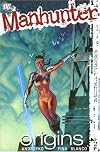
Author of Manhunter Vol. 3: Origins
Works by Fernando Blanco
Midnighter and Apollo #4 1 copy
Midnighter and Apollo #3 1 copy
Midnighter and Apollo #6 1 copy
Midnighter and Apollo #5 1 copy
Matemagia 1 copy
W0RLDTR33 #5 CVR A BLANCO 1 copy
Associated Works
La historia de la Síntesis de la Proteína — Translator, some editions — 1 copy
Tagged
Common Knowledge
There is no Common Knowledge data for this author yet. You can help.
Members
Reviews

Access a version of the below that includes illustrations on my blog.
I feel about this volume a lot like I did about the previous one: the pieces are there for greatness, but the book isn't achieving it.
Part of this is that it isn't capitalizing on its own premise. The idea of the book is that Manhunter kills the supercriminals the justice system can't take down, but in this volume, she doesn't fight anyone like that: just her own father (and goons hired by him) and a new villain (I think) show more named Sweeney Todd who's a superpowered serial killer. This kind of stuff could happen in any superhero book-- but I always want to see each book be itself as much as it can. There are hints that we're going somewhere, though, as Kate is now a defense attorney, and there's clearly something up with her most recent client, Doctor Psycho.
The other part is that the book vanishes up its own backside sometimes. I like my superhero stories to be outwardly focused: it they're not out there saving people from problems that would exist without them, it's kind of like, what's the point? (For example, when Superman only saves people from invasions by General Zod that wouldn't have happened without Superman's presence, that would seem to indicate the world is better off without Superman.) Unfortunately, this is a very inwardly focused book in all three of its stories.
The first story is a short, one-issue tale of where the components for Kate's costume came from. Most exciting for me was that her suit belonged to one of THE DARKSTARS! Clearly when I called it a "forgotten DC space heroes comic," I didn't know what I was talking about, because ten years on, it's providing the background for Manhunter. (This is around the same time to when the Darkstars appeared in Adam Strange, too.) Always nice to see the Darkstars in action, even if the story doesn't even cameo any preexisting ones. Also we learn how the staff of one of the earlier Manhunters made its way to Kate, but the story really seems to be there to explain how ex-Manhunter Mark Shaw is a recurring character in this series even though he was killed off back in the 1990s. (Clones, man, it's always clones.)
The second story, "Who's Your Daddy?" is, as I alluded to, about Kate's father emerging to kidnap her son so he can try to do some kind of transfusion. It's okay. I don't find Kate's personal history very compelling, and the story probably goes on a bit too long compared to how interesting it is. Like, three issues would be fine, but it wears out its welcome at five. I do like me some Director Bones, though-- you gotta love a mid-level bureaucrat who just happens to look like a living skeleton.
The final story, "Psychobabble," feels, as I said, incomplete. It starts out as Kate defending Doctor Psycho, but then this Sweeney Todd fellows turns up, and there is also a diversion featuring Kilg%re, an old Green Lantern villain, and then the whole thing really delves into Kate's backstory, showing how she's not a descendant of the Golden Age hero she thought she was, but two different Golden Age heroes. Honestly, this feels like a misstep-- I prefer when my unpowered heroes are ordinary people who decided to step up, not people with Secret Pasts and Destinies. It cheapens what I think is the appeal of the superhero genre.
The one-year jump that happens in the middle of the book is a bit jarring, mostly because you have to infer a little bit too much about Kate's changed circumstances. Why did she become a defense attorney? I think I know why, but it would be nice if someone came out and said it.
Still, there's a lot to like here. Like I said, Director Bones is fun, and the subplot about the reporter who's been stalking Kate resolves in an unexpected and darkly comic way. Javier Pina is a solid artist, the right one for this book, with a realistic, grounded artistic style. Cameron Chase ending up in a friends-with-benefits relationship with Kate's tech guy is also pretty funny. I'm not sure what I think about Kate's assistant Damon dating Todd, the son of the Golden Age Green Lantern-- feels pretty small world, though it does lead to some nice moments.
So we'll see where this new set-up goes: I can see potential in it, but Andreyko didn't exactly deliver on the potential of his first set-up, either.
Manhunter: « Previous in sequence | Next in sequence » show less
I feel about this volume a lot like I did about the previous one: the pieces are there for greatness, but the book isn't achieving it.
Part of this is that it isn't capitalizing on its own premise. The idea of the book is that Manhunter kills the supercriminals the justice system can't take down, but in this volume, she doesn't fight anyone like that: just her own father (and goons hired by him) and a new villain (I think) show more named Sweeney Todd who's a superpowered serial killer. This kind of stuff could happen in any superhero book-- but I always want to see each book be itself as much as it can. There are hints that we're going somewhere, though, as Kate is now a defense attorney, and there's clearly something up with her most recent client, Doctor Psycho.
The other part is that the book vanishes up its own backside sometimes. I like my superhero stories to be outwardly focused: it they're not out there saving people from problems that would exist without them, it's kind of like, what's the point? (For example, when Superman only saves people from invasions by General Zod that wouldn't have happened without Superman's presence, that would seem to indicate the world is better off without Superman.) Unfortunately, this is a very inwardly focused book in all three of its stories.
The first story is a short, one-issue tale of where the components for Kate's costume came from. Most exciting for me was that her suit belonged to one of THE DARKSTARS! Clearly when I called it a "forgotten DC space heroes comic," I didn't know what I was talking about, because ten years on, it's providing the background for Manhunter. (This is around the same time to when the Darkstars appeared in Adam Strange, too.) Always nice to see the Darkstars in action, even if the story doesn't even cameo any preexisting ones. Also we learn how the staff of one of the earlier Manhunters made its way to Kate, but the story really seems to be there to explain how ex-Manhunter Mark Shaw is a recurring character in this series even though he was killed off back in the 1990s. (Clones, man, it's always clones.)
The second story, "Who's Your Daddy?" is, as I alluded to, about Kate's father emerging to kidnap her son so he can try to do some kind of transfusion. It's okay. I don't find Kate's personal history very compelling, and the story probably goes on a bit too long compared to how interesting it is. Like, three issues would be fine, but it wears out its welcome at five. I do like me some Director Bones, though-- you gotta love a mid-level bureaucrat who just happens to look like a living skeleton.
The final story, "Psychobabble," feels, as I said, incomplete. It starts out as Kate defending Doctor Psycho, but then this Sweeney Todd fellows turns up, and there is also a diversion featuring Kilg%re, an old Green Lantern villain, and then the whole thing really delves into Kate's backstory, showing how she's not a descendant of the Golden Age hero she thought she was, but two different Golden Age heroes. Honestly, this feels like a misstep-- I prefer when my unpowered heroes are ordinary people who decided to step up, not people with Secret Pasts and Destinies. It cheapens what I think is the appeal of the superhero genre.
The one-year jump that happens in the middle of the book is a bit jarring, mostly because you have to infer a little bit too much about Kate's changed circumstances. Why did she become a defense attorney? I think I know why, but it would be nice if someone came out and said it.
Still, there's a lot to like here. Like I said, Director Bones is fun, and the subplot about the reporter who's been stalking Kate resolves in an unexpected and darkly comic way. Javier Pina is a solid artist, the right one for this book, with a realistic, grounded artistic style. Cameron Chase ending up in a friends-with-benefits relationship with Kate's tech guy is also pretty funny. I'm not sure what I think about Kate's assistant Damon dating Todd, the son of the Golden Age Green Lantern-- feels pretty small world, though it does lead to some nice moments.
So we'll see where this new set-up goes: I can see potential in it, but Andreyko didn't exactly deliver on the potential of his first set-up, either.
Manhunter: « Previous in sequence | Next in sequence » show less
An already good series continues to improve. I'm not a huge fan of DC jumping a year ahead (I feel it disrupted some books that didn't need the disruption), but this series generally handled it well. It's amazing to me that this series wasn't a bigger success for DC.
Although I thought this was a bit of a letdown, it actually wasn't that bad. It was nice to get a little bit of background on the makeup of Kate's equipment, but on the other hand, a lot more could have been done with that. And I enjoyed the story with Kate's father. It's nice that they didn't shy away from letting her be enough of a badass to kill him without having it be a huge emotional ordeal. Even the "One Year Later" stuff was handled reasonably well. I like having Kate switch from show more being a prosecutor to a defense attorney; the conflict between her day and night jobs should set up some interesting drama.
Still, I'm skeptical. I can't really put my finger on why, but I think I'm just afraid about the whole tendency to wrap every character into the DC family. Why does Kate have to turn out to be descended from a previous hero? And I could have done without the whole "I love the law" speech. The thing I've most enjoyed about Manhunter is that her motivations haven't come straight out of the superhero handbook. I like to think that she broke into that weapons locker for no better reason than that she was pissed off. show less
Still, I'm skeptical. I can't really put my finger on why, but I think I'm just afraid about the whole tendency to wrap every character into the DC family. Why does Kate have to turn out to be descended from a previous hero? And I could have done without the whole "I love the law" speech. The thing I've most enjoyed about Manhunter is that her motivations haven't come straight out of the superhero handbook. I like to think that she broke into that weapons locker for no better reason than that she was pissed off. show less
This issue mostly feels like a connection between the end of the previous story arc and whatever comes next, giving the characters a little breathing room to talk to each other. Unfortunately, the people available to talk to are obnoxious Colony leaders. (And ugh, Kate's dad is awful.) Not sure where the twist at the end is going!
You May Also Like
Associated Authors
Statistics
- Works
- 14
- Also by
- 15
- Members
- 130
- Popularity
- #155,341
- Rating
- 3.6
- Reviews
- 10
- ISBNs
- 2
- Languages
- 1