

Phil Jimenez
Author of The Invisibles, Vol. 4: Bloody Hell in America
About the Author
Series
Works by Phil Jimenez
The DC Comics Encyclopedia: The Definitive Guide to the Characters of the DC Universe (2004) 430 copies, 4 reviews
Wonder Woman Historia: The Amazons (2023) — Illustrator; Cover artist, some editions — 152 copies, 5 reviews
Teen Titans/Outsiders: The Death and Return of Donna Troy (2006) — Author; Illustrator — 106 copies, 5 reviews
The Essential Wonder Woman Encyclopedia: The Ultimate Guide to the Amazon Princess (2010) 78 copies, 1 review
Wonder Woman by George Pérez Omnibus, Volume Three (2018) — Illustrator; Contributor — 33 copies, 1 review
The Invisibles Vol. 1 #18 — Illustrator — 6 copies
The Invisibles Vol. 2 #08 — Illustrator — 5 copies
The Invisibles Vol. 2 #12 — Illustrator — 4 copies
The Invisibles Vol. 2 #11 — Illustrator — 4 copies
The Invisibles Vol. 2 #02 — Illustrator — 4 copies
The Invisibles Vol. 2 #13 — Illustrator — 4 copies
The Invisibles Vol. 2 #04 — Illustrator — 4 copies
The Invisibles Vol. 2 #05 — Illustrator — 4 copies
The Invisibles Vol. 2 #06 — Illustrator — 4 copies
The Invisibles Vol. 2 #07 — Illustrator — 4 copies
The Invisibles Vol. 2 #09 — Illustrator — 4 copies
The Invisibles Vol. 2 #10 — Illustrator — 4 copies
Wonder Woman, Vol. 2 #171 3 copies
Superwoman #1 3 copies
Wonder Woman, Vol. 2 #172 2 copies
Wonder Woman: Ztracený ráj 2 copies
Wonder Woman, Vol. 2 #173 2 copies
Savage Wolverine 3 - Gazap 1 copy
Wonder Woman, Vol. 2 #164 1 copy
Wonder Woman, Vol. 2 #165 1 copy
Otherworld # 4 1 copy
Wonder Woman, Vol. 2 #166 1 copy
Wonder Woman, Vol. 2 #181 1 copy
DC Universe: Rebirth 1 copy
Wonder Woman, Vol. 2 #175 1 copy
Wonder Woman, Vol. 2 #167 1 copy
Otherworld # 3 1 copy
Otherworld # 6 1 copy
Otherworld # 2 1 copy
The Return of Donna Troy — Author — 1 copy
Wonder Woman, Vol. 2 #177 1 copy
Wonder Woman, Vol. 2 #176 1 copy
Otherworld # 1 1 copy
Otherworld # 5 1 copy
Wonder Woman, Vol. 2 #174 1 copy
Otherworld # 7 1 copy
Associated Works
9-11: The World's Finest Comic Book Writers & Artists Tell Stories to Remember (2002) — Illustrator — 256 copies, 1 review
Guardians of the Galaxy Volume 3: Guardians Disassembled (2014) — Illustrator — 149 copies, 4 reviews
The Superior Foes of Spider-Man Volume 1: Getting the Band Back Together (2014) — Illustrator, some editions — 116 copies, 4 reviews
Wonder Woman: The Ultimate Guide to the Amazon Princess (2003) — Foreword, some editions — 108 copies, 5 reviews
Captain Marvel: Liberation Run Prose Novel (Novels of the Marvel Universe) (2019) — Cover artist, some editions — 70 copies, 4 reviews
Bad Doings & Big Ideas: A Bill Willingham Deluxe Edition (2011) — Illustrator — 48 copies, 3 reviews
Alpha Flight by Greg Pak and Fred Van Lente Volume 1 (2012) — Cover artist, some editions — 14 copies
The Multiversity Guidebook #1 (The Multiversity, #6) (2015) — Cover artist, some editions — 7 copies
Future Quest Presents #10 — Cover artist, some editions — 1 copy
Tagged
Common Knowledge
- Legal name
- Jimenez, Phil
- Birthdate
- 1970-07-12
- Gender
- male
- Education
- School of Visual Arts
- Nationality
- USA
- Birthplace
- Los Angeles, California, USA
- Associated Place (for map)
- California, USA
Members
Reviews
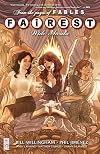
Summary: Ali Baba, the Prince of Thieves, is looting a war-ravaged city of the fallen Empire when he runs across a magic bottle. In it is not the genie that he'd hoped for, but instead a bottle imp who cannot grant wishes, but does have a special skill at knowing things. He leads Ali Baba to a goblin camp, wherein lies a powerful weapon: a sleeping princess who can only be awakened by a kiss. But once Ali Baba sneaks into the encampment, he finds not one but two sleeping women: Briar Rose, show more and the Snow Queen. He wakes the princess, but almost as soon as they escape from the goblins, they find themselves in the clutches of the also-freshly-awakened Snow Queen... the same Snow Queen responsible for centuries' worth of terrible deeds at the right hand of the Emperor himself.
This volume also includes a one-off noir detective piece in which Beast is out in the Mundy world, tracking a femme fatale who's a bit more fatale than the typical variety.
Review: The various spin-offs of the main Fables story arc have had varying degrees of success (at least, if we measure success in terms of how much I liked them), with Peter and Max among the best, and the recent Werewolves of the Heartland not really working for me at all. But I think one of the best things about the Fables universe in general is that it offers such seemingly endless possibilities for storytelling; that the universe is fertile and rich enough to provide material for the spin-offs in the first place. I'm not entirely sure how this volume overlaps with the main series - we've of course met Briar Rose and the Snow Queen before, but it's been long enough since I read the main arc that I don't entirely remember how they wound up in the goblin camp. (Or whether or not we even know how they got there, to tell the truth.) But the good news is, this story stands on its own quite well, and manages to present both a solid re-telling of the Sleeping Beauty origin story, as well as an interesting "modern-day" story in which the Fables from different stories overlap and interact. Plus, there's just as much action and humor and true love (or maybe just true love's kiss, which is a whole different matter) as you could wish, plus a Firefly joke or two thrown in for good measure.
I also absolutely loved the artwork in this volume. There's some creative panelling and great use of color, and the action sequences and battle scenes in particular are very creatively drawn. But most of all, I absolutely love the issue covers. I would hang a framed print of the picture with Sleeping Beauty and the spinning wheel in my house without a second's hesitation. Just beautiful. 4 out of 5 stars.
Recommendation: This volume is perfectly understandable without being up-to-date on the main Fables series, although fans of one are obviously going to enjoy the other, and fans of fairy tales in any form should certainly be reading these books. show less
This volume also includes a one-off noir detective piece in which Beast is out in the Mundy world, tracking a femme fatale who's a bit more fatale than the typical variety.
Review: The various spin-offs of the main Fables story arc have had varying degrees of success (at least, if we measure success in terms of how much I liked them), with Peter and Max among the best, and the recent Werewolves of the Heartland not really working for me at all. But I think one of the best things about the Fables universe in general is that it offers such seemingly endless possibilities for storytelling; that the universe is fertile and rich enough to provide material for the spin-offs in the first place. I'm not entirely sure how this volume overlaps with the main series - we've of course met Briar Rose and the Snow Queen before, but it's been long enough since I read the main arc that I don't entirely remember how they wound up in the goblin camp. (Or whether or not we even know how they got there, to tell the truth.) But the good news is, this story stands on its own quite well, and manages to present both a solid re-telling of the Sleeping Beauty origin story, as well as an interesting "modern-day" story in which the Fables from different stories overlap and interact. Plus, there's just as much action and humor and true love (or maybe just true love's kiss, which is a whole different matter) as you could wish, plus a Firefly joke or two thrown in for good measure.
I also absolutely loved the artwork in this volume. There's some creative panelling and great use of color, and the action sequences and battle scenes in particular are very creatively drawn. But most of all, I absolutely love the issue covers. I would hang a framed print of the picture with Sleeping Beauty and the spinning wheel in my house without a second's hesitation. Just beautiful. 4 out of 5 stars.
Recommendation: This volume is perfectly understandable without being up-to-date on the main Fables series, although fans of one are obviously going to enjoy the other, and fans of fairy tales in any form should certainly be reading these books. show less

This is branded as a Wonder Woman comic, but Wonder Woman does not appear here. It goes back to the origins of the Amazons, exploring how the tribe of warrior women that ultimately gave birth to Wonder Woman came into existence. Skimming a timeline of DC history, I can see this ties together and dramatizes some preexisting material, but it totally stands on its own, and doesn't feel like a continuity patch or origin story. Indeed, the greatest thing you can say about it (and I speak this as show more someone who reads a lot of tie-in and franchise fiction) is that it transcends its origins as a tie-in comic. I would feel comfortable handing this to someone who doesn't enjoy superhero comics but does like graphic novels and wants to read a bold, dynamic take on Greek mythology, because that's what this is. It's not a rewriting of George Pérez (or whomever), it's a new myth designed to take its place among old ones.
The story starts with the Greek goddesses, who reach their breaking point with the ways men treat women, but find the gods unwilling to do anything about it, and so take things into their own hands. It then follows the doings of the gods, especially Hera, who refuses to overtly move against her husband's will, in parallel with the rise of the Amazon tribes, and a would-be human midwife who ends up encountering the Amazons as they travel across the world slaughtering men who hurt women, and then into a war where the gods attempt to eliminate the Amazons. It's an epic story, but the presence of Hippolyta, the midwife, keeps it grounded; I enjoyed her trajectory very much.
More importantly, though, writer Kelly Sue DeConnick has three top-notch artistic collaborators here. Phil Jimenez's work I honestly don't know that well (aside from event comics like Infinite Crisis and Dark Cybertron, which rarely showcase an artist at their best), but he had a well-regarded run as a writer and artist on Wonder Woman; here, he turns in some brilliant and beautiful two-page spreads, one of jars(!), but in particular, a few depicting Hippolyta's desperate pursuit of a lost infant. Gorgeous, heartbreaking stuff. Gene Ha I've liked since his Top Ten days, but this is probably career best work for him, his attention to character really capturing the struggle and emotions of Hippolyta as she seeks to become an Amazon. And Nicola Scott I've thought a solid artist since her debut on Birds of Prey; here, she knocks it out of the park with the war between the Amazons and the gods. For all three artists, the art is beautifully colored, and the deluxe hardcover collection really shows it off to its utmost; I don't always buy Hugo finalists outside of the category of Best Novel, but I am so glad I'm not reading this comic on my Kindle Fire.
If I had a complaint, it would be that I found the parameters of Hippolyta's key choice in the last issue kind of confusing and rushed, but I'm sure on a reread (this is a tough book to read, but not in a bad way; sometimes it's just nice to read a comic that makes you work a little harder than normal) it would hold up fine. The backmatter tease two more sets of three chapters, but even if we don't get a trilogy of trilogies for Wonder Woman Historia, this will hold up as a tremendous work about what men do to women, and what women do to get away from it. show less
The story starts with the Greek goddesses, who reach their breaking point with the ways men treat women, but find the gods unwilling to do anything about it, and so take things into their own hands. It then follows the doings of the gods, especially Hera, who refuses to overtly move against her husband's will, in parallel with the rise of the Amazon tribes, and a would-be human midwife who ends up encountering the Amazons as they travel across the world slaughtering men who hurt women, and then into a war where the gods attempt to eliminate the Amazons. It's an epic story, but the presence of Hippolyta, the midwife, keeps it grounded; I enjoyed her trajectory very much.
More importantly, though, writer Kelly Sue DeConnick has three top-notch artistic collaborators here. Phil Jimenez's work I honestly don't know that well (aside from event comics like Infinite Crisis and Dark Cybertron, which rarely showcase an artist at their best), but he had a well-regarded run as a writer and artist on Wonder Woman; here, he turns in some brilliant and beautiful two-page spreads, one of jars(!), but in particular, a few depicting Hippolyta's desperate pursuit of a lost infant. Gorgeous, heartbreaking stuff. Gene Ha I've liked since his Top Ten days, but this is probably career best work for him, his attention to character really capturing the struggle and emotions of Hippolyta as she seeks to become an Amazon. And Nicola Scott I've thought a solid artist since her debut on Birds of Prey; here, she knocks it out of the park with the war between the Amazons and the gods. For all three artists, the art is beautifully colored, and the deluxe hardcover collection really shows it off to its utmost; I don't always buy Hugo finalists outside of the category of Best Novel, but I am so glad I'm not reading this comic on my Kindle Fire.
If I had a complaint, it would be that I found the parameters of Hippolyta's key choice in the last issue kind of confusing and rushed, but I'm sure on a reread (this is a tough book to read, but not in a bad way; sometimes it's just nice to read a comic that makes you work a little harder than normal) it would hold up fine. The backmatter tease two more sets of three chapters, but even if we don't get a trilogy of trilogies for Wonder Woman Historia, this will hold up as a tremendous work about what men do to women, and what women do to get away from it. show less

(Nothing quite inspires confidence like seeing that it took fifteen artists to draw a seven-issue miniseries.)
Infinite Crisis is a sequel to Crisis on Infinite Earths, twenty years on, in addition to being mired in the then-current DC continuity. In some ways, it feels very much like an attempt to replicate the success of its predecessor: there are beats here straight out of that story, down to a Flash sacrificing himself to (temporarily) beat the villain by running superfast, ending with show more some continuity alterations, and a completely gratuitous attack by every villain. But it doesn't quite work as well, and I'm hard-pressed to explain why, as most of what it does is what the original does. But what worked in the hands of Marv Wolfman and George Pérez doesn't always come across when done by Geoff Johns and Phil Jimenez.
Part of my difficulty with Infinite Crisis is that the character threads are muddled and unclear. Supposedly (you can see them on the cover) this story is about the trinity of Batman, Wonder Woman, and Superman, but that doesn't always come across. A theme of the Countdown to Infinite Crisis materials was Batman's lack of trust, and this is maybe the most successful of the strands: Batman has a conversation with the Superman of Earth-Two about their much more congenial relationship, and by the end of the story, he's recruited a gang of superheroes to help him out, including Green Arrow. Another theme of Countdown was Wonder Woman's willingness to kill, but that's addressed incredibly poorly here. First off, Batman and Superman still fail to account for the fact that the situation in The OMAC Project was perfectly constructed to make killing her only option; neither of them could have done better. Secondly, there's not really a reason or development that would lead to her stepping back on that philosophy here; just all of a sudden she's like, no, I could never do that again! Finally, Sacrifice set up this notion that Superman was so powerful he was starting to scare himself. Not even mentioned in Infinite Crisis.
Interestingly, this story uses the same notion that Marv Wolfman seeded in his own return visits to the original Crisis (see especially the 2005 novelization): that the New Earth that came into existence at the end of the Crisis was fundamentally darker, with heroes who were less heroic. But it's kind of unclear why or to what end this thread is introduced, because this story is just as guilty of it as any other: the Superboy of Earth-Prime kills minor characters by punching their heads off! I mean, seriously, I don't want to read that. If this story's violence is just as gratuitous as all the others', it's impossible to take its critiques seriously.
I hate the propensity of these crossovers to kill off minor characters to prove the situation is serious. The Phantom Lady introduced in Action Comics Weekly is killed, for example; she wasn't my favorite, but she was fun enough. But each of these characters probably is someone's favorite. I think the reason it bothers me is the feeling they're being killed off because they supposedly aren't anyone's favorite. I'm okay with the Flash being killed off because I know the creators probably like him, and it's an actual sacrifice for them to build up their stakes by killing their character. But killing a character you know the writer thinks is worthless doesn't build the stakes; killing off Phantom Lady doesn't make me think Geoff Johns will do in anyone important.
Some of my problems are down to choppiness-- the sacrifice of Barry Allen has a whole issue in the original Crisis. That of Wally West is a quick, sudden moment here. That made me care about Barry despite knowing nothing about him; I like Wally and this did nothing for me. Or the giant villain attack on Metropolis has little time devoted to it (it's more clearly explicated in the Infinite Crisis Companion) and thus comes across as super-random: all of a sudden it's happening, all of a sudden it's not. And when Alexander Luthor mentions how the continuity's changed: ugh, just ugh. It's the most forced, unnatural thing you could imagine. And so pointless. The original Crisis was a bit navel-gazing, sure, but it cleared the decks of a cumbersome storytelling mechanism. This just introduces some changes for the sake of it, like Zero Hour did.
Perhaps the fatal weakness are the villains. The Superman of Earth-Two is only meant to be a temporary villain, but even then it's kind of hard to believe that he would act the way he does, at least for as long as he does. The Superboy of Earth-Prime is too much of a spoiled brat: that kind of villain is never interesting. And why does Alexander Luthor want to make a perfect world? I'm not honestly very sure. I did like the explanations of how all the Countdown miniseries tied together, though I felt like The OMAC Project tie-in was the least successful. (what did Alexander gain from making Brother Eye sentient or creating the OMAC army or, especially, giving control to Maxwell Lord?) But it especially nicely builds off the goings-on in Villains United and Rann-Thanagar War. The best villain is, of course, our Lex Luthor: no one ever gets the upper hand on him for long, not even his son from an alternate Earth.
The moments this book works best are the ones it slows down and is about something for minute. Batman's conversation with the Superman of Earth-Two. Booster Gold's desperate attempts to save the past in the name of Blue Beetle. The Wonder Woman of Earth-Two leaving Olympus to talk to New Earth's Wonder Woman. Power Girl discovering she does have a meaningful past. The emphasis on Nightwing as the world's most moral man. The trinity chatting before they split up on their various journeys. The assemblage of heroes who will watch the world while they're gone (including ones from Seven Soldiers).
And, I'll admit, I loved that Luthor's vibrational fork was built out of the corpse of the Anti-Monitor.
DC Comics Crises: « Previous in sequence | Next in sequence » show less
Infinite Crisis is a sequel to Crisis on Infinite Earths, twenty years on, in addition to being mired in the then-current DC continuity. In some ways, it feels very much like an attempt to replicate the success of its predecessor: there are beats here straight out of that story, down to a Flash sacrificing himself to (temporarily) beat the villain by running superfast, ending with show more some continuity alterations, and a completely gratuitous attack by every villain. But it doesn't quite work as well, and I'm hard-pressed to explain why, as most of what it does is what the original does. But what worked in the hands of Marv Wolfman and George Pérez doesn't always come across when done by Geoff Johns and Phil Jimenez.
Part of my difficulty with Infinite Crisis is that the character threads are muddled and unclear. Supposedly (you can see them on the cover) this story is about the trinity of Batman, Wonder Woman, and Superman, but that doesn't always come across. A theme of the Countdown to Infinite Crisis materials was Batman's lack of trust, and this is maybe the most successful of the strands: Batman has a conversation with the Superman of Earth-Two about their much more congenial relationship, and by the end of the story, he's recruited a gang of superheroes to help him out, including Green Arrow. Another theme of Countdown was Wonder Woman's willingness to kill, but that's addressed incredibly poorly here. First off, Batman and Superman still fail to account for the fact that the situation in The OMAC Project was perfectly constructed to make killing her only option; neither of them could have done better. Secondly, there's not really a reason or development that would lead to her stepping back on that philosophy here; just all of a sudden she's like, no, I could never do that again! Finally, Sacrifice set up this notion that Superman was so powerful he was starting to scare himself. Not even mentioned in Infinite Crisis.
Interestingly, this story uses the same notion that Marv Wolfman seeded in his own return visits to the original Crisis (see especially the 2005 novelization): that the New Earth that came into existence at the end of the Crisis was fundamentally darker, with heroes who were less heroic. But it's kind of unclear why or to what end this thread is introduced, because this story is just as guilty of it as any other: the Superboy of Earth-Prime kills minor characters by punching their heads off! I mean, seriously, I don't want to read that. If this story's violence is just as gratuitous as all the others', it's impossible to take its critiques seriously.
I hate the propensity of these crossovers to kill off minor characters to prove the situation is serious. The Phantom Lady introduced in Action Comics Weekly is killed, for example; she wasn't my favorite, but she was fun enough. But each of these characters probably is someone's favorite. I think the reason it bothers me is the feeling they're being killed off because they supposedly aren't anyone's favorite. I'm okay with the Flash being killed off because I know the creators probably like him, and it's an actual sacrifice for them to build up their stakes by killing their character. But killing a character you know the writer thinks is worthless doesn't build the stakes; killing off Phantom Lady doesn't make me think Geoff Johns will do in anyone important.
Some of my problems are down to choppiness-- the sacrifice of Barry Allen has a whole issue in the original Crisis. That of Wally West is a quick, sudden moment here. That made me care about Barry despite knowing nothing about him; I like Wally and this did nothing for me. Or the giant villain attack on Metropolis has little time devoted to it (it's more clearly explicated in the Infinite Crisis Companion) and thus comes across as super-random: all of a sudden it's happening, all of a sudden it's not. And when Alexander Luthor mentions how the continuity's changed: ugh, just ugh. It's the most forced, unnatural thing you could imagine. And so pointless. The original Crisis was a bit navel-gazing, sure, but it cleared the decks of a cumbersome storytelling mechanism. This just introduces some changes for the sake of it, like Zero Hour did.
Perhaps the fatal weakness are the villains. The Superman of Earth-Two is only meant to be a temporary villain, but even then it's kind of hard to believe that he would act the way he does, at least for as long as he does. The Superboy of Earth-Prime is too much of a spoiled brat: that kind of villain is never interesting. And why does Alexander Luthor want to make a perfect world? I'm not honestly very sure. I did like the explanations of how all the Countdown miniseries tied together, though I felt like The OMAC Project tie-in was the least successful. (what did Alexander gain from making Brother Eye sentient or creating the OMAC army or, especially, giving control to Maxwell Lord?) But it especially nicely builds off the goings-on in Villains United and Rann-Thanagar War. The best villain is, of course, our Lex Luthor: no one ever gets the upper hand on him for long, not even his son from an alternate Earth.
The moments this book works best are the ones it slows down and is about something for minute. Batman's conversation with the Superman of Earth-Two. Booster Gold's desperate attempts to save the past in the name of Blue Beetle. The Wonder Woman of Earth-Two leaving Olympus to talk to New Earth's Wonder Woman. Power Girl discovering she does have a meaningful past. The emphasis on Nightwing as the world's most moral man. The trinity chatting before they split up on their various journeys. The assemblage of heroes who will watch the world while they're gone (including ones from Seven Soldiers).
And, I'll admit, I loved that Luthor's vibrational fork was built out of the corpse of the Anti-Monitor.
DC Comics Crises: « Previous in sequence | Next in sequence » show less
Now that the Jack of Fables spinoff has ended, I was intrigued by this. I had fairly good expectations for this book, and wow, these expectations were EXCEEDED. I was wondering what had happened to Lumi, given that Jack of Fables ended without telling us what had happened to her. Well, wonder no more - her fate is revealed in here as well as that of Sleeping Beauty, another character many of us have been wondering about. The artwork is stunning - STUNNING - and the writing is just bloody show more brilliant with how the story is presented, the details, the dialogue, and so on. I'm not kidding. If I could give this book ten stars, you better believe I would! If the next book is half as good as this one (and it is supposed to be about Rapunzel) then I will be happy. show less
Lists
Awards


You May Also Like


Associated Authors
Statistics
- Works
- 113
- Also by
- 59
- Members
- 4,629
- Popularity
- #5,443
- Rating
- 3.8
- Reviews
- 103
- ISBNs
- 99
- Languages
- 7
- Favorited
- 1