
Pete Seeger (1919–2014)
Author of Abiyoyo
About the Author
Image credit: World Telegram & Sun photo by Fred Palumbo, 1955 (Library of Congress Prints and Photographs Division, LC-USZ62-116961)
Works by Pete Seeger
How to Play the 5-string Banjo: A Manual for Beginners, 3rd Revised Edition (1948) 123 copies, 1 review
Carry It On!: A History in Song and Picture of the Working Men and Women of America (1985) 75 copies, 1 review
Everybody Says Freedom: A History of the Civil Rights Movement in Songs and Pictures (1990) 52 copies
Henscratches and Flyspecks: How to Read Melodies from Songbooks in Twelve Confusing Lessons. (1973) 25 copies
Pete Seeger: The Storm King: Stories, Narratives, Poems: Spoken Word Set to a World of Music (2013) 16 copies, 2 reviews
We Shall Overcome / Pete Seeger Recorded Live At His Historic Carnegie Hall Concert 1963 (1989) 10 copies
American favorite ballads. Vol. 2 4 copies
Dangerous Songs 3 copies
Pete Seeger Banjo Pack: Includes How to Play the 5-String Banjo book and How to Play the 5-String Banjo DVD (Homespun Tapes) (2010) 3 copies
Ao Vivo Em Lisboa (Live in Lisbon) 3 copies
Together in Concert 3 copies
Abiyoyo by Pete Seeger (1994-01-01) 3 copies
The Goofing-Off Suite - Instrumental Pieces for 5 String Banjo and Guitar and Mandolin (1959) 3 copies
How Can I Keep From Singing 2 copies
Pete Seeger: A Link In The Chain 2 copies
American Play Parties (78) 2 copies
Pioneer of Folk 2 copies
Love songs for friends & foes 2 copies
Pete Seeger & Arlo Guthrie - Pete Seeger & Arlo Guthrie Together In Concert - Reprise Records - REP 64023 (1975) 1 copy
Greatest Hits 1 copy
Road to Eliat 1 copy
If I had a hammer [simplified score] : the hammer song — Composer — 1 copy
Warehouse-Life: Eine satirische Chor-Revue in 10 Abteilungen. soloists, speakers, mixed choir (SATB) and combo. (1976) 1 copy
Henscratches Flyspecks 1 copy
Morgenlied: "Verschwunden ist die finstre Nacht". gemischter Chor. (Schott's Chorblätter) (1976) 1 copy
Sessions 1 copy
I Can See a New Day (Live) 1 copy
Pete Seeger "live in '65" 1 copy
The folk singer Pete Seeger 1 copy
Pete Seeger and Sonny Terry 1 copy
Sing out! hootenanny 1 copy
The Nativity by Sholem Asch 1 copy
Pete Seeger ~ Singalong ~ CD 1 copy
Sing Out with Pete! 1 copy
For Kids & Just Plain Folks 1 copy
Folk Songs 1 copy
American Folk Songs For... 1 copy
Incompleat Folk Singer, The 1 copy
A Link in the Chain 1 copy
If I Had A Song... 1 copy
The Bitter and the Sweet 1 copy
Genius of Folk 1 copy
Vision Revisited 1 copy
Bitter & The Sweet 1 copy
Associated Works
A Patriot's Handbook: Songs, Poems, Stories, and Speeches Celebrating the Land We Love (2003) — some editions — 567 copies, 5 reviews
The Rolling Stone Book of the Beats: The Beat Generation and American Culture (1999) — Contributor — 180 copies, 2 reviews
War No More: Three Centuries of American Antiwar and Peace Writing (2016) — Contributor — 111 copies, 2 reviews
Thus Spake the Corpse: An Exquisite Corpse Reader, 1988-1998: Volume 2 - Fictions, Travels & Translations (1999) — Contributor — 45 copies
The power of goodness : art and stories for a culture of peace (2016) — Foreword, some editions — 42 copies, 3 reviews
Hudson River Journey: Images from Lake Tear of the Clouds to New York Harbor (2003) — Foreword — 23 copies
Black and white;: A song that is a story about freedom to go to school together (2007) — Introduction, some editions — 10 copies
A Tribute to Woody Guthrie — Performer — 6 copies
Mural Manual: How to Paint Murals for the Classroom, Community Center, and Street Corner (1975) — Introduction — 3 copies
Murder Ballads: 15 Original Tracks That Inspired Nick Cave and the Bad Seeds (2017) — Contributor — 3 copies
Last Night (1998 Film) — Contributor — 2 copies
Tagged
Common Knowledge
- Canonical name
- Seeger, Pete
- Legal name
- Seeger, Peter
- Birthdate
- 1919-05-03
- Date of death
- 2014-01-27
- Gender
- male
- Education
- Harvard University
- Occupations
- singer-songwriter
activist
folklorist
environmental activist - Organizations
- Archives of American Folk Music
The Almanac Singers
The Weavers
Hudson River Sloop Clearwater
Great Hudson River Revival - Awards and honors
- National Medal of Arts (1994)
Kennedy Center Honors (1994) - Relationships
- Seeger, Charles (father)
Seeger, Peggy (half-sister)
Seeger, Mike (half-brother)
Seeger, Alan (uncle)
Hille, Waldemar (friend)
Seeger, Ruth Crawford (stepmother) (show all 9)
Seeger, Penny (half-sister)
Seeger, Toshi (wife)
The Weavers (folk music quartet) - Nationality
- USA
- Birthplace
- Patterson, New Jersey, USA
- Places of residence
- Fishkill, New York, USA
Beacon, New York, USA - Place of death
- New York, New York, USA
- Burial location
- cremated
- Associated Place (for map)
- New York, USA
Members
Reviews
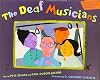
I thoroughly enjoyed this book for a few reasons. First, I like how the author used and showcased onomatopoeia throughout the book. On the first page the author writes the sounds “Plink-a-plink-BOMP-plink-plink”, to have the readers imagine what a piano sounds like. On top of this, the author puts these sounds in a multicolored and large font to stand out in the text. It was an interesting and eye-catching feature.
Secondly, I liked the plot of this story. Lee (the main character), was a show more piano player in a jazz band until he suddenly went deaf. His band kicked him out, and Lee was forced to find somewhere else to go. He went to a school for the deaf and learned how to play music by utilizing sign language. He did this on the subway every day and soon he formed an entirely new band. I think for the author to juxtapose the concept of a deaf man playing and “hearing” music to a non-deaf musician was brilliant. This shed light on how the deaf community functions and how they are not entirely crippled because of their disability.
The overall message in this story is that as long as an individual perseveres, there is nothing they cannot accomplish. Lee worked hard to learn sign language so he could once again do the thing he loves most in the world, play music. show less
Secondly, I liked the plot of this story. Lee (the main character), was a show more piano player in a jazz band until he suddenly went deaf. His band kicked him out, and Lee was forced to find somewhere else to go. He went to a school for the deaf and learned how to play music by utilizing sign language. He did this on the subway every day and soon he formed an entirely new band. I think for the author to juxtapose the concept of a deaf man playing and “hearing” music to a non-deaf musician was brilliant. This shed light on how the deaf community functions and how they are not entirely crippled because of their disability.
The overall message in this story is that as long as an individual perseveres, there is nothing they cannot accomplish. Lee worked hard to learn sign language so he could once again do the thing he loves most in the world, play music. show less
The book, The Deaf Musicians was very inspirational. The big picture of the book was to not let anything stop you from doing what you love. This book has the power to motivate children to do what they enjoy regardless of what other people think. It allows readers to know they can overcome adversity. I enjoyed reading this book because of the character development and person against person conflict. The character, Lee, started off as a confident musician who loved what he did. However, when show more his bandmates found out that he was losing hearing he thought he would never be able to play music again. The author showed Lee evolve from a person who felt like he lost who he was to someone who found himself again. He learned that he could overcome his hearing loss and still do what he loves. He was no longer insecure about becoming deaf. Instead, he was proud and continued making music. The conflict between Lee and the band leader also helped develop the story. The band leader told him nobody would listen to a deaf man play music, and at first, Lee felt defeated. That did not stop him though. He proved him wrong and the band leader realized that being deaf does not limit your ability to do things. This conflict developed the big picture, and it made the story very moving for readers. show less

It was so good to hear the voice and thoughts of this iconic singer and activist. He shared a bit of his personal story, which I knew nothing about, and touched on so many subjects that I had known or shared. He often gives credit to others who have helped him during his life, e.g.: The Smothers Brothers who took a risk and insisted on having the blacklisted Pete sing on their show without editing. In consequence, their TV show was shut down. The writer of the song 'Tsimme' and his hopes for show more Jewish/Palestinian open dialog.
However, based on current awareness of racial bias, Pete's spur-of-the-moment comments fall short in a few places. Most notably was his talk about the creation of the Cherokee alphabet by Sequoyah, which ended with "and of course, when we discovered California and the redwoods, they were named after him, which is why he is famous." And the mention of the Cherokee Trail of Tears, which he had to keep guessing at the numbers of Cherokee involved and dead, and which ended with a white man "saving" a Cherokee woman & child from deportation. I know his point was that the actions of just common people can be important, but it ended feeling like the Cherokee were without agency. His talk about the banjo also seemed to focus on how the white peopel developed it's musicality and brought the instrument to prominence after they learned about it from the slaves (who, apparently, promptly stopped playing it)
The edition I listened to could benefit from some sound editing: sometimes I could barely hear and other times (especially when the title was announced by someone) it was too loud. Other than that, the mix of talk, instruments, and singing was generally fine. show less
However, based on current awareness of racial bias, Pete's spur-of-the-moment comments fall short in a few places. Most notably was his talk about the creation of the Cherokee alphabet by Sequoyah, which ended with "and of course, when we discovered California and the redwoods, they were named after him, which is why he is famous." And the mention of the Cherokee Trail of Tears, which he had to keep guessing at the numbers of Cherokee involved and dead, and which ended with a white man "saving" a Cherokee woman & child from deportation. I know his point was that the actions of just common people can be important, but it ended feeling like the Cherokee were without agency. His talk about the banjo also seemed to focus on how the white peopel developed it's musicality and brought the instrument to prominence after they learned about it from the slaves (who, apparently, promptly stopped playing it)
The edition I listened to could benefit from some sound editing: sometimes I could barely hear and other times (especially when the title was announced by someone) it was too loud. Other than that, the mix of talk, instruments, and singing was generally fine. show less
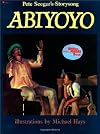
Based on a South African folktale, a young boy and his father manage to outwit a giant (who reminded me rather a lot of Golem) who has risen from the setting sun. The boy has always been clever, and the father, a magician, has a knack for playing tricks on people and making things *poof* into thin air! The tale is told through a song, “Abiyoyo”, which has a lighthearted, almost goofy, lilting rhythm. The illustrations are vivid and feel folksy, with slightly cartoonish features.
Lists
Awards


You May Also Like


Associated Authors
Statistics
- Works
- 188
- Also by
- 31
- Members
- 4,238
- Popularity
- #5,932
- Rating
- 4.2
- Reviews
- 174
- ISBNs
- 107
- Languages
- 4
- Favorited
- 3

