
Woody Guthrie (1912–1967)
Author of Bound for Glory
About the Author
Woody Guthrie was born in Oklahoma and traveled this whole country over -- not by jet or motorcycle, but by boxcar, thumb, and foot. During the journey of discovery that was his life, he composed and sang words and music that have become a national heritage. His songs, however, are but part of his show more legacy. Behind him Woody Guthrie left a remarkable autobiography that vividly brings to life both his vibrant personality and a vision of America we cannot afford to let die. show less
Series
Works by Woody Guthrie
CALIFORNIA TO THE NEW YORK ISLAND: Being a pocketful of Brags, Blues, Bad-Men Ballads, Love Songs, Okie Laments. (1960) 11 copies
Library of Congress Recordings 8 copies
A Tribute to Woody Guthrie 6 copies
Original Vision 5 copies
BOUND FOR GLORY: 101 Woody Guthrie Songs, Including All the Songs from "Bound for Glory." (1977) 5 copies
Woody Guthrie 4 copies
Pastures of Plenty 4 copies
The Ultimate Collection 2 copies
This Land Is Your Land 1 2 copies
Deja Vu - Retro Gold Collection 2 copies
Woody Guthrie Folk Songs 2 copies
Dieses Land ist mein Land - Bound for Glory . Mit Zeichnungen des Autors und einem Vorwort von Studs Terkel (1977) 2 copies
Immortal Woody Guthrie 2 copies
Struggle 2 copies
Dust Bowl Ballads, Volume 2 1 copy
My Dusty Road 1 copy
The Ultimate Collection 1 copy
CON DESTINO A LA GLORIA 1 copy
Legends 1 copy
The Legendary Woody Guthrie 1 copy
American Folk Legend 1 copy
Deja Vu Retro Gold 1 copy
Modern Times 1 copy
Hard Travelin' 1 copy
Dies Land ist mein Land 1 copy
The Ultimate Collection 1 copy
Woody Guthrie Story 1 copy
"Lindbergh" 1 copy
"Cocaine Blues" 1 copy
"This Land Is My Land" 1 copy
"Talking Hard Work" 1 copy
"Talking Fishing Blues" 1 copy
"Talking Columbia" 1 copy
"Miner's Song" 1 copy
"Jesus Christ" 1 copy
"House of the Rising Sun" 1 copy
"I Ain't Got Nobody" 1 copy
"Car Song" 1 copy
American Folk Music 1 copy
"Guitar Blues" 1 copy
Worried Man Blues 1 copy
Woody Guthrie Vol.2 1 copy
One of a Kind 1 copy
Dust Bowl Ballads, Volume 1 1 copy
Talking Dust Bowl 10" 1 copy
Early Years 1 copy
We Ain't Down Yet 1 copy
Associated Works
American Poetry: The Twentieth Century, Volume Two: E. E. Cummings to May Swenson (2000) — Contributor — 444 copies, 1 review
Carry It On!: A History in Song and Picture of the Working Men and Women of America (1985) — Contributor — 75 copies, 1 review
Years of Protest: A Collection of American Writings of the 1930's (1967) — Contributor — 44 copies, 1 review
Lapham's Quarterly - Lines of Work: Volume IV, Number 2, Spring 2011 (2011) — Contributor — 32 copies, 2 reviews
Uncut Presents: Drifter's Escape (The Music That Inspired Bob Dylan's John Wesley Harding And Nashville Skyline) (February 2008) (2008) — Contributor — 4 copies
Tagged
Common Knowledge
- Canonical name
- Guthrie, Woody
- Legal name
- Guthrie, Woodrow Wilson
- Birthdate
- 1912-07-14
- Date of death
- 1967-10-03
- Gender
- male
- Occupations
- singer
songwriter - Relationships
- Guthrie, Arlo (son)
- Cause of death
- Huntington's disease
- Nationality
- USA
- Birthplace
- Okemah, Oklahoma, USA
- Places of residence
- Pampa, Texas, USA
- Place of death
- New York, New York, USA
- Burial location
- Okemah, Okfuskee County, Oklahoma, USA
- Map Location
- USA
Members
Reviews
Bound for Glory: The Hard-Driving, Truth-Telling, Autobiography of America's Great Poet-Folk Singer (Plume) by Woody Guthrie
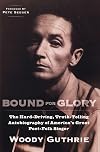
Woody Guthrie is a rare and remarkable storyteller, I already knew that from his songs. Now, my life is enriched by having read his wide-brimmed memoir. Thanks to Bob Dylan for the recommendation in his own autobiography, Chronicles: Volume One.
In Bound For Glory, published in 1943, Woody's words leap and tumble off the page with poetic immediacy, humor, and his hometown Oklahoma dialect of the times that grabbed hold and shook me, as he captivates with a casade of tales from his youth show more through the beginning of his fame as THE Woody Guthrie we all know: uplifting, rock solid folksinger of his day and influencer of generations to come.
Guthrie was raised during the depression and word paints and illustates portraits of this colorful and challenging slice of life through his telling of his family life and boyhood, which was full of love, adventure, angst, and tragedy. His beloved sister Clara died from a fire in childhood. After that jarring loss, his mother went though searing emotional anguish as a parent who survived the catastrophic death of her child. Her sad story does not end well. Eventually, young Woody, (who was often inducted against his wishes by his peers to rock and fist fight because he was strong and it was a sporting spectacle to see), set out from home early. He traveled like a hobo by train, got caught in the rain, spoke Oakie, not plain, and sang his way to fame.
The narrative packs in social commentary on race relations, injustice, friendship, labor and class struggles, and takes biting jabs at the pathetic political rouse in this country. I fell in love with this the portrayal of Guthrie as an innocent wee kid, a rascally boy, and hung on to his every word as the pages spin out his evocative evolution into a young man of conviction, intelligence, talent and integrity who is jostled by life and flooded with down-to-earth humanity.
He says, "... with a song, you sing it out, and it soaks that in people's ears and they all jump up and down and sing it with you, and then when you quit singing, it's gone, and you get a job singing it again. On top of that, you can sing out what you think. You can tell tall tales of all sorts to put your idea across to the other fellow." Well, he put his ideas across to me all right, and I will always remember my dad singing out his songs. Guthrie has sort of seeped into my soul. I recommend this book. show less
In Bound For Glory, published in 1943, Woody's words leap and tumble off the page with poetic immediacy, humor, and his hometown Oklahoma dialect of the times that grabbed hold and shook me, as he captivates with a casade of tales from his youth show more through the beginning of his fame as THE Woody Guthrie we all know: uplifting, rock solid folksinger of his day and influencer of generations to come.
Guthrie was raised during the depression and word paints and illustates portraits of this colorful and challenging slice of life through his telling of his family life and boyhood, which was full of love, adventure, angst, and tragedy. His beloved sister Clara died from a fire in childhood. After that jarring loss, his mother went though searing emotional anguish as a parent who survived the catastrophic death of her child. Her sad story does not end well. Eventually, young Woody, (who was often inducted against his wishes by his peers to rock and fist fight because he was strong and it was a sporting spectacle to see), set out from home early. He traveled like a hobo by train, got caught in the rain, spoke Oakie, not plain, and sang his way to fame.
The narrative packs in social commentary on race relations, injustice, friendship, labor and class struggles, and takes biting jabs at the pathetic political rouse in this country. I fell in love with this the portrayal of Guthrie as an innocent wee kid, a rascally boy, and hung on to his every word as the pages spin out his evocative evolution into a young man of conviction, intelligence, talent and integrity who is jostled by life and flooded with down-to-earth humanity.
He says, "... with a song, you sing it out, and it soaks that in people's ears and they all jump up and down and sing it with you, and then when you quit singing, it's gone, and you get a job singing it again. On top of that, you can sing out what you think. You can tell tall tales of all sorts to put your idea across to the other fellow." Well, he put his ideas across to me all right, and I will always remember my dad singing out his songs. Guthrie has sort of seeped into my soul. I recommend this book. show less
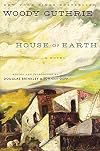
Yes, Woody Guthrie wrote a novel. A cousin sent me a copy of this book, which she said she loved in concept, but couldn't engage with. I had the same problem. I read enough of it to get the feel of Guthrie's writing, which I would call a cross between Steinbeck and D. H. Lawrence in both style and subject. The trouble is, having read The Grapes of Wrath and Lady Chatterley's Lover a couple times each, 50 pages of this one was enough to tell me there wasn't anything more in it for me. Kudos show more to Guthrie for one of the longest and least obnoxious sex scenes ever written, though. show less
Although Woody Guthrie has been dead for over 40 years this book that he wrote in 1947 was never published. He sent it off to a friend in Hollywood hoping it would be made into a movie and the manuscript was kept by the producer but never made. When the producer's papers were archived the manuscript was found and sent off to the Woody Guthrie archives in 2012. Douglas Brinkley and Johnny Depp found the manuscript while looking for information about Bob Dylan and they became its champions. show more Thus this novel about Dust Bowl America written almost 65 years ago finally was published.
Guthrie's style is unique, much more like song lyrics than prose, but it is very engaging. In fact, I was reading this book coming home on the bus from work and I was so engrossed that I went 3 stops past my regular stop. I felt like I was right in the panhandle of Texas living in a wooden shack that let the winter winds and the summer dirt storms in with hardly any break.
The story is pretty basic. Tike and Ella May Hamlin are renting 600 acres of farm land from the local banker. They live in a small wood house on the land which is much the worse for wear. Tike sends away to the federal government for a booklet that tells how to build an adobe house, something that will be warm in winter, cool in summer, keep out the bugs and stand for years. Tike is pretty excited about the idea but Ella May has to point out that since they don't own their farm land they can't build on it. The pair scheme to try to figure out a way to buy some land but this is the height of the depression. Land is still expensive but farm prices have hit bottom. The two can barely make ends meet, let alone save to buy land. Ella May is the daughter of a rich man but she won't take a penny from her father. She does, however, have some money from before her marriage. As their son is born both Tike and Ella Mae vow to raise up a house of earth to bring him up in and the reader believes they will do it.
The first chapter of the book contains one of the best love scenes I have ever read. It's not a description of hot passion but more of real lovemaking between two people who love each other and have all the time in the world to show it. If this book had been published when it was written that scene would probably have been expunged or at least considerably changed. Maybe it's a good thing publication was delayed until now; otherwise we could have missed out on this glorious scene.
I highly recommend this book. show less
Guthrie's style is unique, much more like song lyrics than prose, but it is very engaging. In fact, I was reading this book coming home on the bus from work and I was so engrossed that I went 3 stops past my regular stop. I felt like I was right in the panhandle of Texas living in a wooden shack that let the winter winds and the summer dirt storms in with hardly any break.
The story is pretty basic. Tike and Ella May Hamlin are renting 600 acres of farm land from the local banker. They live in a small wood house on the land which is much the worse for wear. Tike sends away to the federal government for a booklet that tells how to build an adobe house, something that will be warm in winter, cool in summer, keep out the bugs and stand for years. Tike is pretty excited about the idea but Ella May has to point out that since they don't own their farm land they can't build on it. The pair scheme to try to figure out a way to buy some land but this is the height of the depression. Land is still expensive but farm prices have hit bottom. The two can barely make ends meet, let alone save to buy land. Ella May is the daughter of a rich man but she won't take a penny from her father. She does, however, have some money from before her marriage. As their son is born both Tike and Ella Mae vow to raise up a house of earth to bring him up in and the reader believes they will do it.
The first chapter of the book contains one of the best love scenes I have ever read. It's not a description of hot passion but more of real lovemaking between two people who love each other and have all the time in the world to show it. If this book had been published when it was written that scene would probably have been expunged or at least considerably changed. Maybe it's a good thing publication was delayed until now; otherwise we could have missed out on this glorious scene.
I highly recommend this book. show less
This long-lost Woody Guthrie book tells part of the story of Tike and Ella May, living in what is not much more than a shack in the Texas panhandle during the dust bowl times, and dreaming of more. Their dream doesn't go an awful lot further than building an adobe house and owning an acre of land, but it seems that even that small dream is probably beyond their reach.
There's not an awful lot of plot to the book, but that's OK, because its strengths make up for it. The two characters are show more really well-drawn and their love for one another (even if Tike has a wandering eye) is palpable. The first 30 pages of the book, in fact, tell of an erotic encounter between the two that is exciting and realistic.
The other joy of the book is the language. I suspect some of Guthrie's language games are a side-effect of the disease he had which was getting worse by the time this book was written. Be that as it may, Guthrie has a love of language that really jumps off the page, and makes the characters all the more real.
I'd give it 5 stars if it had more of a plot, and I may come back and do that later; we'll see how it lives in memory. show less
There's not an awful lot of plot to the book, but that's OK, because its strengths make up for it. The two characters are show more really well-drawn and their love for one another (even if Tike has a wandering eye) is palpable. The first 30 pages of the book, in fact, tell of an erotic encounter between the two that is exciting and realistic.
The other joy of the book is the language. I suspect some of Guthrie's language games are a side-effect of the disease he had which was getting worse by the time this book was written. Be that as it may, Guthrie has a love of language that really jumps off the page, and makes the characters all the more real.
I'd give it 5 stars if it had more of a plot, and I may come back and do that later; we'll see how it lives in memory. show less
Lists
Awards


You May Also Like


Associated Authors
Statistics
- Works
- 135
- Also by
- 15
- Members
- 3,516
- Popularity
- #7,223
- Rating
- 4.0
- Reviews
- 56
- ISBNs
- 138
- Languages
- 7
- Favorited
- 3


