
S. Beth Atkin
Author of Voices from the Fields : Children of Migrant Farmworkers Tell Their Stories
About the Author
Image credit: via HarperCollins
Works by S. Beth Atkin
Voices from the Fields : Children of Migrant Farmworkers Tell Their Stories (1993) 280 copies, 8 reviews
Tagged
Common Knowledge
- Gender
- female
Members
Reviews
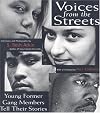
Voices From the Street, by S. Beth Atkins, is an informative and educational book that tells the story of young former gang members. I appreciate that Atkins attempts to tell these youngster’s stories in their own voices. I love that Atkins includes a glossary of terms at the back of this book. I found it very useful as I was reading the book, and I feel that she did a great job knowing which terms would be foreign to a young reader. I also liked the photographs and samples of writing that show more she collected from some of the kids. I was surprised by the wisdom that came from some of these kids.
I think that this book could be invaluable in middle to high-school classrooms for many reasons. The author truly gives voice to these young people who got caught up in gang life. The different reasons that these kids found gangs so appealing are truly heartbreaking, but break down into wanting to fill the same basic needs --acceptance, family, belonging, a way out of poverty. Indeed, gangs seem to be so prevalent today not because of the human desires that deal with wanting to hurt and be violent, do damage; but the desire to fit in, feel loved and be a part of something. Before reading this book, I have to admit that when I thought of gang-bangers nothing endearing came to my mind. I thought of trouble, of violence and drugs and everything wrong with society. After reading this book, and hearing these kids’ stories in their own voices, I see that they are mostly kids who have been given a raw deal in life, and made choices that any of us could have made had we been in their shoes. The book doesn’t sugar coat or gloss over the fact that some of these people did some awful things, nor does it go into the gory details of their experiences. Atkins explains things honestly and without embellishment, and I feel that the kids that she interviewed share the same tone. Atkins opened my eyes to the fact that gangs, like so many other things, are a symptom of a flawed society. Atkins points out that children who are most at risk for being involved in a gang suffer from poverty, abuse of some kind, and lack of family support. Doesn’t that always seem to be the case? A piece of wisdom that I got out of this book is that human beings are alike at some basic level, and there is hope that people can change.
This book would be useful to me in my current situation as an English tutor. So many of the students that I work with fall into many, if not all of these categories, and I know that they are at a greater risk for the unhealthy behaviors that are discussed in this book. It could be useful to students of all walks of life, even those who are not at risk of falling into the dangerous behaviors that are talked about in this book, because this book brings up important social and human-rights issues that could really get them thinking. Being that it was published in 1996, some of the information and terms might be outdated. However, the personal stories of these young people can still be extremely beneficial to an adolescent audience, and there are many things about gang-life in the current day that have remained the same. show less
I think that this book could be invaluable in middle to high-school classrooms for many reasons. The author truly gives voice to these young people who got caught up in gang life. The different reasons that these kids found gangs so appealing are truly heartbreaking, but break down into wanting to fill the same basic needs --acceptance, family, belonging, a way out of poverty. Indeed, gangs seem to be so prevalent today not because of the human desires that deal with wanting to hurt and be violent, do damage; but the desire to fit in, feel loved and be a part of something. Before reading this book, I have to admit that when I thought of gang-bangers nothing endearing came to my mind. I thought of trouble, of violence and drugs and everything wrong with society. After reading this book, and hearing these kids’ stories in their own voices, I see that they are mostly kids who have been given a raw deal in life, and made choices that any of us could have made had we been in their shoes. The book doesn’t sugar coat or gloss over the fact that some of these people did some awful things, nor does it go into the gory details of their experiences. Atkins explains things honestly and without embellishment, and I feel that the kids that she interviewed share the same tone. Atkins opened my eyes to the fact that gangs, like so many other things, are a symptom of a flawed society. Atkins points out that children who are most at risk for being involved in a gang suffer from poverty, abuse of some kind, and lack of family support. Doesn’t that always seem to be the case? A piece of wisdom that I got out of this book is that human beings are alike at some basic level, and there is hope that people can change.
This book would be useful to me in my current situation as an English tutor. So many of the students that I work with fall into many, if not all of these categories, and I know that they are at a greater risk for the unhealthy behaviors that are discussed in this book. It could be useful to students of all walks of life, even those who are not at risk of falling into the dangerous behaviors that are talked about in this book, because this book brings up important social and human-rights issues that could really get them thinking. Being that it was published in 1996, some of the information and terms might be outdated. However, the personal stories of these young people can still be extremely beneficial to an adolescent audience, and there are many things about gang-life in the current day that have remained the same. show less
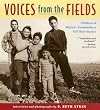
Novel!! I loved reading this style of novel where it felt much more personal because of the pictures, poems, and real letters included. I think a picture essay also helps the pace of the story. I think for many students and families these stories could feel connectable. I would love to find more picture essays if I teach in a higher 4-5 grade classroom.
I'm re-reading right now as I read Esperanza Rising again with my kids. Not much has changed for migrant farmers in the last 70 years save for more efforts by outside agencies to try to help the children; it's so unfair to the kids and makes me sad, but they seem content with their fate and the programs aren't always that effective. Perhaps I'm just projecting my middle-class ideals on these workers, but it seems to me that the kids have little choice but to perpetuate the cycle of migrant show more work and poverty. show less
Voices from the Fields is a book of poetry and first-hand accounts from children of migrant workers. For example, Jose’s account of working in the strawberry fields and missing school is immediately relatable to Esperanza’s (Esperanza Rising) experiences in California. The newly learned background knowledge from the novel, along with photos of Jose’s family and a brief description by the author of Jose’s working conditions, help readers better understand and connect with the extreme show more emotional and physical conditions that migrant workers and their families must endure. Later in Voices from the Field, we read Adriana’s beautiful poem about her parents followed by Victor’s story about his family. It is clear from both the written and photographic accounts, that Adriana’s and Victor’s families are incredibly important to them. There is a tremendous respect, appreciation, and loyalty that each child has toward their family members.
Readers of all ages, including myself, should be able to connect the similarities and differences of migrant families to their own family structure as well as the depiction of the strong family bonds of Esperanza’s family (Esperanza Rising). It is through these multiple connections that background knowledge is created and critical thinking skills can be developed. show less
Readers of all ages, including myself, should be able to connect the similarities and differences of migrant families to their own family structure as well as the depiction of the strong family bonds of Esperanza’s family (Esperanza Rising). It is through these multiple connections that background knowledge is created and critical thinking skills can be developed. show less
Awards


You May Also Like


Statistics
- Works
- 3
- Members
- 353
- Popularity
- #67,813
- Rating
- 4.2
- Reviews
- 10
- ISBNs
- 14