
Leni Zumas
Author of Red Clocks
About the Author
Leni Zumas teaches creative writing at Hunter College.
Works by Leni Zumas
Associated Works
Dispatches from Anarres: Tales in Tribute to Ursula K. Le Guin (2021) — Contributor — 44 copies, 1 review
Tagged
Common Knowledge
- Birthdate
- 1972
- Gender
- female
- Education
- Brown University (BA)
University of Massachusetts, Amherst (MFA) - Occupations
- English & Creative Writing professor, Portland State University
- Agent
- Meredith Kaffel Smirnoff
- Nationality
- USA
- Places of residence
- Portland, Oregon, USA
Washington, D.C., USA - Map Location
- USA
Members
Discussions
Red Clocks Group Read in January in 75 Books Challenge for 2022 (January 2022)
Reviews
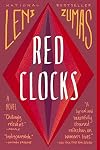
A worthy prequel to Atwood's Handmaiden, this dystopian novel does not seem to be either unlikely or futuristic. Set in a sodden Oregon oceanside village, Newville is home to four, really five, women: the Biographer, a teacher writing the life story of a pioneering female polar scientist; the Mother, struggling with rambunctious children and a lazyass partner; the Daughter, sixteen and vulnerable; and the Mender, despised and cherished by local women as a witch. They struggle for and against show more each other in a country where draconian laws have been passed that ban abortion, in vitro fertilization, adoption by single women, and procreation outside marriage. The "Personhood Amendment" uses the death penalty against abortion providers, prison for their patients, and all adoptions are subject to state approval. Canada is no refuge, as a "Pink Wall" with criminal penalties have been established to prevent women from crossing the border for purposes of gaining or losing progeny. The writing is a bit dense at first and it takes a while for the reader to get settled into the characters, but as each pursues her goals, it becomes a thriller and a race against time and the state. It's a very startling and urgent warning. show less

Keep Them Barefoot
Leni Zumas uses the Personhood Amendment as the impetus for her novel about the lives of four disparate women, plus a fictional 19th century historical figure, to illustrate in dramatic fashion the constraints under which many women struggle now and perhaps in the near future if certain zealots get their way. She further emphasizes her points by compartmentalizing these women by their primary roles: The Biographer, The Wife, The Daughter, and The Mender. The historical show more figure, an ambitious woman who doesn’t hew to the societal demands of her time, is simply a woman, itself, when you view the novel this way, a restrictive compartment.
The novel follows the lives of these women living in a small Oregon coastal fishing town, including how they interact with each other. The Biographer, Ro, researches and writes a biography of 19th century Arctic explorer Eivør Mínervudottir, teaches at the local high school, and tries via IVF to have a baby before her biological clock and a new law sounds expiration. The Wife, Susan, raises two children as she suffocates in her marriage to her teacher husband, who seems indifferent to her and certainly self-absorbed. The Daughter, Mattie, an adopted child, finds herself pregnant and desperate, as abortions have been outlawed and harming a fetus in anyway is a crime. The Mender, Gin, a young crone of sorts, lives in the woods, prefers the company of her animals to humans, and sells herbal remedies to townspeople. And Eivør forms something of an intermezzo between chapters not only adding a note of emphasis to the issues faced by the characters but also reminding us that severely restricting women to certain accepted roles has always been the norm.
These women prove complex, more expansive than their definitions, but also squarely within them as well. Ro nearly impoverishes herself trying to become pregnant but puts aside her desires to help, though not without much inner torment, Mattie resolve her unwanted pregnancy. Susan struggles to exit her marriage and builds up lots of resentment toward Ro, who she views as free, though Ro resents Susan partly because she has what Ro desires. Gin, for her part, can’t help but be involved with others in town, regardless of how much she wishes most to be left alone.
Hanging over all of them and affecting them in different ways is the Personhood Amendment, which steals control of their lives from them and imposes potentially severe punishments and restrictions upon them. This, for those not familiar, for in fact it is a real proposal pushed by some antiabortion groups, declares life begins at conception, triggering a whole laundry list of laws, among them murder for abortions, no contraception, and more. In the novel, this is coupled with it being illegal to go to Canada for an abortion, as you will be turned away, even arrested, at the “Pink Wall,” the requirement of two, a man and woman, as parents, and the impending end to IVF. Since all these currently don’t exist but could if some had their way, the novel has the flavor of a dystopian future.
Some may find the novel’s flow a bit disjointed and the writing a little showy, while others may not think it dystopian enough in the sense of being technologically removed from our time. But for others interested in how society works, and can work even harder, to mold women to limited expectations, the novel will resonate. show less
Leni Zumas uses the Personhood Amendment as the impetus for her novel about the lives of four disparate women, plus a fictional 19th century historical figure, to illustrate in dramatic fashion the constraints under which many women struggle now and perhaps in the near future if certain zealots get their way. She further emphasizes her points by compartmentalizing these women by their primary roles: The Biographer, The Wife, The Daughter, and The Mender. The historical show more figure, an ambitious woman who doesn’t hew to the societal demands of her time, is simply a woman, itself, when you view the novel this way, a restrictive compartment.
The novel follows the lives of these women living in a small Oregon coastal fishing town, including how they interact with each other. The Biographer, Ro, researches and writes a biography of 19th century Arctic explorer Eivør Mínervudottir, teaches at the local high school, and tries via IVF to have a baby before her biological clock and a new law sounds expiration. The Wife, Susan, raises two children as she suffocates in her marriage to her teacher husband, who seems indifferent to her and certainly self-absorbed. The Daughter, Mattie, an adopted child, finds herself pregnant and desperate, as abortions have been outlawed and harming a fetus in anyway is a crime. The Mender, Gin, a young crone of sorts, lives in the woods, prefers the company of her animals to humans, and sells herbal remedies to townspeople. And Eivør forms something of an intermezzo between chapters not only adding a note of emphasis to the issues faced by the characters but also reminding us that severely restricting women to certain accepted roles has always been the norm.
These women prove complex, more expansive than their definitions, but also squarely within them as well. Ro nearly impoverishes herself trying to become pregnant but puts aside her desires to help, though not without much inner torment, Mattie resolve her unwanted pregnancy. Susan struggles to exit her marriage and builds up lots of resentment toward Ro, who she views as free, though Ro resents Susan partly because she has what Ro desires. Gin, for her part, can’t help but be involved with others in town, regardless of how much she wishes most to be left alone.
Hanging over all of them and affecting them in different ways is the Personhood Amendment, which steals control of their lives from them and imposes potentially severe punishments and restrictions upon them. This, for those not familiar, for in fact it is a real proposal pushed by some antiabortion groups, declares life begins at conception, triggering a whole laundry list of laws, among them murder for abortions, no contraception, and more. In the novel, this is coupled with it being illegal to go to Canada for an abortion, as you will be turned away, even arrested, at the “Pink Wall,” the requirement of two, a man and woman, as parents, and the impending end to IVF. Since all these currently don’t exist but could if some had their way, the novel has the flavor of a dystopian future.
Some may find the novel’s flow a bit disjointed and the writing a little showy, while others may not think it dystopian enough in the sense of being technologically removed from our time. But for others interested in how society works, and can work even harder, to mold women to limited expectations, the novel will resonate. show less
In the US, a constitutional amendment has recently passed declaring any fertilized cell to have the full rights of a human being, meaning that anyone who gets or provides an abortion can and will be charged with murder. Another law is about to go into effect, too, preventing single parents from adopting, because "Every Child Needs Two." In this world, we meet four women: One who is desperate to have a child of her own. One who is being driven crazy by her life with her children and her show more might-as-well-be-a-child husband. One who gave her own baby up for adoption, and who now lives in the woods treating other women with herbs. And a teenage girl who finds herself accidentally pregnant.
I'll be honest, I was a bit leery of this book going in, thinking the odds were higher than I'd like that it'd either be a heavy-handed political screed (which aren't super enjoyable even when I very much agree with them) or an incredibly depressing dystopia (which I might find a little hard to handle these days). But I think it does avoid being either of those. The situation faced by women in this all-too-plausible world is infuriating -- at least, it is if you value reproductive rights, although I imagine the novel would be infuriating in entirely different ways if you think those laws sound like fantastic ideas -- but the novel itself isn't as bleak as I'd feared. And giving us the stories of four different women (or five, if you count the snippets from the biography one of the women is writing), all with very different experiences and desires and perspectives when it comes to their own reproduction, is a great way to explore things.
All that having been said, I still didn't love it, although I keep second-guessing the reasons why. One of them is that I had trouble getting along with the writing style. Zumas hit a major misstep for me almost immediately with the way that she refuses to use her character's names when writing in their POV. That, in itself, is a literary device that can be interesting, but in this case, it turned out that all the characters know each other and readily use each other's names, so it seemed to accomplish absolutely nothing other than keeping me confused, early on, about which names went with which POV characters and who was being talked about at any given moment. I may have started muttering to myself about stupid literary gimmicks and "yet another MFA type whose writing is so 'clever' it can't get out of its own way" or words to that effect. Which is maybe unfair, and I did more or less warm up to the writing eventually, but I think that initial reaction colored a lot of my response to the whole thing.
Also not helping was the fact that I found almost all of the characters annoying. Which is probably also unfair, Hell, the carefully calibrated surgical-strike awfulness of the most irritating character in the book -- the husband of the married POV character -- is actually a fairly impressive artistic accomplishment. And the women are supposed to be flawed, with their issues and capacity for pettiness and so on no doubt being very much part of the point. Women are complicated human beings, people are judgmental because no one ever fully understands another's POV, society's attitudes about women mess with everyone's head, and so on. I get it. And, again, it did work better for me as the novel went on. But as a reading experience, it didn't exactly thrill me. Although it did leave me asking myself uncomfortable and thought-provoking questions about my own ability to sympathize with women whose experiences and desires differ significantly from my own, which I think is probably a worthwhile result in itself.
Anyway. Can't say I entirely enjoyed it, for reasons that might well be as much my fault as the author's, but I certainly did appreciate aspects of it, and in the end I'm not sorry I read it, anyway. show less
I'll be honest, I was a bit leery of this book going in, thinking the odds were higher than I'd like that it'd either be a heavy-handed political screed (which aren't super enjoyable even when I very much agree with them) or an incredibly depressing dystopia (which I might find a little hard to handle these days). But I think it does avoid being either of those. The situation faced by women in this all-too-plausible world is infuriating -- at least, it is if you value reproductive rights, although I imagine the novel would be infuriating in entirely different ways if you think those laws sound like fantastic ideas -- but the novel itself isn't as bleak as I'd feared. And giving us the stories of four different women (or five, if you count the snippets from the biography one of the women is writing), all with very different experiences and desires and perspectives when it comes to their own reproduction, is a great way to explore things.
All that having been said, I still didn't love it, although I keep second-guessing the reasons why. One of them is that I had trouble getting along with the writing style. Zumas hit a major misstep for me almost immediately with the way that she refuses to use her character's names when writing in their POV. That, in itself, is a literary device that can be interesting, but in this case, it turned out that all the characters know each other and readily use each other's names, so it seemed to accomplish absolutely nothing other than keeping me confused, early on, about which names went with which POV characters and who was being talked about at any given moment. I may have started muttering to myself about stupid literary gimmicks and "yet another MFA type whose writing is so 'clever' it can't get out of its own way" or words to that effect. Which is maybe unfair, and I did more or less warm up to the writing eventually, but I think that initial reaction colored a lot of my response to the whole thing.
Also not helping was the fact that I found almost all of the characters annoying. Which is probably also unfair, Hell, the carefully calibrated surgical-strike awfulness of the most irritating character in the book -- the husband of the married POV character -- is actually a fairly impressive artistic accomplishment. And the women are supposed to be flawed, with their issues and capacity for pettiness and so on no doubt being very much part of the point. Women are complicated human beings, people are judgmental because no one ever fully understands another's POV, society's attitudes about women mess with everyone's head, and so on. I get it. And, again, it did work better for me as the novel went on. But as a reading experience, it didn't exactly thrill me. Although it did leave me asking myself uncomfortable and thought-provoking questions about my own ability to sympathize with women whose experiences and desires differ significantly from my own, which I think is probably a worthwhile result in itself.
Anyway. Can't say I entirely enjoyed it, for reasons that might well be as much my fault as the author's, but I certainly did appreciate aspects of it, and in the end I'm not sorry I read it, anyway. show less
I devoured this after midnight in a Newark hotel. Great and, as others have noted, a necessary story in this moment. Not a dystopian novel — currently we’re only one heartbeat away from this reality. My only disappointment? I don’t think we’re going to get the complete Minervudottir biography. Spin-off??
Lists
To Read (1)
Awards


You May Also Like


Associated Authors
Statistics
- Works
- 4
- Also by
- 3
- Members
- 1,594
- Popularity
- #16,182
- Rating
- 3.7
- Reviews
- 73
- ISBNs
- 35
- Languages
- 6
- Favorited
- 3