
Naomi Alderman
Author of The Power
About the Author
Image credit: Photograph by Jerry Bauer
Works by Naomi Alderman
Zombies, Run! Keeping Fit and Living Well in the Current Zombie Emergency (2016) 50 copies, 2 reviews
Nieposluszenstwo 1 copy
Associated Works
Goblin Quest - Softcover: A game of fatal incompetence (2015) — Author, some editions — 12 copies, 1 review
Tagged
Common Knowledge
- Birthdate
- 1974
- Gender
- female
- Education
- University of Oxford (Lincoln College)
University of East Anglia (MA ∙ Creative Writing)
South Hampstead High School - Occupations
- novelist
game designer
Professor of Creative Writing - Organizations
- Bath Spa University
- Awards and honors
- Waterstones 25 Authors for the Future (2007)
Granta's Best of Young British Novelists (2013) - Relationships
- Alderman, Geoffrey (father)
- Nationality
- England
UK - Birthplace
- London, England, UK
- Places of residence
- London, England, UK
- Map Location
- England, UK
Members
Discussions
The Power by Naomi Alderman in Dystopian novels (August 2019)
Reviews
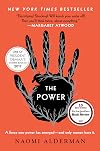
Hooooooooooly crap, y'all. This book is AMAZING. And seriously violent and triggery and, on many levels, a depressing meditation on the fact that humans are garbage. At the same time, however, it is absolutely cathartic; while it may very well trigger those who have had sexual assault and abuse experiences, I would encourage fellow survivors to read it anyway, because the process of the book creates an emotional and experiential arc that, in the end, is both horrifying and deeply, deeply show more satisfying.
Let's be clear: this is speculative fiction that looks toward the near future and is drawn straight from today's very real gender dynamics. In the book, teenage girls and women manifest the power to produce electricity in their bodies sufficient to electrocute -- you might imagine that such power turns society on its head, and it is that upheaval that the novel follows. It's also set up a book-within-a-book, with far future citizens looking back at what would be our near future and arguing amongst themselves about what's true in their history. That very set up creates enough distance to make even the more violent scenarios of the internal story fascinating in context.
A friend of mine told me that there are two camps of people who read this book: those who think it should be viewed purely as a meditation on the absolute corruption of power (which, on many levels, it definitely is) and those who finish the book with the phrase "Burn it all down" on their lips. I leave you to decide which camp you are in, but I'm telling you that you need to read this book. The very last line of the very last far-future letter puts the entire novel in perspective -- when you read it, it will hit you. Amazing. Seriously. show less
Let's be clear: this is speculative fiction that looks toward the near future and is drawn straight from today's very real gender dynamics. In the book, teenage girls and women manifest the power to produce electricity in their bodies sufficient to electrocute -- you might imagine that such power turns society on its head, and it is that upheaval that the novel follows. It's also set up a book-within-a-book, with far future citizens looking back at what would be our near future and arguing amongst themselves about what's true in their history. That very set up creates enough distance to make even the more violent scenarios of the internal story fascinating in context.
A friend of mine told me that there are two camps of people who read this book: those who think it should be viewed purely as a meditation on the absolute corruption of power (which, on many levels, it definitely is) and those who finish the book with the phrase "Burn it all down" on their lips. I leave you to decide which camp you are in, but I'm telling you that you need to read this book. The very last line of the very last far-future letter puts the entire novel in perspective -- when you read it, it will hit you. Amazing. Seriously. show less
What if women, starting with teen girls, suddenly developed an extraordinary electrostatic ability? How does this change gender dynamics? Politics? The whole world? With this new ability, women finally have the power to upend the patriarchy.
The story follows the lives of just a handful of people in this new world: a young woman in Britain from a crime family, a young mixed-race woman in America who has been in the foster system most of her life, the mayor of a major city whose daughter show more shares her power with her, and a Nigerian reporter (the only male POV in the story) who travels the world documenting the political changes as they happen.
The first half of the book is incredibly empowering to read as a woman. The women in this book no longer have to be afraid to walk alone at night. They can seek their own retribution. It kicks ass. Come the second half of the book, though, things take a turn for the worse. Our main characters suffer some defeats, and the world itself becomes more and more dystopic. (Of course, since the author basically just gender flipped everything, to call a world in which women are in charge and men are subjugated a dystopia, means that we also have to recognize that the real world we live in where women are subjugated, is also a dystopia. Food for thought there, for sure.)
Overall, I really enjoyed the book. Some characters took some time to grow on me, and most of them surprised me in their own ways. I wish the author had included more diverse perspectives. What happens to trans people in this world? What about black women in America? Or anywhere else? What of people in Asia? There is so much more room for other stories within this world and I wish the author had taken that opportunity. Nonetheless, I think this book will appeal to readers of science fiction and feminist stories. show less
The story follows the lives of just a handful of people in this new world: a young woman in Britain from a crime family, a young mixed-race woman in America who has been in the foster system most of her life, the mayor of a major city whose daughter show more shares her power with her, and a Nigerian reporter (the only male POV in the story) who travels the world documenting the political changes as they happen.
The first half of the book is incredibly empowering to read as a woman. The women in this book no longer have to be afraid to walk alone at night. They can seek their own retribution. It kicks ass. Come the second half of the book, though, things take a turn for the worse. Our main characters suffer some defeats, and the world itself becomes more and more dystopic. (Of course, since the author basically just gender flipped everything, to call a world in which women are in charge and men are subjugated a dystopia, means that we also have to recognize that the real world we live in where women are subjugated, is also a dystopia. Food for thought there, for sure.)
Overall, I really enjoyed the book. Some characters took some time to grow on me, and most of them surprised me in their own ways. I wish the author had included more diverse perspectives. What happens to trans people in this world? What about black women in America? Or anywhere else? What of people in Asia? There is so much more room for other stories within this world and I wish the author had taken that opportunity. Nonetheless, I think this book will appeal to readers of science fiction and feminist stories. show less
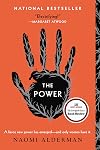
When I heard that Naomi Alderman’s mentor is the queen of speculative fiction Margaret Atwood, I knew The Power was a book I had to read. The Power is written as a book within a book. It starts with a letter from an author named Neil Adam Armon (an anagram of Naomi Alderman) to another author named Naomi. Neil has written a historical fiction novel set 5000 years ago (which would make it set in the present day) about what happened when teenage girls suddenly developed the power to shoot show more powerful volts of electricity out of their hands. The balance of power in the world shifts when women are suddenly able to overpower men whenever they want.
It turns out that power corrupts women just as much as it corrupts men and a female-dominated society isn’t the benevolent matriarchy one might imagine. It’s an interesting thought experiment that Alderman engages in. She does so with nuance and a touch of dark humor. Once I finished, I immediately wanted to read it again because I know I’ll get even more out of it when I know where the story is headed. We read this book for one of my book clubs and there was a lot to talk about – it makes for a great discussion. My book club is all-female – I’d be really interested in what male readers think of it. I’m guessing most would find it pretty eye-opening. Highly recommended. show less
It turns out that power corrupts women just as much as it corrupts men and a female-dominated society isn’t the benevolent matriarchy one might imagine. It’s an interesting thought experiment that Alderman engages in. She does so with nuance and a touch of dark humor. Once I finished, I immediately wanted to read it again because I know I’ll get even more out of it when I know where the story is headed. We read this book for one of my book clubs and there was a lot to talk about – it makes for a great discussion. My book club is all-female – I’d be really interested in what male readers think of it. I’m guessing most would find it pretty eye-opening. Highly recommended. show less
"The shape of power is always the same; it is the shape of a tree. Root to tip, central trunk branching and re-branching, spreading wider in ever-thinner, searching fingers. The shape of power is the outline of a living thing straining outward, sending its fine tendrils a little further, and a little further yet." - page 3
Originally, the premise for this book seemed a bit outlandish. BUT page three immediately had be nodding along with the set up. I saw Alderman comparing power to the show more branches and roots of trees, and rivers leading to the ocean, and lightning, and was really rooting for her to make the connection to the nervous system...and she did. I've always thought that trees are like the blood vessels of the world. Trees do create oxygen, after all. The world is a beautiful coincidence (or a system of perfection). I appreciate that Alderman noticed that too.
The book is set up as historical fiction, as if the writer is basing the plot from recently discovered history. Alderman speculates on what might happen if the power in the world was in the hands of women rather than men. Suddenly, young girls have the power of electricity emanating from their body at will. It causes quite a rabbit hole of a plot. The book's setup mainly follows four characters: Allie, passed through the foster system as an orphan who hears a voice called 'Mother Eve' from a young age and becomes much more than an orphan. Margot, a mayor who is rising up the ranks of government and a mom of a teenager with the power. Tunde, a college boy from Nigeria who starts traveling the world to become the chronicler of the revolution. Roxy, a young girl who first uses her power when her mom is killed because of her family's penchant for crime. All of the characters start to intertwine and I'm amazed at Alderman's skill at representing all four characters equally. And all four are equally essential to this story. The newfound power the women have quite changes their thinking, a bit too riotously. The power shifts too much and of course the men are scared. The characters are a little too man hating. I was thinking this book was just alright, but there were a couple more things I appreciated: Allie has a grand realization that should have been a Hail Mary (pun intended) for saving the world, which might have been too easy for the narrative. So I appreciated the book for that realization AND that it wasn't enough for redemption. This made the book for me. show less
Originally, the premise for this book seemed a bit outlandish. BUT page three immediately had be nodding along with the set up. I saw Alderman comparing power to the show more branches and roots of trees, and rivers leading to the ocean, and lightning, and was really rooting for her to make the connection to the nervous system...and she did. I've always thought that trees are like the blood vessels of the world. Trees do create oxygen, after all. The world is a beautiful coincidence (or a system of perfection). I appreciate that Alderman noticed that too.
The book is set up as historical fiction, as if the writer is basing the plot from recently discovered history. Alderman speculates on what might happen if the power in the world was in the hands of women rather than men. Suddenly, young girls have the power of electricity emanating from their body at will. It causes quite a rabbit hole of a plot. The book's setup mainly follows four characters: Allie, passed through the foster system as an orphan who hears a voice called 'Mother Eve' from a young age and becomes much more than an orphan. Margot, a mayor who is rising up the ranks of government and a mom of a teenager with the power. Tunde, a college boy from Nigeria who starts traveling the world to become the chronicler of the revolution. Roxy, a young girl who first uses her power when her mom is killed because of her family's penchant for crime. All of the characters start to intertwine and I'm amazed at Alderman's skill at representing all four characters equally. And all four are equally essential to this story. The newfound power the women have quite changes their thinking, a bit too riotously. The power shifts too much and of course the men are scared. The characters are a little too man hating. I was thinking this book was just alright, but there were a couple more things I appreciated: Allie has a grand realization that should have been a Hail Mary (pun intended) for saving the world, which might have been too easy for the narrative. So I appreciated the book for that realization AND that it wasn't enough for redemption. This made the book for me. show less
Lists
Best Dystopias (1)
Overdue Podcast (1)
SFFKit 2018 (1)
Awards


You May Also Like


Associated Authors
Statistics
- Works
- 20
- Also by
- 11
- Members
- 8,727
- Popularity
- #2,740
- Rating
- 3.8
- Reviews
- 388
- ISBNs
- 180
- Languages
- 14
- Favorited
- 7