
Lewis White Beck (1913–1997)
Author of Kant: On History
About the Author
Image credit: Lewis White Beck - https://www.rit.edu/cla/philosophy/FacultyStaff.html
Works by Lewis White Beck
Associated Works
Foundations of the Metaphysics of Morals / What is Enlightenment? (1959) — Translator, some editions — 637 copies, 4 reviews
Tagged
Common Knowledge
- Birthdate
- 1913-09-26
- Date of death
- 1997-06-07
- Gender
- male
- Education
- Duke University (Ph.D.|Philosophy)
- Occupations
- philosopher
Faculty, University of Rochester (Philosophy) - Organizations
- University of Rochester
- Awards and honors
- President, American Philosophical Association Eastern Division (1971-1972)
- Nationality
- USA
- Birthplace
- Griffin, Georgia, USA
- Place of death
- Rochester, New York, USA
- Associated Place (for map)
- USA
Members
Reviews
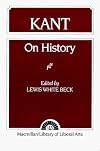
For class.
Kant is, of course, most famous for his three Big Critiques of Reason and Judgment. His historical analyses are a smaller part of his thought, although some bits can be found in the Groundwork of the Metaphysics of Morals, mainly, the earliest known examples of the Rechtsstaat.
My reading assignment mainly focused on the essay Perpetual Peace, traditionally assigned as a part of Liberal-IR Theory. He lists nine total articles which are very similar to our modern notion of the show more Wilsonian 'democratic peace', one of the few things which is anything like a law in IR theory today. Rather dry stuff now, but revolutionary then.
Of course, there are some holes. Raymond Cohen, in his article Pacific Unions, aims to disprove this, using the main counterexample of democratic states in Latin America in the early 20th century, saying that instead the rule should be revised to say "democratic states in the North Atlantic/Western European area, sharing a particular set of historical circumstances and a common cultural heritage, have avoided going to war ... No causal mechanism has been shown to exist providing a necessary link between democracies and mutually peaceful behaviour." Go figure. show less
Kant is, of course, most famous for his three Big Critiques of Reason and Judgment. His historical analyses are a smaller part of his thought, although some bits can be found in the Groundwork of the Metaphysics of Morals, mainly, the earliest known examples of the Rechtsstaat.
My reading assignment mainly focused on the essay Perpetual Peace, traditionally assigned as a part of Liberal-IR Theory. He lists nine total articles which are very similar to our modern notion of the show more Wilsonian 'democratic peace', one of the few things which is anything like a law in IR theory today. Rather dry stuff now, but revolutionary then.
Of course, there are some holes. Raymond Cohen, in his article Pacific Unions, aims to disprove this, using the main counterexample of democratic states in Latin America in the early 20th century, saying that instead the rule should be revised to say "democratic states in the North Atlantic/Western European area, sharing a particular set of historical circumstances and a common cultural heritage, have avoided going to war ... No causal mechanism has been shown to exist providing a necessary link between democracies and mutually peaceful behaviour." Go figure. show less
You May Also Like


Associated Authors
Statistics
- Works
- 24
- Also by
- 2
- Members
- 629
- Popularity
- #40,057
- Rating
- 3.4
- Reviews
- 3
- ISBNs
- 32
- Languages
- 2