
Benoît Peeters
Author of Brüsel
About the Author
Image credit: Benoît Peeters à la Marche des auteurs, Festival d'Angoulême 2015
Series
Works by Benoît Peeters
La petite bibliothèque du tintinologue Coffret 3 volumes : Hergé, fils de Tintin ; Les métamorphoses de Tintin ; Herg (2006) 3 copies
Herge dessinateur / 60 ans d'aventures de tintin / [exposition, musee d'ixelles, 23 decembre 1988-15 (1996) 2 copies
De onzichtbare grens deel 2 1 copy
Leggere il fumetto 1 copy
Jenseits der Grenze Bd. 2 1 copy
Elvis Peeters 1 copy
Brussels 1 copy
Associated Works
L'Homme qui voulait classer le monde : Paul Otlet et le Mundaneum (2006) — Afterword, some editions — 28 copies
Tagged
Common Knowledge
- Canonical name
- Peeters, Benoît
- Birthdate
- 1956-08-28
- Gender
- male
- Education
- Ecole des hautes études en sciences sociales, Paris (Diplôme, Thèse 'Analyse, case par case, des Bijoux de la Castafiore',))
Université de la Sorbonne, Paris (Licence, Philosophie)
Lycée Louis-le-Grand, Paris
Collège Don Bosco, Bruxelles, Belgique - Occupations
- Scénariste (Bandes déssinées)
Conseiller éditorial
Editeur - Organizations
- Editions Casterman (Conseiller éditorial, 20 01 | )
Conservatoire national des arts et métiers, Paris (Professeur associé, 20 16 | 20 19)
Université de Lancaster, Grande-Bretagne (Visiting professor) - Awards and honors
- Officier des Arts et des Lettres (2014)
- Nationality
- France
- Birthplace
- Paris, Île-de-France, France
- Map Location
- France
- Associated Place (for map)
- France
Members
Reviews
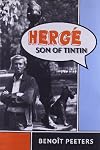
https://fromtheheartofeurope.eu/herge-son-of-tintin-by-benoit-peeters/
Like all good Belgian comics fans, I’m fascinated by the adventures of Tintin and by their creator. This is a really interesting biographical study, by a writer who met Hergé an interviewed him a couple of times, and has now lived long enough to absorb the mass of critical commentary on Hergé’s work that has emerged over the decades.
I learned a lot from it. In particular, I learned that it’s very difficult to show more navigate exactly how close Hergé came to collaboration with the occupying Germans during the war. He was not brave, and he was close to some of the leading Rexists, in particular Léon Degrelle. On the other hand, he mostly resisted pressure to produce pro-German propaganda, and he never put anyone else in danger; and an exhaustive investigation from the trigger-happy Belgian authorities after the war found in the end that he had no case to answer. Still, it is not a part of his career that he was proud of in later years.
Tintin was very bad for his creator’s health. Once he had rebranded and re-established himself after the war, Hergé’s arrangements with younger artistic collaborators were frankly exploitative; all of their work for him appeared under his name, though in fairness the pressure he put on them to get it exactly the way he wanted it was also part of the process. On several occasions Hergé’s own mental health broke down and the serialisation of the latest Tintin story simply stopped for weeks or months until he felt well enough to resume. But he was so dominant in the Belgian market, and selling so well, that he could get away with both mistreating his juniors and disappearing for long stretches.
Peeters is also very good at looking into the background of each book, and he’s disarming frank about the inescapable fact that the early and late Tintin stories are really not very good. I’ve written before about the early adventures in the Soviet Union, the Congo and America, and the unfinished story of Alph-Art. But it’s good to be reminded that there is a run of genius from Cigars of the Pharaoh to The Castafiore Emerald, and that I’ve yet to reread some of my childhood favourites.
The English version is well translated by Tina A. Kover, though one sometimes senses the French-language flourishes trying to get past her guard. show less
Like all good Belgian comics fans, I’m fascinated by the adventures of Tintin and by their creator. This is a really interesting biographical study, by a writer who met Hergé an interviewed him a couple of times, and has now lived long enough to absorb the mass of critical commentary on Hergé’s work that has emerged over the decades.
I learned a lot from it. In particular, I learned that it’s very difficult to show more navigate exactly how close Hergé came to collaboration with the occupying Germans during the war. He was not brave, and he was close to some of the leading Rexists, in particular Léon Degrelle. On the other hand, he mostly resisted pressure to produce pro-German propaganda, and he never put anyone else in danger; and an exhaustive investigation from the trigger-happy Belgian authorities after the war found in the end that he had no case to answer. Still, it is not a part of his career that he was proud of in later years.
Tintin was very bad for his creator’s health. Once he had rebranded and re-established himself after the war, Hergé’s arrangements with younger artistic collaborators were frankly exploitative; all of their work for him appeared under his name, though in fairness the pressure he put on them to get it exactly the way he wanted it was also part of the process. On several occasions Hergé’s own mental health broke down and the serialisation of the latest Tintin story simply stopped for weeks or months until he felt well enough to resume. But he was so dominant in the Belgian market, and selling so well, that he could get away with both mistreating his juniors and disappearing for long stretches.
Peeters is also very good at looking into the background of each book, and he’s disarming frank about the inescapable fact that the early and late Tintin stories are really not very good. I’ve written before about the early adventures in the Soviet Union, the Congo and America, and the unfinished story of Alph-Art. But it’s good to be reminded that there is a run of genius from Cigars of the Pharaoh to The Castafiore Emerald, and that I’ve yet to reread some of my childhood favourites.
The English version is well translated by Tina A. Kover, though one sometimes senses the French-language flourishes trying to get past her guard. show less
Las ciudades oscuras 7 La teoría del grano de arena / Dark Cities 7 The theory of sand's grain by Benoît Peeters
"La teoría del grano de arena" de Schuiten y Peeters es una entrega fascinante de la serie Las Ciudades Oscuras que explora temas de sincronicidad, equilibrio y los misterios de lo inexplicable. La trama se desarrolla en Brüsel, una versión paralela de Bruselas, donde una serie de eventos aparentemente inconexos comienzan a alterar la vida de sus habitantes. Un restaurador que pierde peso inexplicablemente hasta empezar a flotar, arena y rocas que aparecen de la nada en apartamentos, y show more otros fenómenos extraños llevan a Mary Von Rathen, una investigadora de lo paranormal, a buscar las conexiones entre estos sucesos.
El álbum destaca por su reflexión sobre la permeabilidad de las fronteras entre lo racional y lo inexplicable, así como por su crítica implícita a las consecuencias del imperialismo y la intervención extranjera. Visualmente, Schuiten despliega su maestría habitual, creando imágenes detalladas de arquitecturas imposibles y escenas urbanas que complementan perfectamente la narrativa surrealista de Peeters. La obra invita a los lectores a considerar la interconexión de eventos aparentemente aleatorios y a cuestionar la necesidad de explicaciones puramente racionales para todo lo que ocurre en el mundo. Como es característico en la serie, "La teoría del grano de arena" combina elementos de fantasía, crítica social y reflexión filosófica, consolidándose como una adición valiosa al universo de Las Ciudades Oscuras. show less
El álbum destaca por su reflexión sobre la permeabilidad de las fronteras entre lo racional y lo inexplicable, así como por su crítica implícita a las consecuencias del imperialismo y la intervención extranjera. Visualmente, Schuiten despliega su maestría habitual, creando imágenes detalladas de arquitecturas imposibles y escenas urbanas que complementan perfectamente la narrativa surrealista de Peeters. La obra invita a los lectores a considerar la interconexión de eventos aparentemente aleatorios y a cuestionar la necesidad de explicaciones puramente racionales para todo lo que ocurre en el mundo. Como es característico en la serie, "La teoría del grano de arena" combina elementos de fantasía, crítica social y reflexión filosófica, consolidándose como una adición valiosa al universo de Las Ciudades Oscuras. show less
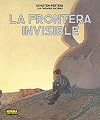
"La frontera invisible" es otra destacada entrega de la serie Las Ciudades Oscuras de Benoit Peeters y François Schuiten, que explora temas de cartografía, política y manipulación de la realidad. La historia sigue a Roland de Cremer, un joven cartógrafo asignado al Centro de Cartografía, donde trabaja bajo la tutela de Paul Ciceri. La trama se complica con la llegada de la tecnología y la intervención del mariscal Radisic, quien busca utilizar la cartografía con fines show more propagandísticos y expansionistas.
El álbum se destaca por su reflexión sobre la manipulación del espacio geográfico y la realidad para fines políticos y militares, ampliando la escala de las reflexiones previas de la serie sobre las formas urbanas. Visualmente, Schuiten demuestra su maestría no solo en los diseños arquitectónicos, sino también en la representación de paisajes naturales, empleando una paleta de colores cálidos que contrasta con entregas anteriores. Aunque el guión de Peeters muestra signos de cierto agotamiento, con una trama que a veces parece funcionar a tirones, "La frontera invisible" sigue siendo una adición valiosa a la serie, ofreciendo una crítica aguda al estamento militar y a las políticas colonialistas. show less
El álbum se destaca por su reflexión sobre la manipulación del espacio geográfico y la realidad para fines políticos y militares, ampliando la escala de las reflexiones previas de la serie sobre las formas urbanas. Visualmente, Schuiten demuestra su maestría no solo en los diseños arquitectónicos, sino también en la representación de paisajes naturales, empleando una paleta de colores cálidos que contrasta con entregas anteriores. Aunque el guión de Peeters muestra signos de cierto agotamiento, con una trama que a veces parece funcionar a tirones, "La frontera invisible" sigue siendo una adición valiosa a la serie, ofreciendo una crítica aguda al estamento militar y a las políticas colonialistas. show less
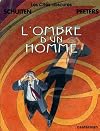
"La sombra de un hombre", parte de la aclamada serie Las Ciudades Oscuras de François Schuiten y Benoît Peeters, explora la transformación de Albert Chamisso, un agente de seguros cuya sombra adquiere su propia apariencia, desafiando las normas sociales y desencadenando una serie de eventos que alteran su vida.
El álbum combina una narrativa sobria con las ilustraciones meticulosas de Schuiten, que utiliza un suave coloreado pastel para crear una atmósfera a la vez inquietante y show more romántica. Los diseños detallados de vehículos, edificios y urbanismo complementan perfectamente la trama, mientras que el tratamiento de los personajes refleja hábilmente sus transiciones psicológicas. Aunque algunos lectores pueden echar de menos el protagonismo de la ciudad característico de obras anteriores, "La sombra de un hombre" mantiene la esencia de la serie al construir un mundo de luces y sombras que invita a la reflexión sobre temas actuales como la soledad y la marginación de quienes son diferentes. show less
El álbum combina una narrativa sobria con las ilustraciones meticulosas de Schuiten, que utiliza un suave coloreado pastel para crear una atmósfera a la vez inquietante y show more romántica. Los diseños detallados de vehículos, edificios y urbanismo complementan perfectamente la trama, mientras que el tratamiento de los personajes refleja hábilmente sus transiciones psicológicas. Aunque algunos lectores pueden echar de menos el protagonismo de la ciudad característico de obras anteriores, "La sombra de un hombre" mantiene la esencia de la serie al construir un mundo de luces y sombras que invita a la reflexión sobre temas actuales como la soledad y la marginación de quienes son diferentes. show less
Lists
Awards

You May Also Like


Associated Authors
Statistics
- Works
- 88
- Also by
- 6
- Members
- 2,426
- Popularity
- #10,573
- Rating
- 3.9
- Reviews
- 45
- ISBNs
- 255
- Languages
- 10
- Favorited
- 1
