
Helena Whitbread
Author of The Secret Diaries of Miss Anne Lister 1: I Know My Own Heart
Series
Works by Helena Whitbread
The Secret Diaries of Miss Anne Lister 1: I Know My Own Heart (1988) — Editor; Editor; Editor — 439 copies, 10 reviews
The Secret Diaries of Miss Anne Lister 2: No Priest But Love (1992) — Editor; Editor; Editor — 152 copies, 2 reviews
Tagged
Common Knowledge
Members
Reviews
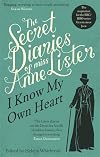
Having read two biographies of the quite fascinating Anne Lister (Anne Choma's, focussing on the emotional courtship of Ann Walker; and Angela Steidele's perhaps more academic overview of her whole life) I thought I'd immerse myself in the diaries themselves.
This is by no means the whole of Lister's writings: the journals of some years have gone missing. Editor Helena Whitbread takes the years 1816-24, the opening of which finds Lister making a fourth (along with the bride's sister) as they show more accompany Mariana Belcombe- the love of her life- and the man she has married for appearance's sake on their honeymoon tour.
The diary is utterly, unputdownably interesting. It immerses you in Yorkshire life in the early 1800s. Lister describes everything...from meals taken, mundane occurrences (I was quite struck by the several visits from the leech-woman of Northowram), her changing opinions on the locals, overthinking their remarks, deciding who was 'vulgar' and who 'to cut', annd details on her boundless intellectual pursuits, as she sets herself to studying Greek, playing the flute and mastering Euclid.
In crypt hand (coded- Whitbread italicizes these passages) she discusses her thoughts on other people, her private finances, her clothes and hair, and her love interests. The reader really starts to get to know the - undoubtedly snobbish at times - character; to empathise with the loneliness after Mariana's marriage (only able to meet up occasionally) and yearning to meet someone suitable. Lister particularly endears the reader through a strong-minded determination to pull herself together - these are emphatically not pages by a whinging victim type.
One almost feels one has no business to be poring over another's hidden life. And yet, Lister remarks "I am resolved not to let my life pass without some private memorial that I may hereafter read, perhaps with a smile, when Time has frozen up the channel of those sentiments which flow so freshly now." And I think she might not mind at all show less
This is by no means the whole of Lister's writings: the journals of some years have gone missing. Editor Helena Whitbread takes the years 1816-24, the opening of which finds Lister making a fourth (along with the bride's sister) as they show more accompany Mariana Belcombe- the love of her life- and the man she has married for appearance's sake on their honeymoon tour.
The diary is utterly, unputdownably interesting. It immerses you in Yorkshire life in the early 1800s. Lister describes everything...from meals taken, mundane occurrences (I was quite struck by the several visits from the leech-woman of Northowram), her changing opinions on the locals, overthinking their remarks, deciding who was 'vulgar' and who 'to cut', annd details on her boundless intellectual pursuits, as she sets herself to studying Greek, playing the flute and mastering Euclid.
In crypt hand (coded- Whitbread italicizes these passages) she discusses her thoughts on other people, her private finances, her clothes and hair, and her love interests. The reader really starts to get to know the - undoubtedly snobbish at times - character; to empathise with the loneliness after Mariana's marriage (only able to meet up occasionally) and yearning to meet someone suitable. Lister particularly endears the reader through a strong-minded determination to pull herself together - these are emphatically not pages by a whinging victim type.
One almost feels one has no business to be poring over another's hidden life. And yet, Lister remarks "I am resolved not to let my life pass without some private memorial that I may hereafter read, perhaps with a smile, when Time has frozen up the channel of those sentiments which flow so freshly now." And I think she might not mind at all show less
I was inspired to read this account of Anne Lister's life after a visit to Shibden Hall, her home in nearby Halifax, and she was certainly an unconventional, opinionated lady (or perhaps 'gentleman' is more appropriate) - but some serious verbal pruning was necessary! Her amazing journals cover over thirty years, between 1806 and 1840, and Helena Whitbread only includes excerpts from 1816 to 1824, but I got the drift early on and couldn't help feeling that a little more judicious editing or show more sampling would have made for a more interesting read, particularly with Anne's romantic angsting. Summarise the entries where Anne talks about love, travel, domestic concerns, family and friends, etc, instead of reporting verbatim - although, if I had decoded eight years of handwriting, not to mention Anne's 'crypt hand', I would probably want to include every last word, too!
Anne Lister was born in Market Weighton in 1791, but would come to live at and eventually inherit Shibden Hall. Perhaps most famously, or infamously, Anne was known to 'love, and only love, the fairer sex and thus beloved by them in turn' - she had lesbian affairs with a few of her close 'friends', in particular Mrs Mariana Lawton, and devised a code based on algebra and Greek to write about her lovers in her journals (and in letters). This code was deciphered in the 1930s, but her diaries were only printed in full fifty years later. Sexual orientation aside, Anne Lister was a remarkable woman, and her personality shines through in her writing. Witty, proud and a little lonely, she actually brought to my mind Jane Austen's eponymous heroine Emma (and there have been whisperings about Emma's feelings for Harriet Smith!) She talks of 'vulgar' neighbours who she haughtily avoids associating with ('Of course I refused, tho as civilly as I could ...'), buying livery and mourning for the servants ('the cook being so big takes 9 and a quarter yards'), and comments on the dress and manner of other young women ('shockingly disfigured with out of curl ringlets'). Anne also buys a gun to defend herself and her property, firing out of her window and breaking the glass in the process, and stands her ground against strange men who pester her ('I should like to see you try'). She is at once of her time, bringing in the 'leech-woman' for treatment and 'making water' on the coach floor, and also shockingly modern, like a lesbian, land-owning Bridget Jones! A brilliant, intelligent character, talked about and cut from polite society for her 'masculine' dress and attitude, but loving and open and sympathetic to twenty-first century readers. I just wish there was rather less of the same type of journal entry to read about! show less
Anne Lister was born in Market Weighton in 1791, but would come to live at and eventually inherit Shibden Hall. Perhaps most famously, or infamously, Anne was known to 'love, and only love, the fairer sex and thus beloved by them in turn' - she had lesbian affairs with a few of her close 'friends', in particular Mrs Mariana Lawton, and devised a code based on algebra and Greek to write about her lovers in her journals (and in letters). This code was deciphered in the 1930s, but her diaries were only printed in full fifty years later. Sexual orientation aside, Anne Lister was a remarkable woman, and her personality shines through in her writing. Witty, proud and a little lonely, she actually brought to my mind Jane Austen's eponymous heroine Emma (and there have been whisperings about Emma's feelings for Harriet Smith!) She talks of 'vulgar' neighbours who she haughtily avoids associating with ('Of course I refused, tho as civilly as I could ...'), buying livery and mourning for the servants ('the cook being so big takes 9 and a quarter yards'), and comments on the dress and manner of other young women ('shockingly disfigured with out of curl ringlets'). Anne also buys a gun to defend herself and her property, firing out of her window and breaking the glass in the process, and stands her ground against strange men who pester her ('I should like to see you try'). She is at once of her time, bringing in the 'leech-woman' for treatment and 'making water' on the coach floor, and also shockingly modern, like a lesbian, land-owning Bridget Jones! A brilliant, intelligent character, talked about and cut from polite society for her 'masculine' dress and attitude, but loving and open and sympathetic to twenty-first century readers. I just wish there was rather less of the same type of journal entry to read about! show less
No Priest But Love: The Journals of Anne Lister From 1824-1826 (N Y U Press Women's Classics) by Anne Lister
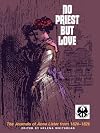
No Priest But Love follows on the heels of I Know My Own Heart. While I Know My Own Heart was published in large part because it seals Anne Lister's claim to fame as the first "modern lesbian," it is light on lesbian content given its overall length and heavy on early 19th century Halifax gossip. Dedicated readers will appreciate Lister's sexual frankness mixed in with the banalities of provincial life, but others may find that the title of First Modern Lesbian demands a bit more. No Priest show more But Love delivers that "more." At the end of 1824 Lister left Halifax for an extended stay in Paris. In Paris Lister finds what the reader was probably hoping she would--unadulterated dyke drama. Lister begins a satisfyingly explicit seduction of an English widow, Mrs Barlow. Like all good lesbians of any age, Lister encourages Mrs Barlow to pack up her U-Haul, and then Lister wrecks the relationship by dragging her ex-girlfriend-wait-a-second-we're-likely-to-get-back-together-any-moment into the picture. If that isn't modern lesbianism, then I don't know what is. And so the drama continues at home and abroad.
In addition to introducing this new love interest of Lister's, No Priest But Love also introduces us more fully to someone who has been there all along--Helena Whitbread. This volume contains more numerous (and very interesting) historical asides, images, and psychological analyses of Lister and her world. (These are few and far in between in I Know My Own Heart). Ms Whitbread also included subject headings for the majority of Lister's entries, making it easier to skim back through and appreciate the overarching narrative of Lister's life at that time.
Overall, this is a faster-paced, more varied, and more sexually explicit extract from Lister's life. Even if I Know My Own Heart didn't do it for you, try giving this volume a whirl. Anne Lister isn't exactly likable, but she is at least readable. show less
In addition to introducing this new love interest of Lister's, No Priest But Love also introduces us more fully to someone who has been there all along--Helena Whitbread. This volume contains more numerous (and very interesting) historical asides, images, and psychological analyses of Lister and her world. (These are few and far in between in I Know My Own Heart). Ms Whitbread also included subject headings for the majority of Lister's entries, making it easier to skim back through and appreciate the overarching narrative of Lister's life at that time.
Overall, this is a faster-paced, more varied, and more sexually explicit extract from Lister's life. Even if I Know My Own Heart didn't do it for you, try giving this volume a whirl. Anne Lister isn't exactly likable, but she is at least readable. show less
I Know My Own Heart: The Diaries of Anne Lister, 1791-1840 (Cutting Edge: Lesbian Life & Literature) by Anne Lister
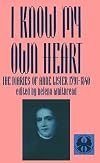
The Diaries of Anne Lister is definitely the oldest “lesbian” book I’ve read to date. I’m putting lesbian in quotation marks because what is actually the most fascinating things about the diary is how Anne Lister explores her attraction to women and her sexual identity in a time before sexuality was such a defining characteristic for our identities and before the word lesbian even existed with our contemporary understanding of it (if anyone as nerdy as me is wondering, “lesbian” show more was first used in 1890 as “female homosexual,” according to the Oxford English Dictionary—so it’s really a relatively new word!). Back to Anne Lister: she was an upper-class Englishwoman living in Halifax and Shibden Hall, West Yorkshire in the early 1800s who kept a very comprehensive diary of her life, a significant amount of which was written in a code that Lister herself had created. This diary was discovered in the early 20th century by John Lister, the last inhabitant of Shibden Hall; he was advised to burn the diaries when the code was cracked—isn’t this a great lesbian detective story? Fortunately he didn’t (thanks John, for saving an incredible piece of lesbian herstory!) and historian Helena Whitbread has published two editions of Lister’s diaries—the first one in 1988, the version that I’ve picked up.
What is often strange and amusing about this diary is how Lister will list off banal details of her life, such as that she had “most excellent ¼ hind lamb, cold, potatoes & kidney beans” for supper and calculated her finances with a balance of “ninety pounds, twelve shillings, & twopence three farthings,” alongside shockingly matter-of-fact statements about her sexual and romantic relationships with women. If you picked this book up somehow not knowing, you might miss Lister’s astonishing assertion “I love, & only love, the fairer sex & thus beloved by them in turn, my heart revolts from any other love than theirs.” Having declared her sexual identity, Lister meets another masculine queer woman, Miss Pickford, and wonders “Are there more Miss Pickfords in the world than I have ever thought of?” She discovers, in other words, that she is not alone in her sexuality and comes to terms with herself as different, but “natural.” She tries to deal with her lover Marianne’s internalized homophobia. She flirts with neighbourhood women. Actually, Lister is kind of a dog; she juggles a few women at once throughout her diary, and writes of one woman that “She looked very pretty … She seems innocent & unknowing as to the ways of the world. I wonder if I can ever, or shall ever, mould her to my purpose.” Oh my, to what purpose is that, Anne?
Another fascinating issue in the book is Lister’s gender. In fact, I began to wonder the farther I read into the diary if she might identify as a trans man if she were alive today. She often, for example, is read as a man in public and is uncomfortable with women’s clothing. She writes shockingly at one point: “Foolish fancying about Caroline Greenwood, meeting her on Skircoat Moor, taking her into a shed there is there & being connected with her. Supposing myself in men’s clothes & having a penis, tho’ nothing more.” What does she mean by this? Why is Marianne’s pet name for Lister “Fred” in their letters? Would Lister have preferred to pass as a man? Or was conceptualizing herself as Marianne’s “husband” the only way she had of expressing her desire for a female partner? The diary doesn’t answer these questions, obviously, but they are interesting ones to keep in mind while reading it.
If you can take Lister’s classist, snobbish qualities in historical context—her attempts at social climbing and her insulting the “vulgarity” of those socially beneath her are pretty awful—the diary is quite a fun read. I found the contrast between the old proper British English and some of the raunchy details—Lister in bed with different women, Lister attempting to cure her venereal disease—hilarious. The other element of the book that I really enjoyed was the unlikely feeling of kinship I felt with Lister despite the huge differences between us. I came away from the diary with the sense that dyke or queer lives today are in some ways not so different than Lister’s. For example, she records a visit to the Ladies of Llangollen, a known lesbian couple, wanting to find a kind of role model for herself and an eventual partner—so even in 1822 all the dykes knew each other! Lister’s declaration of her love for the “fair sex” echoes contemporary coming out and coming of age stories. Her struggles with gender identity, homophobia, relationships, intimacy, and sex are definitely of her own time, but reading about them in Lister’s own voice really made them resonate for my time. show less
What is often strange and amusing about this diary is how Lister will list off banal details of her life, such as that she had “most excellent ¼ hind lamb, cold, potatoes & kidney beans” for supper and calculated her finances with a balance of “ninety pounds, twelve shillings, & twopence three farthings,” alongside shockingly matter-of-fact statements about her sexual and romantic relationships with women. If you picked this book up somehow not knowing, you might miss Lister’s astonishing assertion “I love, & only love, the fairer sex & thus beloved by them in turn, my heart revolts from any other love than theirs.” Having declared her sexual identity, Lister meets another masculine queer woman, Miss Pickford, and wonders “Are there more Miss Pickfords in the world than I have ever thought of?” She discovers, in other words, that she is not alone in her sexuality and comes to terms with herself as different, but “natural.” She tries to deal with her lover Marianne’s internalized homophobia. She flirts with neighbourhood women. Actually, Lister is kind of a dog; she juggles a few women at once throughout her diary, and writes of one woman that “She looked very pretty … She seems innocent & unknowing as to the ways of the world. I wonder if I can ever, or shall ever, mould her to my purpose.” Oh my, to what purpose is that, Anne?
Another fascinating issue in the book is Lister’s gender. In fact, I began to wonder the farther I read into the diary if she might identify as a trans man if she were alive today. She often, for example, is read as a man in public and is uncomfortable with women’s clothing. She writes shockingly at one point: “Foolish fancying about Caroline Greenwood, meeting her on Skircoat Moor, taking her into a shed there is there & being connected with her. Supposing myself in men’s clothes & having a penis, tho’ nothing more.” What does she mean by this? Why is Marianne’s pet name for Lister “Fred” in their letters? Would Lister have preferred to pass as a man? Or was conceptualizing herself as Marianne’s “husband” the only way she had of expressing her desire for a female partner? The diary doesn’t answer these questions, obviously, but they are interesting ones to keep in mind while reading it.
If you can take Lister’s classist, snobbish qualities in historical context—her attempts at social climbing and her insulting the “vulgarity” of those socially beneath her are pretty awful—the diary is quite a fun read. I found the contrast between the old proper British English and some of the raunchy details—Lister in bed with different women, Lister attempting to cure her venereal disease—hilarious. The other element of the book that I really enjoyed was the unlikely feeling of kinship I felt with Lister despite the huge differences between us. I came away from the diary with the sense that dyke or queer lives today are in some ways not so different than Lister’s. For example, she records a visit to the Ladies of Llangollen, a known lesbian couple, wanting to find a kind of role model for herself and an eventual partner—so even in 1822 all the dykes knew each other! Lister’s declaration of her love for the “fair sex” echoes contemporary coming out and coming of age stories. Her struggles with gender identity, homophobia, relationships, intimacy, and sex are definitely of her own time, but reading about them in Lister’s own voice really made them resonate for my time. show less
Lists
You May Also Like


Associated Authors
Statistics
- Works
- 4
- Members
- 441
- Popularity
- #55,515
- Rating
- 4.3
- Reviews
- 12
- ISBNs
- 13
- Favorited
- 1